Fixing a 'Finished' Crawl Space Encapsulation (That Never Should Have Passed)
When "Finished" Doesn't Mean Done Right
Got a call from a homeowner here in Central Illinois who'd just had their crawl space encapsulated by a restoration company.
They had a mold problem, the company handled the remediation, and sold them on an encapsulation to prevent it from coming back.
Job was "finished." Payment was made. But something didn't feel right to the homeowner, so they asked us to come take a look.
Within minutes, we found several thousand dollars worth of problems. Wrong size dehumidifier. Equipment installed crooked and actually dripping moisture onto the vapor barrier.
Seams not sealed properly. Polyethylene stapled instead of properly attached.
This is the frustrating part of what we do—fixing someone else's shortcuts after the homeowner already paid for it once.
And it happens more often than it should, especially when homeowners hire companies that treat crawl space encapsulation like just another service instead of the specialized work it actually is.
The Problems We Found
Let's start with the dehumidifier. It's too small for the space. When equipment is undersized, it runs constantly trying to keep up and never actually solves your humidity problem. You're paying for electricity and getting minimal results.
But it gets worse. The dehumidifier is mounted crooked. That means it can't drain properly, so instead of removing moisture from your crawl space, it's dripping water directly onto your vapor barrier. The same barrier that's supposed to be keeping moisture out of your home.
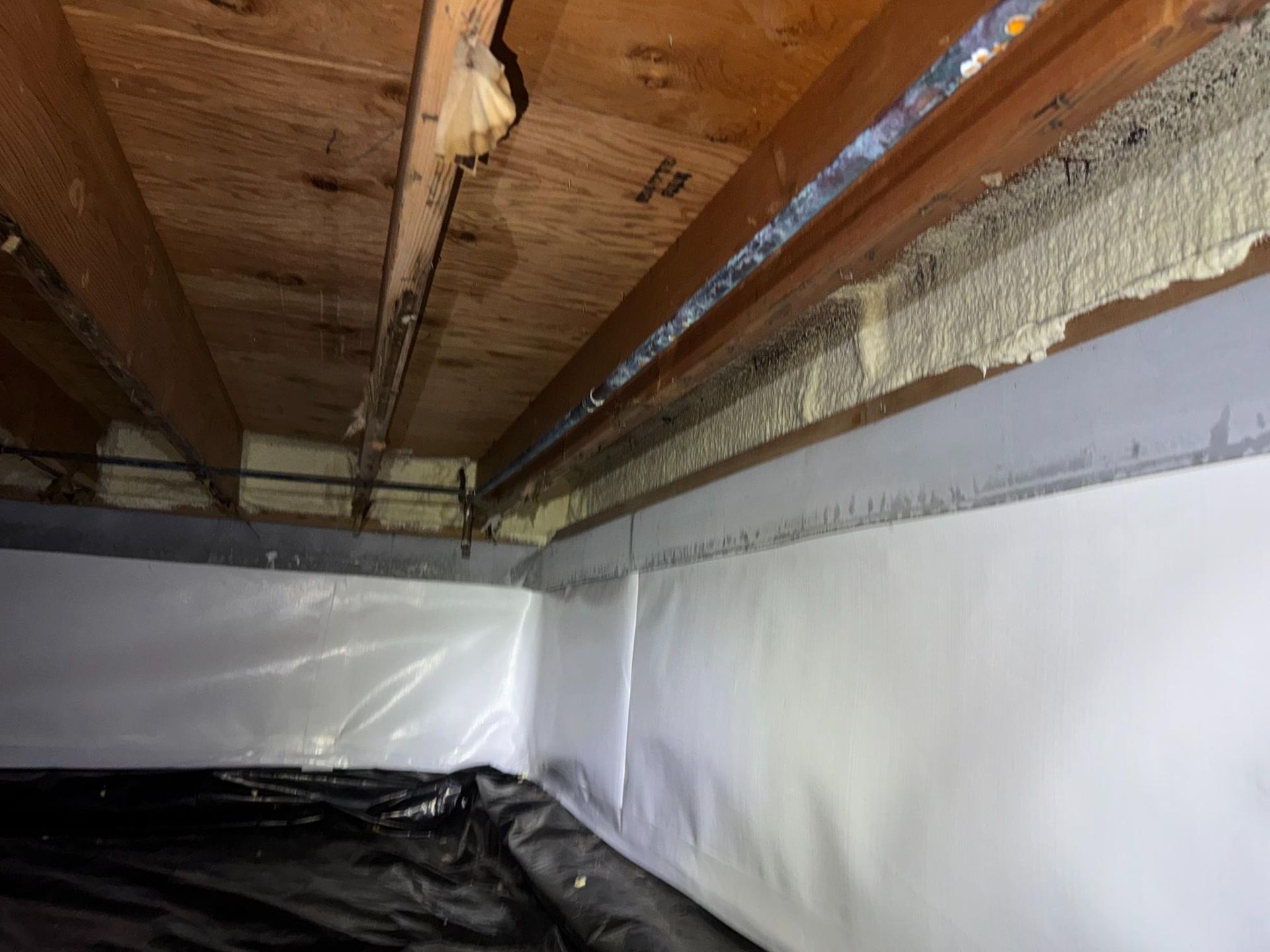
The polyethylene is stapled to the sill plate. That's not how you seal a crawl space. Staples create holes. Holes let moisture through. The whole point of encapsulation is creating a sealed environment—you can't do that by punching holes in your barrier.
The installation itself is wrinkly throughout. Seams aren't taped correctly. Some aren't taped at all. It looks like someone rushed through it just to get it done and move on to the next job.
These aren't small cosmetic issues. Each one of these problems affects how well the system works. A dehumidifier that's dripping moisture back into your crawl space isn't just ineffective—it's actively making things worse. Improperly sealed barriers let humidity in. Wrong-sized equipment wastes energy and money.
This homeowner paid for an encapsulation. What they got was an installation that looks finished but doesn't actually function the way it should.
Why This Keeps Happening
Here's the thing about restoration companies: they're good at what they specialize in. Mold remediation, water damage, fire restoration—that's their expertise. But crawl space encapsulation? For most of them, it's a side service they picked up because customers kept asking about it.
They went to a training seminar. Learned the basics. Got certified. Now they can sell it as an add-on whenever they're doing remediation work upstairs.
But there's a massive difference between knowing how to do something and actually being good at it. Between following basic instructions and understanding why each step matters. Between installing equipment and knowing how to size it correctly for the specific space you're working in.
When you're a generalist trying to do everything, crawl spaces are just one more thing on your service list. You're not researching new techniques. You're not staying current on best practices. You're not learning from mistakes because you're already onto the next fire restoration or water damage job.
That's how you end up with a dehumidifier mounted crooked. Nobody on that crew specialized in this work, so nobody caught it. They followed the basic steps they were taught, checked the box, and called it done.
And here's the hard truth: companies often win jobs by being the cheapest quote. To hit that low price, they cut somewhere. Usually it's in the details. Proper sealing takes time. Correctly sizing equipment requires knowledge. Quality installation requires experience. When you're racing to the next job, those details get skipped.
What Proper Crawl Space Encapsulation Should Look Like
When we do an encapsulation, the dehumidifier is sized specifically for your crawl space. Not whatever we have on the truck. Not the cheapest model. The right capacity for your square footage and your moisture load.
It's mounted level. That sounds basic, but it matters. A level dehumidifier drains properly. It does its job without creating new problems.
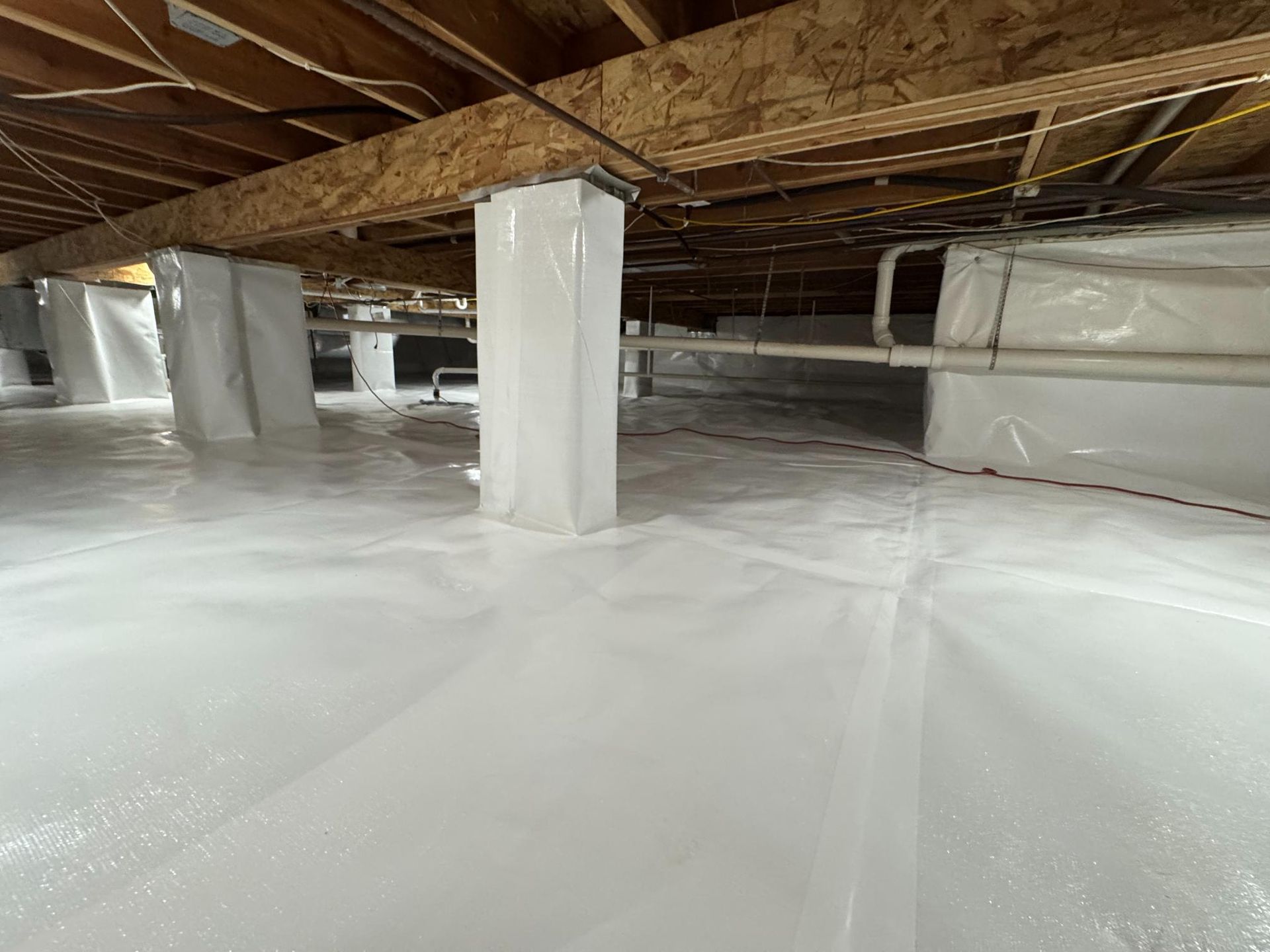
The vapor barrier is sealed to the foundation walls and piers—not stapled. We use proper adhesives and mechanical fasteners that create an actual seal. Because the whole point is keeping moisture out, and you can't do that with holes punched every few inches.
Seams are overlapped correctly and taped with proper crawl space tape. Not duct tape. Not whatever's cheap. The right materials that will actually hold up in a high-humidity environment.
The installation is tight and clean. No wrinkles, no gaps, no shortcuts. When we're done, your vapor barrier should look like it was meant to be there—not like someone threw it down and hoped for the best.
All penetrations are sealed. Pipes, support posts, anything coming through the barrier gets properly detailed so moisture can't sneak around it.
This is what separates an installation from a proper encapsulation. Anyone can lay down plastic. Creating a sealed, functioning system that actually protects your home long-term? That takes knowledge, experience, and attention to detail.
The difference shows up in how well it works, and how long it lasts.
The Real Cost of Cheap Work
This homeowner is now paying twice. Once for the original encapsulation. Again to fix the problems that never should have existed.
And they're not even getting a complete do-over. They can't afford to rip everything out and start from scratch, so we're going through and correcting what we can. Making the best of a bad situation.
But here's what really hurts: while they were figuring out something was wrong, the faulty system was running. A dehumidifier dripping moisture into their crawl space. Improperly sealed barriers letting humidity through. The mold problem they paid to solve? It could be coming back because the encapsulation isn't actually working.
Mold doesn't wait for you to notice your dehumidifier is installed wrong. Moisture doesn't pause while you're getting second opinions. The damage continues.
That's the real cost of hiring cheap. You pay for work that doesn't function. Then you pay to fix it. And in between, you're dealing with the continued problems you thought you'd solved—plus the stress and frustration of realizing you got taken advantage of.
Cheap quotes aren't savings. They're just delayed expenses.
How to Vet Your Crawl Space Contractor
Before you hire someone for crawl space work, ask them how many encapsulations they've actually done. Not how long they've been in business—how many crawl spaces specifically.
Ask if this is their main focus or just one of many services they offer. There's nothing wrong with companies that do multiple things, but understand you're getting a generalist's version of crawl space work, not a specialist's.
Request references for crawl space jobs specifically. A company might have great reviews for their restoration work but limited experience with encapsulation.
Ask what continuing education they do in this field. Are they researching new techniques? Staying current on best practices? Or did they learn it once at a seminar five years ago and haven't thought about it since?
Red flags to watch for: companies that do everything under the sun. Quotes that come in way lower than everyone else. Rushed estimates where they barely looked at your space. Pressure to sign immediately.
And here's the reality: specialists usually cost more than generalists. Because they're not cutting corners to hit rock-bottom prices. They're doing the work right, with the right materials, the right equipment, and the experience to back it up.
That difference is worth it.
Our Approach in Central Illinois
Chris and I are crawl space specialists. Not restoration experts who also do crawl spaces. Not handymen who picked up encapsulation. This is what we focus on.
We research. We study new techniques. We learn from every job we do and constantly improve our process. When better materials become available, we know about them. When installation methods improve, we adapt.
That's what specialization means. We're not spreading our attention across ten different services. We're putting all our focus into doing crawl space work at the highest level we can.
We're not the cheapest option in Central Illinois. We're also not the most expensive. We price our work to reflect the quality and expertise we bring—and to ensure we can take the time to do it right instead of rushing to the next job.
When you hire My Guys, you get Chris or me. Not whatever crew happens to be available. We're on your job. We're accountable for the work. And because we live right here in Mahomet, our reputation isn't just business—it's personal.
We see our customers around town. That matters.
Book A Free Inspection Now
Your crawl space problems aren't going to fix themselves. But they are fixable. Let's get it done — the right way, permanently.
Or call us directly (217) 863-9559
Get It Done Right the First Time
If you're considering crawl space encapsulation, give us a call. We'll come out, do a thorough inspection, and give you an honest assessment of what you need.
Already had work done but something doesn't feel right? We'll evaluate it. No judgment, no pressure—just straight answers about whether your encapsulation is actually functioning the way it should.
Reach out anytime. We're here in Mahomet, and we're ready to help.