Crawl Space Problems in Rantoul, IL
Why So Many Rantoul Homeowners Are Dealing with Crawl Space Problems

Why So Many Rantoul Homeowners Are Dealing with Crawl Space Problems
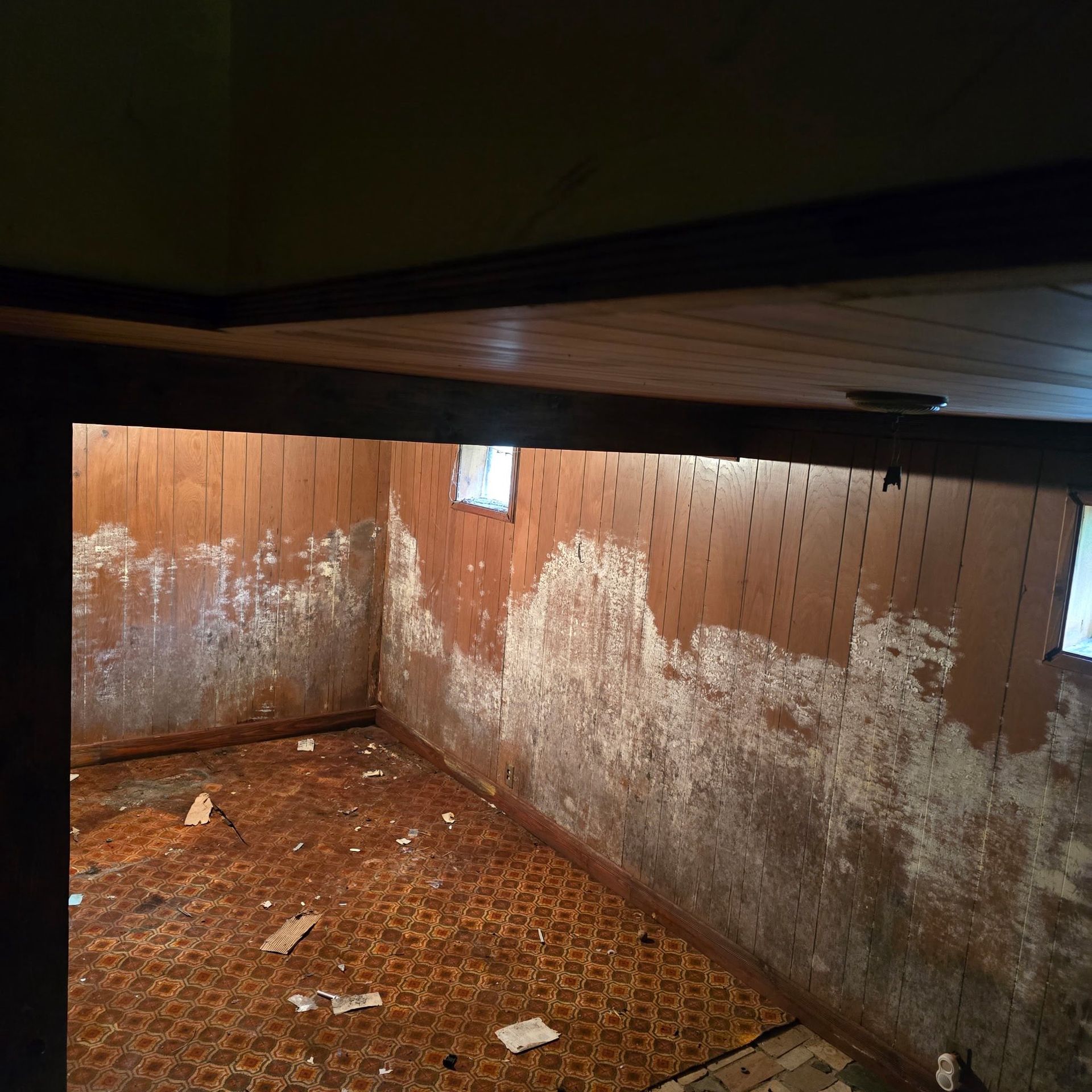
You went down there and saw standing water. Or that musty smell won't go away no matter what you do. Maybe your floors feel soft in certain spots, or the home inspection just flagged moisture issues.
Here's the thing: this isn't your fault.
Rantoul's Champaign County clay soil doesn't drain—it holds water. The flat terrain means water pools instead of running off. And a lot of homes here were built quickly during the 1950s-60s Chanute Air Force Base boom, which meant speed mattered more than long-term moisture management.
I've been in hundreds of Rantoul crawl spaces. What you're dealing with is a pattern I see over and over. And it's fixable.
The Geography Working Against You
Mattoon's geography creates crawl space problems. This isn't about you neglecting your home. The soil, the water table, and the flat terrain are all working against you.
Coles County soil holds moisture. More importantly, Mattoon sits on relatively flat terrain. Water has nowhere to go when it rains, so it sits—and a lot of it ends up under your house.
The Embarras River and Lake Mattoon both affect groundwater patterns. Homes on the north side, especially closer to the lake, tend to have higher water tables. Some neighborhoods flood predictably every spring.
Almost every Mattoon crawl space I inspect has moisture problems to some degree. You didn't cause this. The geography created it, and the way homes were built decades ago didn't account for it.
Rantoul Crawl Space Problems by Home Age
The problems you're experiencing depend heavily on when your house was built. Different eras had different construction standards. Here's what I typically find.
1950s-1960s Homes
1970s-1980s Homes
Newer Homes 1990s
When Chanute Air Force Base was active, Rantoul needed housing fast. Homes went up quickly to house military families. That meant construction focused on speed, not moisture management.
What was standard: 2x8 floor joists spanning 13 feet or more—undersized by today's standards. Little to no vapor barrier. Crawl space vents that people thought would help with airflow but actually let in humid air. No drainage systems.
What I see now: sagging or bouncy floors because those joists can't handle the load. High humidity with no vapor barrier to stop ground moisture. Standing water after rain. Mold growth on floor joists and that musty smell that won't go away.
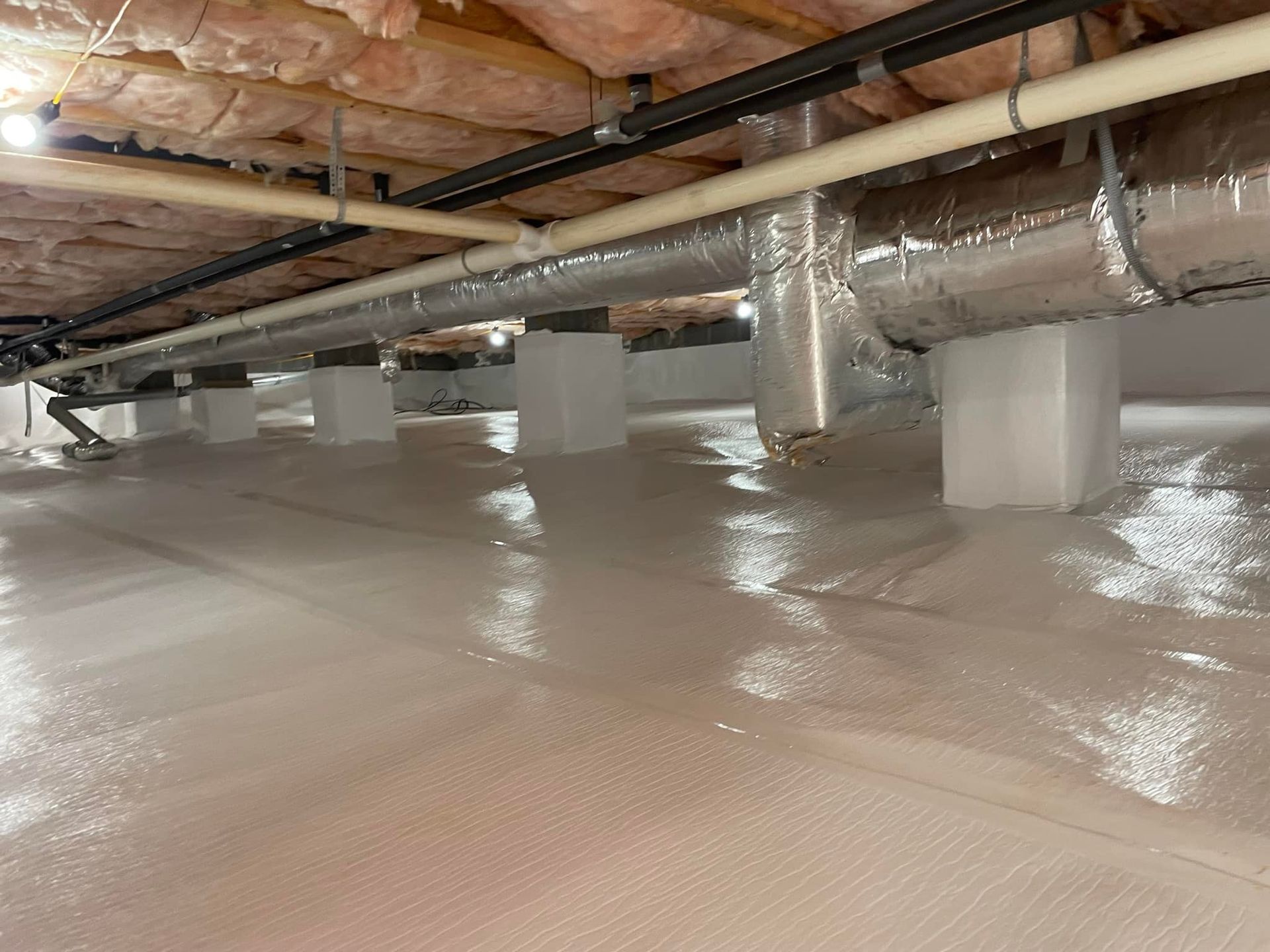
What fixes it: proper drainage like French drains or sump pumps to handle water. Heavy-duty vapor barriers installed and sealed correctly. Structural support to reinforce undersized joists. Seal those vents that make humidity worse. Dehumidification systems.
Last year we fixed a 1960s ranch with standing water every spring and bouncing kitchen floors. No drainage system, no vapor barrier, undersized joists, and the HVAC condensate line was draining straight into the crawl space. We installed a French drain and sump pump, rerouted the condensate, put in a proper vapor barrier and dehumidifier, and added structural support. Stays dry year-round now, floors are solid, smell is gone.
1950s-1960s Homes (The Chanute Era)
By the 70s and 80s, construction improved somewhat. These ranch-style homes are common throughout Rantoul. But they still didn't include real moisture management, and builders installed fiberglass batt insulation in crawl spaces that fails over time.
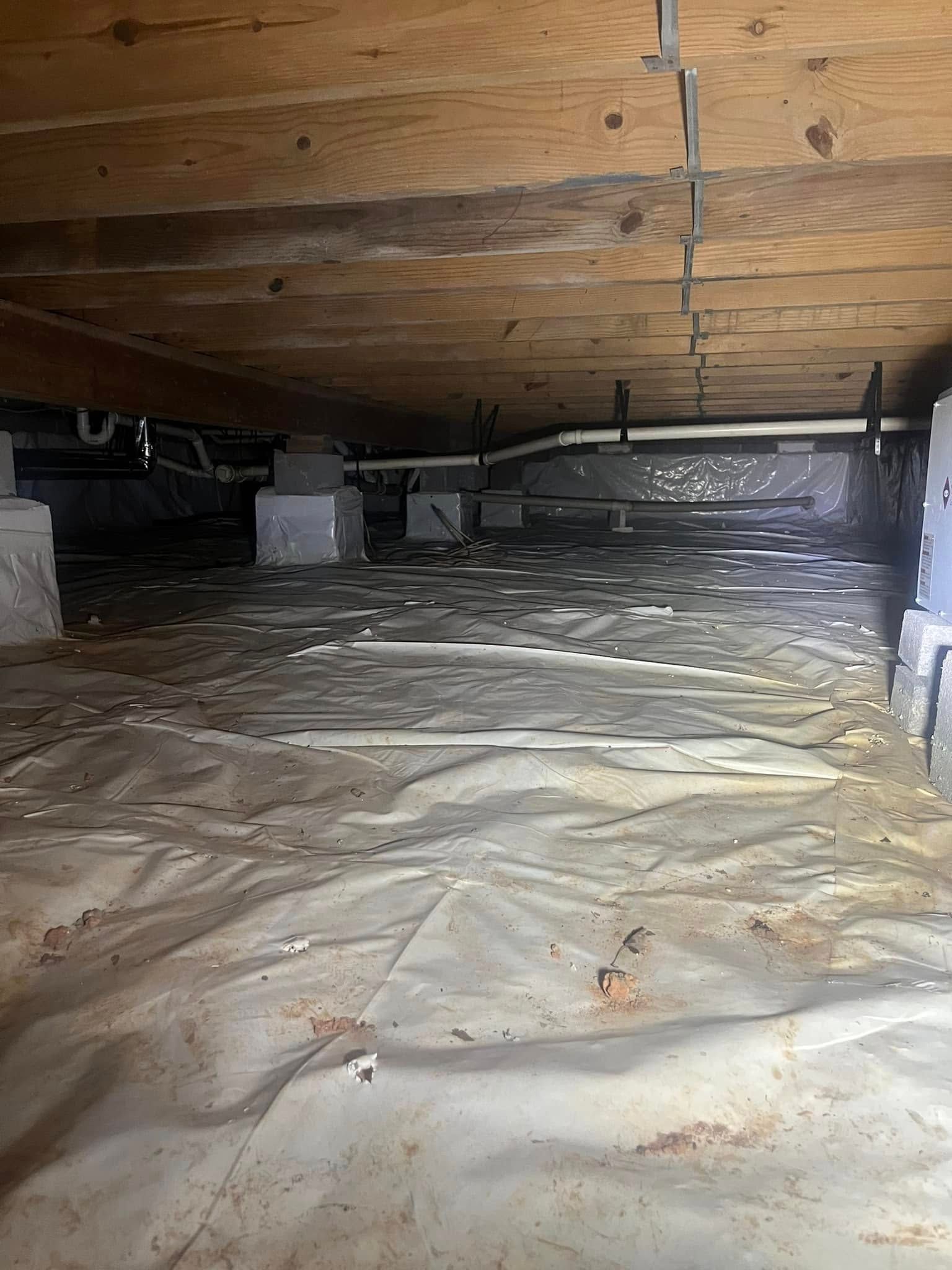
What I see now: fiberglass insulation has fallen down or been pulled apart by rodents. Vapor barriers are torn or bunched in corners. High humidity, especially in summer. Cold floors in winter because the insulation stopped working.
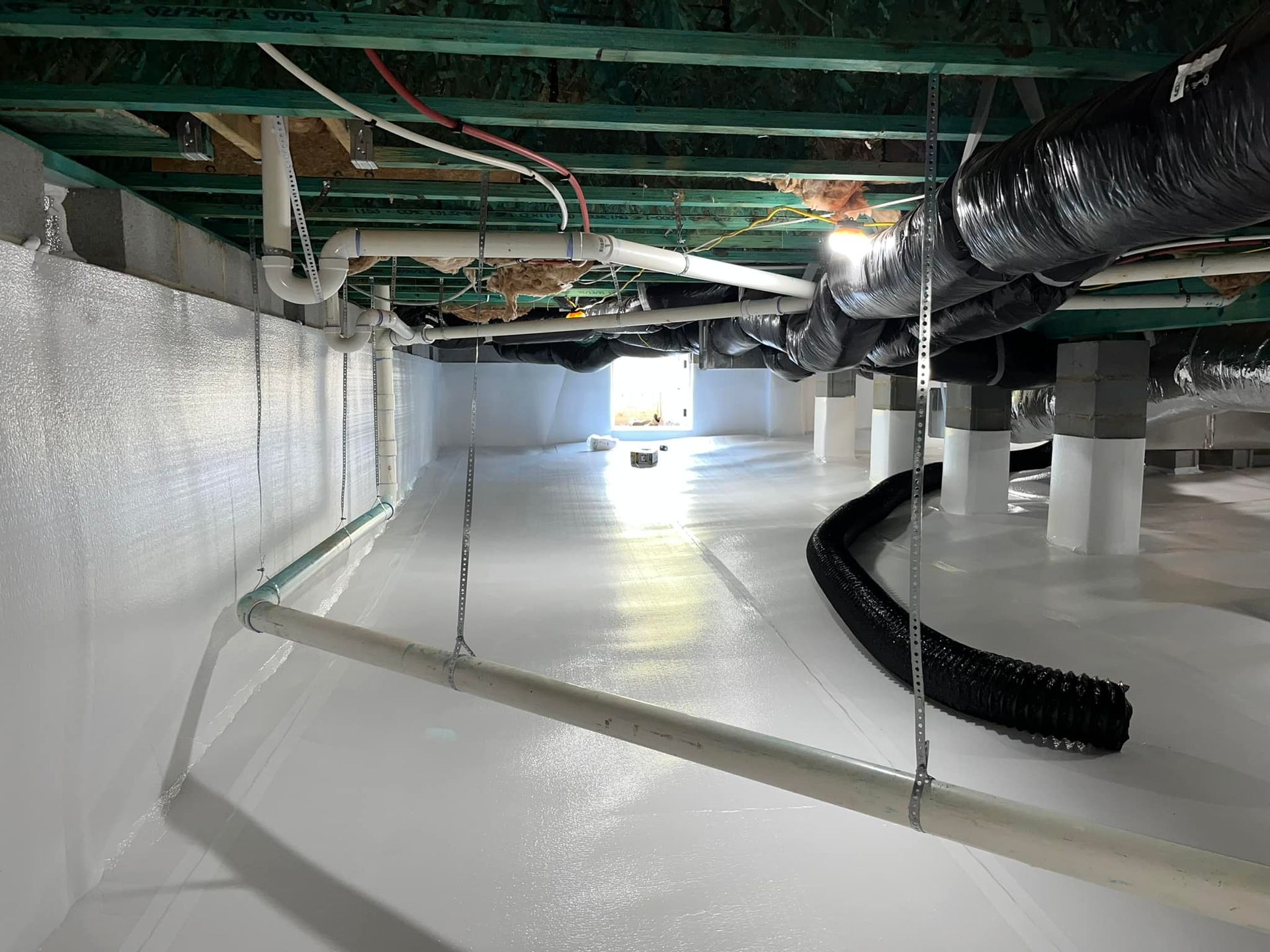
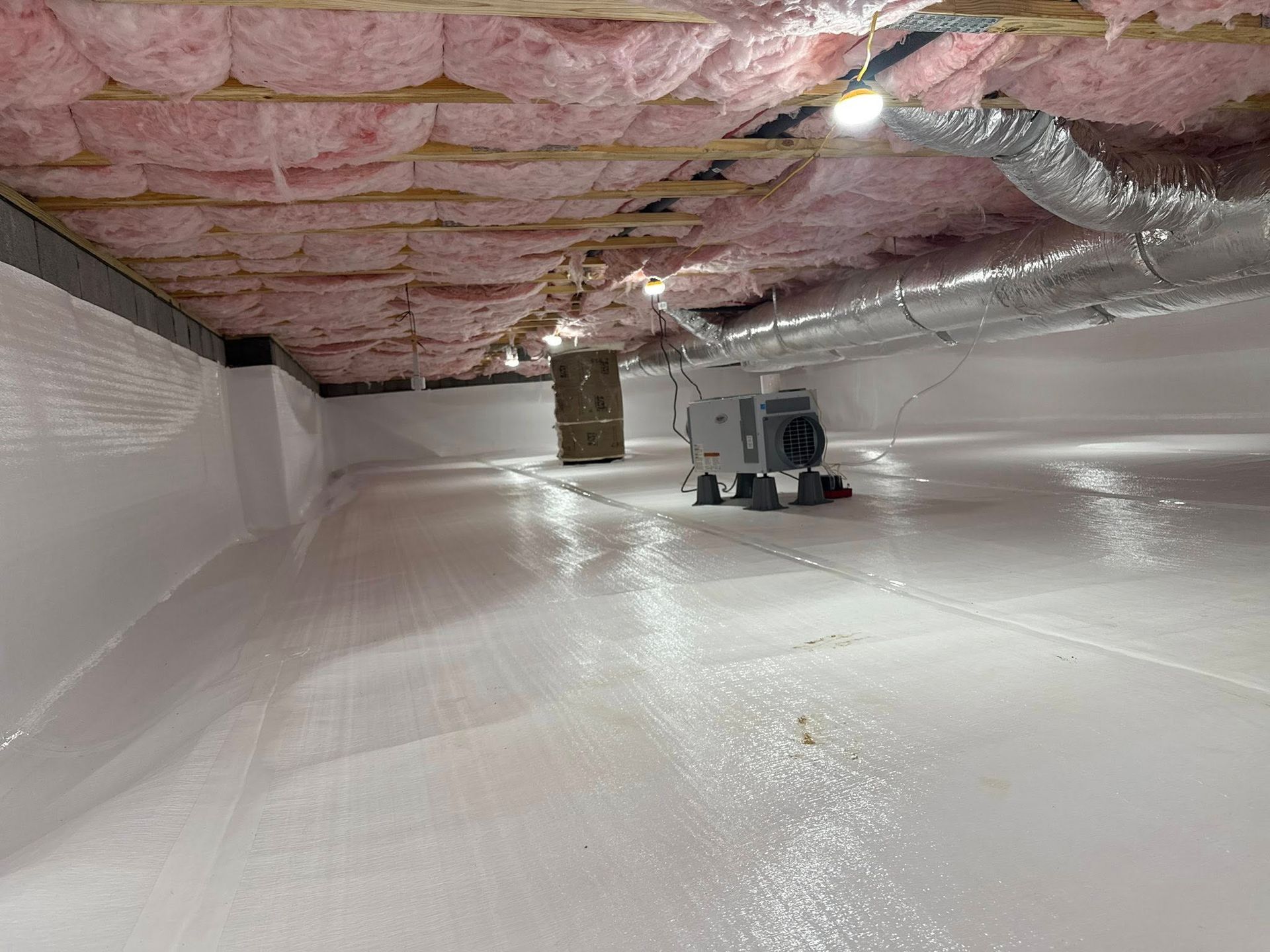
What fixes it: remove that failed insulation. Install proper vapor barriers with sealed seams. Use spray foam or rigid foam on rim joists instead of fiberglass batts. Add dehumidification.
We worked on a 1970s home where the homeowner couldn't get rid of a musty smell. Another company had done "mold remediation" but it came back in six months. When I got there, humidity was 75%, the vapor barrier was shredded, and those open vents were letting in humid summer air. We removed contaminated insulation, treated the mold, sealed vents, installed a heavy-duty vapor barrier and dehumidifier. Smell gone within a week, humidity stays below 50% now.
1970s-1980s Homes (Ranch Era)
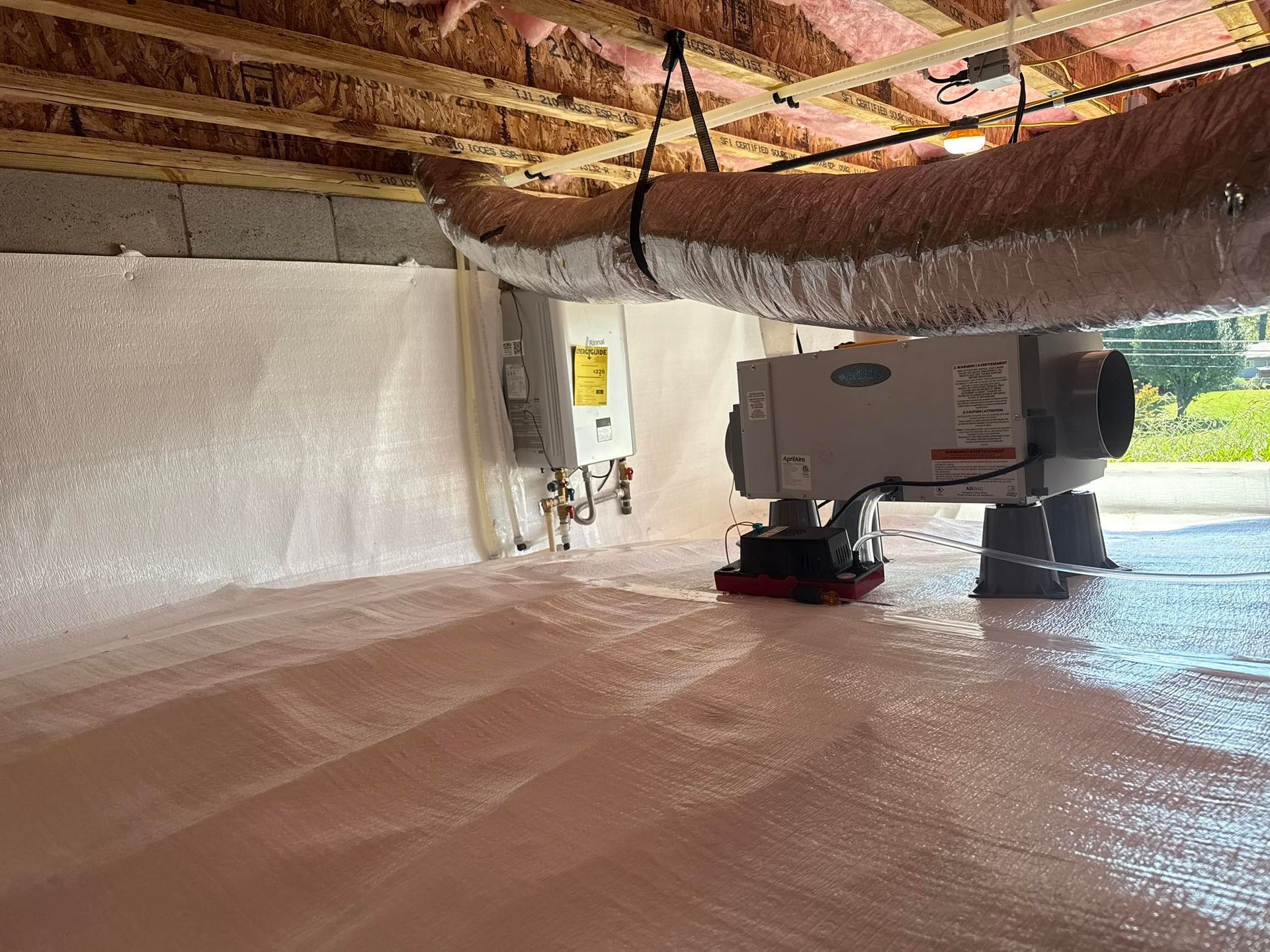
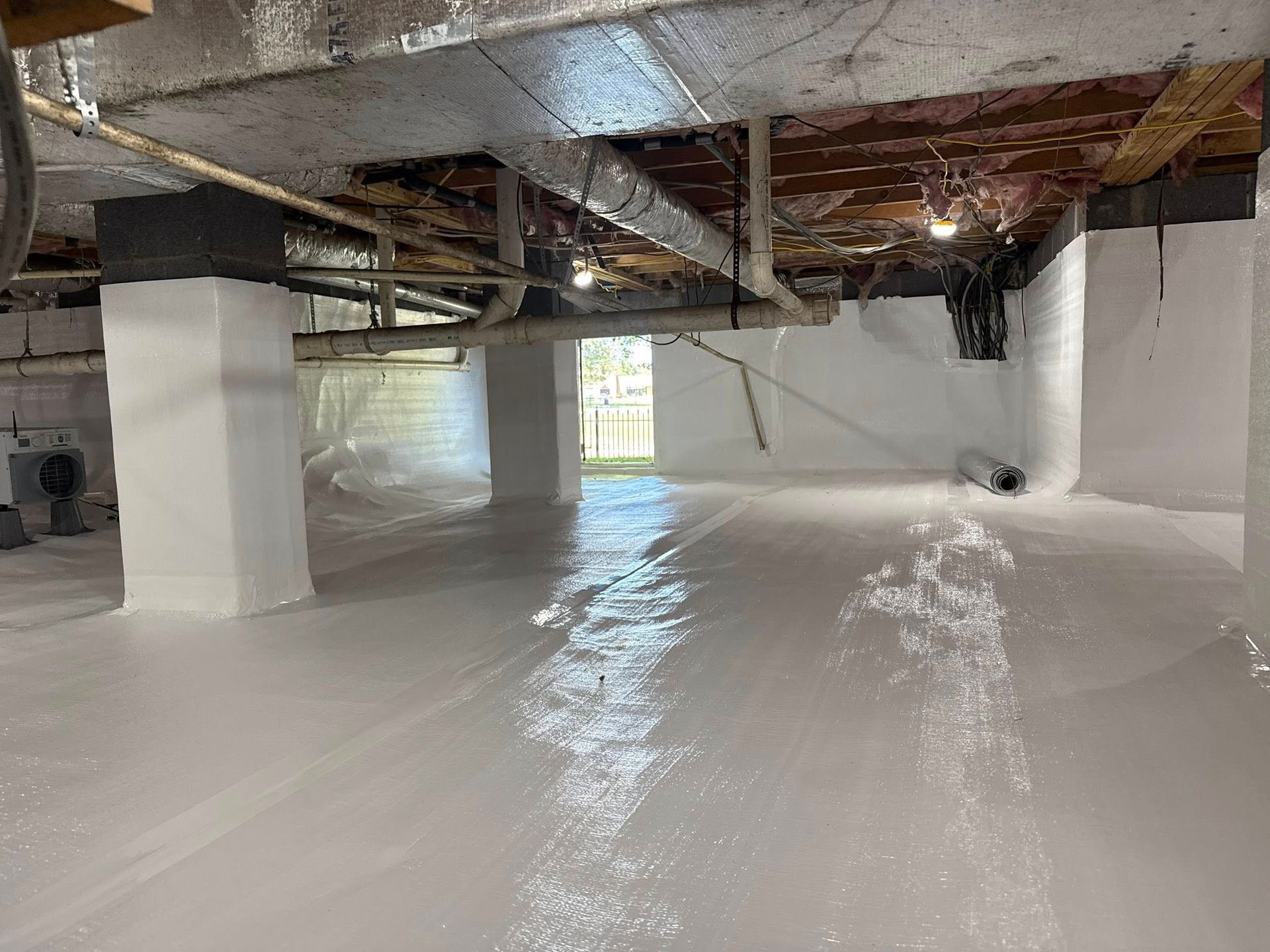
Even 20-year-old homes have these problems. Better initial construction doesn't prevent moisture issues when Rantoul's clay soil and water table are working against you. These homes typically deal with drainage problems from poor grading or damaged vapor barriers.
Older historic homes—anything built before 1950—have unique challenges. Stone or early concrete block foundations. Settlement from decades of shifting. Usually no vapor barrier at all. Each one needs a custom approach.
Newer Homes (1990s+) and Older Historic Homes
What Actually Fixes These Problems
If You've Got Standing Water or Dampness
Standing water happens because of poor drainage directing water toward your foundation, a high water table, or no interior drainage system to handle what gets in.
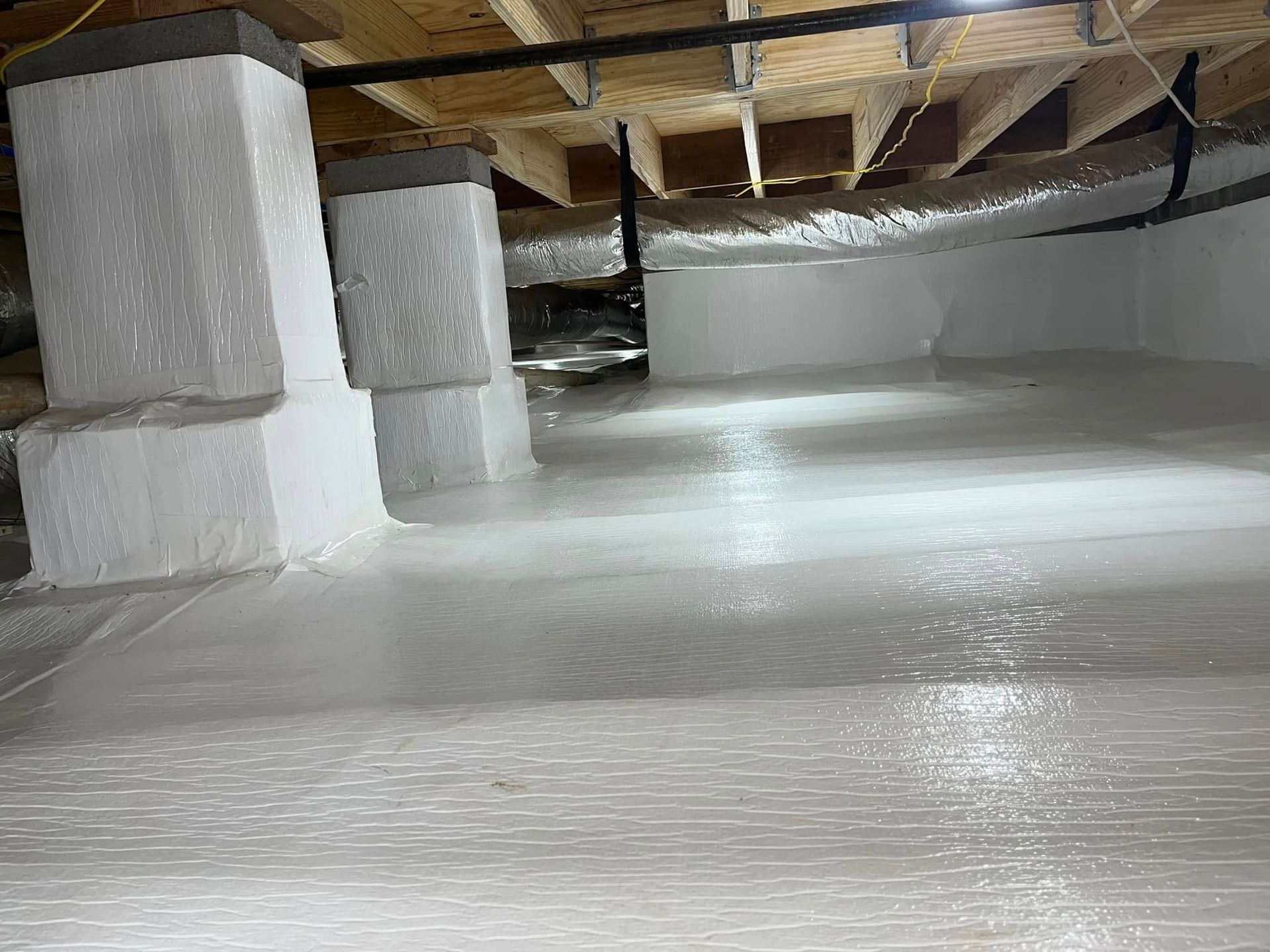
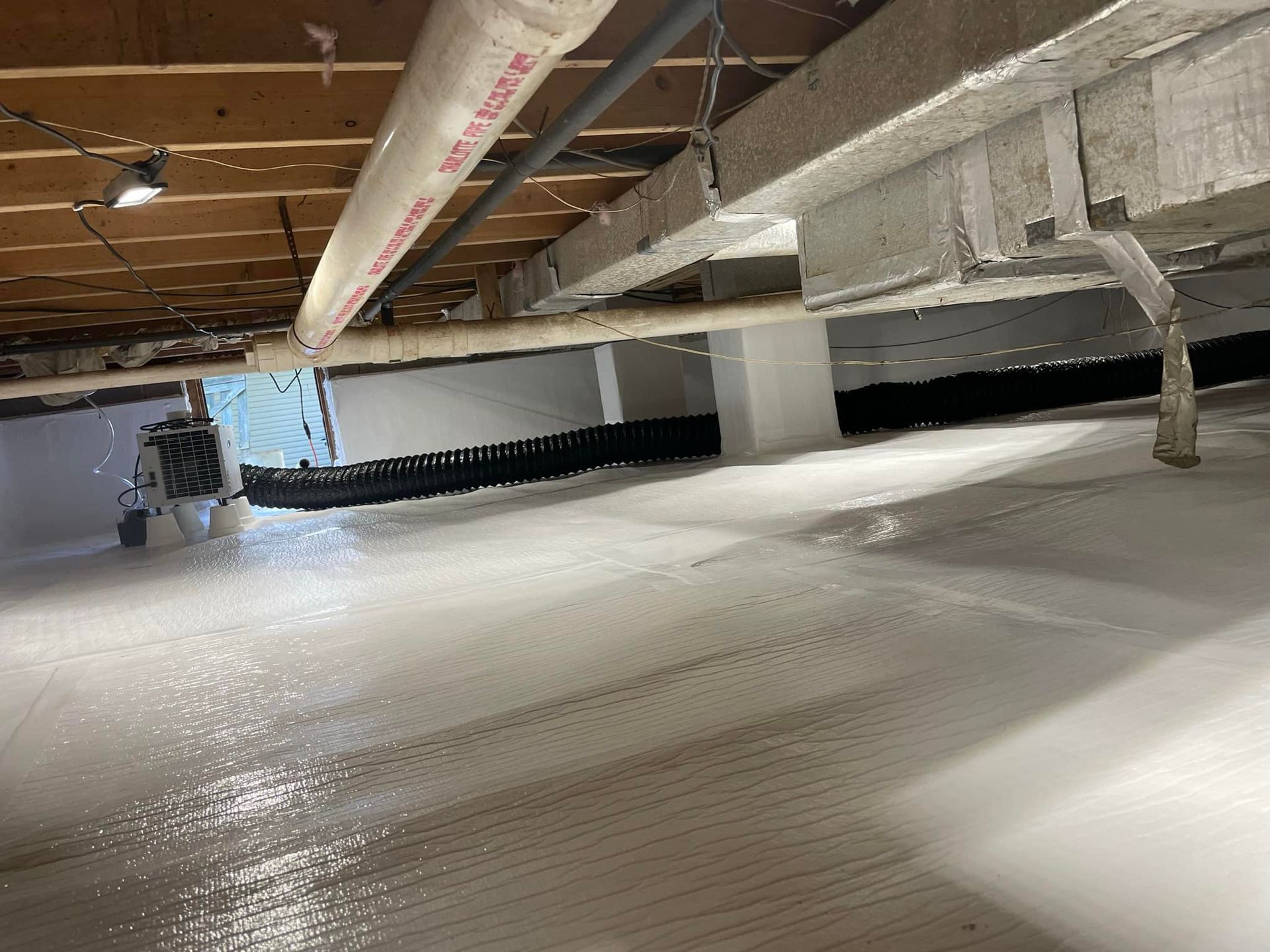
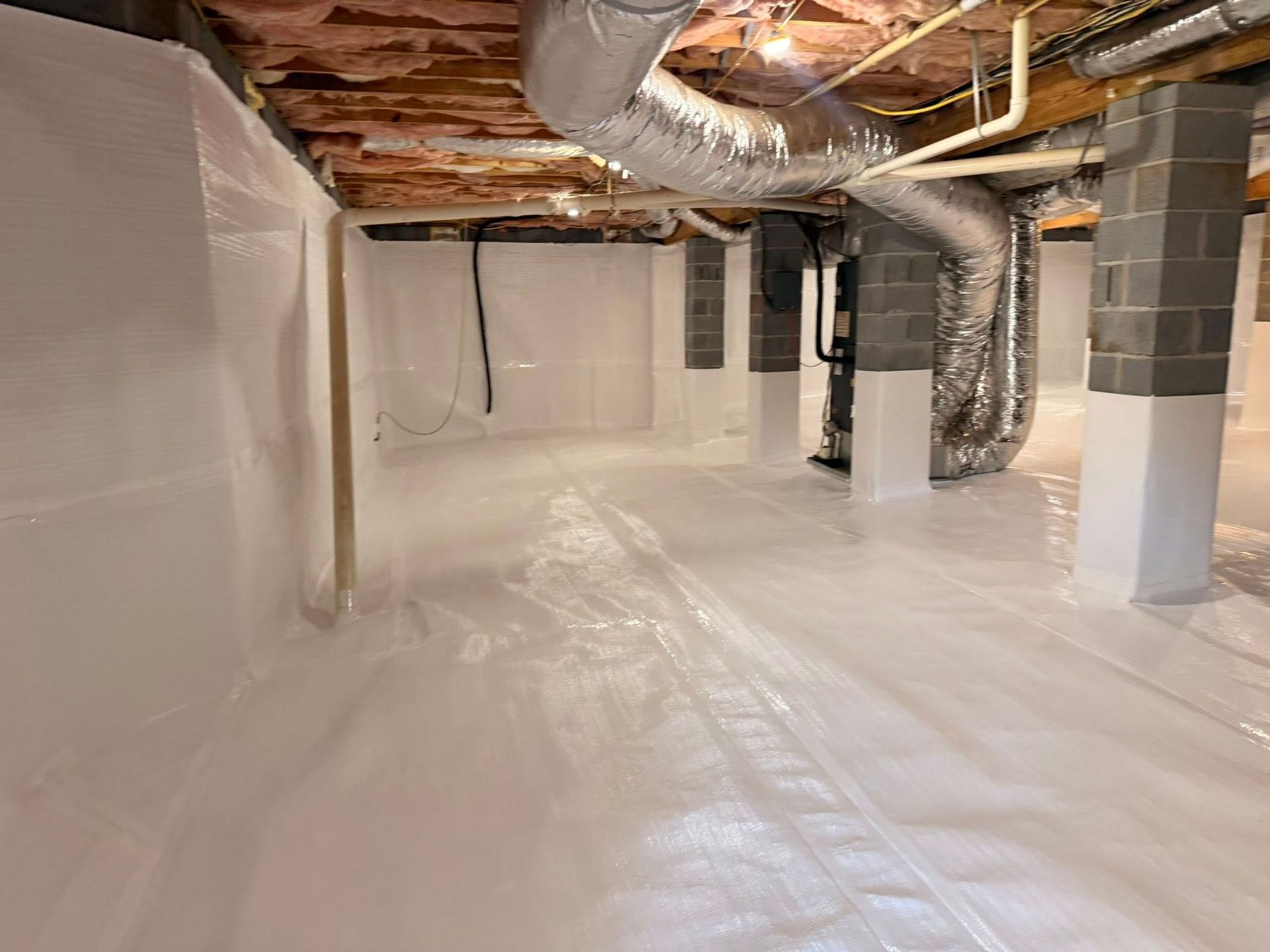
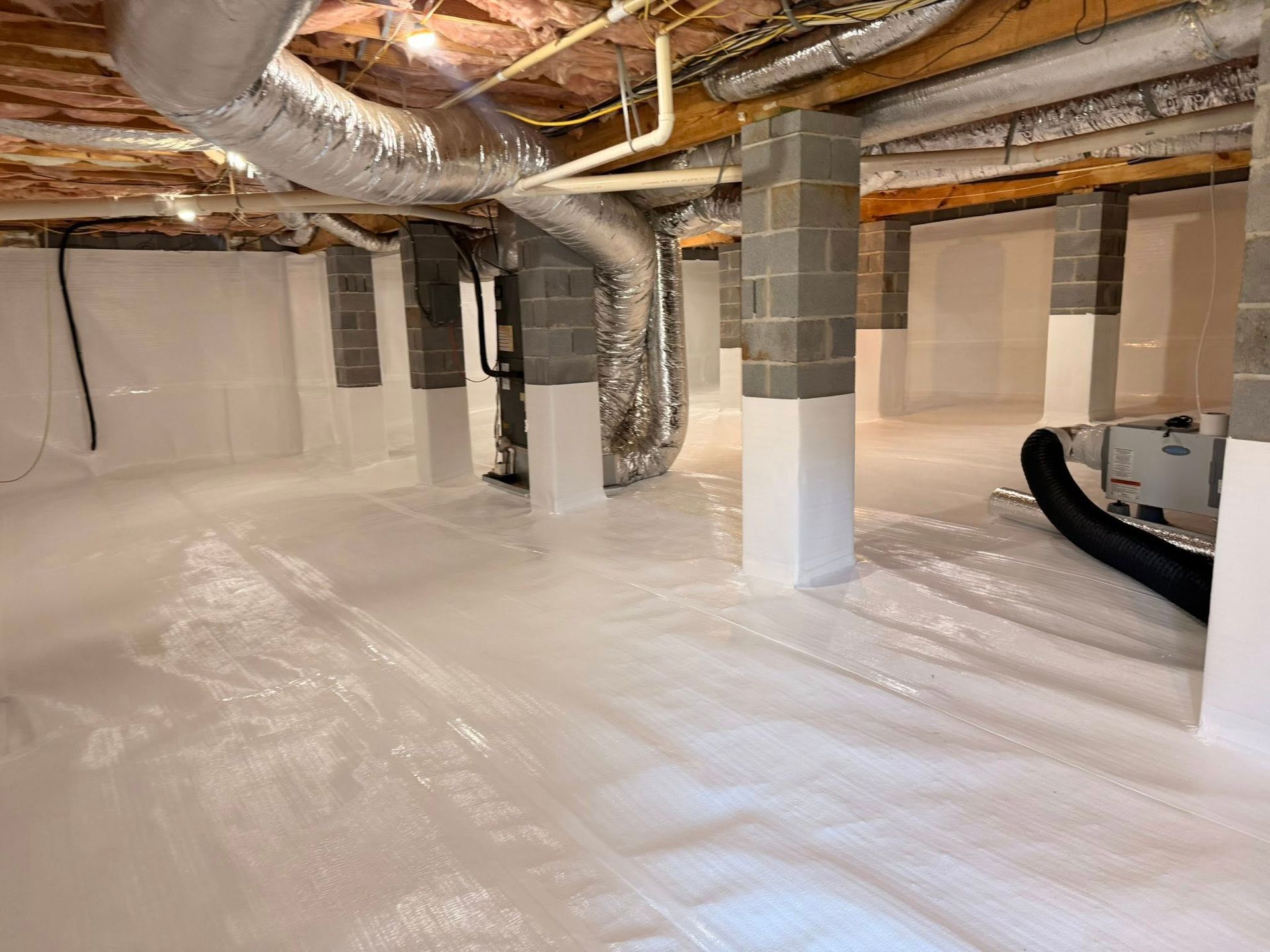
Just pumping it out and hoping it doesn't come back doesn't work. Neither does running a dehumidifier without fixing the water source. What actually works: French drain systems that intercept water before it enters your crawl space. Sump pumps with battery backup that remove water automatically even when the power's out. Exterior drainage improvements like fixing grading or extending downspouts. Then we seal it with encapsulation and add dehumidification to handle any remaining moisture.
My plumbing and foundation background means I know how to install drainage systems that actually work long-term, not just move your water problem to a different spot.
If You've Got That Musty Smell
That smell is mold and mildew growing on your floor joists because of high humidity. Here's what most people don't realize: about 50% of the air in your home comes up from your crawl space. If there's mold down there, you're breathing those spores upstairs.
Spraying bleach doesn't work. Bleach can't penetrate porous surfaces like wood, and it doesn't fix the moisture that's causing mold to grow. The mold just comes back.
What works: control the moisture source first with drainage and vapor barriers. Remove contaminated insulation and materials that can't be saved. Treat affected wood surfaces with proper antimicrobials, not bleach. Seal and encapsulate to prevent moisture intrusion. Install dehumidification to keep humidity below 60% where mold can't grow.
My wife has an autoimmune disease, so indoor air quality isn't abstract for me. It's personal. That's why I pay attention to what's happening under your house—because it directly affects what's happening inside your house.
If You've Got Sagging or Soft Floors
Sagging floors are common in Rantoul's 1950s-60s homes because those 2x8 joists spanning 13+ feet just can't handle the load anymore. It also happens when moisture weakens floor joists over time, or when support posts shift or deteriorate.
Cheap jacks from a hardware store don't work. Using a 4x4 as a beam doesn't work—it's not structurally adequate. And forcing floors up too fast causes drywall cracks and creates new problems.
What works: proper beam sizing based on your span and load—often two-ply 2x8s or 2x10s. Galvanized adjustable support posts that won't rust out in five years. Concrete footings, not just setting posts on dirt. And gradual lifting over time to avoid causing damage.
We also address any moisture issues that weakened the wood in the first place. Supports don't fix moisture—they just hold up damaged wood until it fails again.
I fixed a job in Rantoul where another contractor had used a 4x4 beam and basic jacks. One of the jacks was literally laying on the ground doing nothing. We tore it all out, installed proper two-ply beams and galvanized supports on concrete footings. Problem solved.
Here's Exactly What Happens
When You Call
Chris or I answer personally. We ask what you're noticing—standing water, musty smells, soft floors—and we schedule a convenient time to come to your Rantoul home.
The Inspection
We sit down and talk first. I need to understand your goals—are you planning to stay here long-term, or are you selling soon? That changes what we prioritize. Then I do a thorough inspection, usually 1-2 hours. I'm looking at everything: moisture, structure, HVAC, plumbing, electrical. I take photos and measurements. When I'm done, we sit down again and I show you what I found. Same-day findings with photos—I explain what's happening and why. Then we work together to design a solution based on your goals and timeline.
If You Move Forward
We work consecutively until the job is done—no disappearing for a week and coming back. Most jobs take 2-4 days. We protect your home with shoe covers and floor protection. We give you progress updates throughout. We clean up completely when we're done and do a final video walkthrough so you see exactly what we did.
After Installation
We schedule follow-up visits at 6 months and 1 year to make sure everything's working right. And we're always available if you have questions. You'll talk to Chris or me—not a call center.
Crawl Space Specialists Who Come to Rantoul—Not Generalists Who Happen to Be Here
We're Based in Mahomet
Chris and I have lived in Mahomet our entire lives. We're in Rantoul regularly—we know Champaign County soil, home construction patterns, and weather.
But here's the thing: we're not trying to be the local handyman who does a little bit of everything. We specialize in crawl spaces. You get specialist expertise without national franchise pricing or the inexperience of a generalist who's never focused on this type of work.
We're close enough to respond fast when you need us, but we're focused enough to actually know what we're doing.
We're Multi-Trade Background
Most crawl space companies just do crawl spaces. They miss HVAC condensate problems because they don't have HVAC experience. They miss plumbing leaks because they don't have plumbing background. They miss electrical hazards because they've never done electrical work.
I worked in HVAC for years, then spent time at a foundation repair company before starting My Guys. I see how everything connects under your house—not just moisture, but how your systems interact and create problems.
Just last month, I found a furnace condensate line draining directly into a Rantoul crawl space. The homeowner had no idea, and the previous inspector completely missed it. We fixed it while we were there.
And yes, if we find other issues—or if you need help with other projects around your home—we handle that too. Carpentry, electrical work, plumbing repairs, door and window work. We're your guys for everything, not just what's under your house.
We Answer Our Phone
When you call, you'll talk to Chris or me—not a call center, not a salesperson. No phone trees, no waiting days for a callback.
Our faith guides how we treat people. You win first, we win last. If you don't need something, we won't recommend it. If there's a simpler solution, we'll tell you that instead of selling you the most expensive option.
Our reputation in this community matters more than any single sale.
Ready to Fix Your Rantoul Crawl Space?
Call us at (217) 631-8222—Chris or I will answer personally. Or fill out the form below and we'll call you back the same day.
We'll schedule a thorough inspection and give you same-day findings with photos and video. No pressure, no surprises—just honest answers about what's happening under your home and how to fix it for good.
You deserve to understand what's going on under your house. And you deserve a solution that actually works, not just a band-aid that'll fail in six months.
Let's get this fixed the right way.