Crawl Space Problems in Mahomet, IL
I've Lived Here My Whole Life and Fixed Hundreds of Crawl Spaces Across Town. Here's What I See Over and Over

It's Not Just Your House—It's Our Soil, Our Weather, and How Homes Were Built Here
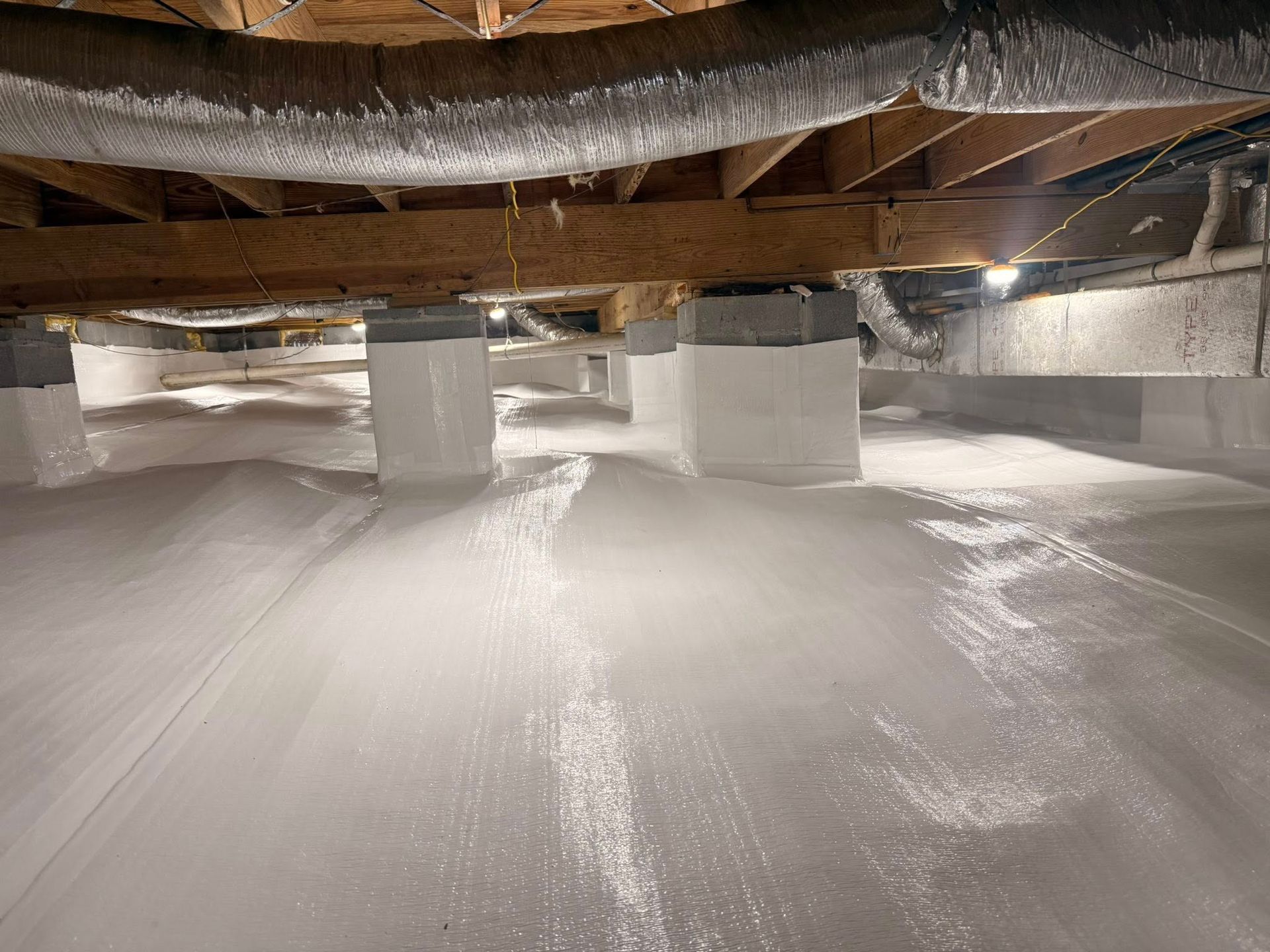
If you've got crawl space problems in Mahomet, you're not alone. I see the same issues in home after home across town—from Lake of the Woods to downtown to the newer subdivisions off Route 47.
Here's why: our heavy clay soil doesn't drain. When it rains, water sits instead of flowing away. That water finds its way into your crawl space and stays there. Then our humid Central Illinois summers turn that moisture into mold and mildew. By July and August, unsealed crawl spaces are hitting 70-80% humidity.
Add in spring rains and snowmelt that overwhelm drainage systems, and you've got perfect conditions for crawl space problems.
I live two blocks from where I worked yesterday. I see these patterns everywhere because they're not random—they're tied to how Mahomet homes were built and what's under every house in town. The soil doesn't change. The weather doesn't change. But how your crawl space handles them depends entirely on when your house was built.
I Live Here Too—This Work Became Personal When My Wife Got Sick
My wife has an autoimmune disease. When she was diagnosed, I dove deep into indoor air quality because I wanted to do everything I could to keep her healthy at home.
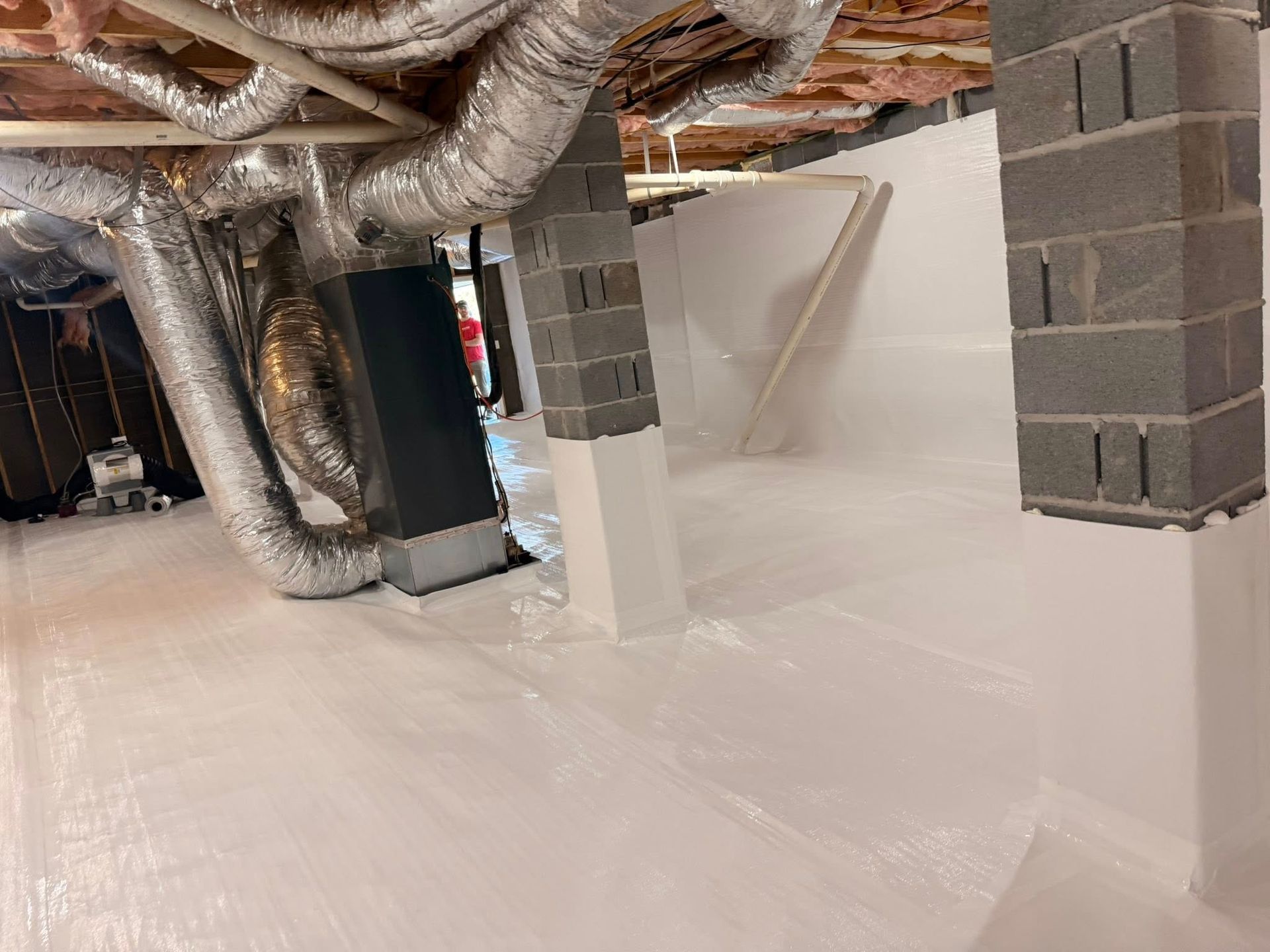
That's when the 50% statistic hit different. Half the air we were breathing was coming from our crawl space. If there was mold, moisture, or mildew down there, we were breathing it every day. I fixed our crawl space for the same reason I'll fix yours—because your family's health is on the line.
My background gives me an advantage most crawl space companies don't have. Years in HVAC, then foundation work, now running My Guys. I see connections others miss. Last month I found an AC condensate line draining directly into a crawl space two streets over from my house. The homeowner had two other companies look at their moisture problem. Both missed it completely.
When I inspect your crawl space, I'm looking at your HVAC system, your plumbing, your drainage, your structure—all of it. One inspection. All the problems. All the solutions.
What's Probably Happening Under Your Home
I can usually predict what's wrong before I even get under your house. All I need to know is when it was built. Homes from different eras have different problems because building practices changed, codes changed, and our understanding of crawl spaces changed.
Before 1950
Built 1950-1980
Built After 1980
These are the beautiful older homes in downtown Mattoon. Stone or brick foundations. Character and craftsmanship you don't see in newer homes. But crawl spaces were an afterthought. Most have crawl spaces that are barely crawlable—maybe 18 to 24 inches of clearance. Access is usually through a small hatch inside the house.
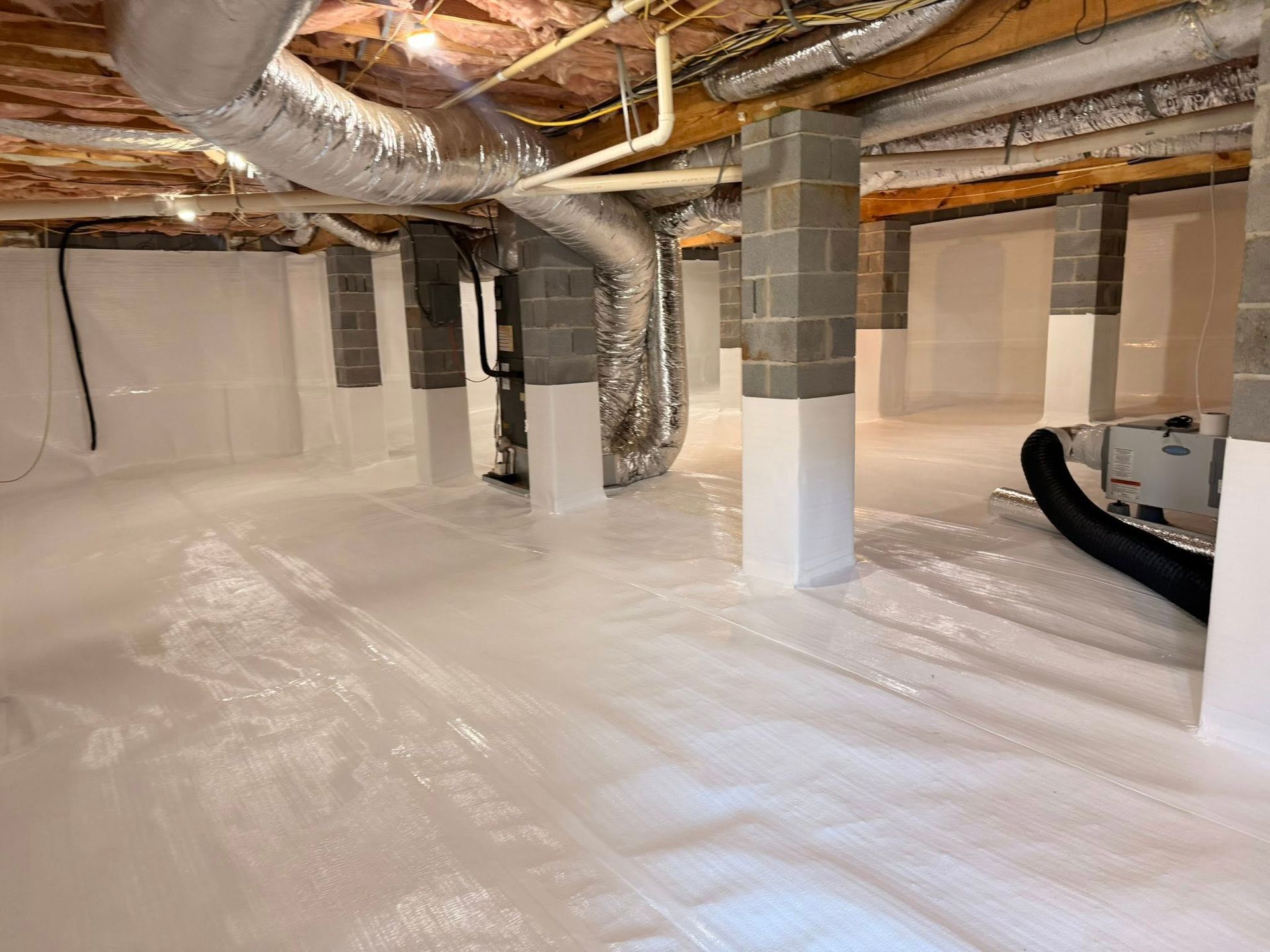
Here's what I always find: no vapor barrier at all. Just bare dirt. Ground moisture constantly evaporates up into your floor joists. That's where the mold comes from—and that musty smell you can't get rid of.
Your floors are cold in winter because there's no insulation. Or if there is, it's old fiberglass that's falling down and doing nothing.
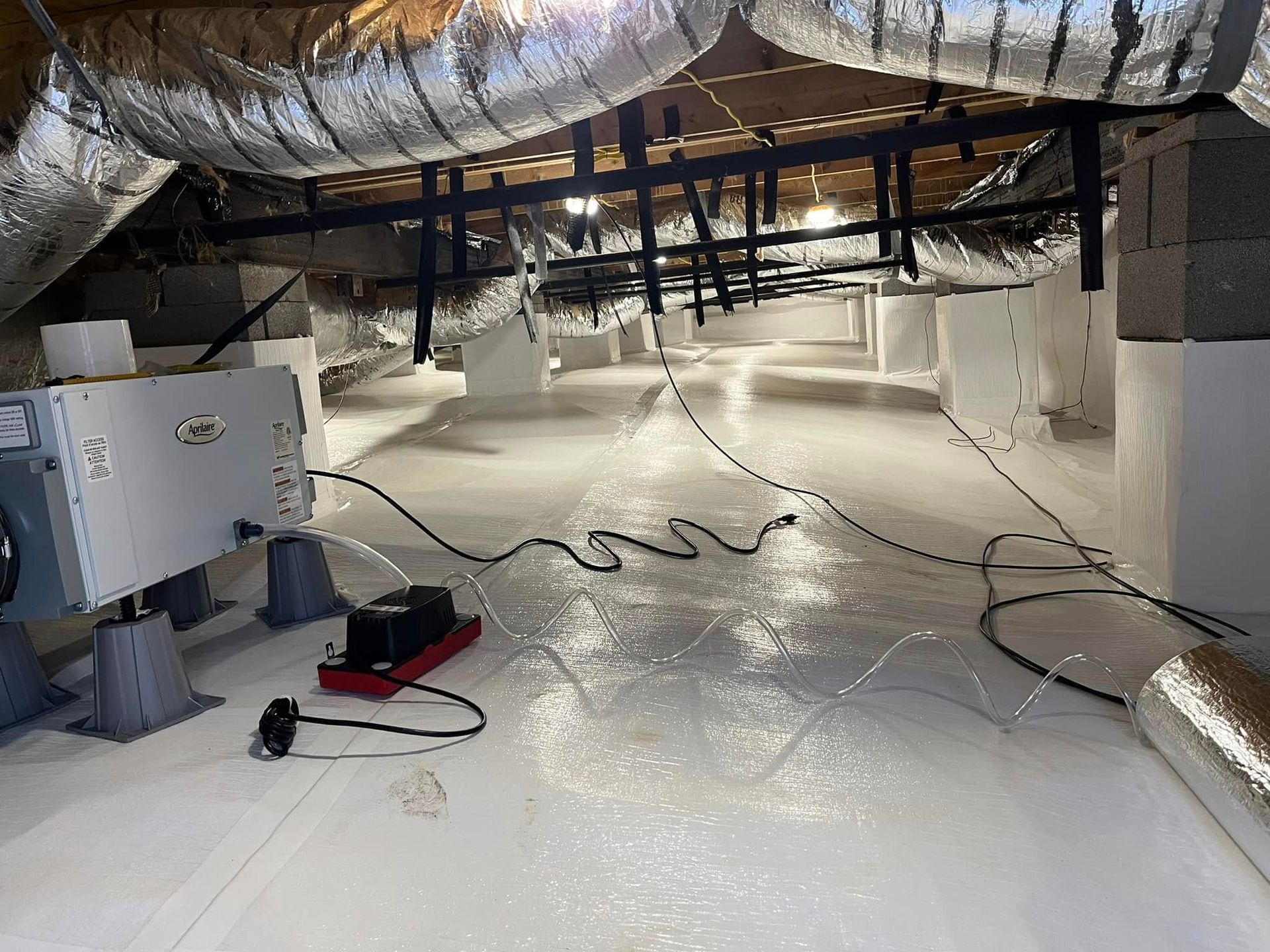
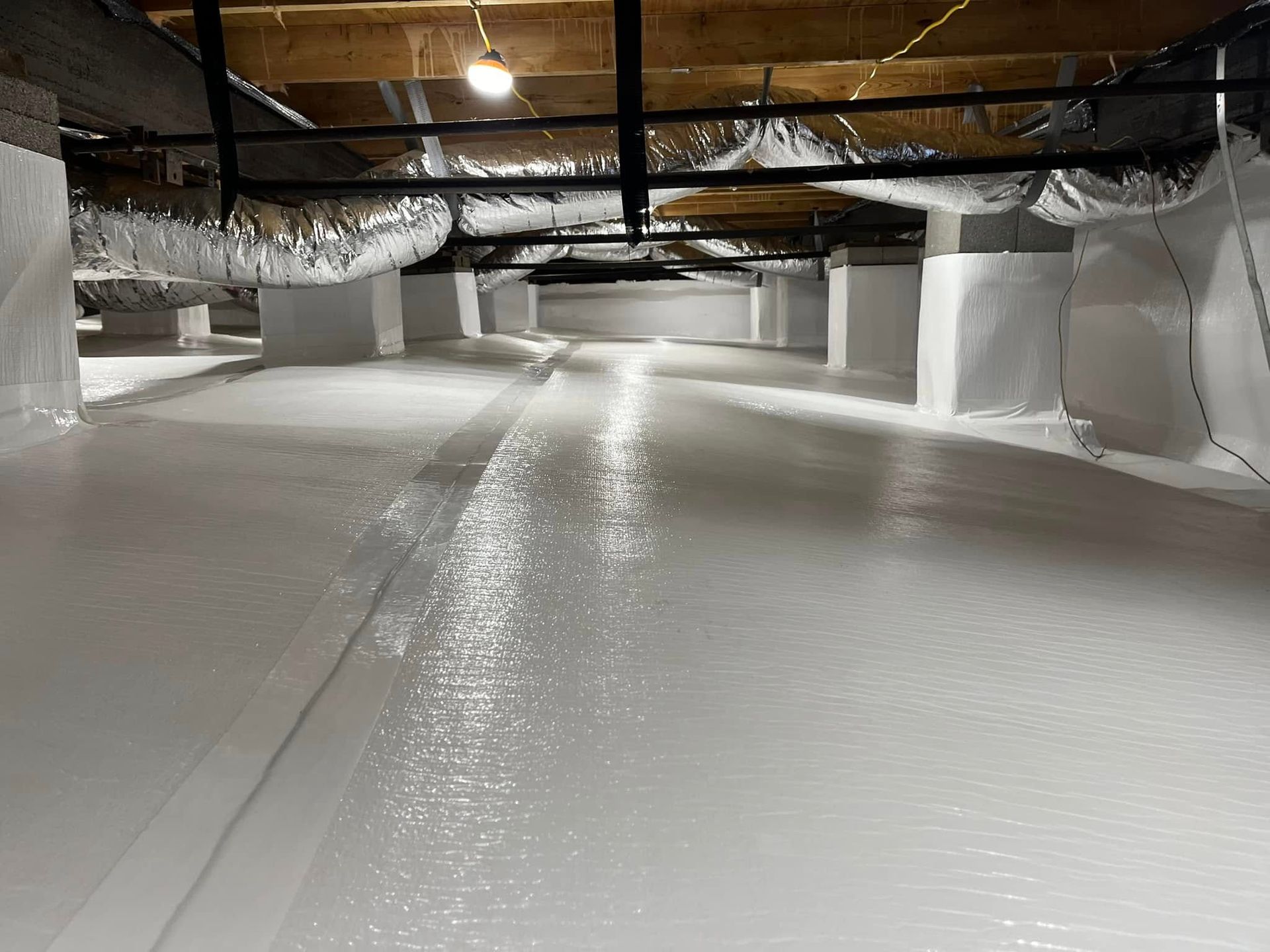
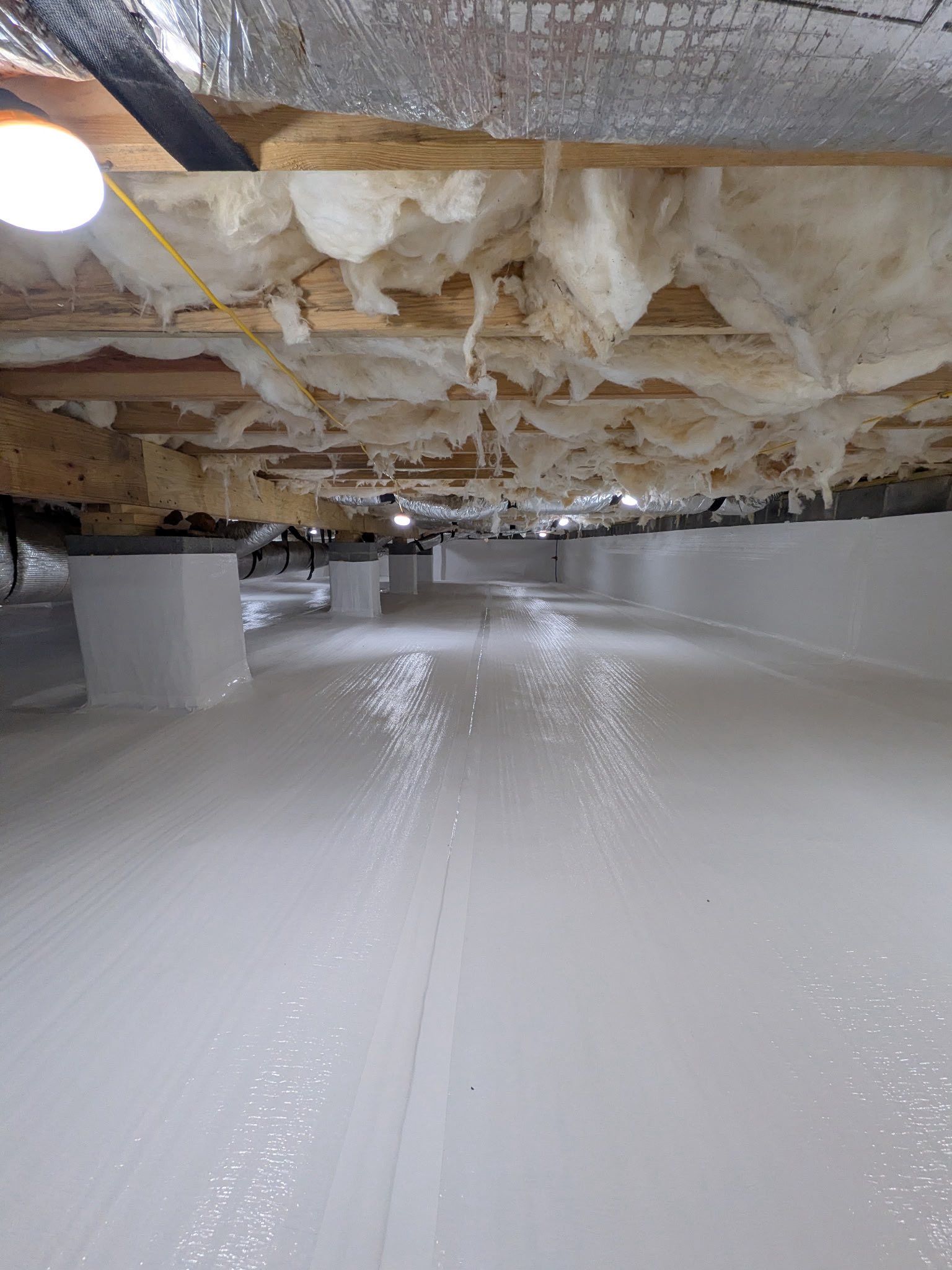
These homes weren't built wrong for their time—they just weren't built with what we now know about crawl space health. The good news? These problems are fixable. Drainage if there's standing water. A heavy-duty vapor barrier that's actually sealed and secured. A dehumidifier to control humidity year-round. Sometimes structural support if joists have sagged.
If Your Home Was Built Before 1950 (Downtown and Historic Areas)
This is when Mattoon grew significantly. The north side neighborhoods, the west side expansion—most of Mattoon's housing stock comes from this era. Concrete block foundations and vented crawl spaces.
Here's what I always find: bouncy floors, especially in kitchens and bathrooms. You walk across the room and the floor gives. Dishes rattle in cabinets. Cracks forming in drywall. That's because homes from this era typically have 2x8 floor joists spanning 13 feet or more. Not enough support for a kitchen with cabinets, appliances, and people walking around.
Then there's the insulation. I pull out dozens of feet of nasty fiberglass—falling down, soaking wet, or pulled apart by rodents. It's not doing anything. And the humidity is always high in summer. Those vents that were supposed to help? They're making it worse. They let in Mattoon's humid summer air, which condenses on cool surfaces in your crawl space. Perfect conditions for mold.
Why? Building codes back then weren't as strict. Vented crawl spaces were considered best practice. We now know they do the opposite in humid climates.
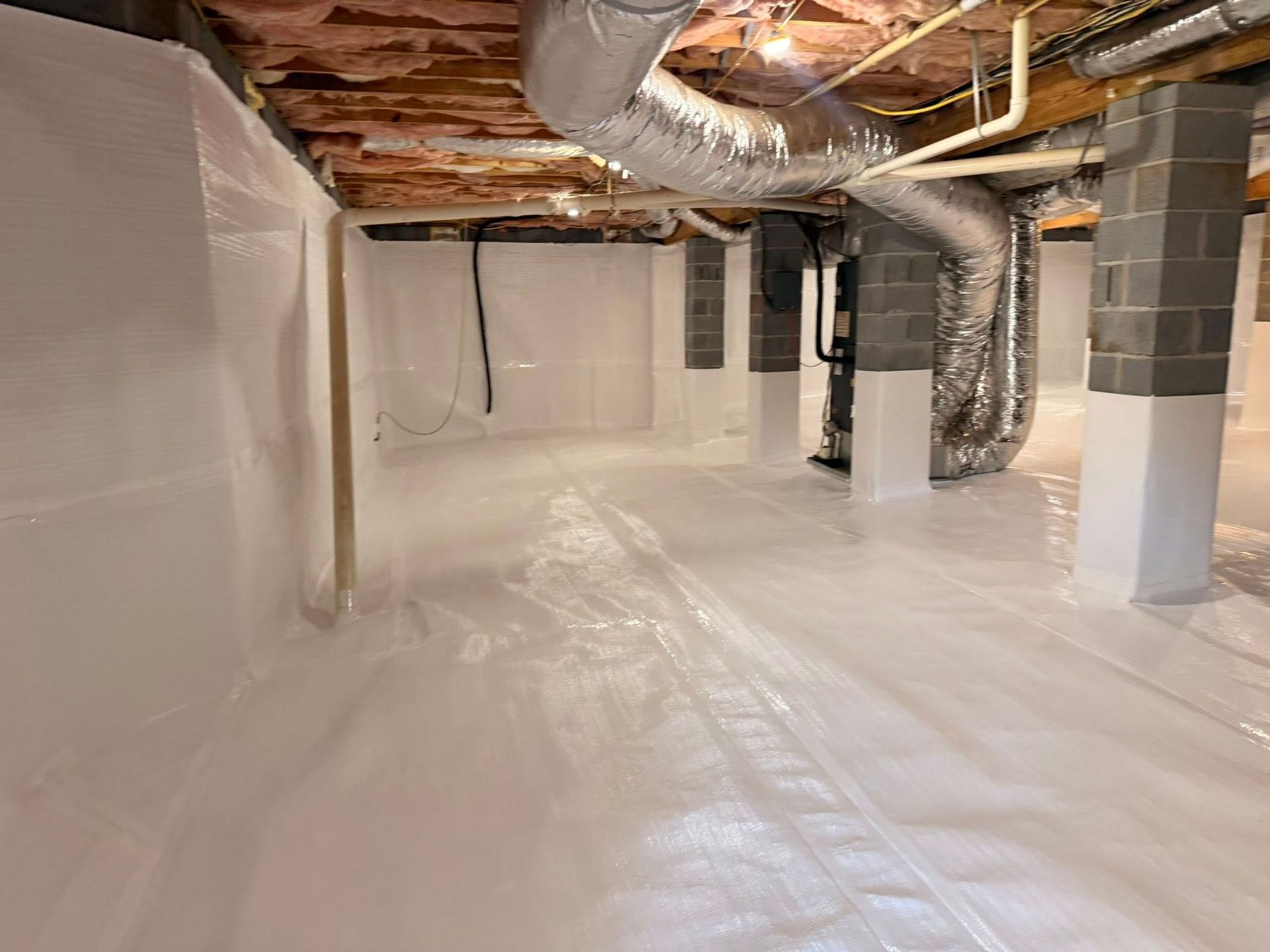
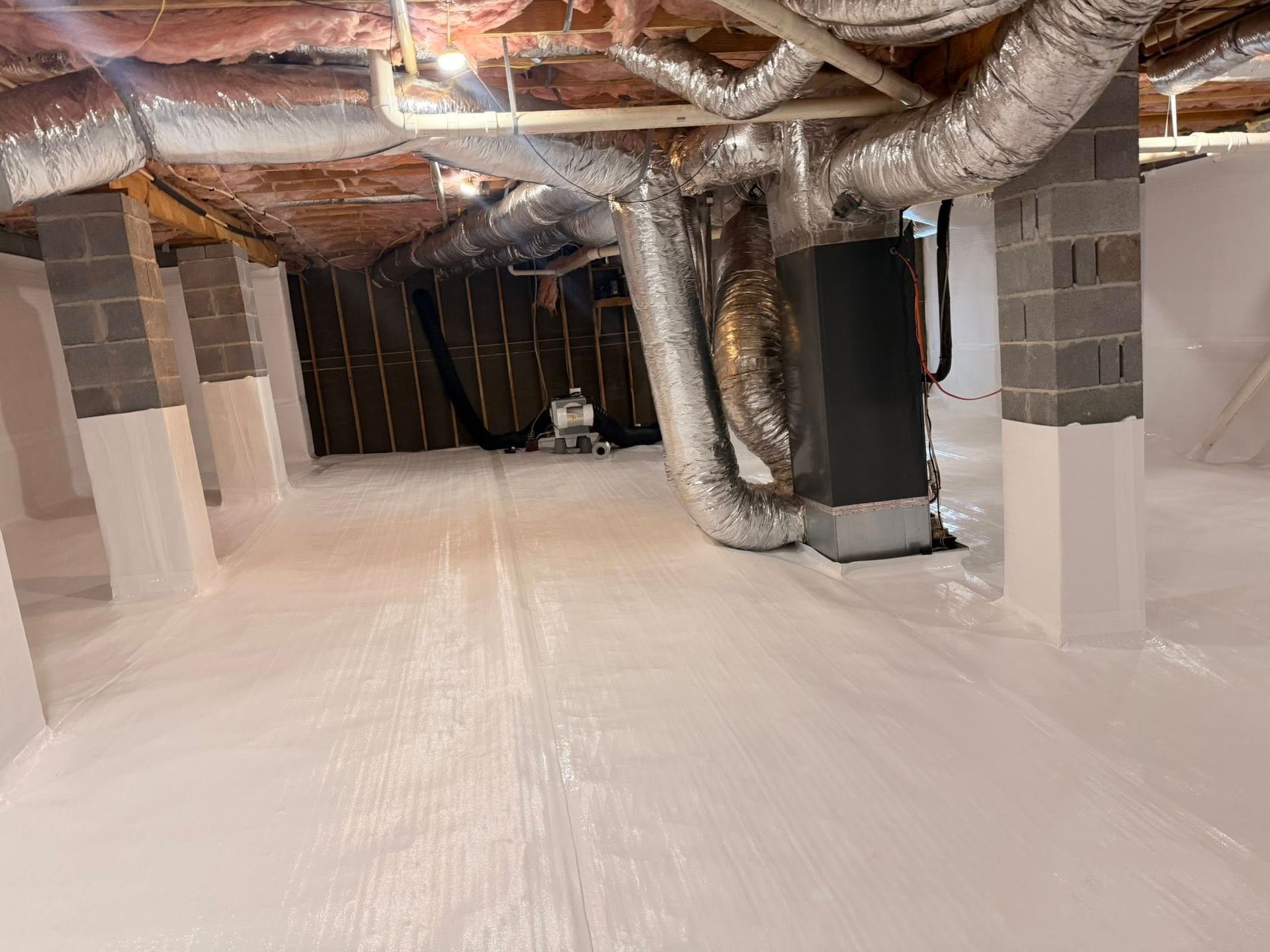
Here's what fixes it: seal the vents, install structural support for sagging floors, address moisture with drainage or sump pumps, then install a dehumidifier. Remove that old fiberglass and install proper rim joist insulation.
If Your Home Was Built 1950-1980 (Most of Mattoon)
The newer homes in Mattoon—mostly on the west side—were built with better construction standards. Poured concrete foundations. Better materials. But newer doesn't mean immune to crawl space problems.
Many still have vented crawl spaces because that design persisted into the 2000s. Builders kept doing it because that's what they'd always done. I still find humidity problems in summer. Mold growth despite the home being relatively new. Energy efficiency issues—cold floors, high heating bills. Sometimes drainage issues from poor lot grading.
Why? Those vented crawl spaces still don't work, no matter how new the home is. Mattoon's humid summers overwhelm the ventilation.
The good news with newer homes is you usually don't need as much structural work. But you still need the same moisture control: seal the vents, install a dehumidifier, make sure you've got a proper vapor barrier.
If Your Home Was Built After 1980 (West Side Developments)
The Five Problems I See Most in Mahomet
Standing Water or Constant Dampness
Our clay soil won't let water drain away. After a heavy rain, dig down six inches in your yard—it's still wet three days later. That water has to go somewhere, and it usually ends up in your crawl space. Downspouts dumping water right at your foundation make it worse. If you're in a low-lying area near Sangamon River tributaries or drainage paths, you already know water is your main enemy.
Musty Smell You Can't Get Rid Of
That's mold growing on your floor joists from high humidity. Here's what makes it worse: about 50% of the air in your home comes up from your crawl space. You're breathing those mold spores upstairs. Our July and August humidity creates perfect conditions for growth. If you smell it in your living room, it's bad in your crawl space.
Bouncy or Sagging Floors
Walk across your kitchen and the dishes rattle in the cabinet? That's undersized floor joists in older homes, or moisture damage that's weakened your floor framing over time. I see this constantly in pre-1980 homes where 2x8 joists are spanning too far.
High Humidity Even With a Dehumidifier Running
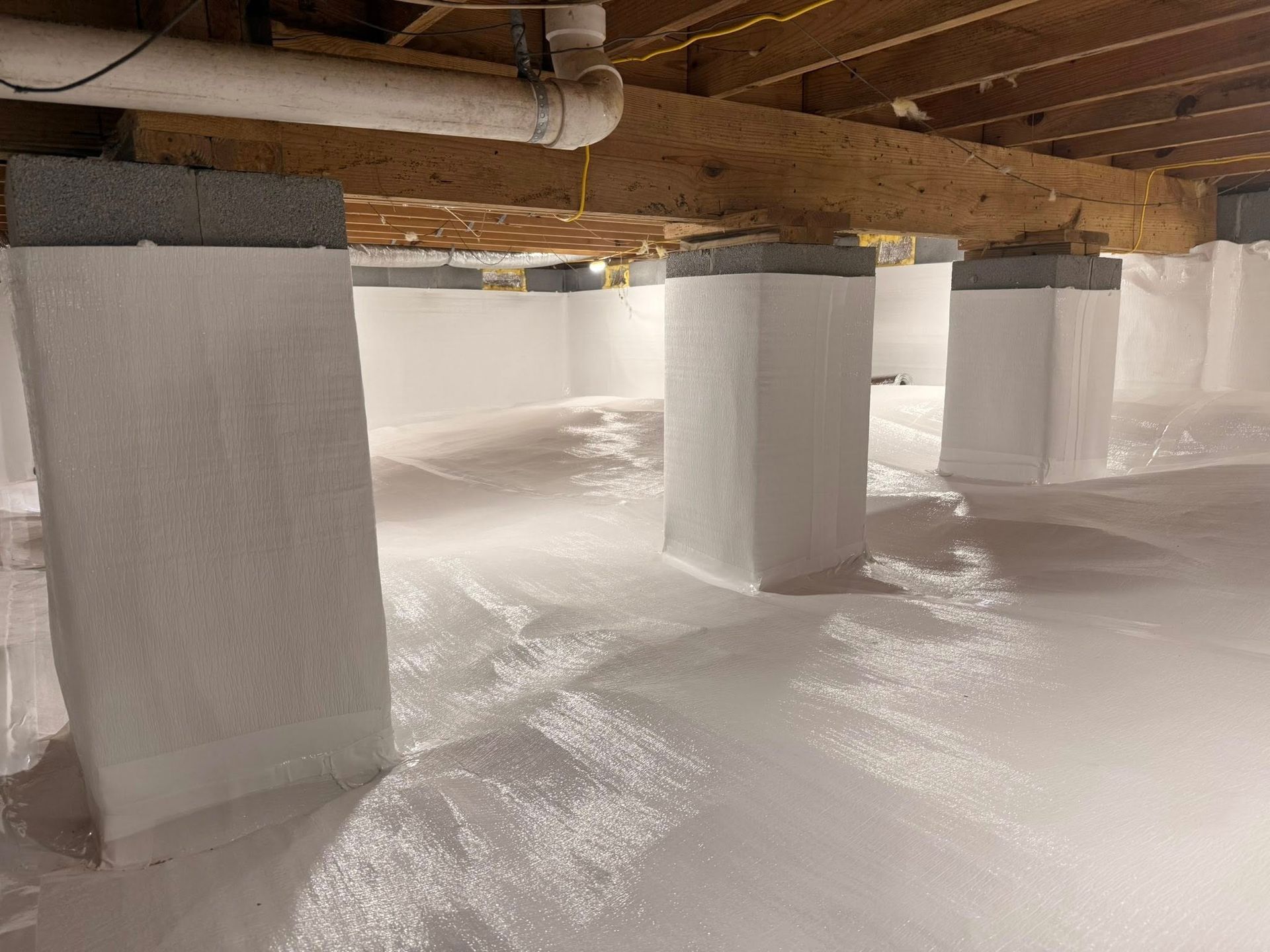
If your crawl space has open vents, they're making things worse by letting in humid outside air. Your dehumidifier is fighting a losing battle if your crawl space isn't properly sealed. No vapor barrier or an inadequate one means ground moisture keeps evaporating up into the space.
HVAC and Plumbing Issues Making Everything Worse
AC condensate lines draining directly into crawl spaces. Slow plumbing leaks going unnoticed for months. Ductwork problems from moisture damage. My HVAC and plumbing background means I catch these issues when crawl space-only companies walk right past them.
Where You Live Tells Me What You're Fighting
Near Lake of the Woods
Higher water table here. Spring flooding patterns are predictable. Most of these are older homes with foundations that have settled over the decades.
Downtown and Established Neighborhoods
Pre-1980 construction dominates. Undersized floor joists are the norm. Foundations have shifted as our clay soil expands and contracts over 40+ years.
Route 47 Developments
Newer construction but rapid development meant some grading shortcuts. Builder materials that met code but are failing earlier than expected. Drainage issues showing up within 5-10 years.
Low-Lying Areas
If you're anywhere near a creek, drainage ditch, or in the floodplain, water is your constant problem. Gravity works against you—water flows to the lowest point, and that's you.
Why Mahomet Homeowners Choose My Guys
We Live Here
You'll see me at County Market or at a Bulldogs game. Chris and I have lived in Mahomet our entire lives. We're not a national franchise that's here today and gone tomorrow. Our reputation in this community is everything to us.
I Know Mahomet Homes
I've been in hundreds of crawl spaces across town. I know which neighborhoods have which problems. I know what decade had what construction issues. I spent years in HVAC, then foundation work, now running My Guys. That background means I understand how everything under your house connects.
I See What Others Miss
My HVAC background catches condensate line problems and ductwork issues. My plumbing background catches leaks. My foundation experience means I understand the structural implications of what I'm seeing. One inspection covers everything—you won't need to call three different contractors.
We Actually Answer Our Phone
Call us and Chris or I will answer personally. No phone trees. No waiting three days for a callback. When you have a problem, you need someone now.
Our Values Guide Our Work
Our faith guides how we treat people. You win first, we win last. If you don't need something, we won't sell it to you. We're okay making less money if it means doing right by you.
The Real Cost of "Living With It"
Every month you wait, the problem gets worse and more expensive.
That small damp spot becomes standing water. Standing water becomes mold. Mold affects your family's health through the air you breathe. Meanwhile, moisture is rotting your floor joists and beams.
I've seen what happens when homeowners wait. Soft floors turn into sagging floors. Sagging floors turn into structural damage. What would cost $4,000 to fix today becomes a $15,000 floor framing replacement in three years when you're forced to deal with it during a home sale.
Your energy bills keep climbing because your HVAC system is fighting moisture and temperature loss. You're running dehumidifiers 24/7. You're buying air fresheners that don't work.
And if you're selling? Home inspectors flag crawl space moisture immediately. Buyers either walk away or demand you fix it under pressure with no time to shop around.
I've seen the major floor framing replacements. You don't want to go there.
Let's Find Out What's Actually Happening Under Your Home
You probably recognized your house somewhere in this article. Now let's confirm what's actually there and fix it.
I'll come do a thorough inspection with video documentation so you can see exactly what I'm seeing. You'll get same-day findings and clear recommendations. No pressure, no games—just honest answers about your specific crawl space.
I've probably fixed this exact problem within a few blocks of your house. Let me show you what we found and how we solved it.
Call us or fill out the form below. Chris or I will answer personally.