How Your Crawl Space Affects the Air You Breathe
The Air Connection You Probably Didn't Know About
Out doing Sunday chores this weekend, and one of them was taking care of our chickens. We keep a few for fresh eggs—good protein, good cholesterol, all that.
But even with the coop door open and nice weather, it still smells in there. You know that enclosed space smell. Got me thinking about crawl spaces.
Here's something most homeowners don't realize: about 50% of the air you breathe in your home comes from your crawl space. Just like that chicken coop, your crawl space is an enclosed area. And if it's damp, musty, or full of mold, that air isn't staying down there.
It's coming up. Through your floors. Into your living room. Into your bedrooms.
That morning congestion you deal with? Those allergies that never quite go away? Might not be what you think. Might be coming from below.
How Air Actually Moves Through Your Home
Your house works on something called the stack effect. Warm air rises. As it does, it creates negative pressure on the lower levels. That pressure pulls air up from your crawl space.
Every gap in your flooring, every unsealed rim joist, every penetration where your HVAC ducts or plumbing pipes come through—those are all pathways for air to move from your crawl space into your living space.
It's not a separate system. Your crawl space and your first floor share the same air. They're connected.
Think about where your HVAC return vents are. A lot of them pull air from near the floor. So they're literally sucking up whatever's coming from the crawl space and distributing it throughout your entire house.
This happens 24/7. While you're sleeping, while you're cooking dinner, while your kids are playing on the living room floor. Air is constantly moving from below to above.
And if what's below is full of moisture, mold, or deteriorating materials, that's what you're breathing.
What's Actually in That Crawl Space Air
So what exactly is coming up from an unsealed crawl space?
First, there's moisture. Ground moisture seeps up through dirt floors. Humidity condenses on your HVAC ducts. Water vapor comes through foundation walls. All of that moisture creates the perfect environment for mold and mildew to grow.
Mold releases spores. Those spores are light enough to float in the air, and they come right up through your floors into your home.
Then you've got dust mites. They love damp, humid environments. Your crawl space is basically a breeding ground if it's not properly sealed and dehumidified.
Add in deteriorating materials—old vapor barrier breaking down, decaying wood from moisture damage, fiberglass insulation that's fallen and gotten wet. All of it releases particles into the air.
And that musty smell? That's not just unpleasant. It's telling you something is actively breaking down or growing down there.
Here's the thing: these aren't just "crawl space problems." They're indoor air quality problems. Because all of that—the mold spores, the dust mite waste, the particles from deteriorating materials—is making its way upstairs.
It shows up as the dust you can never quite get rid of. The allergies that seem worse at home than anywhere else. The respiratory issues that won't go away no matter how many air purifiers you buy.
The source isn't your living room. It's underneath it.
The Health Symptoms Most People Don't Connect
We get calls from homeowners all the time who've been dealing with the same issues for years.
They wake up congested every morning. Not sick, just stuffy. It clears up during the day, then comes back the next morning. They think it's allergies or just "the way their sinuses are."
Or their kids have asthma that seems worse at home. They've changed the HVAC filters, bought HEPA purifiers, even had the ducts cleaned. Nothing really helps.
Some people notice they're constantly dusting, but the dust comes back almost immediately. Or there's a smell they can't quite identify—not strong, just always there in the background.
Here's the pattern: these symptoms are worse at home. Better at work, better when they travel. But at home, they're constant.
Nobody ever thinks to check the crawl space. Why would they? It's under the house. Seems unrelated.
But that's where about half your air is coming from. And if the conditions down there are creating mold, dust mites, and airborne particles, those conditions are directly affecting your family's health.
We see it constantly in homes around Mahomet and Central Illinois. The connection is real.
What Proper Crawl Space Sealing Actually Does
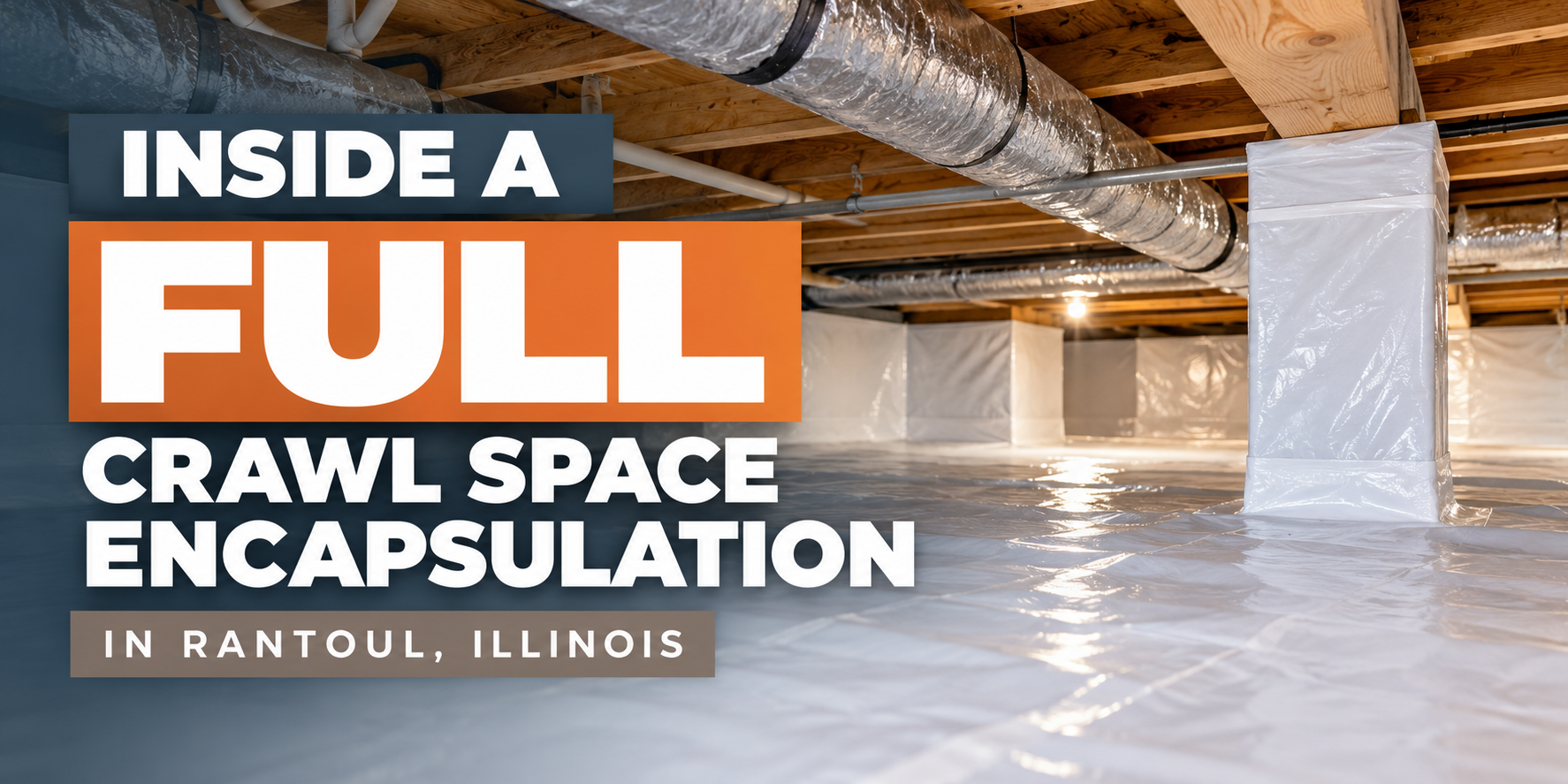
When we do a full encapsulation, we're not just trying to keep water out. We're creating a sealed system that protects your indoor air quality.
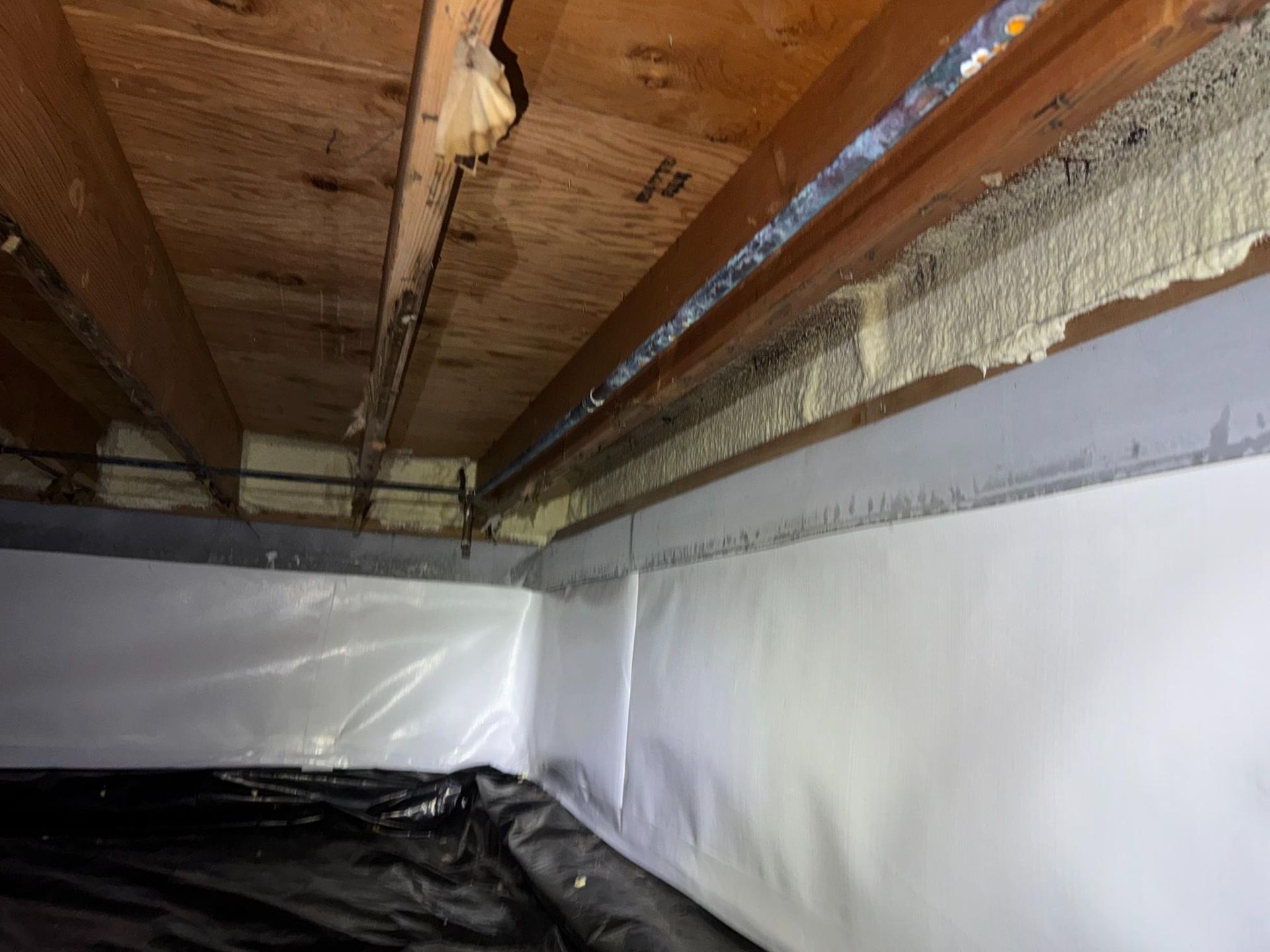
First, we seal all the rim joists—that's where your foundation meets your floor framing. It's one of the biggest pathways for air to move from the crawl space into your home. We use closed-cell spray foam to completely seal those gaps.
Then we address every floor penetration. HVAC ducts, plumbing pipes, electrical lines—anywhere something passes from the crawl space up into your house, we're sealing it. No gaps, no pathways for air to sneak through.
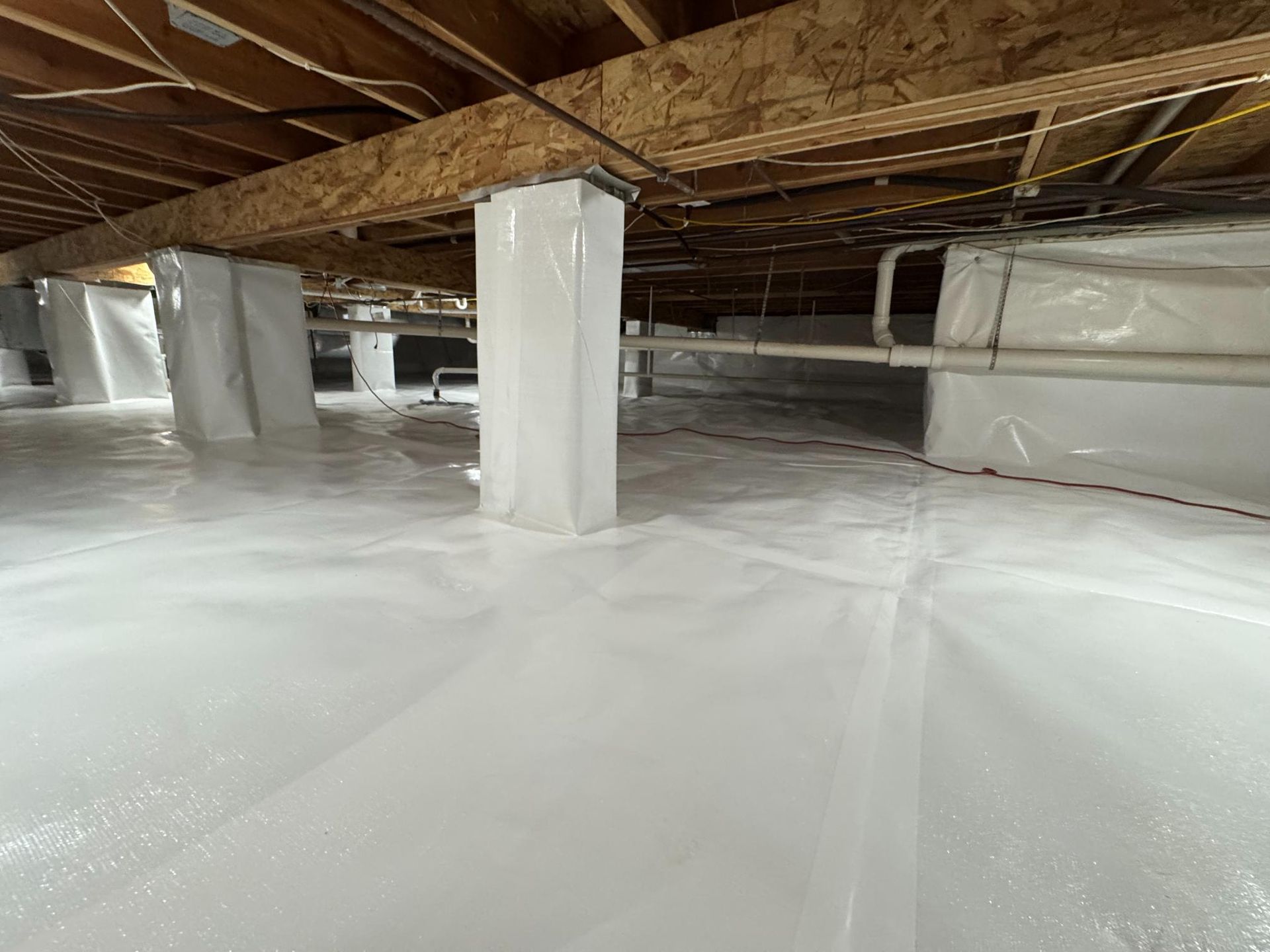
We install a heavy-duty vapor barrier across the entire crawl space floor. This isn't the thin plastic you see at hardware stores. It's fiberglass-reinforced polyethylene designed specifically for crawl space encapsulation. It blocks ground moisture from evaporating into the air.
Next, we install a commercial-grade dehumidifier. Even with everything sealed, you need active humidity control to keep the space dry year-round.
The result? No more moisture coming up from the ground. No more humid air leaking through gaps. No more mold growth. No more musty smells.
And upstairs? Cleaner air. Because when you eliminate the source of contamination below, you're protecting the air quality throughout your entire home.
Every detail matters. Every gap we seal is one less pathway for bad air to reach your family.
Why We're So Serious About Every Detail
My wife has ulcerative colitis, an autoimmune disease. A few years back, I went down a deep dive learning about indoor air quality and how it affects health—especially for someone dealing with a condition like hers.
That's actually what got me so focused on crawl space work in the first place. I learned that a sealed, dehumidified crawl space dramatically improves the air quality throughout your entire home. It's not just theory. I saw the difference it made.
So when I talk about sealing every rim joist and addressing every penetration, I'm not being picky for the sake of it. I know firsthand how indoor air quality affects someone's daily life. Their energy. Their ability to just feel good in their own home.
This work matters beyond just construction. It's about protecting your family's health.
Chris and I live here in Mahomet. We're not disappearing to some corporate office after we finish your job. We're your neighbors. And we treat every crawl space like it's affecting someone we care about—because it is.
When it's our name on the work, we make sure it's done right.
What to Look For in Your Own Home
Here are some signs your crawl space might be affecting your air quality:
You notice a musty smell, especially on humid days or in certain rooms.
You or your family members wake up congested regularly, even when nobody's sick.
Allergies or asthma symptoms seem worse at home than elsewhere.
There's constant dust buildup no matter how often you clean.
You can feel humidity in the air, especially in the summer.
If any of these sound familiar, it's worth getting your crawl space inspected. We'll check humidity levels, look for moisture sources, and identify where air is moving from the crawl space into your home.
A good inspection includes photos, humidity readings, and a clear explanation of what's happening and why. No pressure, no gimmicks. Just honest information so you can make the right decision for your home.
Book A Free Inspection Now
Your crawl space problems aren't going to fix themselves. But they are fixable. Let's get it done — the right way, permanently.
Or call us directly (217) 863-9559
Breathe Easier—Starting from the Bottom Up
If you're dealing with air quality issues, constant allergies, or just want to know what's actually happening under your house, give us a call.
We'll come out and do a thorough crawl space inspection. We'll show you exactly what we find, explain how it's affecting your home, and walk you through what proper sealing would involve.
No pressure. Just Chris or me giving you honest answers.
Because healthier air starts with a healthier crawl space.