It Can Actually Rain Inside Your Crawl Space - Here's How
When Your Ductwork Starts Raining
I'm over in Danville today doing an assessment for a customer we've worked with before on the handyman side. Got down in his crawl space and found something a lot of homeowners don't realize is even possible.
Water. Pouring off the ductwork.
Not a leak. Not a plumbing problem. Just condensation—so much of it that when I ran my hand across the bottom of the ducts, water literally streamed off.
Most people think crawl space moisture only comes from outside. Rain getting in through vents. Water seeping through the foundation. Downspouts dumping water too close to the house.
But humidity can get trapped in your crawl space and create its own weather system. When that happens, it can actually rain inside your crawl space. And that's exactly what's been happening here.
What's Actually Happening in This Crawl Space
Stand under this ductwork with me for a second. You can see the water droplets forming on the metal. Get closer, and it's even more obvious. I run my hand across it, and water just pours off like I'm wringing out a sponge.
Here's what's going on: the air conditioner is running, cooling down this metal ductwork. The crawl space air is warm and humid. When that humid air hits the cold metal, condensation forms. Same thing that happens on a cold glass of water on a hot summer day.
Except this isn't a few drops on a glass. This is constant moisture dripping onto whatever's below.
This customer used to have a vapor barrier down here. All that condensation was dripping onto the plastic with nowhere to drain. Just sitting there. Creating the perfect environment for mold.
The mold problem got bad enough that he pulled the vapor barrier out himself. Which solved the mold-on-plastic issue but didn't solve the actual problem—all that moisture is still here. It's just dripping straight onto the ground now instead.
The Two Moisture Sources at Work Here
This crawl space has two separate moisture problems feeding each other.
The first one is pretty obvious once you know what to look for. See that downspout outside? It's dumping water right against the foundation. And this foundation is porous brick—you can actually see where the moisture's coming through.
Look at the sidewall here. Ground level is about right there. Notice how the brick color changes? Darker where the ground meets it. That's moisture traveling through the brick and into the crawl space.
It gets worse in the corners where two walls meet. More surface area for water to push through. More brick soaking it up. That water comes inside and just stays in the air.
The second source is that trapped humidity turning into condensation. All that moisture in the air—whether it's coming through the foundation, up from the ground, or just hot summer air getting in through the vents—it has nowhere to go in an unsealed crawl space.
Then your AC kicks on. Cools down the ductwork. And suddenly all that humidity in the air is condensing on cold metal and raining down.
The two sources feed each other. Water intrusion creates humidity. Humidity creates condensation. Condensation creates more moisture. And the cycle keeps going until you address both problems, not just one.
Why One Fix Won't Solve Multiple Sources
Here's what happens when you only fix part of the problem.
Let's say you go outside and fix that downspout. Redirect it away from the house, regrade the soil, do everything right. Good move. But if your crawl space is still unsealed with vents letting in humid summer air, you're still going to get condensation on those ducts. You solved one source, but not the other.
Or maybe you replace the vapor barrier. Get rid of the moldy plastic, put down fresh material. Looks better. But if moisture is still coming through the foundation walls and humidity is still condensing on your ductwork, that new plastic is going to have the same problem eventually.
I see this all the time. Homeowners spend money on what seems like the obvious fix, and they're frustrated when the moisture problem comes back. It's not that the fix was wrong—it's that it was incomplete.
Crawl space moisture is almost never a single-source problem. Especially here in Central Illinois where we've got humidity, rain, older foundations, and homes that were built before anyone thought about crawl space science.
You've got to look at the whole system. Where is water getting in? What's trapping the humidity? What's creating condensation? What's allowing air exchange with outside?
Fix all of it, or you're just buying time until the next problem shows up.
What a Complete Solution Actually Looks Like
For this Danville crawl space, here's what we're recommending:
First, seal those crawl space vents. Right now they're letting in hot, humid outside air. That air is part of what's creating the condensation problem. Sealed vents mean controlled environment.
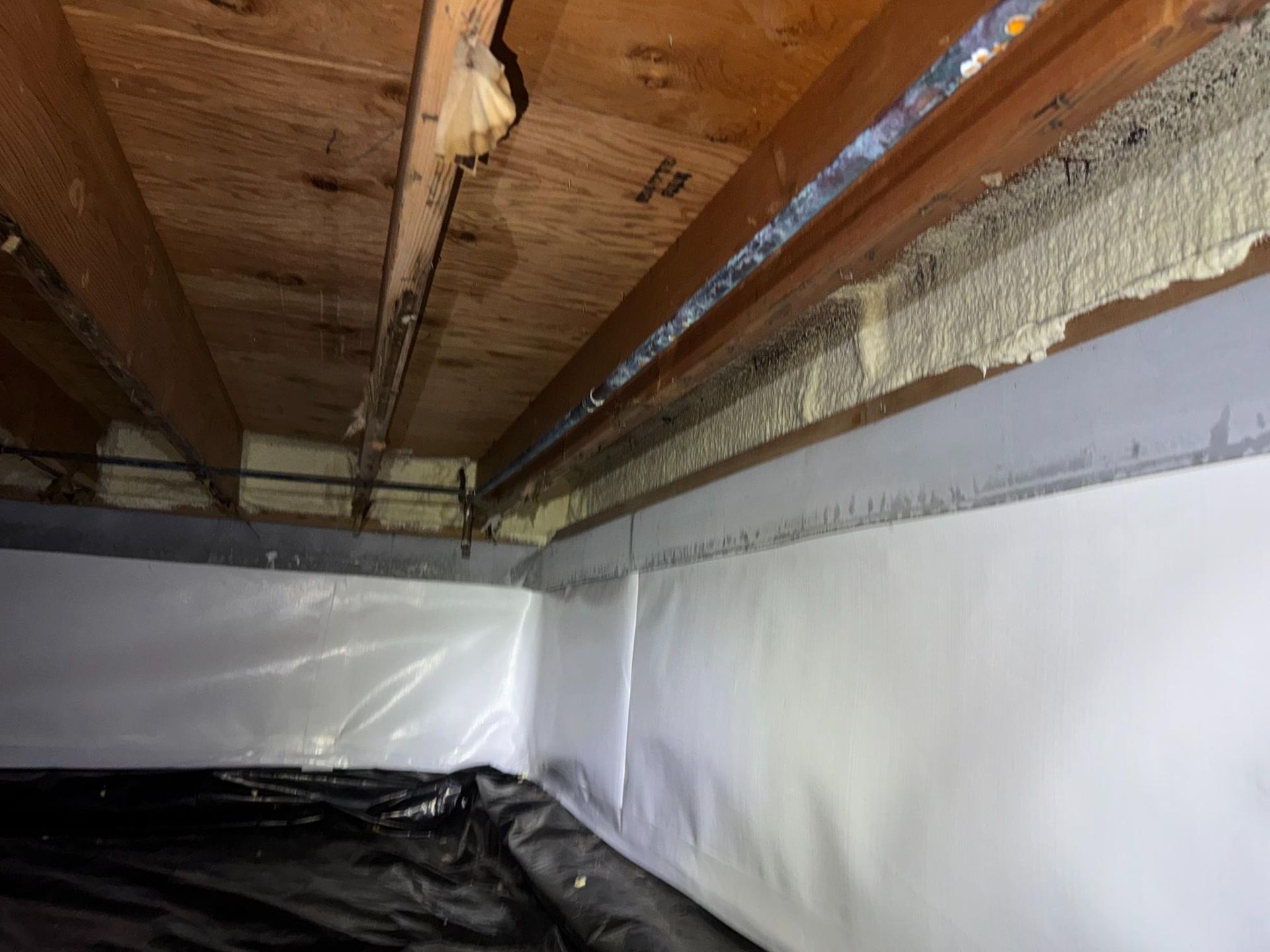
Next, spray foam insulation on all the rim joists. That's where your foundation meets your floor framing. It's a huge source of air leaks and heat transfer. Sealing it stops outside air from getting in and keeps your ductwork from getting as cold.
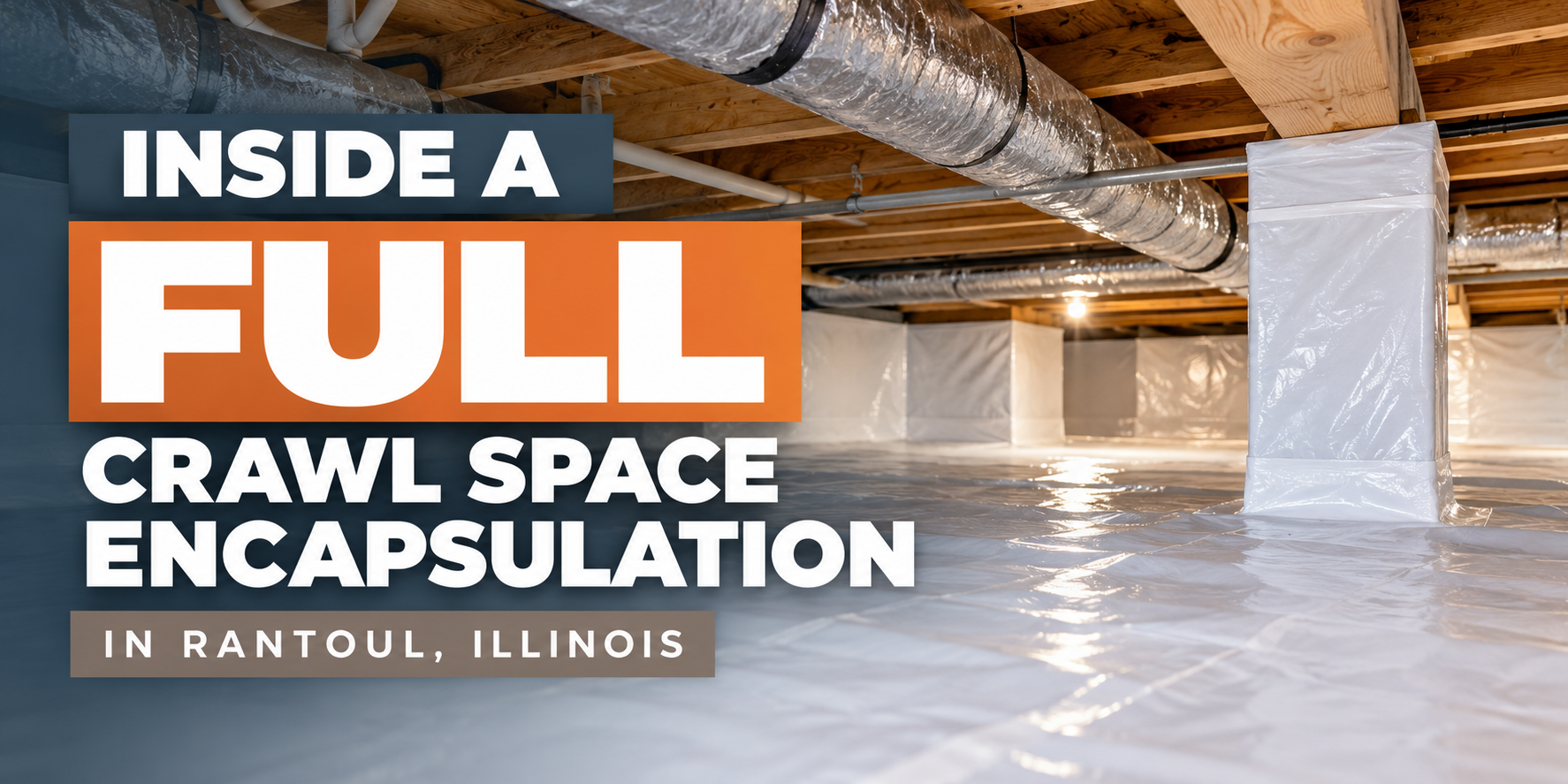
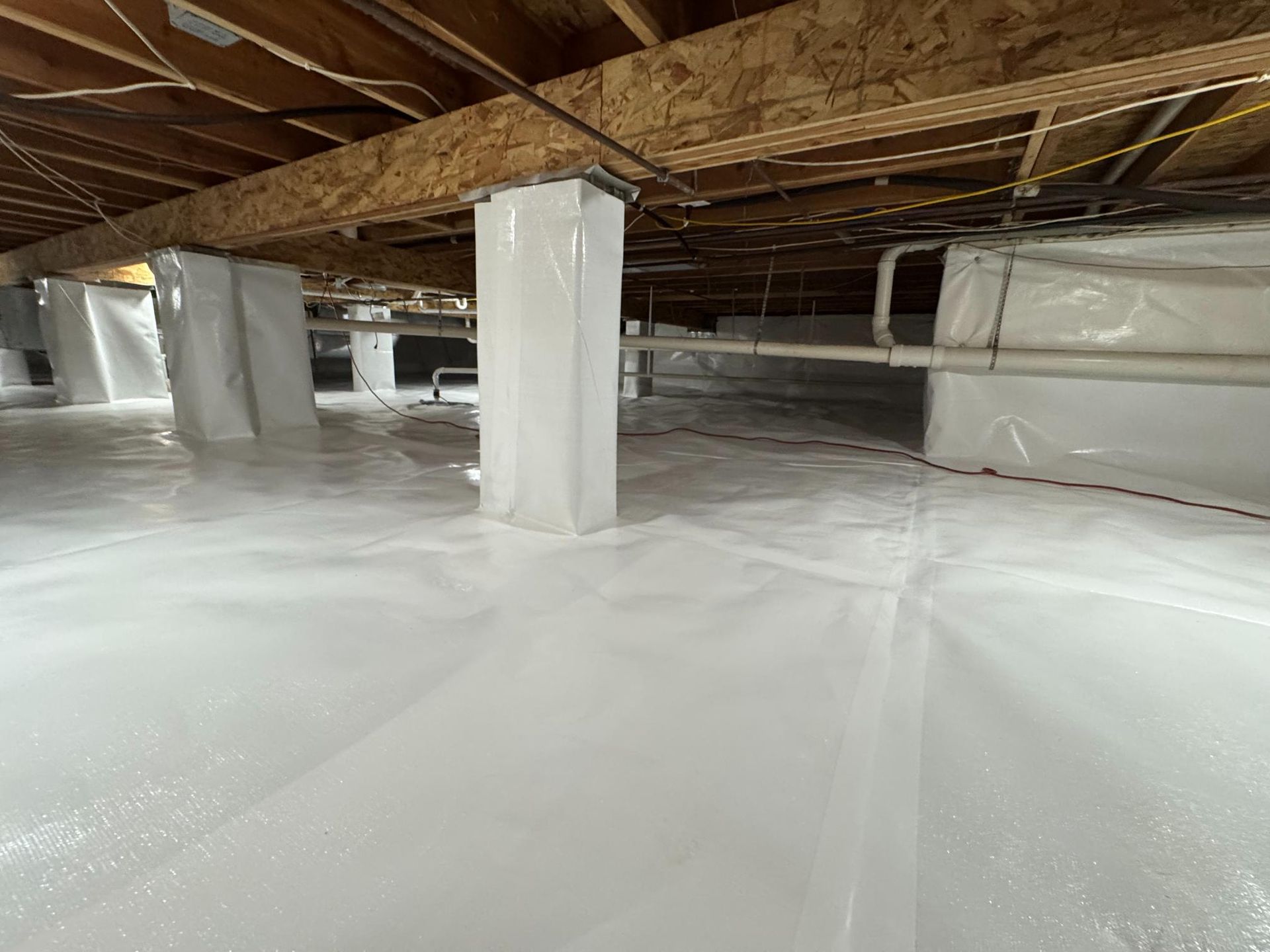
Then a proper encapsulation. Not just plastic on the ground—a sealed system on the floor and up the walls. Heavy-duty vapor barrier that's actually attached and sealed, not just laid down loose.
Install a dehumidifier designed for crawl spaces. This is the active control. Even with everything sealed, you need something managing the humidity level and keeping it where it should be.
And mold treatment where it's needed. Kill what's already growing before we seal everything up.
Each piece handles a different part of the problem. The encapsulation stops ground moisture. The sealed vents stop outside air. The spray foam stops air leaks and temperature transfer. The dehumidifier controls whatever humidity is left.
That's a complete system. Not a single fix. Not a band-aid. A solution that addresses every source and actually solves the problem long-term.
How to Know If You Have This Problem
Most people don't go in their crawl space. So by the time you notice something's wrong, the problem's usually been there for a while.
Here's what to watch for upstairs: musty smell that won't go away, even after cleaning. Allergies or respiratory issues that seem worse at home. Humidity that feels higher than it should, even with the AC running. Hardwood floors that are cupping or buckling.
If you do go in your crawl space, look for water on the bottom of your ductwork. Condensation dripping off pipes. Damp or wet insulation. Mold growing on wood or plastic. A smell that hits you as soon as you open the access door.
But honestly, you shouldn't have to wait until it's obvious. A moisture meter will tell you what's happening before you can see or smell it. We check humidity levels, temperature, moisture content in the wood—real numbers that show what's going on.
Here in Central Illinois, our climate makes crawl space humidity worse. Hot, humid summers. Homes built before moisture control was a thing. If your house is more than 20 years old and you've never had the crawl space assessed, it's worth checking.
Our Approach in Danville and Throughout Central Illinois
When we do an assessment, we're not looking for one problem to fix. We're looking at the whole picture.
Where's the water coming from? Is it ground moisture, foundation intrusion, condensation, or all three? What's the humidity level? What's the temperature difference between your crawl space and your ducts? Are the vents sealed? Is there insulation, and if so, is it doing anything useful?
We measure all of it. Then we explain what we found and why it matters. No cookie-cutter solutions. No "every crawl space needs the same thing." Just an honest assessment of your specific situation.
This customer in Danville is someone we've worked with before on handyman jobs. He trusted us enough to call when he realized the crawl space was a bigger issue. That's how we operate—Chris and I are the ones you talk to, the ones who show up, the ones accountable for the work.
We're not a corporate crew passing through. We live here. Mahomet, Danville, all over Central Illinois. Our reputation is local, and it matters to us. When we say we're going to solve the problem, we mean all of it.
Book A Free Inspection Now
Your crawl space problems aren't going to fix themselves. But they are fixable. Let's get it done — the right way, permanently.
Or call us directly (217) 863-9559
Get a Complete Crawl Space Assessment
If you've noticed musty smells, higher humidity, or you just want to know what's actually happening under your house, give us a call.
We'll come out and do a thorough inspection. Moisture readings, humidity levels, thermal imaging if needed. We'll show you what we find—pictures, measurements, the whole story. Then we'll explain what it means and what we'd recommend to fix it.
No pressure. No gimmicks. Just Chris or me walking you through your crawl space situation and helping you understand your options.
Catching moisture problems early saves you money. Mold remediation costs more than prevention. Structural repairs cost more than proper encapsulation.
Reach out anytime. We're here in Mahomet, serving Danville and all of Central Illinois.