What We Found in This Tuscola Crawl Space (And Why Equipment Quality Matters)
The Rusted Sump Pump in a Five-Gallon Bucket
Hey, Chris here. We're down in Tuscola today looking at a crawl space, and I wanted to show you something that explains a lot about why this homeowner's been having moisture issues.
This is their sump pump. Or what's supposed to be their sump pump. It's literally just sitting in a five-gallon bucket, rusting away from the inside out.
Now, most homeowners never look at their sump pump. It's down in the crawl space, out of sight, doing its job—or at least that's what you assume. But when we opened this up, it was pretty clear this thing has been failing for a while. And it's probably causing more problems than it's solving.
This is why equipment quality matters in crawl space work. You can have the best encapsulation in the world, but if your drainage system is a rusted bucket, you're not protected.
What We Were Dealing With
Let me walk you through what we're looking at here.
Someone installed this sump pump by dropping it into a regular five-gallon bucket. No proper basin, no real structure, just a bucket you'd buy at the hardware store. And over time, that pump has been sitting in water—because that's what sump pumps do—and it's been rusting.
You can see the deterioration on the pump itself. The bucket's starting to crack. The whole setup is barely holding together.
Here's the thing: this pump is probably still running. It might turn on when water comes in. But it's not pumping efficiently anymore. It's working harder, moving less water, and creating a false sense of security.
Meanwhile, moisture is building up in this crawl space because the drainage system can't keep up. The homeowner has no idea because the pump hasn't completely died yet. It's just slowly failing—which is actually worse than a pump that quits outright, because at least then you know you have a problem.
This setup was probably installed to save a couple hundred dollars. And now it's costing way more than that in crawl space damage.
How Sump Pumps Fail (And Why You Don't Notice)
Here's what most people don't understand about sump pump failure: it doesn't happen all at once.
A sump pump doesn't just work perfectly one day and then completely quit the next. It deteriorates gradually. The motor starts working harder. It pumps a little slower. It takes longer to clear water out of the basin. Maybe it runs more often because it's not moving as much water per cycle.
But unless you're down in your crawl space regularly—and let's be honest, nobody is—you won't notice these small changes.
Meanwhile, moisture is building up. Your crawl space humidity is a little higher than it should be. There's standing water staying around longer after a rain. Your encapsulation is trying to do its job, but the drainage system that's supposed to support it is barely keeping up.
Then one day, during the next big storm when you actually need that pump to work, it finally quits. And by that point, you've already got damage happening. Higher humidity. Wet insulation. Floor joists that have been absorbing moisture for months.
The frustrating part? You paid someone to install a sump pump system. You thought you were protected. But because they cut corners on the equipment and installation, you were never really protected at all.
That's why we don't mess around with sump pump quality. When it fails, everything else fails with it.
What Proper Sump Pump Installation Looks Like
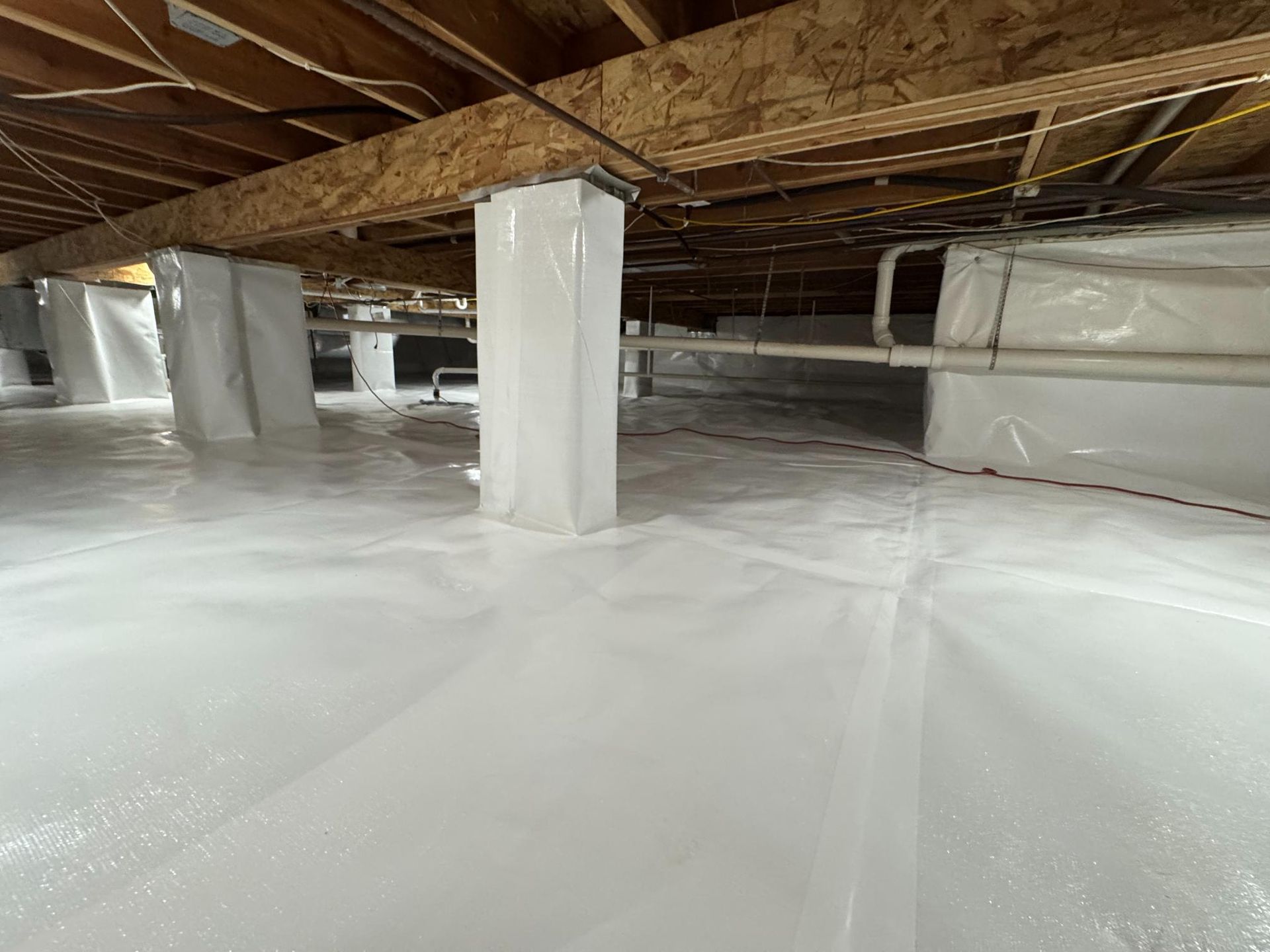
So what should a crawl space sump pump system actually look like?
First, you need a real sump basin—not a five-gallon bucket. A proper basin is designed to collect water, handle the pump's weight, and last for decades. It won't crack or deteriorate like a makeshift bucket setup.
The pump itself needs to be quality equipment rated for continuous use in wet conditions. We're not talking about the cheapest option at the hardware store. We're talking about pumps built specifically for crawl space drainage that can handle years of regular cycling.
You need proper discharge lines that actually route water away from your foundation. Not just dumping it right outside the crawl space where it'll seep back in. We're talking about getting that water far enough away that it's not your problem anymore.
Check valves are crucial too. They prevent water from flowing back down into the basin after the pump shuts off. Without them, your pump is doing the same work over and over.
And if you're in an area with power outages, a battery backup system isn't optional—it's necessary. Your sump pump needs to work during storms, which is exactly when the power's most likely to go out.
All of this should be accessible for maintenance and inspection. Because even good equipment needs to be checked occasionally.
That's the difference between a system that protects your home and a five-gallon bucket that's slowly rusting away.
Why Contractors Take These Shortcuts
So why do contractors install systems like this?
Honestly? It's usually about speed and cost. A proper sump pump system costs more and takes longer to install. A five-gallon bucket and a cheap pump? That's maybe an hour of work and a couple hundred dollars in materials.
Some contractors figure the homeowner will never look at it anyway. It's buried in the crawl space, out of sight. As long as it's "working" when they leave the job site, who's going to check back in a year to see how it's holding up?
And here's the problem: there's very little accountability in crawl space work. Most homeowners don't know what a proper installation looks like. They're trusting the contractor to do it right. And some contractors take advantage of that trust by cutting corners on the parts you'll never see.
It saves them money. It saves them time. It lets them move on to the next job faster.
But it costs you. Because when that cheap equipment fails—and it will—you're the one dealing with crawl space moisture problems all over again.
That's why we don't reuse old equipment or cut corners on installations. Your crawl space deserves better than someone's shortcut.
What This Means for Your Crawl Space
If you're getting floor support work done, here are some questions worth asking:
Are you evaluating the entire floor system, or just the spots I pointed out? A good contractor should be looking at everything, not just reacting to where you feel bounce.
What's causing the problem? If they can't explain why your floor is sagging—not just that it is—that's a red flag.
Where are you planning to put supports, and why there specifically? The answer should be more detailed than "under the bouncy spot."
Are you considering future loads? If you mention plans for heavy additions—aquariums, safes, tile work—and they don't factor that into the design, they're not thinking long-term.
And here's the biggest one: Will this fix prevent future problems, or am I going to be calling someone back in a year when a different spot starts sagging?
The cost difference between doing it right once and doing multiple repairs over several years is significant. More importantly, the stress on your floor system compounds over time if it's not properly addressed.
You want a solution, not a band-aid.
How to Check Your Own Sump Pump
You don't need to be an expert to do a basic sump pump check.
Go down to your crawl space with a flashlight. Find your sump pump. Look at the setup. Is it in a proper basin or something makeshift? Do you see rust on the pump or the components? Is there water sitting in the basin that's not getting pumped out?
Pour a bucket of water into the sump basin and watch what happens. The pump should kick on pretty quickly and clear that water out in less than a minute. If it's slow, struggling, or making weird noises, that's a problem.
Check it at least once a year. After heavy rains is a good time. Don't wait until you notice moisture problems upstairs—by then, the damage is already happening.
And if anything looks off, call someone to inspect it properly. A failing sump pump only gets worse.
Book A Free Inspection Now
Your crawl space problems aren't going to fix themselves. But they are fixable. Let's get it done — the right way, permanently.
Or call us directly (217) 863-9559
Get Your Crawl Space Equipment Inspected
If you're in Tuscola, Mahomet, or anywhere in Central Illinois and you're not sure about your crawl space equipment, give us a call.
We'll come out and do a thorough inspection. We'll check your sump pump, your drainage system, your encapsulation—everything. And we'll give you an honest assessment of what actually needs replacing versus what's still working fine.
No pressure, no gimmicks. Just Chris or Jeff telling you the truth about what's going on under your house.
Because your crawl space deserves equipment that actually works.