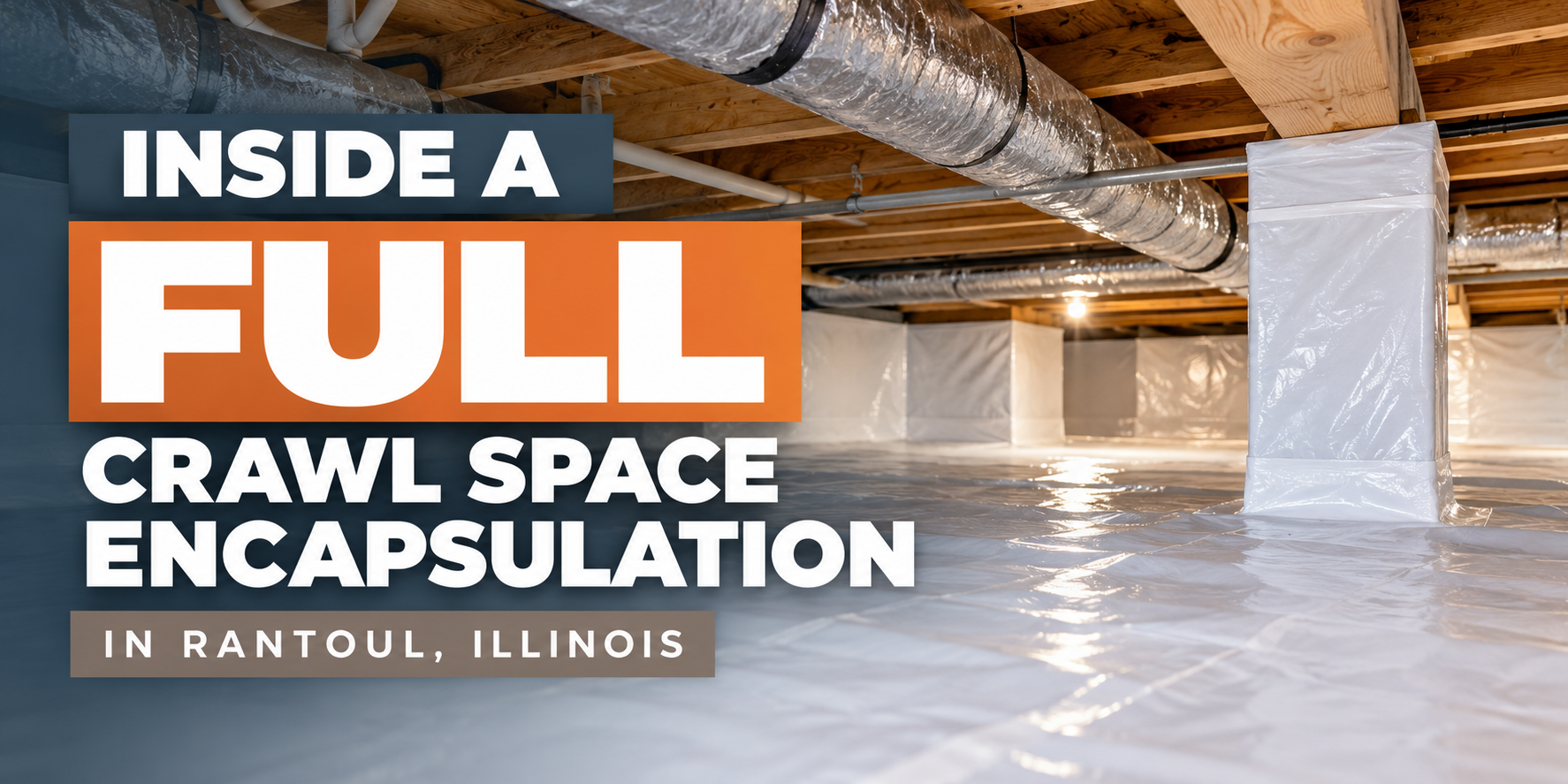
Another Crawl Space Successfully Dried Out
More Than Just Vapor Barrier
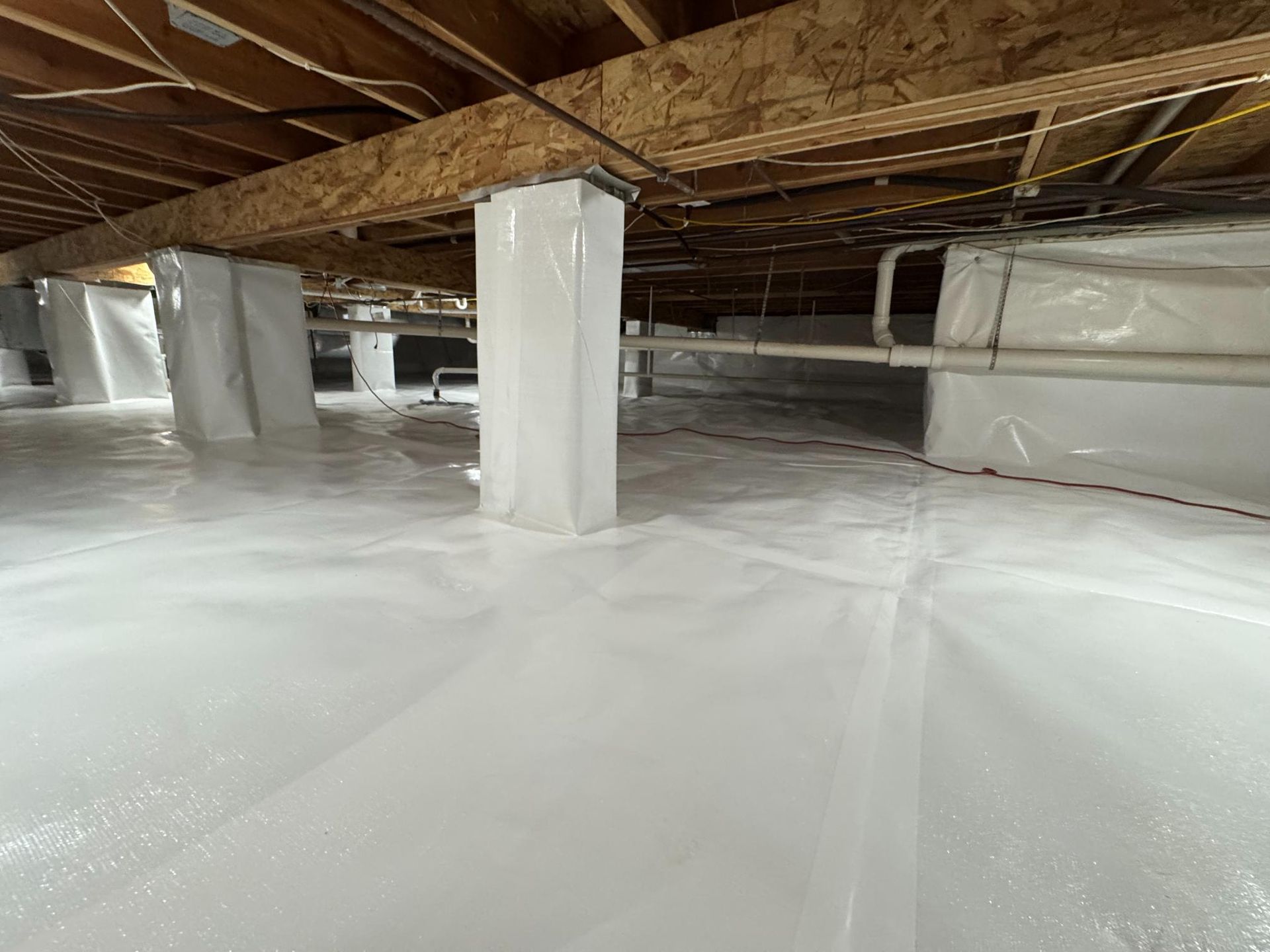
We just wrapped up another crawl space project here in Central Illinois, and I wanted to show you what "complete" actually looks like.
Dehumidifier installed and running. Condensate drain from the HVAC system properly routed to the sump pump. Dryer vent re-run so it's exhausting outside where it belongs. HVAC plenum cleaned up and sealed. Everything working together.
A lot of companies will encapsulate your crawl space and call it done. Vapor barrier goes down, they collect payment, and they're on to the next job. But if your AC is still dumping condensate water onto your crawl space floor, or your dryer is venting humid air right back into the space they just sealed, you haven't really solved anything.
This homeowner now has a system that actually works—low humidity, clean air, and proper drainage throughout. That's the difference between a job that's finished and a job that's complete.
What We Actually Finished Today
Let me walk you through what we did on this job beyond the encapsulation itself.
First, we installed a dehumidifier sized correctly for this space. It's set up to maintain proper humidity levels year-round and drain automatically to the sump pump.
Second, we rerouted the HVAC condensate drain. Before, every time the AC ran, it was dumping water directly onto the crawl space floor. Now it drains properly to the sump pump where it belongs.
Third, we re-ran the dryer vent. It was terminating inside the crawl space, which meant every load of laundry was pumping humid air into a space we're trying to keep dry. Now it exhausts outside.
And finally, we cleaned and sealed the HVAC plenum. No more air leaks, no more dust being pulled into the system.
Each one of these fixes matters. The vapor barrier creates the foundation, but these details are what actually keep the space dry and healthy long-term. Miss even one, and you're fighting an uphill battle against moisture you're constantly adding back in.
The Problem with "Encapsulation Only"
Here's what happens with most crawl space companies: they show up, install vapor barrier, maybe seal some vents, and then they're done. The crawl space looks great. Clean white plastic everywhere. You write the check feeling good about it.
Six months later, you've still got humidity problems. Maybe there's condensation on the vapor barrier. Maybe that musty smell is back. The dehumidifier they sold you is running constantly but barely keeping up.
What went wrong? Usually, it's not the encapsulation itself. It's everything else that got ignored.
Your HVAC system produces gallons of condensation, especially in summer. If that's still draining onto your crawl space floor, you're adding massive amounts of water into a space you just paid to seal and dry out.
Your dryer vent might be pumping humid air right back into that sealed crawl space. Every load of laundry is working against your new encapsulation.
Poor drainage around the foundation is still letting water seep in. Groundwater doesn't care that you put down new vapor barrier.
All of these moisture sources don't go away just because you encapsulated. And a dehumidifier can't fix them—it's just fighting a losing battle trying to keep up with water and humidity you're constantly adding back in.
That's why encapsulation alone isn't enough. You need to address where moisture is actually coming from.
Your Crawl Space Is a System, Not Just a Space
Everything in your crawl space affects everything else. It's not a bunch of separate parts—it's a connected system. And when one piece isn't working right, it undermines everything else.
Think about it this way: you can install the best vapor barrier money can buy. But if your AC condensate is dumping water onto that barrier every day, you're going to have standing water, high humidity, and eventually problems with the barrier itself.
You can run a top-of-the-line dehumidifier. But if your dryer is venting into the sealed crawl space, that dehumidifier is working overtime just to keep up with the moisture you're actively pumping in. It'll never get ahead.
You can seal all your foundation vents. But if you haven't addressed how water drains around your house, you're trapping moisture inside instead of keeping it out.
This is why we look at the whole picture when we inspect a crawl space. We're not just thinking about vapor barrier. We're asking:
Where is water coming from? (Foundation drainage, condensate lines, plumbing leaks)
Where is humidity being added? (Dryer vents, unsealed ducts, ground moisture)
How is everything draining? (Sump pumps, condensate routing, grading)
What's the HVAC system doing? (Ductwork condition, plenum sealing, condensate management)
Fix the encapsulation but ignore these questions, and you haven't really fixed anything. You've just created a prettier version of the same problem.
What Complete Crawl Space Work Should Include
So what does a complete crawl space job actually look like? Here's what should be addressed:
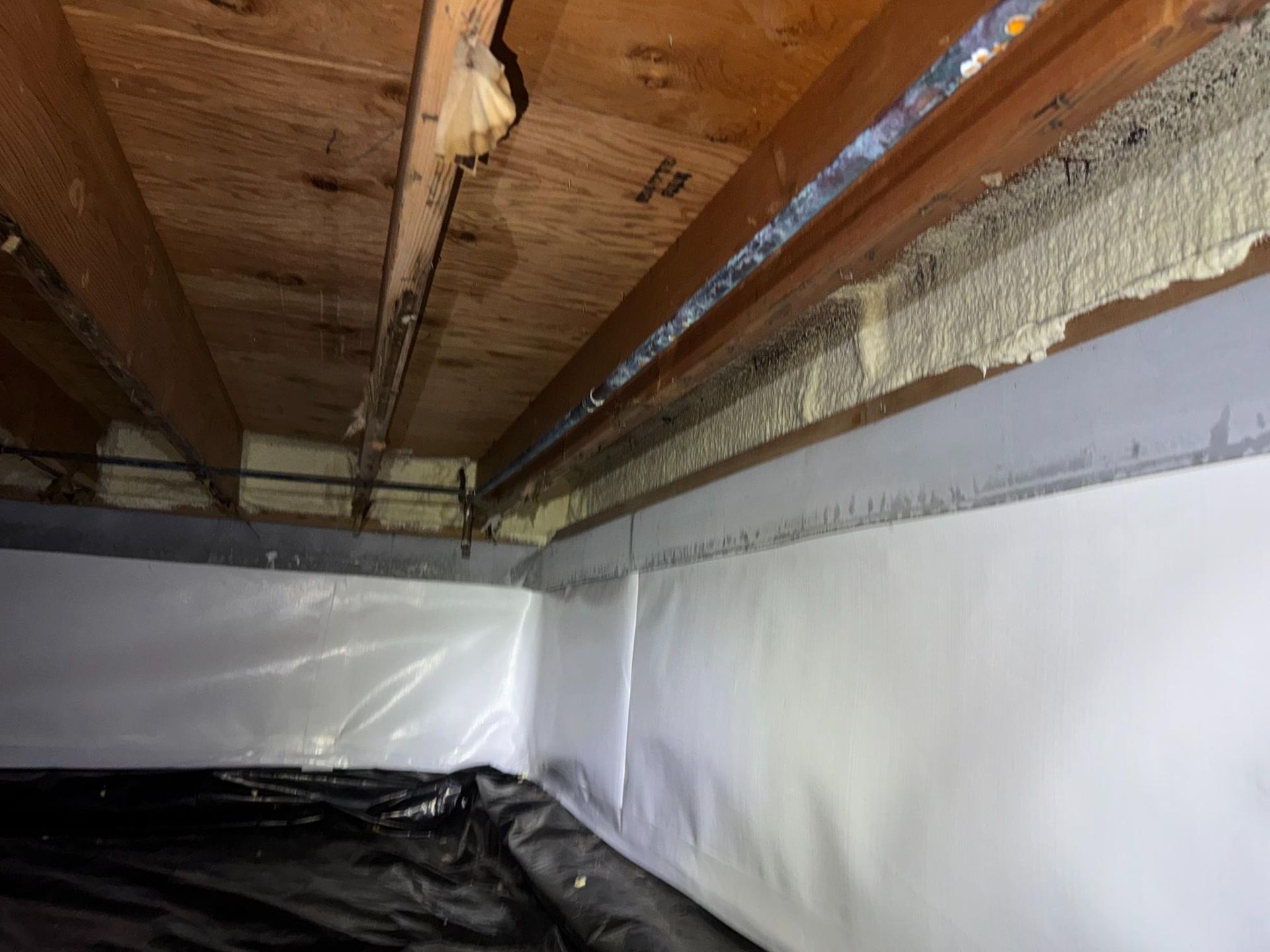
Proper encapsulation. That's your foundation—vapor barrier correctly installed, foundation vents sealed, rim joist insulation if needed. This creates the controlled environment everything else depends on.
Humidity control. A dehumidifier sized correctly for your space, not just whatever's cheapest. It should be set up to drain automatically so you're not emptying buckets.
Drainage solutions. HVAC condensate lines routed to your sump pump or outside. The sump pump itself working correctly. Any groundwater issues addressed.
Ventilation fixes. Dryer vents exhausting outside, not into your crawl space. Bathroom exhaust fans venting properly. Any other sources of humid air redirected.
HVAC considerations. Ductwork in good condition and properly sealed. Supply and return plenums sealed. Condensate lines clear and draining correctly.
Skip any one of these, and you're leaving a problem that will undermine everything else. It's like fixing three of the four flat tires on your car—you still can't drive it.
This is standard for us here in Mahomet. When we say a job is done, we mean the whole system is addressed. Not just the part that's easiest or most profitable. The homeowner deserves a crawl space that actually stays dry and healthy, not one that looks good for a few months and then starts having problems again.
How This Protects Your Home Long-Term
When everything's set up correctly, here's what this homeowner can expect for years to come:
Low humidity year-round, not just for the first few months. The dehumidifier isn't fighting against constant moisture sources—it's just maintaining levels in a space that's actually sealed and controlled.
Clean air flowing upstairs. Remember, about 50% of the air you breathe comes from your crawl space. When that space is truly dry and clean, it affects your whole home's air quality.
No water pooling from AC condensate. No humid air being pumped back in from the dryer. No moisture undermining the encapsulation work we just did.
And here's the part people don't think about: when your HVAC tech or plumber needs to get under your house in five years, everything will still be clean and dry. They can actually see what they're working on. Systems are easier to maintain because they're not corroded or damaged from constant moisture exposure.
This is what your investment should buy you—a system that protects your home long-term, not just a temporary fix that looks good on day one.
Questions to Ask Your Crawl Space Contractor
Before you hire anyone for crawl space work, here are some questions worth asking:
"What happens to my HVAC condensate drain?" If they say "we don't touch that" or "not our department," that's a problem. It needs to drain somewhere proper.
"Where does my dryer vent terminate?" If it's exhausting into your crawl space and they're not planning to fix it, your encapsulation won't work like it should.
"Is humidity control included in your proposal?" A sealed crawl space without a dehumidifier is still going to have moisture problems.
"Do you handle drainage routing?" Water has to go somewhere. Condensate lines, sump pumps, proper grading—all of it matters.
"What about my HVAC ductwork?" If it's in bad shape or poorly sealed, that needs to be part of the solution.
Red flags to watch for: "We just do the encapsulation" or "You'll need to call someone else for that." A company that only handles one piece of the system is leaving you to coordinate multiple contractors—and leaving gaps that cause problems.
Complete work means one team handling everything that affects your crawl space's health.
Book A Free Inspection Now
Your crawl space problems aren't going to fix themselves. But they are fixable. Let's get it done — the right way, permanently.
Or call us directly (217) 863-9559
Ready to Get It Done Right?
If you're dealing with crawl space moisture, humidity issues, or you just want to know what's actually going on under your house—give us a call.
We'll come out and do a thorough inspection of your complete crawl space system. Not just the vapor barrier situation, but drainage, ventilation, HVAC considerations, everything that affects moisture and air quality.
You'll get a clear explanation of what you need and why. No pressure, no gimmicks. Just Chris or me walking you through what we found and what we'd recommend.
And if we do the work, you'll get a system that actually works together—not just one piece fixed while other problems get ignored.
Reach out anytime. We're here in Mahomet, and we're ready to help.