Day 3 of a Crawl Space Encapsulation: What's Actually Happening
The Messy Middle of Quality Work
Day three on this crawl space job in Boody, Illinois, and it looks like a construction zone. There's a massive pile of debris outside. Tools everywhere. Dirt tracked around. Not exactly Instagram-worthy yet.
But here's the thing: this mess means we're actually doing the work.
Every piece of that trash pile came out of the crawl space we're working in. The old deteriorating materials. The junk that was left down there. Everything that doesn't belong. We didn't just cover it up with new vapor barrier and call it done—we removed it.
This is the stage most companies don't show you. The messy middle where the real work happens. It's not pretty, but it's the difference between a job that looks finished and one that actually is.
What You're Looking At: The Current State
That pile outside represents every shortcut we didn't take.
We could've left most of that stuff down there. Just thrown new plastic over the old deteriorating vapor barrier, avoided all the hauling and cleanup, and been done a day earlier. A lot of crews do exactly that because it's faster and easier.
But you can't seal in problems and expect them to go away. Old materials keep breaking down. Moisture keeps building up underneath. And in a couple years, you're right back where you started—except now there's a layer of "new" work covering up the real issues.
So we remove everything. Completely. Which is why there's such a pile outside.
We also had to dig out the access point just to get proper entry for materials and equipment. When you're doing foundation-level work, you can't cut corners on access. You need room to actually work.
This is what the in-between stage looks like when you're not rushing to the next job. It's messy because we're doing it right.
The Water Management System Going In
This crawl space needed two sump pumps. Not one. Two.
We could've gotten away with installing just one and hoping it handled the load. Would've saved time, saved money on materials, made the job cheaper. But here's the problem: this space has serious water issues. One pump wouldn't cut it.
So we've got one sump pump down in the corner where we're seeing heavy water infiltration, and another one further down handling a separate problem area. Both tied into our perimeter drain system that runs all the way around the crawl space.
That perimeter drain is basically a trench we've dug around the inside edge of the foundation. It collects water before it can pool on the floor, directs it to the sump pumps, and gets it out of the space completely. It's the foundation of a proper water management system—literally.
We're also installing drainage mat in the areas where we're seeing the most moisture. It goes under the vapor barrier and gives water a pathway to the drains instead of just sitting against the barrier.
Could we skip the drainage mat and save some money? Sure. Would the system work as well or last as long? No.
This is the engineering part of crawl space work that determines whether your encapsulation actually solves your water problems or just hides them for a while. We size the system based on what the space actually needs, not what fits the budget easiest.
The Prep Work That Determines Everything
Before any vapor barrier goes down, the floor has to be level and properly prepped. You can see in the video—we've got it smoothed out and ready.
If you don't level the floor first, water pools in low spots under your vapor barrier. Then you've got standing water you can't see, can't access, and can't fix without tearing everything back up. The whole encapsulation fails from underneath.
We're also running butyl tape along every seam where the vapor barrier will connect. It's tedious work—Jackson's down there right now making sure every inch is sealed properly. But that's what actually makes the system watertight.
Butyl tape costs more than regular seam tape. It takes longer to apply correctly. And most homeowners will never see it because it's hidden under the finished vapor barrier. But it's the difference between a seal that holds for 20 years and one that starts failing in three.
This prep stage is where big companies save time. They'll skip the detailed floor leveling. Use cheaper tape. Rush through the details because they've got another job starting tomorrow and they're already behind schedule.
We don't work that way. We're on day three of this job because we're not skipping steps. The foundation work—the drainage system, the floor prep, the proper sealing—that's what determines whether this encapsulation actually protects your home or just looks nice for a while.
What's Coming Next: The Transformation
In the next few hours, this whole space is going to transform.
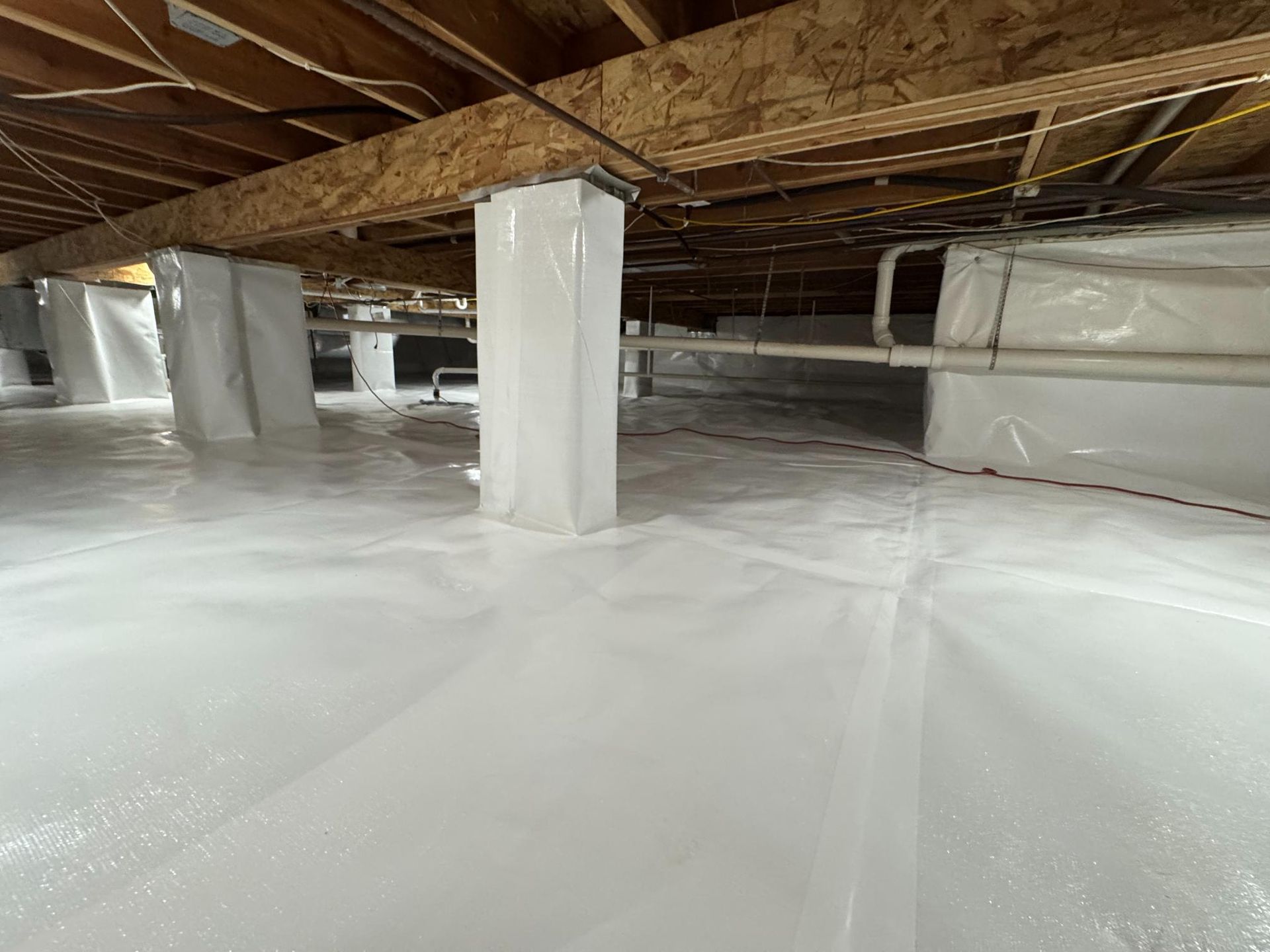
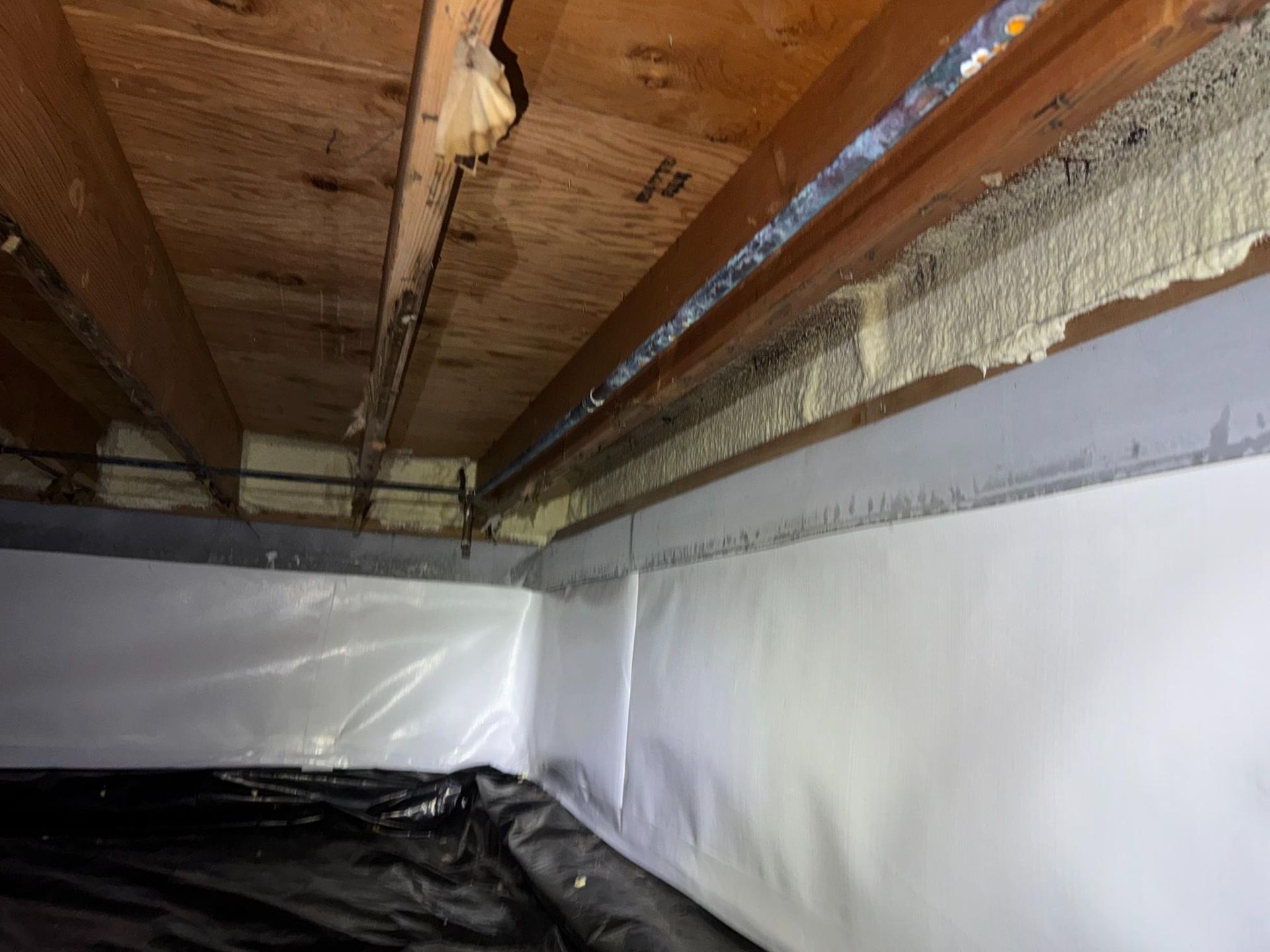
We're about to start installing our 20 mil fiberglass reinforced vapor barrier. That's going on the walls first, then the floor, creating a complete sealed system. It's thick, durable material—not the thin plastic you can poke your finger through that some companies use.
We've still got to handle that condensate drain you can see in the video just draining straight onto the ground. Can't leave it like that. We'll extend it properly so it's draining into the sump system, not creating a new moisture problem.
There's also an old tank down there that needs to come out, and a few other final details to button up.
But the heavy lifting is done. The foundation is set. The water management system is in. The prep work is complete.
By the time we're finished today, this is going to look completely different. Clean white vapor barrier. Properly sealed. All the infrastructure hidden but working. The kind of transformation where you walk in and think, "This is the same space?"
That's the goal. And we're almost there.
Why This Takes Multiple Days
You can't rush foundation work. Not if you want it to actually last.
This job in Boody is on day three because there are stages that have to happen in order. You can't install the vapor barrier before the drainage system is in. You can't seal everything up before the floor is leveled. You can't do proper prep work while you're racing to another appointment across town.
Big crawl space companies are under massive pressure to get in and out fast. They've got multiple crews running, high overhead to cover, and another job scheduled for tomorrow. Time is money, so they minimize the prep work and move on before you really see what they did or didn't do.
We stay until it's done right. If that takes three days, it takes three days. If it takes four, it takes four.
Because here's the reality: you're making a significant investment in your home's foundation. Rushing through to save half a day doesn't save you money—it costs you in problems that show up two or three years down the road when the quick fix stops working.
Done right means taking the time to do it right.
What Homeowners Should See During Their Job
If you've got a crawl space crew working at your house right now, here's what you should be seeing:
Debris actually coming out of the space, not just getting covered up. If there's no trash pile outside, ask where the old materials went.
Multiple days of work for a full encapsulation. If they're in and out in four hours, they're not doing foundation-level prep work.
Proper drainage systems being installed, not just vapor barrier laid down. Look for perimeter drains, sump pumps sized to the actual problem, and drainage mat in wet areas.
Detailed prep work—floor leveling, proper sealing tape, careful attention to seams and connections.
Red flags include crews that rush through without showing you what they're doing, companies that won't let you see the work in progress, and contractors who seem more focused on getting to the next job than finishing yours properly.
We show you the messy middle because we're not hiding anything. This is what quality work looks like before it's pretty. And we want you to see the difference.
Book A Free Inspection Now
Your crawl space problems aren't going to fix themselves. But they are fixable. Let's get it done — the right way, permanently.
Or call us directly (217) 863-9559
Get a Real Assessment of Your Crawl Space
If you're dealing with crawl space moisture, humidity, or structural issues in Central Illinois, we'll come out and give you an honest assessment.
No pressure to do the work tomorrow. No rushing through an inspection to get you a quote. Just a thorough look at what's actually happening under your home and what it'll take to fix it right.
We'll show you what you need—whether that's two sump pumps or one, full encapsulation or something simpler. And we'll give you a realistic timeline because we're not cutting corners to fit someone else's schedule.
Reach out anytime. We're right here in Mahomet, serving communities like Boody across Central Illinois.