The Unglamorous Truth About Professional Crawl Space Work
The Part Nobody Posts on Social Media
I say all the time that I love the crawl space business. And I do—I genuinely enjoy what we do at My Guys.
But that doesn't mean I love every part of it.
Today we're in a crawl space here in Mahomet pulling out old, saggy insulation. It's moist, it's falling apart, and it's absolutely miserable work. Itchy. Dusty. Hot. Ryan's over there stuffing it into trash bags, and neither of us is having a good time.
This is the part of crawl space work that nobody posts about on social media. It's not pretty. It doesn't make for good before-and-after photos. But it's necessary if you actually want a clean, healthy crawl space.
So I wanted to show you the unglamorous reality of what professional crawl space work actually looks like—and why we do it even when it's the worst part of the job.
What We're Actually Doing Down There
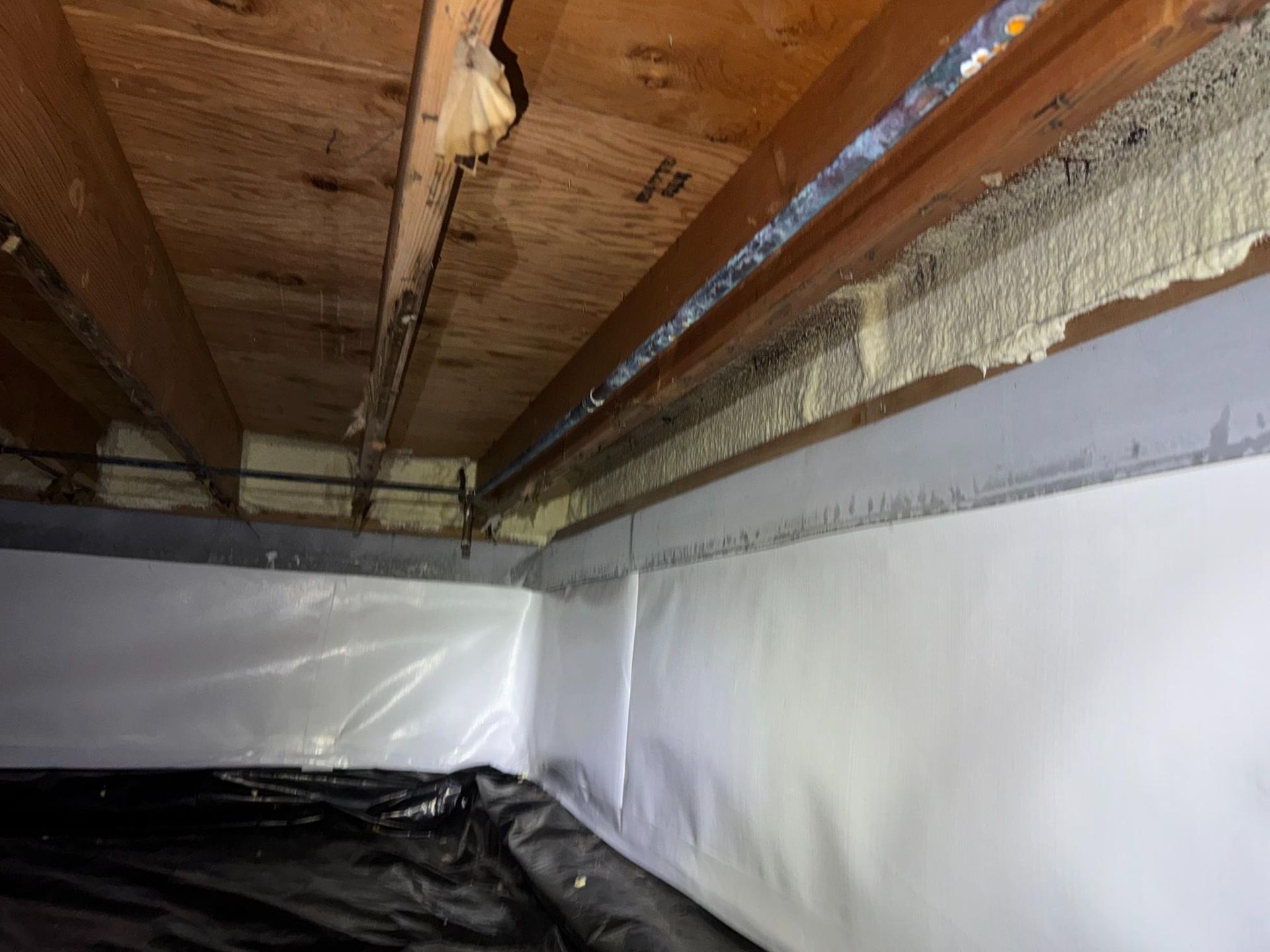
Right now, we're removing every bit of old insulation from this crawl space. Not just the stuff that's obviously falling down—all of it.
That means crawling through tight spaces in a Tyvek suit while it's 80 degrees outside. It means pulling down fiberglass insulation that's been absorbing moisture for who knows how long. It means getting covered in dust and particles that make you itch for the rest of the day.
Ryan's bagging it up as fast as we can pull it down. We've got probably another few hours of this ahead of us. It's slow, uncomfortable work.
And here's the thing: it would be so much easier to just leave it up there. Install the new vapor barrier, seal things up, and call it done. The homeowner would never know the difference—at least not right away.
A lot of companies take that shortcut. They'll work around the old insulation or just cover it up with new materials. It's faster, it's cleaner for the crew, and it costs them less in labor.
But it doesn't actually solve the problem.
Why Most Companies Avoid Complete Removal
Complete insulation removal is one of the biggest costs in a crawl space encapsulation job. Not in materials—in labor hours.
It takes time. It's physically demanding. And it requires crew members who are willing to do genuinely uncomfortable work for hours at a stretch.
So when crawl space companies are looking at their profit margins, this is often the first place they cut corners.
They'll tell you the old insulation is "still functional" or that removing it isn't necessary as long as they install proper encapsulation. Some will say they can "work around it" or that taking it out will cost extra. Others just won't mention it at all and hope you don't ask.
The math makes sense from their perspective: if they can skip removal on a job, they might save four to six hours of labor. That's hundreds of dollars in costs they don't have to eat. And most homeowners won't know enough to question it.
The bigger companies are especially guilty of this. When you're running multiple crews across several states and trying to hit certain profit targets, every job needs to be as efficient as possible. "Efficient" usually means finding ways to cut time without obviously cutting quality.
But here's what they're not telling you: leaving that old insulation in place means leaving all the problems it's collected over the years. And those problems don't just go away because you sealed up the crawl space.
What's Actually Hiding in Old Crawl Space Insulation
That insulation hanging in your crawl space has been down there for years, maybe decades. And the whole time, it's been absorbing everything from your crawl space environment.
Moisture is the big one. Insulation acts like a sponge. In an unsealed crawl space with humidity issues, that fiberglass is pulling moisture out of the air constantly. Once it gets wet, it stays wet. And wet insulation is the perfect place for mold to grow.
But it's not just moisture. There's dust from decades of your HVAC system running. Particles from deteriorating materials. If you've had any pest issues—mice, insects, whatever—their droppings are probably up in that insulation too.
All of that gets trapped in the fiberglass. And because it's hanging right there in your crawl space, it's affecting the air that rises up into your home. Remember: about 50% of the air you breathe upstairs comes from your crawl space.
So when a contractor tells you they can just install new vapor barrier and leave the old insulation in place, what they're really saying is: "We're going to seal up all that contamination and hope it doesn't cause problems."
It's not a solution. It's just hiding the issue behind a layer of new plastic.
The Real Reason We Remove Everything
We pull out every bit of old insulation because we're not trying to make your crawl space look better. We're trying to make it actually clean.
There's a difference.
A lot of crawl space work is cosmetic. New vapor barrier over old problems. A quick spray for mold without addressing moisture. Fixes that look good on an inspection report but don't actually change the environment.
That's not what we're doing here in Mahomet. When we encapsulate a crawl space, we want it genuinely clean. Not "better than it was"—actually clean. Clean enough that you could use it for storage. Clean enough that the next HVAC tech who has to work down there won't be breathing in decades of contamination.
The hard work—the stuff nobody wants to do—is what makes that possible.
Removing old insulation is miserable. But it's the foundation of everything else we do. You can't create a healthy crawl space environment by building on top of unhealthy materials. You have to start from scratch.
That's why we do it. Even when it's the worst part of the job.
What Happens After Removal
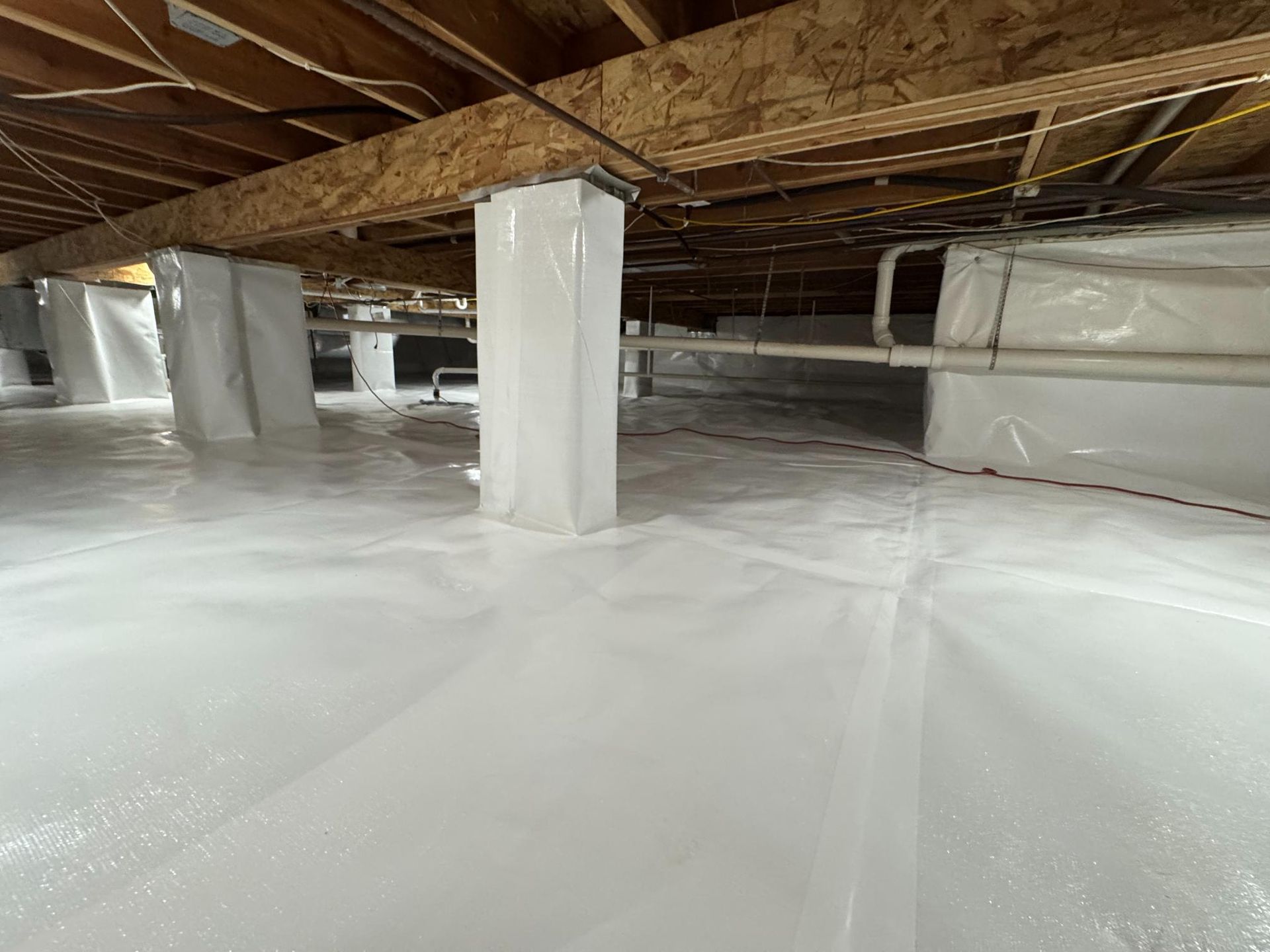
Once all that old insulation is out and we've got a clean crawl space to work with, that's when the real transformation happens.
We install a proper vapor barrier on surfaces that are actually clean. Not over contamination—on clean ground and foundation walls. That seal actually means something because there's nothing underneath it breaking down and causing problems.
Then we add a dehumidifier to control moisture levels long-term. In a space that's been properly cleaned out, the dehu can actually do its job. It's not fighting against wet insulation and years of accumulated moisture.
We install lighting throughout so the space is usable. And here's something homeowners are always surprised by: once a crawl space is encapsulated correctly, mice and insects don't want to be down there anymore. The environment completely changes.
What you end up with is genuinely usable storage space. Bright, dry, clean. A space that will stay that way for years because we addressed the actual problems instead of covering them up.
That's the transformation. And it only happens when you start with complete removal.
How to Know If Your Contractor Is Taking Shortcuts
If you're getting quotes for crawl space work, here are some questions to ask:
Are you removing all the old insulation, or leaving some in place? If they say "we can work around it," that's a red flag.
What's included in your cleanup process? Get specifics. Complete removal should be part of the standard job, not an add-on.
Can I see the space after insulation removal but before encapsulation? Good contractors will show you the clean foundation before they seal it up.
Why is your quote lower than others? Sometimes it's efficiency. Often it's because they're skipping steps.
Here's the reality: if one quote is significantly cheaper than the others, there's a reason. Maybe they're using thinner vapor barrier. Maybe they're not installing a dehumidifier. Or maybe—and this is common—they're leaving the old insulation in place.
The lowest price usually means someone's cutting corners somewhere. And in crawl space work, those corners usually get cut in the parts you can't see after the job's done.
Book A Free Inspection Now
Your crawl space problems aren't going to fix themselves. But they are fixable. Let's get it done — the right way, permanently.
Or call us directly (217) 863-9559
Ready to See What Real Crawl Space Work Looks Like?
If you're dealing with crawl space issues and want to know what's actually happening under your home, give us a call.
We'll do a thorough inspection and show you exactly what we find. We'll explain what needs to be done and why—including the unglamorous parts like insulation removal.
No shortcuts. No covering up problems. Just honest assessment and quality work.
Reach out anytime. We're here in Mahomet, and we're ready to help.