Why Unsealed Crawl Space Vents Are Making Things Worse
The Question I Get on Almost Every Job
I was down in Humboldt today finishing up a crawl space assessment, and the homeowner asked me something I hear all the time: "Are you sure we should seal up the vents?"
There was genuine concern in their voice. They'd owned several houses over the years and had always opened and closed their crawl space vents seasonally. That's what they were taught to do. That's what their parents did. It made sense to them.
So sealing those vents completely? It felt wrong.
I get it. You've been told your whole life that crawl spaces need ventilation. That fresh air keeps things dry and healthy down there. The logic seems sound.
The problem is, that advice is outdated. What we know now from modern building science completely contradicts what your parents and grandparents were taught about crawl space vents.
Why Homeowners Worry About Sealing Vents
This hesitation isn't just common—it's completely understandable.
For decades, building codes required crawl space vents. Every house had them. Your parents opened them in summer and closed them in winter (or at least they were supposed to). Some people, like the homeowner I met today, actually followed that routine religiously.
The reasoning made sense: vents let in fresh air, fresh air keeps the crawl space dry, and a dry crawl space is a healthy crawl space.
Except that's not how it actually works.
The original building codes were based on an assumption that turned out to be wrong. Builders thought outdoor air would help moisture evaporate and keep crawl spaces dry. They didn't account for humidity, condensation, or how air actually behaves in enclosed spaces.
So when I tell homeowners we're going to seal up every single vent, I understand why they pause. I'm asking them to trust something that contradicts everything they've been taught. That's a big ask.
But the science is clear. And once you understand what's actually happening with those open vents, sealing them up makes perfect sense.
What Building Science Actually Shows
Here's what modern research has taught us: open crawl space vents don't keep things dry. They make moisture problems worse.
In Central Illinois, outdoor air is almost always more humid than the air inside your home—especially during summer. When that humid outdoor air flows through your vents into a cool crawl space, it hits cooler surfaces. The moisture in that air condenses. You get water droplets forming on your floor joists, your foundation walls, your ductwork.
That's the exact moisture problem vents were supposed to prevent.
The old building code assumed that ventilation would dry things out through evaporation. But evaporation only works when the incoming air is drier than the space you're trying to dry. In our climate, that's almost never the case.
Modern building science shows that the best way to control crawl space moisture is to seal the space completely and condition it as part of your home. That means no outdoor air coming in. No temperature swings. No condensation cycles.
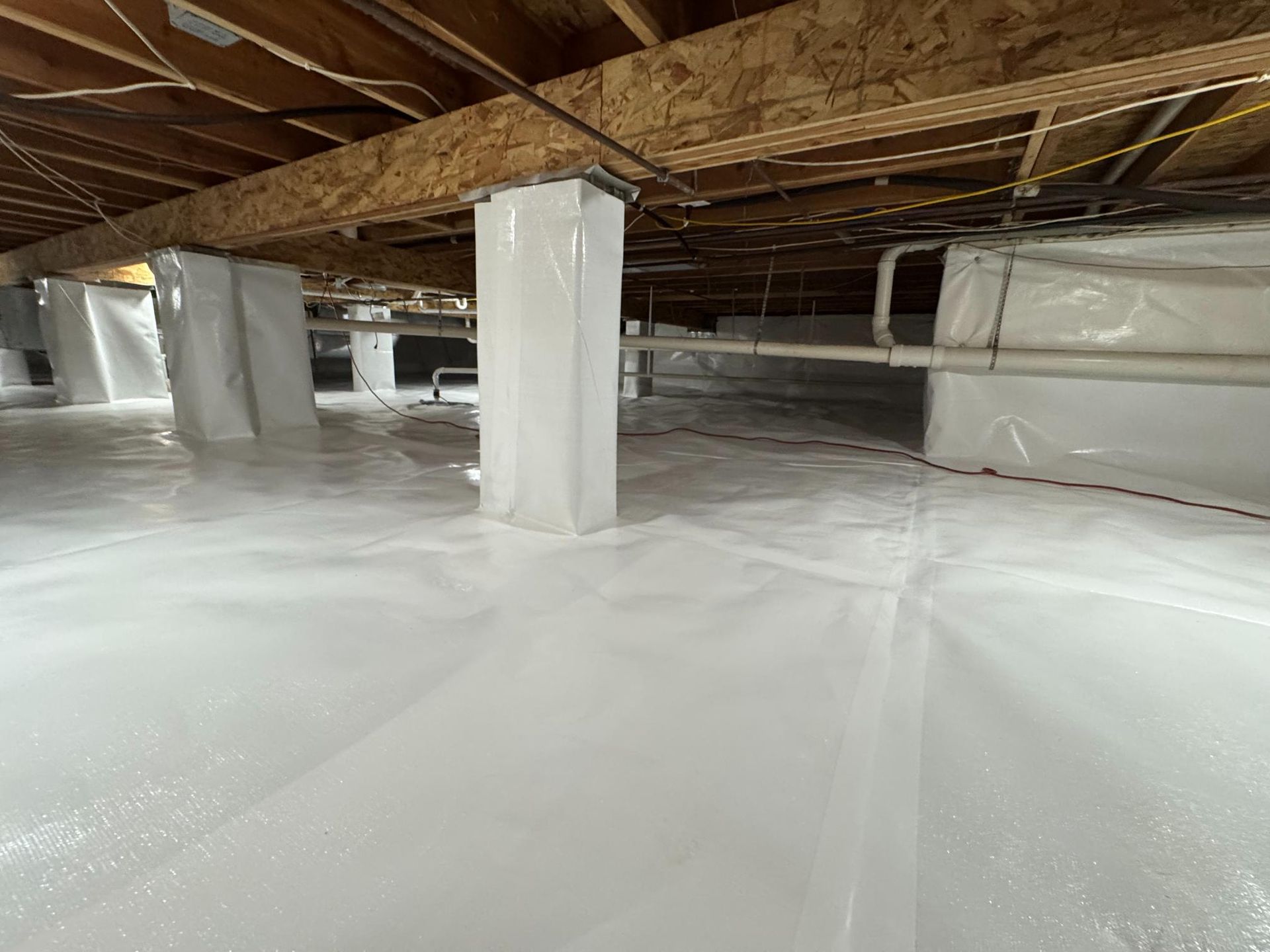
When you encapsulate a crawl space and seal the vents, you create a controlled environment. The dehumidifier manages moisture levels. The vapor barrier blocks ground moisture. The sealed vents keep humid outdoor air from entering.
It's not about "fresh air." It's about controlled air. And controlling the environment under your house is how you actually protect it from moisture damage, mold growth, and structural problems.
The science is settled on this. The building codes just haven't caught up everywhere yet.
The Central Illinois Reality
Let me put this in local terms.
Crawl space vents are only helpful on windy, low-humidity days. That wind flow can actually help with air exchange—but only when the outdoor air is drier than your crawl space air.
Here in Central Illinois, we get maybe six of those days per year. Maybe.
The other 359 days, those open vents are working against you.
In summer, you're letting in hot, humid air that condenses on every cool surface under your house. In winter, you're letting in freezing air that makes your floors cold and drives up your heating bills.
Year-round, you're giving mice, bugs, and other pests a direct entry point into your home.
You're also letting in dust, pollen, and outdoor air pollutants. Remember, about 50% of the air you breathe upstairs comes from your crawl space. Whatever's coming through those vents isn't staying down there—it's circulating through your whole house.
Our climate makes this especially important. We have humid summers and cold winters. That's the worst combination for vented crawl spaces. You're dealing with moisture problems half the year and energy loss the other half.
Sealing the vents isn't optional here. It's necessary.
What Unsealed Vents Are Actually Doing to Your Home
Let's talk about what's really happening when you leave those vents open.
Summer: That humid outdoor air comes in and immediately hits your cool crawl space. Condensation forms on everything. Your floor joists stay damp. Perfect conditions for mold and wood rot. Your dehumidifier (if you have one) runs constantly trying to fight the humidity you're letting in through the vents.
Winter: Cold air pours in and sits under your floors. Your heating system works overtime to keep your house warm, but you're literally heating the outdoors. Your floors stay cold. Your pipes are at risk of freezing. Your energy bills climb.
Year-round: Those vents are highways for pests. Mice don't need much space—a gap the width of a pencil is enough. Every unsealed vent is an open invitation. Bugs, spiders, sometimes even snakes find their way in. And once they're in your crawl space, they're in your home.
The air quality impact is real too. Dust, pollen, mold spores—all of it comes through those vents and gets pulled into your living space through the stack effect. If anyone in your house has allergies or respiratory issues, your open crawl space vents are making it worse.
And all of this adds up to real costs: higher energy bills, potential foundation damage, pest control expenses, health issues, and eventually, major repairs that could have been avoided.
Your crawl space vents aren't protecting your home. They're exposing it to problems you don't need.
What Happens When We Seal Them Properly
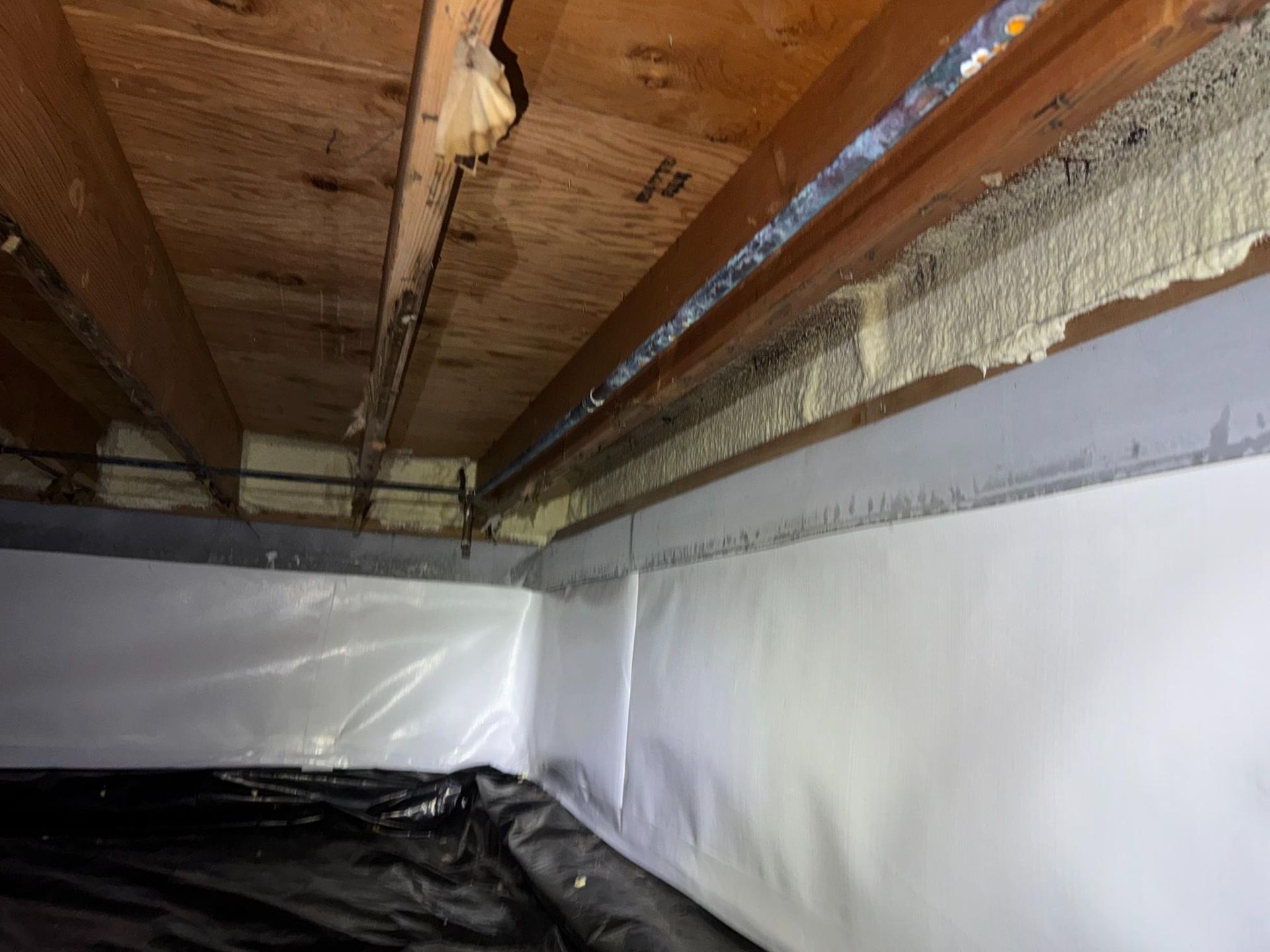
When we encapsulate a crawl space, sealing the vents is one of the most important steps.
We don't just close them—we seal them completely. Air-tight. Every single vent gets sealed from the inside so there's no air movement, no gaps for pests, nothing getting through.
Once that's done, you've got a controlled environment under your house. No humid air coming in during summer. No freezing air in winter. No mice finding their way in through a gap you didn't know existed.
The humidity stays controlled with a dehumidifier that's actually able to do its job instead of fighting outdoor air. The temperature stabilizes. Your floors feel warmer in winter because you're not sitting over an open-air space connected to the outdoors.
The air quality in your home improves too. No dust blowing in from outside. No mold spores. No rodent droppings breaking down and circulating through your ventilation system.
And your energy bills drop because your HVAC system isn't trying to condition air that's constantly being replaced by outdoor air from below.
Sealing those vents isn't taking something away from your home. It's giving you control over what was previously an uncontrolled space.
Why It Still Feels Wrong (And That's Okay)
I completely understand why sealing crawl space vents feels counterintuitive.
You've spent your whole life hearing that ventilation is important. "Fresh air" sounds like a good thing. Sealing up spaces sounds like you're trapping moisture and creating problems.
The homeowner in Humboldt who asked me about this today wasn't being difficult—they were being smart. They were questioning something that didn't make sense based on what they'd always known.
That's exactly what you should do.
But here's the thing: building science evolves. What we thought was true 50 years ago doesn't always hold up when we actually study how buildings perform over time.
Sealed, encapsulated crawl spaces have been studied extensively now. The data is clear. They perform better in every measurable way—moisture control, energy efficiency, air quality, structural protection.
It's okay that it feels wrong at first. Just trust the science, not the tradition.
Book A Free Inspection Now
Your crawl space problems aren't going to fix themselves. But they are fixable. Let's get it done — the right way, permanently.
Or call us directly (217) 863-9559
Get a Free Crawl Space Assessment
If you're wondering whether your crawl space vents should be sealed, we can help you figure it out.
We'll come out, do a thorough inspection, and show you exactly what's going on down there. If you've got open vents, we'll explain what they're doing to your home—good or bad. No pressure, no sales pitch. Just honest answers from someone who's been doing this work for years.
And if sealing them makes sense for your situation, we'll walk you through exactly what that looks like and why it matters.
Free assessments for crawl space work. We serve Humboldt, Mahomet, and communities throughout Central Illinois.