
Champaign, IL · Central Illinois
Crawl Space Encapsulation in Champaign, IL
Something feels off under your Champaign home — and you're probably right to be concerned. If you've noticed any of these, crawl space encapsulation is likely where the answer starts:
- A musty smell you may have stopped noticing
- Cold floors over the crawl space
- An energy bill that doesn't make sense
We're local, we've been in crawl spaces all over Champaign, and we'll come take a look for free. No commitment. Just answers.
Trust your gut
You Noticed Something for a Reason
A musty smell
Floors that give
Sticky air
That's the right instinct. Here's what's actually happening.
Here's something most people don't know: roughly half the air you breathe on your ground floor came up from your crawl space. When that space holds moisture, the air moves up — into your floors, your walls, and the rooms where you sleep.
The smell is the first sign. Then come the sneezing, the congestion, and the allergy flare-ups that never quite go away. In Champaign, that environment is working against your home in ways specific to this soil, this flat ground, and how these homes were built.


What's Stacked Against Your Floors
In Champaign, the threat under your floors comes down to a few things specific to where you live.
The Clay
Dense silty clay holds moisture like a sponge. It swells when it's wet and shrinks when it dries — constant movement that's hard on whatever's underneath your home.
Flat Ground
Champaign sits on some of the flattest ground in Illinois. When it rains, water doesn't run away from your foundation — it spreads out and soaks in, slowly, right next to your house.
The Build
Most crawl spaces here were built between the 1950s and 1970s as vented spaces designed to breathe. Their original plastic liners, if they have one at all, are now shifted or torn.
Who shows up under your house
One Trade, Done All the Way Through
My Guys Crawl Space works exclusively in crawl space encapsulation and repair throughout Champaign and Central Illinois.
Jeff started this company because he kept seeing the same problems done wrong by the same kinds of companies. When we come to your home, we sit down with you first, do a thorough inspection that starts outside, and explain everything we find before we recommend anything. Every inspection is done by Jeff personally.
Free inspection. No commitment. Just answers.
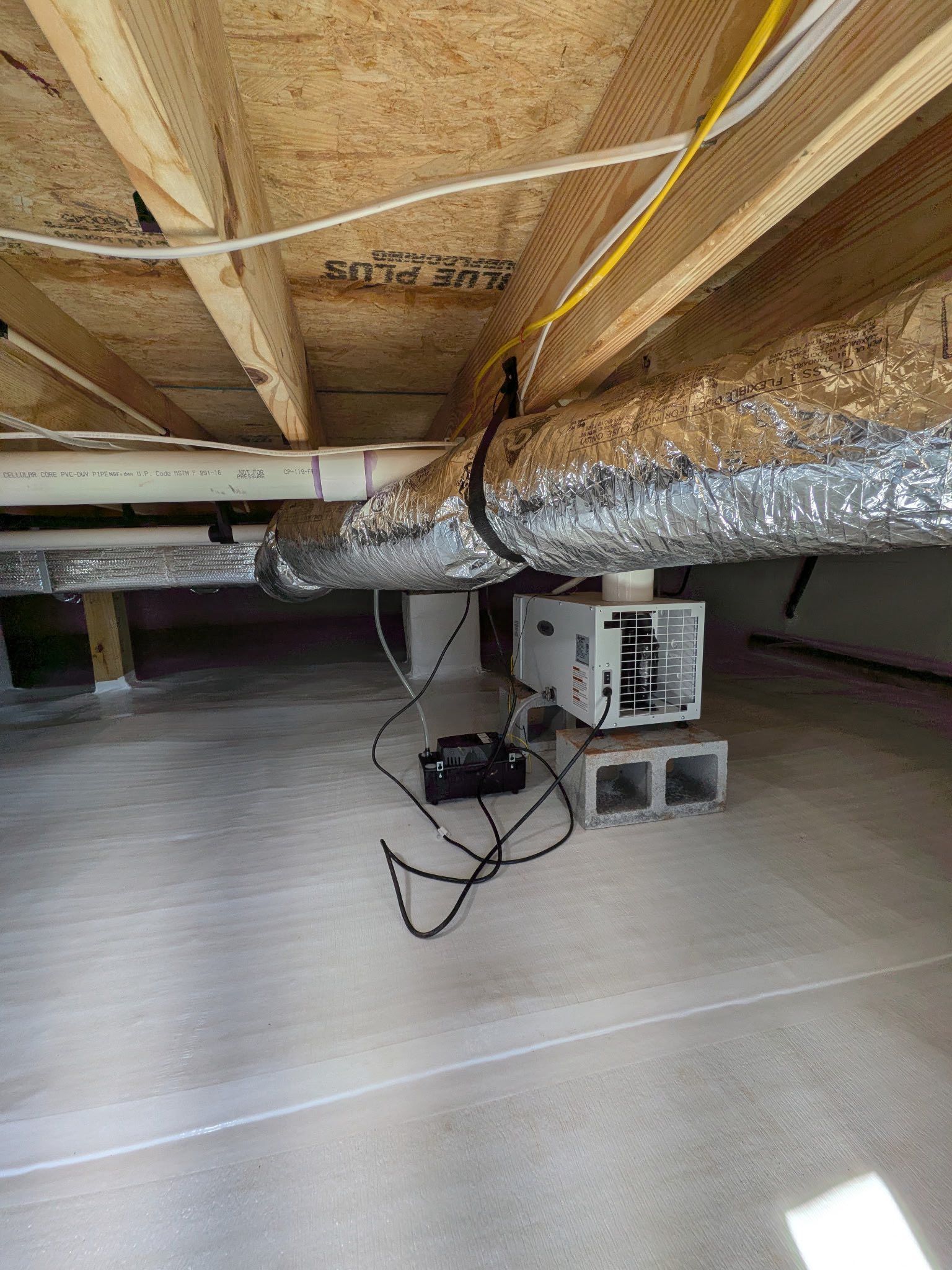
What's underfoot in Champaign
Why Crawl Space Encapsulation in Champaign is Different
Champaign sits on some of the flattest ground in Illinois on dense silty clay that holds moisture like a sponge. When it's wet it swells; when it dries out it shrinks. That movement is constant, and it's hard on whatever's underneath your home.
When it rains, water doesn't run away from your foundation. It spreads out and soaks in — slowly, right next to your house. This isn't a generic moisture problem. It's a Champaign problem.
Combined with:
Flat terrain
Rainwater
Snowmelt
…and the water saturates the soil around your foundation and stays there.
Decades under there
What 40–50 Years Has Done Under Champaign Homes
Built 1950s–1970s
Designed to Breathe
Most of the Champaign crawl spaces we get into were built between the 1950s and 1970s. The builders did what was standard at the time — vented crawl spaces, designed to breathe. We now know that what they were breathing in was the problem.
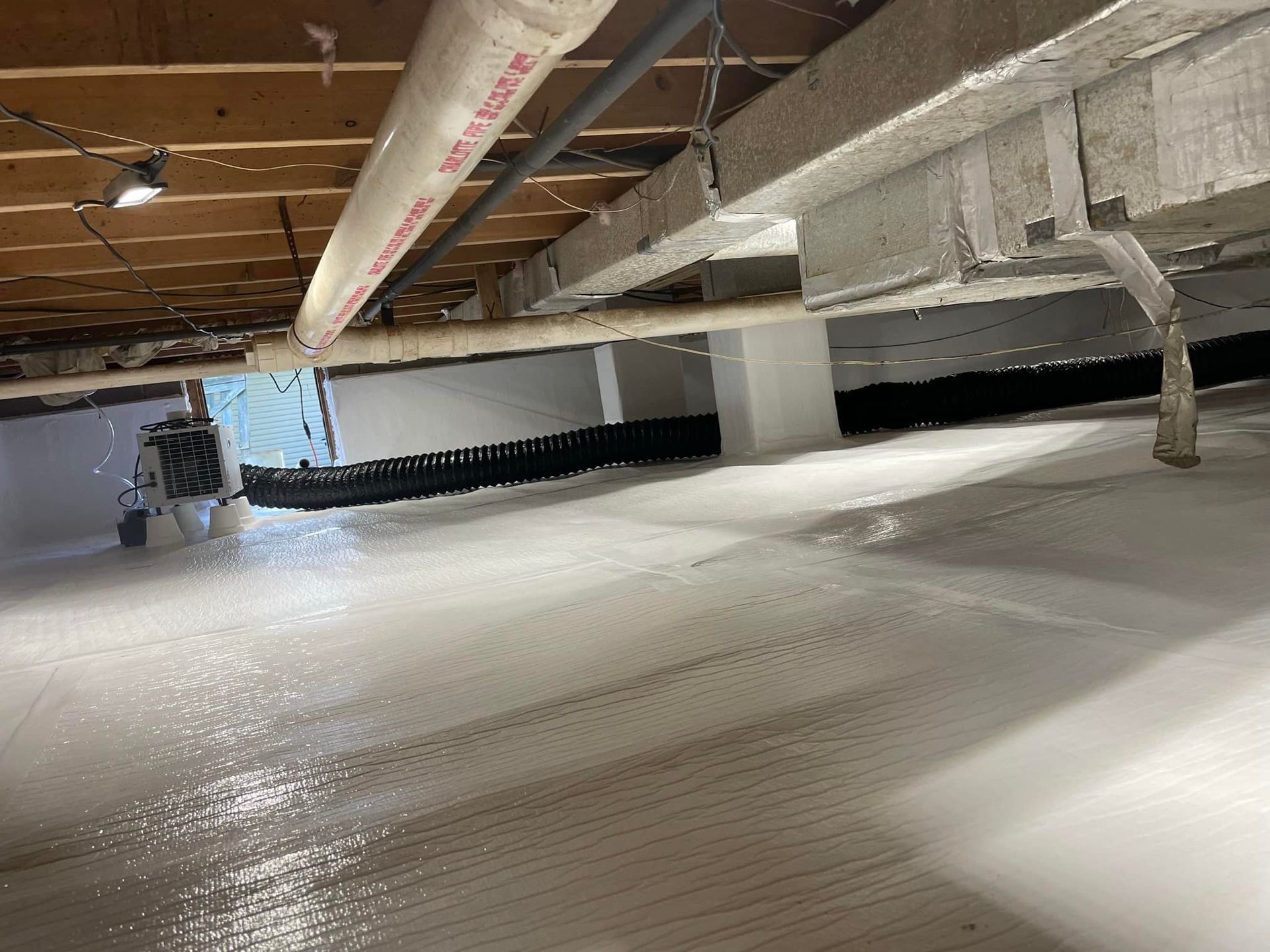
The Original Liner
Shifted, Torn, Bunched Up
A lot of the crawl spaces we inspect still have their original plastic liner — if they have one at all. After 40 or 50 years of that clay soil doing what it does, the liner is shifted, torn, or bunched up in the corners. It's not protecting anything anymore.
Flat Ground, Silty Clay
Water That Soaks In and Stays
On Champaign's flat ground, rain doesn't drain away — it spreads out and soaks into the silty clay right next to your foundation. The clay swells and shrinks with every wet-dry cycle, working against your home year-round.
Most of the crawl spaces we get into around here were built between the 1950s and 1970s. The builders did what was standard at the time -
- vented crawl spaces
- designed to breathe
We now know that what they were breathing in was the problem.
Champaign sits on some of the flattest ground in Illinois. When it rains, water doesn't run away from your foundation. It spreads out and soaks in -slowly, right next to your house. The soil here is a dense silty clay. It holds moisture like a sponge. When it's wet it swells. When it dries out it shrinks. That movement is constant, and it's hard on whatever's underneath your home.
What goes in
How the Seal Comes Together Under a Central Illinois Crawl Space
Ground moisture
Outside air
Humidity
Encapsulation seals the environment beneath your home so that ground moisture, outside air, and humidity stop having free access to your floor system and the air above it.
01
Rim Joists & Vents Sealed
If there's active water coming in, we address drainage first — a liner over a water problem is a cover-up, not an encapsulation. Then every vent and every gap where outside air sneaks in gets closed with spray foam, including the rim joists, where most of the air leakage happens.
02
Heavy-Duty Vapor Barrier
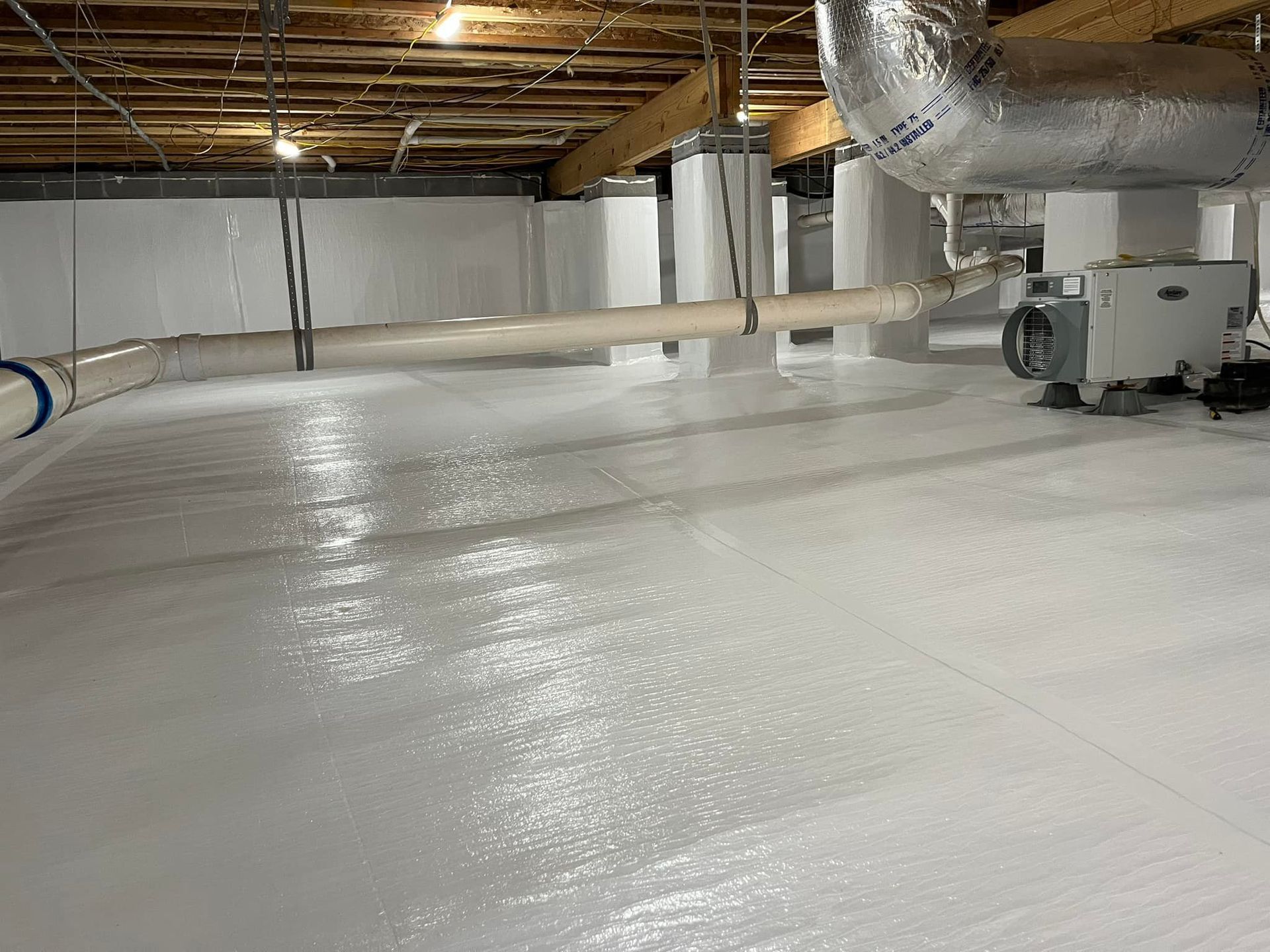
A heavy 20-mil fiberglass-reinforced liner — not the thin plastic sheeting from a hardware store — covers the floor and walls, mechanically fastened and sealed at every seam so ground moisture stays out.
03
Dehumidifier Installed
Then a dehumidifier is installed to actively manage what remains. That last piece matters more in Central Illinois than most places — summer dew points push into the upper 60s and 70s for months.
04
What You'll Notice
Humidity drops, musty odors disappear, floors feel more stable, and the floor framing stops cycling through the wet-dry conditions that degrade wood over time.
About those vents
A lot of Champaign homeowners have been told to open their vents in summer to let the crawl space breathe. Building science has moved past that. In Central Illinois there are maybe six days a year where outside air is dry enough that open vents help rather than hurt. The rest of the year you're pulling humid air directly under your home. We seal those vents on every job.
What we turn up
What Turns Up When We Get Under a Champaign Home
What brought someone to the phone is usually a symptom of something broader. That's why we look at everything — not just the thing you called about.
Mold on Joists and Subfloor
Once humidity stays above 60% for any stretch of time, mold starts growing on your floor joists and subfloor. Wood rot follows after that.
We check the joists, the main beam, and the subfloor on every inspection — that's where it shows up first. Encapsulation stops it before it gets a foothold.
Standing & Seeping Water
We find water more often than homeowners expect. In lower-lying parts of Champaign, seasonal intrusion is common. Those situations need drainage before they need encapsulation.
A liner installed over a water problem isn't an encapsulation — it's a cover-up, and one of the most expensive mistakes to fix later.
Other People's Bad Installs
Wrong size dehumidifier. Liner stapled instead of mechanically fastened. Seams not taped. Condensate drain emptying onto the vapor barrier. We've been called out to fix jobs where the liner was already failing and the mold it was supposed to solve had gotten worse.
That homeowner paid twice.
This is why the inspection comes first. All of it.
Our walkthrough
How a Champaign Inspection Actually Goes
The first thing I do when I arrive for a crawl space inspection isn't go straight to the crawl space.
01
First, We Sit Down
Before I get suited up, I want to understand what you've been noticing and what you're hoping to accomplish. The thing you called about is often just the most visible part of a bigger situation.
02
We Walk the Outside
The inspection starts outside — downspouts, grading, foundation — anything contributing to what's happening inside. The outside almost always tells us what the inside will show.
03
We Cover Every Inch Below
Camera, moisture meter, and humidity gauge. Perimeter first, then zigzag through the interior. You can watch live on a laptop if you want.
04
We Lay It All Out
Every recommendation gets explained — what it is, why it matters, what happens if you address it or don't. You're getting a full understanding of what's going on under your home before you make any decisions. If you need to phase the work, we'll help you prioritize.
05
We Prove It, Then Come Back
Once we start, we don't leave until it's done. When we finish, we do a full walkthrough with video and photos so you can see exactly what was completed. Six-month and one-year follow-up visits are scheduled before we leave — and included in the job.
Questions & Answers
Crawl Space Encapsulation FAQs — Champaign, IL Homeowners
Do I need full encapsulation or just a vapor barrier?
A basic vapor barrier laid on the ground is a starting point — not a solution. If your crawl space has air leaks, open vents, or moisture coming through the walls, a liner on the floor alone won't fix it. Most Champaign crawl spaces we inspect need the full system. The inspection tells you exactly what yours needs.
What does crawl space encapsulation cost in Champaign?
Most crawl space encapsulations in Champaign run between $4,000 and $8,000. What moves that number is the square footage of your crawl space, how much moisture is present, whether drainage needs to go in first, and the dehumidifier — which is almost always included. We're not the cheapest, and we're not priced where the national brands are. You get a clear proposal the same day, after the inspection.
How long does it take?
Most encapsulations take one to three days. We don't start a job and disappear — once we're on your property we stay until it's done.
Will it fix my musty smell?
In most cases, yes. That smell is crawl space air making its way up into your living space. Once the source is sealed and humidity is controlled, the smell goes away — we've had customers tell us they reduced their allergy medication after we finished. But we find what's causing the moisture before we seal anything; encapsulating over an unresolved water problem traps the smell instead of fixing it.
Is your crawl space work guaranteed?
Yes. We come back at six months and one year after every job to make sure everything is performing the way it should. Those visits are included — no additional charge.
Can I encapsulate my crawl space myself?
You can buy liner material and cover your crawl space floor. What's hard to replicate is the rim joist sealing, the correct dehumidifier sizing, the drainage assessment, and the seam integrity that keeps the system working five and ten years out. We've seen DIY jobs and we've fixed DIY jobs — it's usually more expensive to fix than to have done right the first time.
What happens if I wait to deal with it?
Moisture damage runs on a timeline. Mold establishes quickly. Wood rot follows slowly, and then all at once. What costs four to eight thousand dollars to fix today can become a structural repair that costs significantly more. There's no version of waiting that makes this cheaper.
Still have questions?
Every crawl space is different. Call us or book a free inspection and we'll walk you through exactly what your home needs.
The next step
Find Out What's Going On Happening Under Your Home
The inspection is free, with no commitment and no pressure at the end of it. When you call or submit the form, you'll reach Chris or Jeff directly — not a call center. We'll get you on the calendar, show up when we said we would, and give you a straight answer about what's happening under your Champaign home and what it'll take to fix it.
Email US