
Decatur, IL · Central Illinois
Crawl Space Encapsulation in Decatur, IL
Your crawl space wasn't built to last a Central Illinois winter — and that's not really your fault. Those vents were required by code. Building science has since figured out they cause exactly the problems you're probably dealing with right now:
- A floor with a little more bounce than it used to have
- A musty smell that shows up some mornings
- Pipes that get uncomfortably close to freezing in winter
My Guys will come out, get underneath your home, and tell you exactly what's going on — for free.
That's not nothing
That's Not Just an Old House Talking
That damp smell
Floors that give
Sticky air
That's the right instinct. Here's what's actually happening.
Most homeowners notice the floor first — a little bounce that wasn't there before, a soft spot in the kitchen, a squeak that keeps getting worse. That's the moisture talking.
That same air moves upward into your living space through the stack effect — air pressure pulls whatever is sitting in your crawl space directly into the rooms above. A musty smell in the morning, dust that won't quit, someone congested year-round and nobody knows why. The house wasn't neglected; it was built before anyone understood what this climate does to a vented crawl space over thirty years.


What Repeats Every Year in Decatur
In Decatur, the ground itself sets the schedule — three things work against your floors every year, on repeat.
The Sangamon Clay
The ground under Decatur expands when it's wet and shrinks when it's dry. That Sangamon-basin clay pushes against your foundation in spring, then pulls away in summer — opening new gaps every season.
The River Corridor
If your house sits in west or south Decatur near the river corridor, your water table rises every spring — whether it floods or not. That pressure pushes moisture up from below all season long.
Vents, By Code
Those vents were required by code when most Decatur homes were built. All summer, humid air moves in, hits the cooler surfaces under your floor, and condenses — and it doesn't leave on its own.
Gone behind other crews
We've Seen the Other Guy's Work
My Guys works exclusively in crawl space encapsulation and repair throughout Decatur and Central Illinois.
Jeff has gone behind other companies' work more than once. The difference between a real job and a cheap one shows up within a year — wrong-size dehumidifiers, stapled liner, untaped seams, condensate lines draining onto the crawl space floor. He'll sit down with you first, inspect from the outside in, and explain everything before recommending anything.
Free inspection. Same-day quote. No surprises.
What's underfoot in Decatur
Why Decatur Homes Are Prone to Crawl Space Moisture
The ground under Decatur expands when it's wet and shrinks when it's dry. That Sangamon-basin clay pushes against your foundation in spring, then pulls away in summer — opening new gaps every single season.
Add the vents. All summer, humid Central Illinois air moves directly into your crawl space, hits the cooler surfaces under your floor, and condenses. That moisture doesn't leave — it sits on your floor joists, your insulation, your subfloor.
Combined with:
Flat terrain
Rainwater
Snowmelt
…and the water saturates the soil around your foundation and stays there.
Without encapsulation
What Moisture Damage Does to a Decatur Crawl Space
Step One
Condensation Takes Hold
Humid air condenses on your floor joists all summer. Mold takes hold. The fiberglass insulation between your joists absorbs moisture, sags, and eventually falls — exposing more wood to the same cycle.
Step Two
The Floor Weakens From Underneath
The floor structure weakens slowly, from underneath, where you can't see it. A little bounce that wasn't there before, a soft spot in the kitchen, a squeak that keeps getting worse — that's the moisture talking.
Step Three
It Reaches the Rooms Above You
That same crawl space air moves upward through the stack effect — air pressure pulls it straight into your living space. And in winter, an uninsulated crawl space here gets cold enough to freeze pipes. It happens in Decatur every year.
Most of Decatur's housing stock was built during the industrial expansion of the 1920s through the 1960s, when the Staley and A.E. Staley Manufacturing plants were drawing workers to the city.
- uninsulated crawl spaces
- minimal or no vapor barriers
- settled foundations
- aging cast iron plumbing
- original wood-framed windows
- undersized or blocked attic ventilation
That infrastructure has been settling, shifting, and degrading for fifty to one hundred years.
In many of these homes, the original building materials are now working against the structure rather than protecting it — moisture wicking through unsealed concrete, settled foundations creating gaps, and decades of Midwest freeze-thaw cycles accelerating wear.
The full system
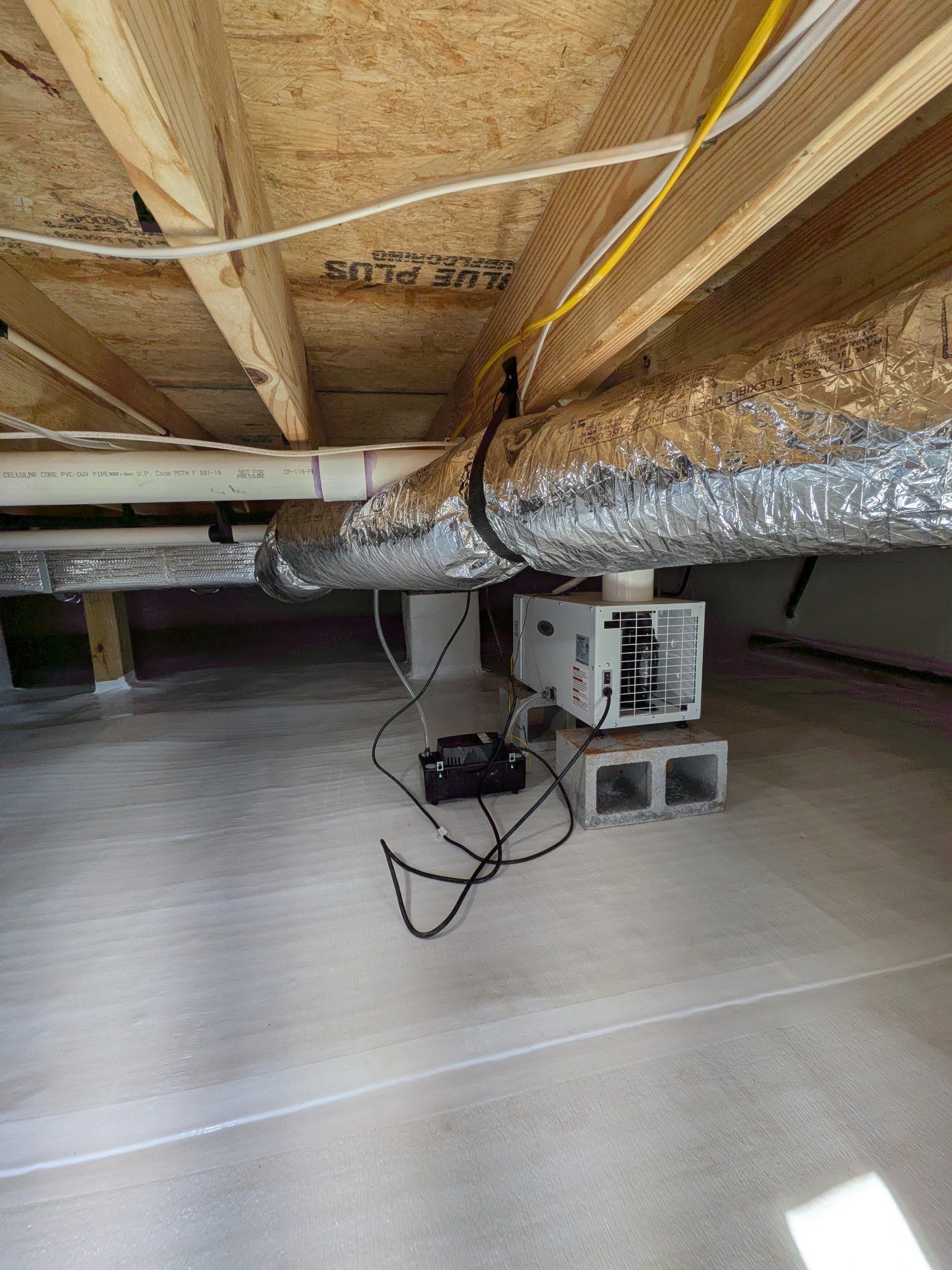
What a Complete Decatur Crawl Space Encapsulation Includes
Not all encapsulations are the same. Jeff has gone behind other companies' work more than once. The difference between a real job and a cheap one shows up within a year.
Ground moisture
Outside air
Humidity
stop having free access to your floor system and the air above it.
01
Vent Sealing & Rim Joist Foam
Every crawl space vent gets closed and sealed permanently — no more humid air pumping through all summer. Then the rim joists, where your foundation meets your floor framing, get sealed with closed-cell spray foam. That's where most air infiltration happens.
02
Heavy 20-Mil Liner
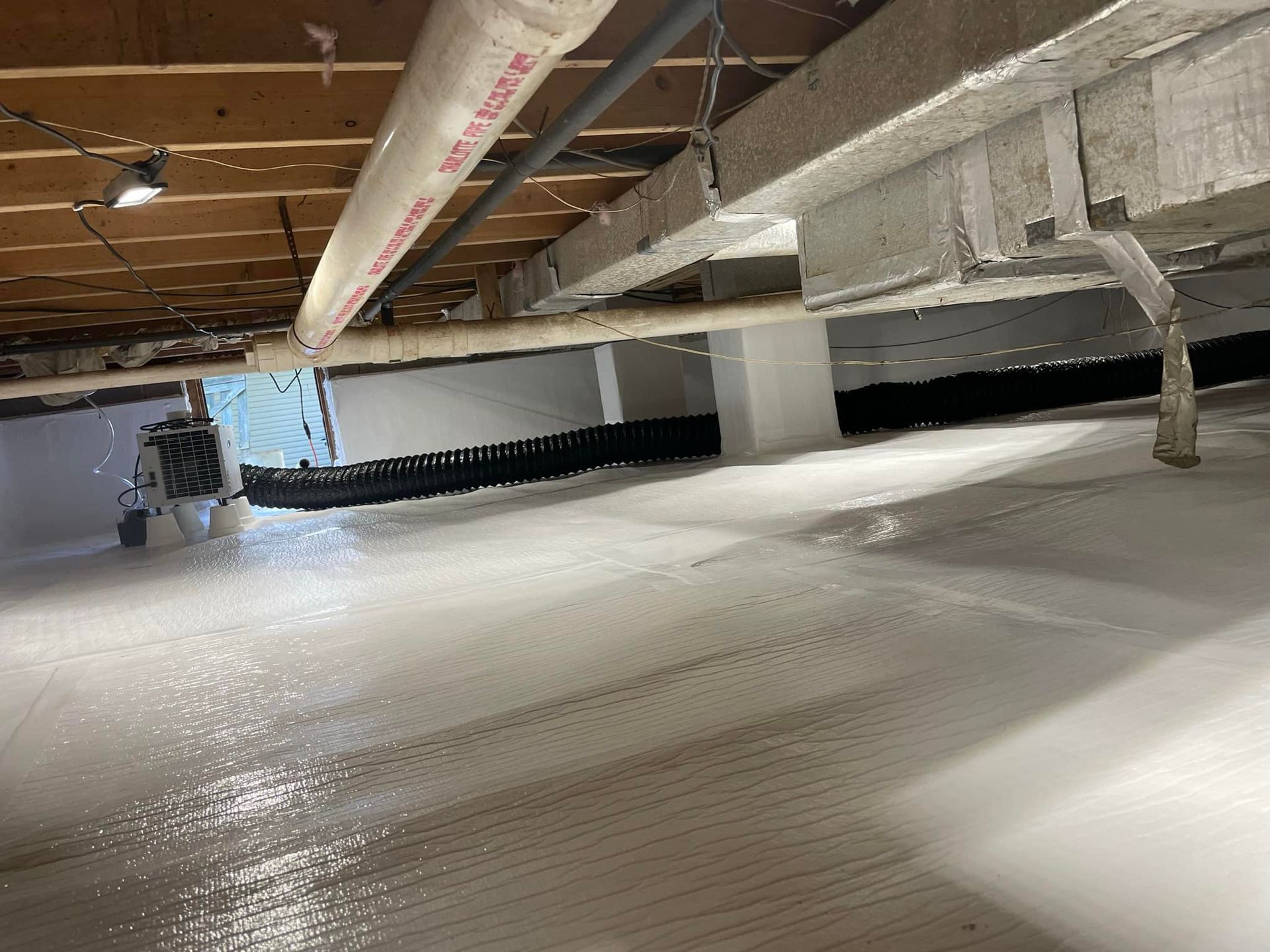
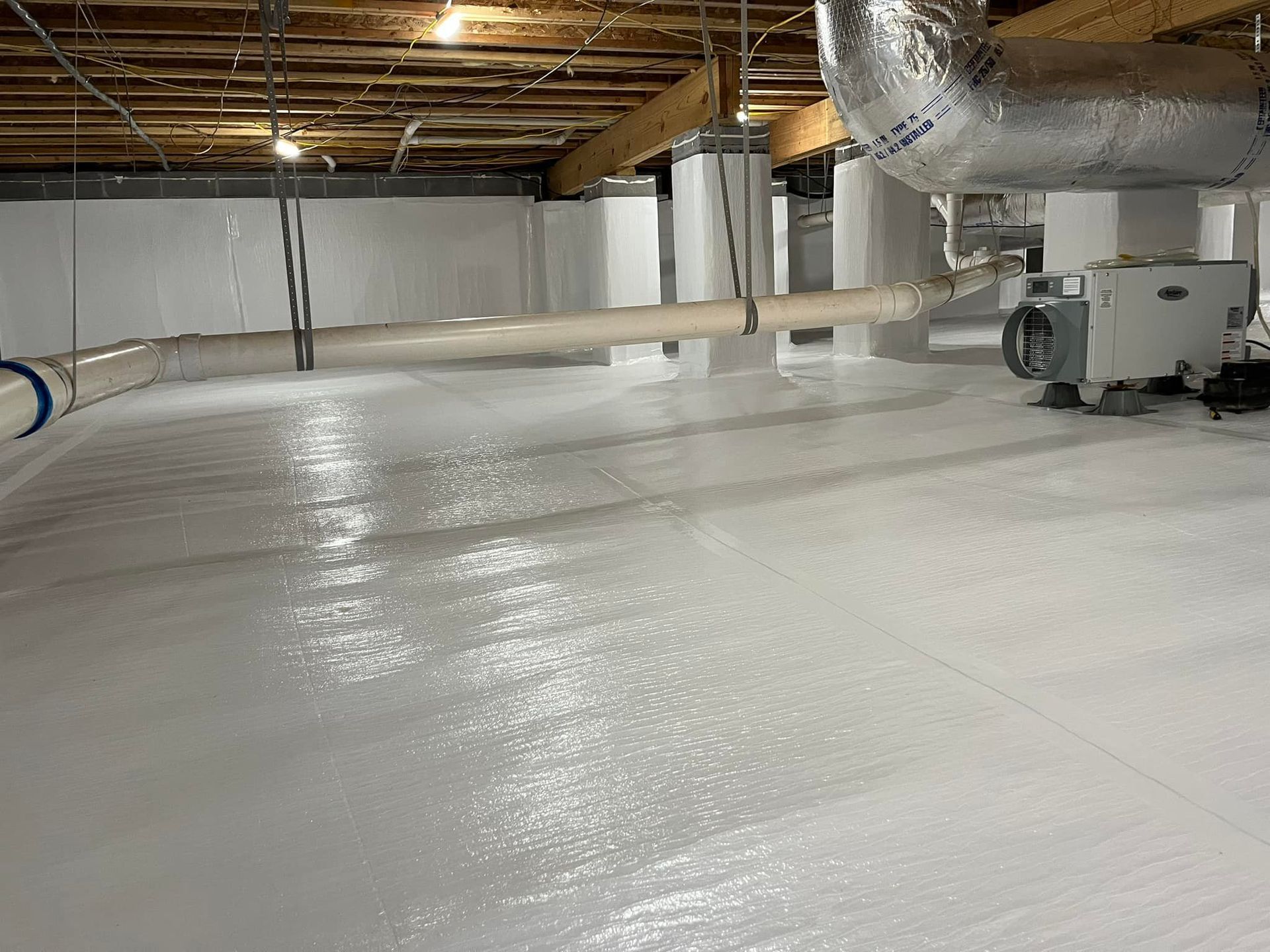
A heavy 20-mil fiberglass-reinforced liner — not the thin plastic sheeting from a hardware store — covers the floor and walls, mechanically fastened and sealed at every seam so ground moisture stays out.
03
Dehumidifier — Plus Drainage if Needed
A correctly sized dehumidifier keeps humidity controlled year-round after everything's sealed. Some Decatur crawl spaces — especially near the river corridor — have groundwater intrusion a vapor barrier alone won't solve. If that's what's there, Jeff adds drainage and a sump pump and tells you why.
04
What Changes Upstairs
Humidity drops, musty odors disappear, floors feel more stable, and the floor framing stops cycling through the wet-dry conditions that degrade wood over time.
About those vents
A lot of Decatur homeowners have been told to open their vents in summer to let the crawl space breathe. Building science has moved past that. In Central Illinois there are maybe six days a year where outside air is dry enough that open vents help rather than hurt. The rest of the year you're pulling humid air directly under your home. We seal those vents on every job.
Behind the liner
What Turns Up When We Get Under a Decatur Home
What brought someone to the phone is usually a symptom of something broader. That's why we look at everything — not just the thing you called about.
Insulation That's Doing More Harm Than Good
Humid air condenses on your floor joists all summer, and mold takes hold. The fiberglass insulation between the joists absorbs that moisture, sags, and eventually falls — exposing more wood to the same cycle. It comes out before anything else goes in.
Groundwater Near the River Corridor
In west and south Decatur near the river corridor, the water table rises every spring whether it floods or not. Those situations need drainage and sometimes a sump pump before they need encapsulation. A vapor barrier over a water problem isn't an encapsulation — it's a cover-up, and one of the most expensive mistakes to fix later.
Jobs That Were Quoted Low and Built to Match
Dehumidifiers too small for the space. Vapor barrier stapled instead of fastened. Seams left untaped. Condensate lines draining straight onto the crawl space floor. Jeff's gone behind work like this more than once — those homeowners paid twice. Once for the job that didn't hold, and again to have it done right.
How Far It's Gotten Into the Floor Framing
The floor structure weakens slowly, from underneath, where you can't see it — a little bounce, a soft spot, a squeak that keeps getting worse. We check how far that's progressed before we ever talk about what it costs to fix.
This is why the inspection comes first. All of it.
From the truck to the proposal
What to Expect From Your Decatur Inspection
When Jeff arrives, he doesn't head straight for the crawl space. He sits down with you first — asks what you've been noticing, what you're worried about, what you're hoping to find out. That conversation shapes everything that happens next, because the thing that sent you searching is often a symptom of something deeper.
01
First, We Sit Down
Jeff asks what you've been noticing, what you're worried about, and what you're hoping to find out. That conversation shapes everything that happens next — the thing that sent you searching is often a symptom of something deeper.
02
We Walk the Outside
Jeff checks your downspouts, your grading, anything on the exterior that could be driving what's happening underneath — then suits up and goes in, moisture meter and camera running.
03
We Cover Every Inch Below
If you want to watch, you can — Jeff can stream the inspection live to a laptop in your living room, so you see exactly what he sees, with no surprises on the report later.
04
We Lay It All Out
Jeff walks you through what he found and why he's recommending what he's recommending — every item, every reason. The number won't be a shock, because nothing about it will be unexplained. If you need to phase the work, he'll help you figure out what to do first.
05
We Prove It, Then Come Back
Once we start, we don't leave until it's done. When we finish, we do a full walkthrough with video and photos so you can see exactly what was completed. Six-month and one-year follow-up visits are scheduled before we leave — and included in the job.
Questions & Answers
Crawl Space Encapsulation FAQs — Decatur, IL Homeowners
What if the damage is worse than I expected?
That's the fear most people carry into the inspection. Jeff's job is to tell you the truth about what's there — not to make it bigger than it is, and not to minimize it either. Whatever is under your house, you're better off knowing. Either it's nothing to lose sleep over, or it's something that's been getting worse while you waited. Either way, you walk away with a clear picture and a path forward.
Do I need to be home for the crawl space inspection?
Yes. Jeff wants to sit down with you before he goes in. That conversation matters. Plan for about an hour.
How long does crawl space encapsulation installation take?
Most jobs are one to two days. My Guys doesn't start a job and leave. If it's a two-day job, they're there both days until it's done.
Can I phase my crawl space encapsulation if I can't do it all at once?
Jeff can help you prioritize. Some things are more urgent than others. You don't have to solve everything in one visit.
What happens after crawl space encapsulation is installed?
My Guys schedules a six-month and one-year follow-up visit at no additional charge. Jeff or Chris comes back to make sure everything is holding the way it should.
How far out is My Guys booked for crawl space encapsulation?
They're typically booked three to five weeks out for installation. Inspections get scheduled sooner. The sooner you call, the sooner you know what you're dealing with.
Still have questions?
Every crawl space is different. Call us or book a free inspection and we'll walk you through exactly what your home needs.
The next step
Schedule Your Free Crawl Space Inspection in Decatur, IL
Whatever is under your house has been there through last winter and every humid summer before it. The longer it stays unsealed, the more it costs to fix. The inspection is free — Jeff or Chris runs it personally. They'll tell you exactly what they found and exactly what it would take to fix it, and you won't be pressured into anything.
The hardest part is usually just deciding to find out.
Email US