Do You Really Need a Dehumidifier for Crawl Space Encapsulation?
Here's Why Sealing Without One Makes Things Worse
We're on the home stretch of a crawl space encapsulation here in Bloomington, getting the dehumidifier set up and fixing a condensate drain issue we found during installation.
I get asked all the time: "Is a dehumidifier really necessary? Can't I just do the encapsulation and save some money?"
Here's the honest answer: if you want an actual, complete encapsulation that solves your problems for good, a dehumidifier is 100% necessary. We won't do an encapsulation without one. Not because we're trying to upsell you, but because sealing up your crawl space without a dehumidifier actually makes things worse.
And this Bloomington job is a perfect example of why the equipment is only half the equation. The other half? Paying attention during installation and catching problems before they get sealed in.
What Encapsulation Actually Does
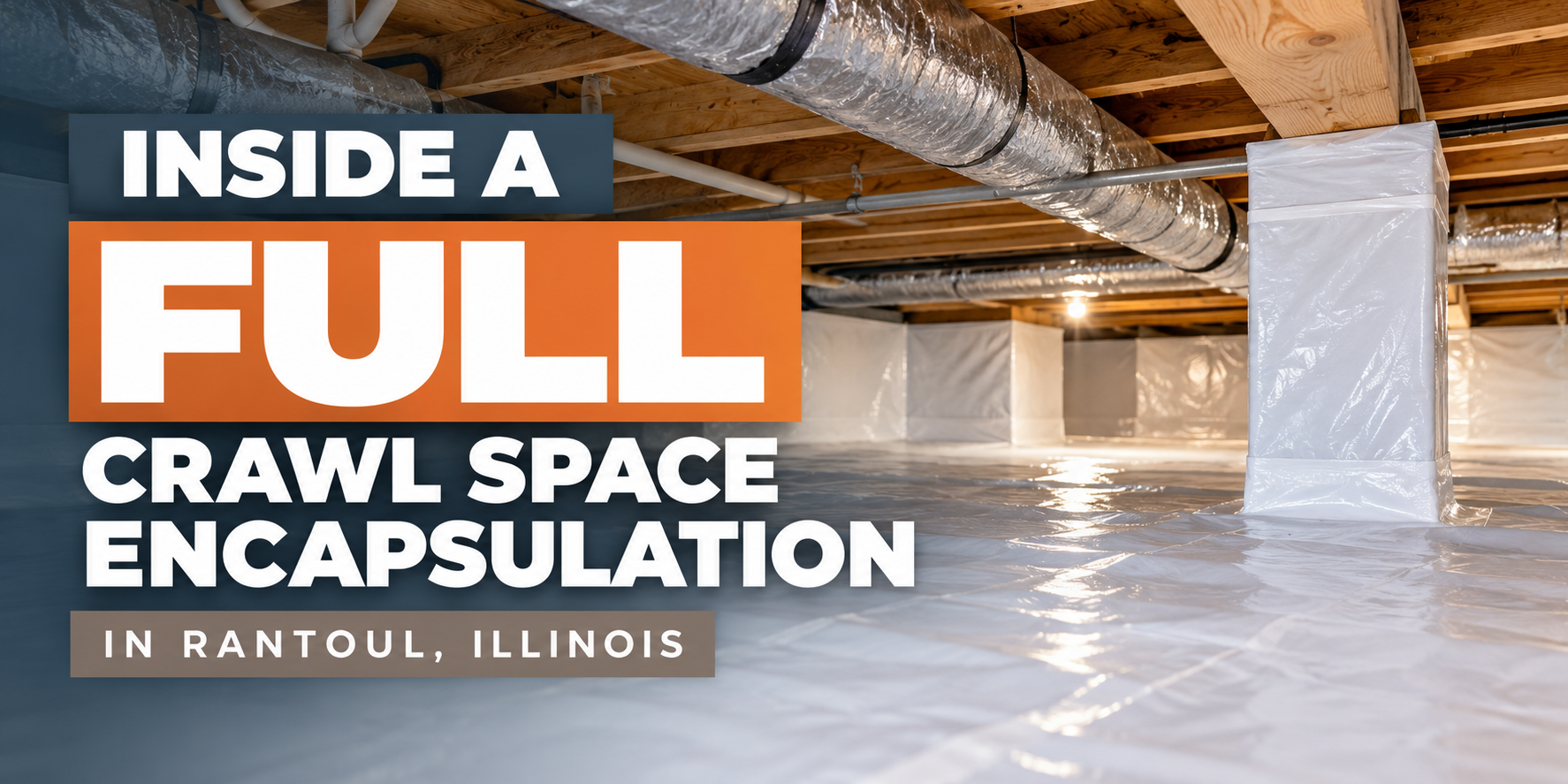
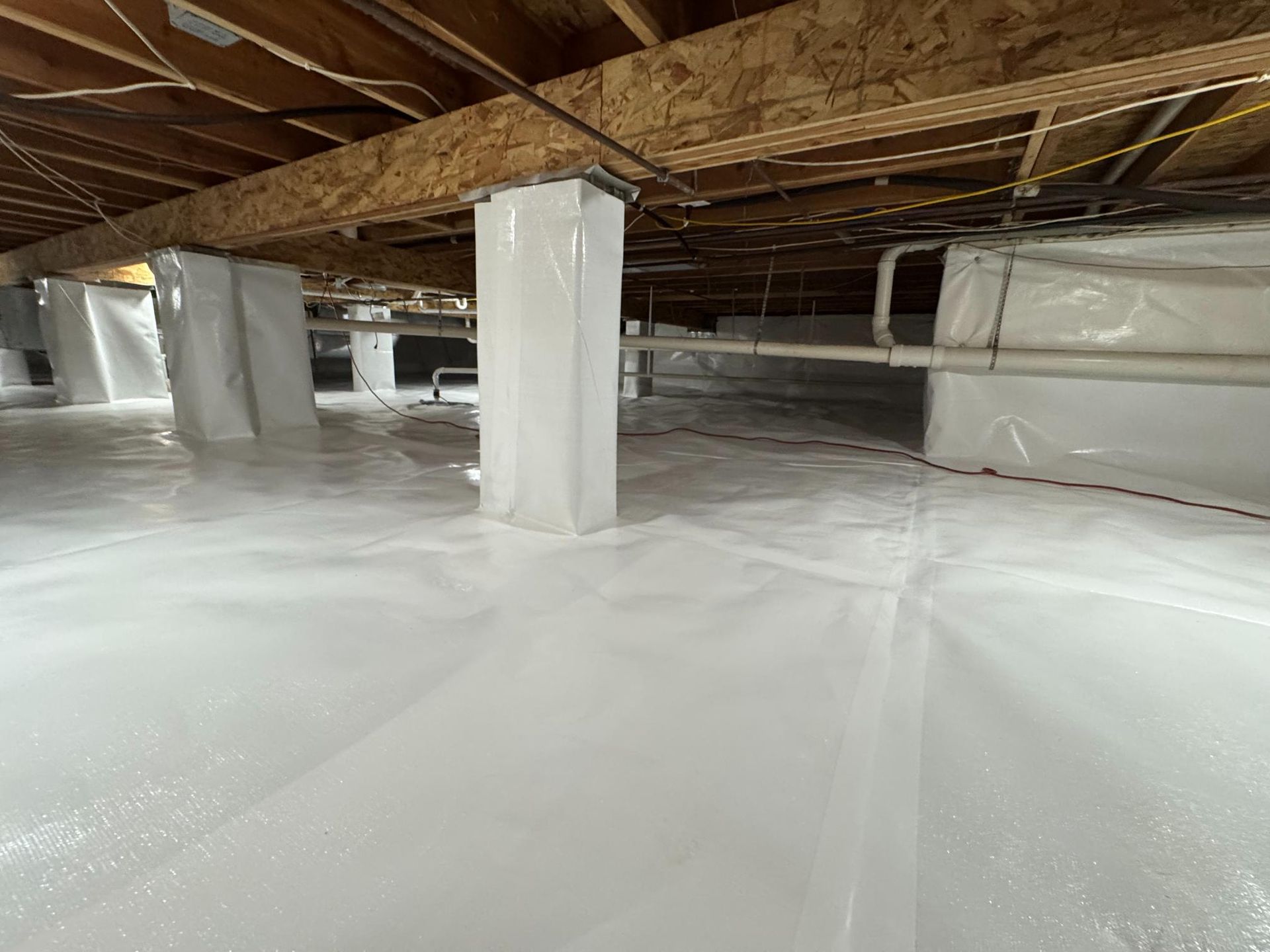
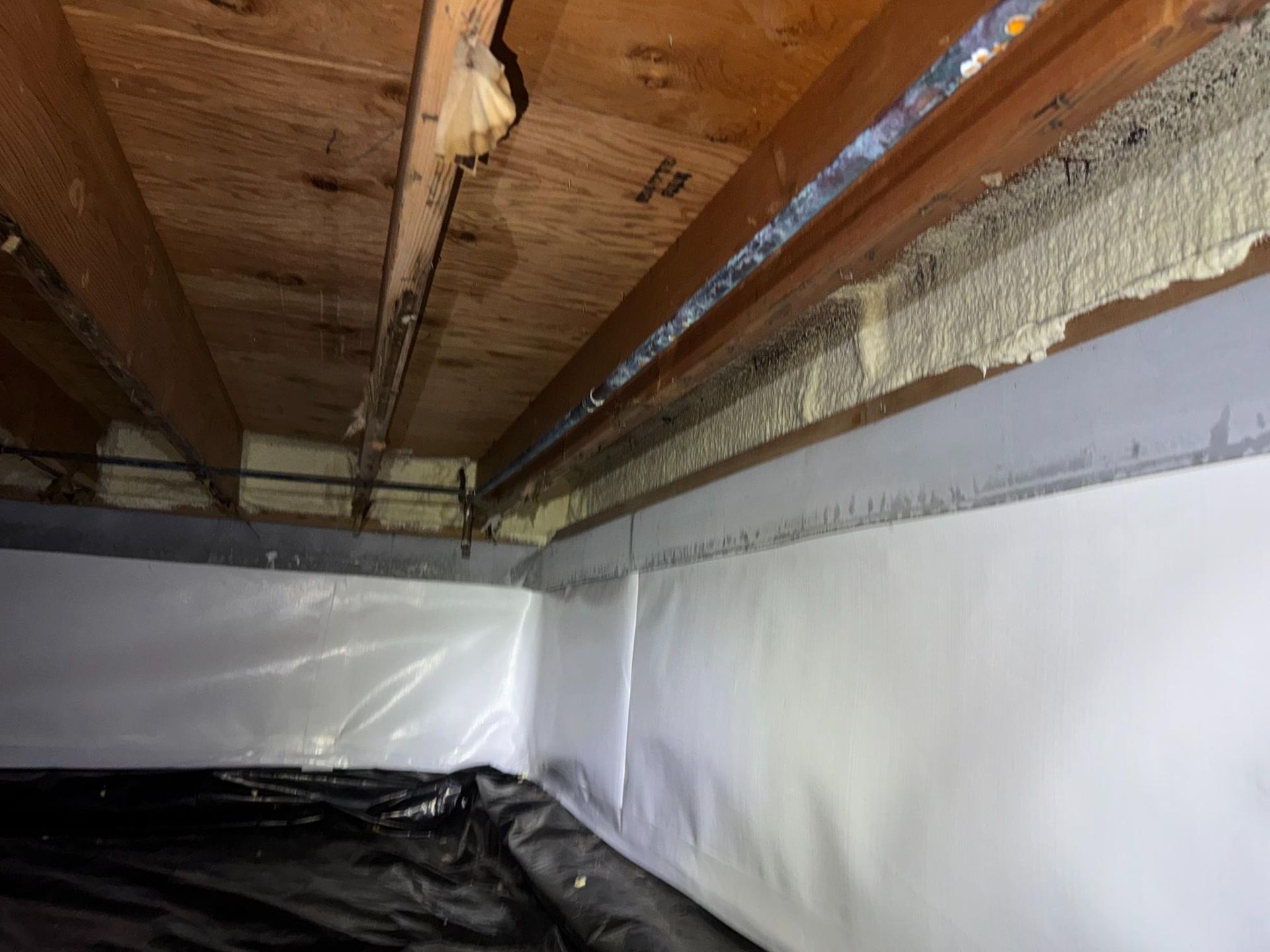
Crawl space encapsulation means sealing everything up. We install a heavy-duty vapor barrier on the floor and up the walls. We seal your vents. We wrap your piers. The goal is to keep outside moisture—from the ground, from outside air, from everywhere—out of your crawl space.
And it works. A properly done encapsulation stops outside moisture from getting in.
But here's what most homeowners don't think about: what happens to humidity that's already inside that sealed space? Or moisture that gets in from a source you didn't know about?
Once your crawl space is encapsulated, that vapor barrier isn't just keeping moisture out. It's also keeping it in. If humidity gets trapped inside all that sealed plastic, it has nowhere to go. The crawl space is now airtight.
So you've created an environment that's dark, damp, sealed off, and undisturbed. That's the perfect recipe for mold to grow like crazy. The same vapor barrier that's supposed to protect your home is now trapping the problem inside.
Why Skipping the Dehumidifier Backfires
This is where a lot of encapsulations go wrong.
Some companies will sell you "encapsulation only" and make the dehumidifier an optional add-on. They're not technically lying—the encapsulation does seal out outside moisture. But without a dehumidifier, you're betting everything on a perfect seal with zero moisture sources inside. And perfect doesn't exist.
There's almost always something. A condensate drain like we found on this job. A small plumbing leak. Groundwater seeping through a tiny crack in the foundation. Humidity that was already in the space when you sealed it up. Even just the moisture that comes up through the concrete or block walls before the barrier goes up.
Without a dehumidifier, all that moisture just sits there. It has nowhere to go. And mold loves that kind of environment.
We've seen plenty of crawl spaces that were encapsulated without dehumidifiers. They all end the same way: homeowners calling us a year or two later saying their crawl space smells worse than it did before the work was done. That's because they sealed the problem in instead of solving it.
A dehumidifier is the active part of the system. It actually removes moisture from the air inside your encapsulated crawl space. The vapor barrier is the passive protection—it blocks outside moisture. But you need both working together. One without the other doesn't get the job done.
That's why we won't do an encapsulation without including a dehumidifier. It's not complete without it.
The Hidden Issue We Found in Bloomington
On this job, our crew was laying down the vapor barrier on the crawl space floor when they noticed something: the poly was getting wet.
That's not normal. So they stopped and investigated.
Turns out there was a condensate drain from the furnace and air conditioner draining directly onto the crawl space floor. We didn't catch it during our initial inspection because there was already a PVC drain line visible down there. But at some point, someone had replaced the HVAC system and added a second condensate line. Instead of routing it to the existing drain, they just let it dump right onto the dirt.
If our crew hadn't been paying attention, we would've sealed that moisture source right into the encapsulation. The dehumidifier would've been running constantly, fighting a losing battle against water actively pouring onto the floor. Eventually, you'd have mold growth, failed barrier, and a system that doesn't work.
Instead, we cut open the poly, installed a small condensate pump, and rerouted the drain line properly. Problem solved before it became a bigger problem.
This is what attention to detail looks like. It's not just following the plan and installing what we quoted. It's staying alert during the work, noticing when something's off, and fixing it right then—not after the homeowner calls us back six months later wondering why their crawl space still smells musty.
Why Installation Quality Matters as Much as Equipment
You can have the best dehumidifier on the market, but if you seal in an active water source, it's not going to keep up.
The dehumidifier's job is to handle normal humidity—the moisture in the air that naturally exists in a crawl space. It's not designed to fight against a condensate drain dumping gallons of water onto the floor, or a leaking pipe, or groundwater coming through a crack.
That's why the installation process matters just as much as the equipment you're using.
Inspections can only tell you so much. We look at your crawl space, assess the moisture issues, check for visible problems. But some things only become obvious once you start working. A drain line hidden under debris. A slow plumbing leak that only shows up when the poly goes down. Groundwater that seeps in from a spot you couldn't see during the walkthrough.
A good crew doesn't just follow the quote and call it done. They stay alert. They investigate when something doesn't look right. They solve problems during installation instead of sealing them in and hoping for the best.
Equipment and careful work—you need both for a system that actually works.
What Happens If You Don't Check
Here's the typical scenario we see: a homeowner calls us because they smell something musty upstairs, or they noticed their floors feel soft. We go down into the crawl space and find standing water. Lots of it.
Turns out their sump pump failed three weeks ago, maybe longer. They had no idea because nobody ever checked. Now we're not just replacing a $300 pump—we're dealing with mold remediation, replacing insulation, treating wood rot, and hoping the structural damage isn't too severe.
What could've been a simple pump replacement becomes a multi-thousand-dollar problem.
And it's completely avoidable.
The difference between catching a failing pump early and discovering it after weeks of standing water is massive. One costs you a few hundred bucks. The other can easily run into the thousands, plus the headache of having contractors in your crawl space for days instead of an hour.
A 30-second check on rainy days prevents all of that.
What "Complete" Encapsulation Should Include
This is why Jeff and I check sump pumps on days like today. Not just for our customers, but for our own homes too.
We live here in Mahomet. We know the weather patterns. We know that when we get heavy rain, everyone in the area is dealing with the same saturated ground and the same stress on their sump pumps. We're all in this together.
That community connection matters to us. When we work on your crawl space, we're not just another crew passing through town. We're your neighbors. We see you at the store, at the kids' games, around town. Our reputation isn't just business—it's personal.
So we'd rather help you replace a pump before it fails than get a panicked call when your crawl space is underwater. That preventive mindset is just how we operate.
We're not trying to run the biggest company in Central Illinois. We're trying to take care of our community the right way. And that means checking the small stuff before it becomes big stuff.
Book A Free Inspection Now
Your crawl space problems aren't going to fix themselves. But they are fixable. Let's get it done — the right way, permanently.
Or call us directly (217) 863-9559
Ready to Do It Right?
If you're dealing with crawl space moisture, musty smells, or you just want to know what's actually going on under your house, give us a call.
We'll come out and do a thorough inspection. We'll explain what we find, what you actually need, and why. No pressure, no upselling equipment you don't need. Just an honest assessment from someone who's been doing this work for years.
And if we do the job, you're getting a complete system: proper encapsulation, correctly sized dehumidifier, and a crew that pays attention to the details that matter.
We serve Bloomington, Mahomet, Champaign, and all of Central Illinois.