What Improper Crawl Space Encapsulation Actually Looks Like
When "Encapsulation" Is Just Black Plastic
I'm standing in a crawl space in Decatur, Illinois, and the homeowner who called me has a problem. They already paid a contractor thousands of dollars for encapsulation work. But the house still smells musty. The humidity is still out of control. And they want to know why.
About thirty seconds into this inspection, I can tell you exactly why.
This isn't encapsulation. It's black plastic thrown down with zero attention to detail, no proper sealing, and shortcuts everywhere. Floor supports laying on the ground instead of holding up the house. A sump pump in a collapsing plastic tote. Mold growing on the wood because nothing was actually fixed.
Let me show you what improper crawl space encapsulation looks like—so you know what to watch for if you're hiring someone or wondering why your existing work didn't solve the problem.
What We Found in This Decatur Crawl Space
First thing I see: floor supports that aren't supporting anything. They're literally laying down on the crawl space floor. One of them has a little bit of weight on it, but it's not installed properly. These are supposed to be holding up your house.
The black plastic vapor barrier isn't taped. The seams are just laying there open. You can lift it up and see dirt underneath. It's falling off the foundation walls because it was only stapled to the floor joists—no proper attachment, no sealing.
There's standing water sitting on top of the plastic. Not under it—on top of it. Which means water is still getting in, pooling up, and going nowhere.
The sump pump system? It's a plastic storage tote from a hardware store. And it's collapsing under its own weight, so someone propped it up with pieces of PVC pipe. At least they connected the furnace condensate drain to it—but then they're pumping it straight into the city sewer line, which is a code violation in most places.
The humidity down here is so bad that water is literally dripping off the HVAC plenum like it's raining inside the crawl space. And because of all that moisture, there's biological growth—mold—on the floor joists above the standing water.
This homeowner paid for encapsulation. What they got was black plastic and problems that never got solved.
Why This Isn't Actually Encapsulation
Real encapsulation is supposed to control moisture, seal your crawl space from the ground, and protect your home's structure. It's a system that works together—vapor barrier, drainage, dehumidification, proper sealing at the walls and rim joists.
What we're looking at here in Decatur is just black plastic laid down to make it look like something was done.
The plastic isn't sealed to the walls. It's not taped at the seams. Water is still getting into the space and has nowhere to go except pool up on top of the barrier. The supports aren't actually supporting the floor. The sump pump is a DIY solution that's already failing.
This approach doesn't solve moisture problems—it just covers them up and hopes you won't notice.
And here's the frustrating part: this is what happens when contractors know most homeowners will never come back down to inspect the work. They do the fastest, cheapest version that technically counts as "we put plastic down," collect payment, and move on to the next job.
Budget encapsulation sounds like a good deal until you realize you're paying thousands of dollars for work that doesn't actually work. Now this homeowner is dealing with the same humidity, the same smells, and the same structural concerns they had before—except now they're out the money they already spent and facing the reality of paying someone else to do it right.
What Proper Encapsulation Should Include
So what should encapsulation actually look like?
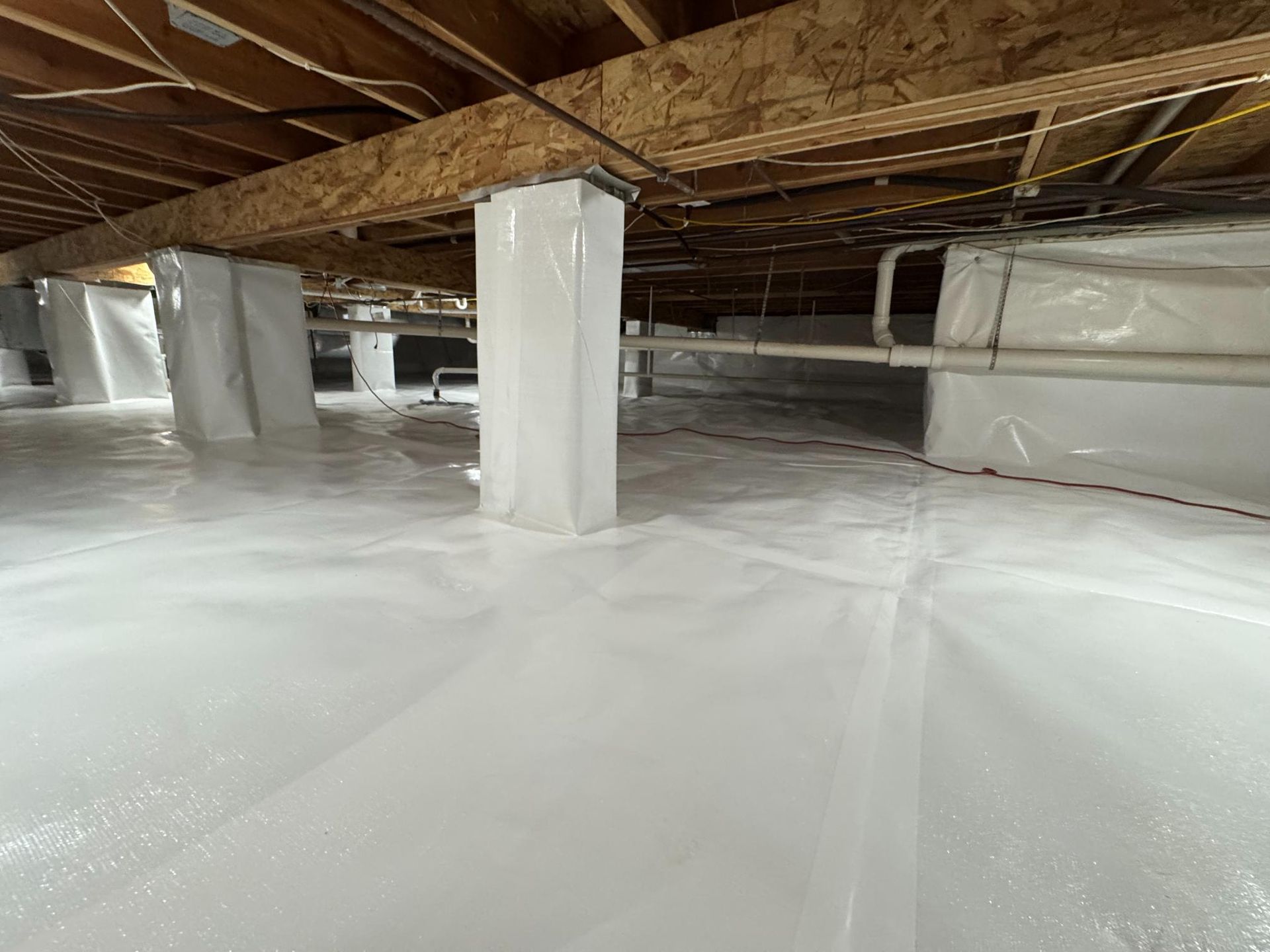
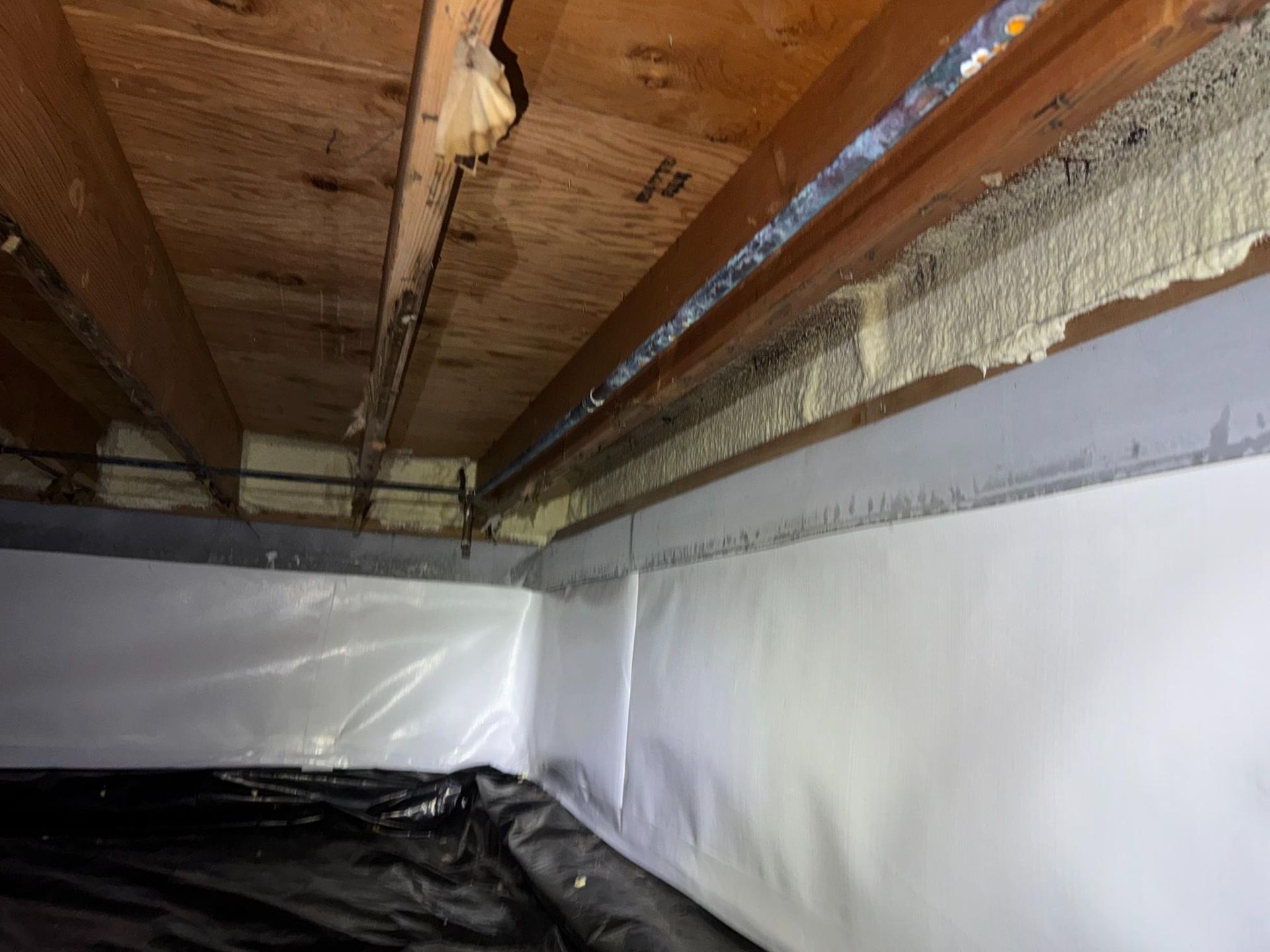
Start with a proper vapor barrier. That means thick, durable material with all seams taped and sealed. It needs to be attached to the foundation walls correctly—not just stapled to the floor joists where it'll fall down in six months. The goal is to create a sealed system between your home and the ground.
Floor supports should be installed correctly and actually bearing weight. That means proper footings, adjustment to the right height, and positioned to support the structure where it needs it. Not just laying on the crawl space floor.
A real sump pump system—professionally installed in a proper basin with a backup pump, sealed lid, and drainage that follows local code. Not a plastic tote held together with PVC pipe and hope.
The rim joists and foundation walls need to be sealed and insulated if needed. Any vents should be closed off or sealed as part of creating a conditioned space.
And here's the part a lot of companies skip: dehumidification. Sealing the crawl space is step one. Controlling the humidity that's already in there is step two. Without a proper dehumidifier, you're still going to have moisture problems.
When it's done right, your crawl space should be clean, dry, and bright. You should be able to walk through it without stepping over debris or standing water. It should look finished—not like someone just threw down plastic and called it a day.
How to Inspect Existing Encapsulation Work
If you've had crawl space work done, here's what to check:
Is the vapor barrier actually sealed? Look at the seams—are they taped? Check where it meets the walls. Is it properly attached, or is it falling down and stapled in a few spots?
Are your floor supports installed correctly? They should be vertical, bearing weight, and positioned on proper footings. Not laying sideways or just sitting on bare ground.
What does your sump pump system look like? Is it a professional installation with a sealed basin, or is it a DIY setup that looks temporary?
Can you see standing water anywhere? If water is pooling on top of the vapor barrier or around the perimeter, the drainage wasn't done right.
And here's the big one: ask your contractor to show you the finished work. Good contractors will walk you through it, show you photos, even do a video walkthrough. If they rushed through the final inspection or seemed eager to just get paid and leave, that's a red flag.
You have the right to see and understand the work you paid for. Don't be afraid to ask questions or request documentation.
Why This Keeps Happening
The crawl space problem is simple: most homeowners never go back down there after the work is done.
And some contractors know that. So they take shortcuts. They do the fastest version of the job that technically counts as "encapsulation" but doesn't actually solve anything. Black plastic instead of proper vapor barrier. Quick staple job instead of sealed attachment. DIY sump pump instead of professional installation.
By the time the homeowner realizes it didn't work—maybe six months later, maybe a year—the contractor is long gone and onto the next job.
Price shopping makes this worse. When you're comparing three quotes and one is half the price of the others, there's a reason. That low-bid contractor is planning to cut corners you can't see. They're banking on you not knowing what proper encapsulation looks like.
The cheapest quote almost never gives you the best value. It gives you the fastest work done to the bare minimum standard—or below it.
If you're hiring someone for crawl space work, look at their reputation. Ask to see photos of completed jobs. Talk to past customers. Check if the owner is actually involved or if you're just getting whatever crew happens to be available that week.
What This Homeowner's Options Are Now
So what happens now for this Decatur homeowner?
They can't just live with it. The humidity is damaging the structure. The smell is affecting the whole house. The mold is a health concern. Ignoring it isn't an option.
They could try partial fixes—add a dehumidifier, repair the sump pump, reseal some areas. But that's just putting bandaids on a system that was never done right to begin with.
The realistic option is a complete redo. Remove the improper materials, fix the drainage, install everything correctly. Which means paying twice for the same problem—once for work that didn't work, and again to actually fix it.
That's not fair. But it's the reality when the first contractor cuts corners and disappears.
This is exactly why we take documentation seriously and why we don't rush through the "invisible" parts of the job.
Book A Free Inspection Now
Your crawl space problems aren't going to fix themselves. But they are fixable. Let's get it done — the right way, permanently.
Or call us directly (217) 863-9559
Get a Second Opinion
If you've had crawl space encapsulation done and you're still dealing with humidity, smells, or structural concerns, give us a call.
We'll come do a thorough inspection and show you exactly what's happening down there—with full video documentation. No pressure, no sales pitch. Just an honest assessment of what's working and what needs to be fixed.
You deserve to know if the work you paid for was done right.
Reach out anytime. We're here in Mahomet, serving Decatur and all of Central Illinois.