How Downspouts Cause Crawl Space Moisture Problems
The Problem Hiding in Plain Sight
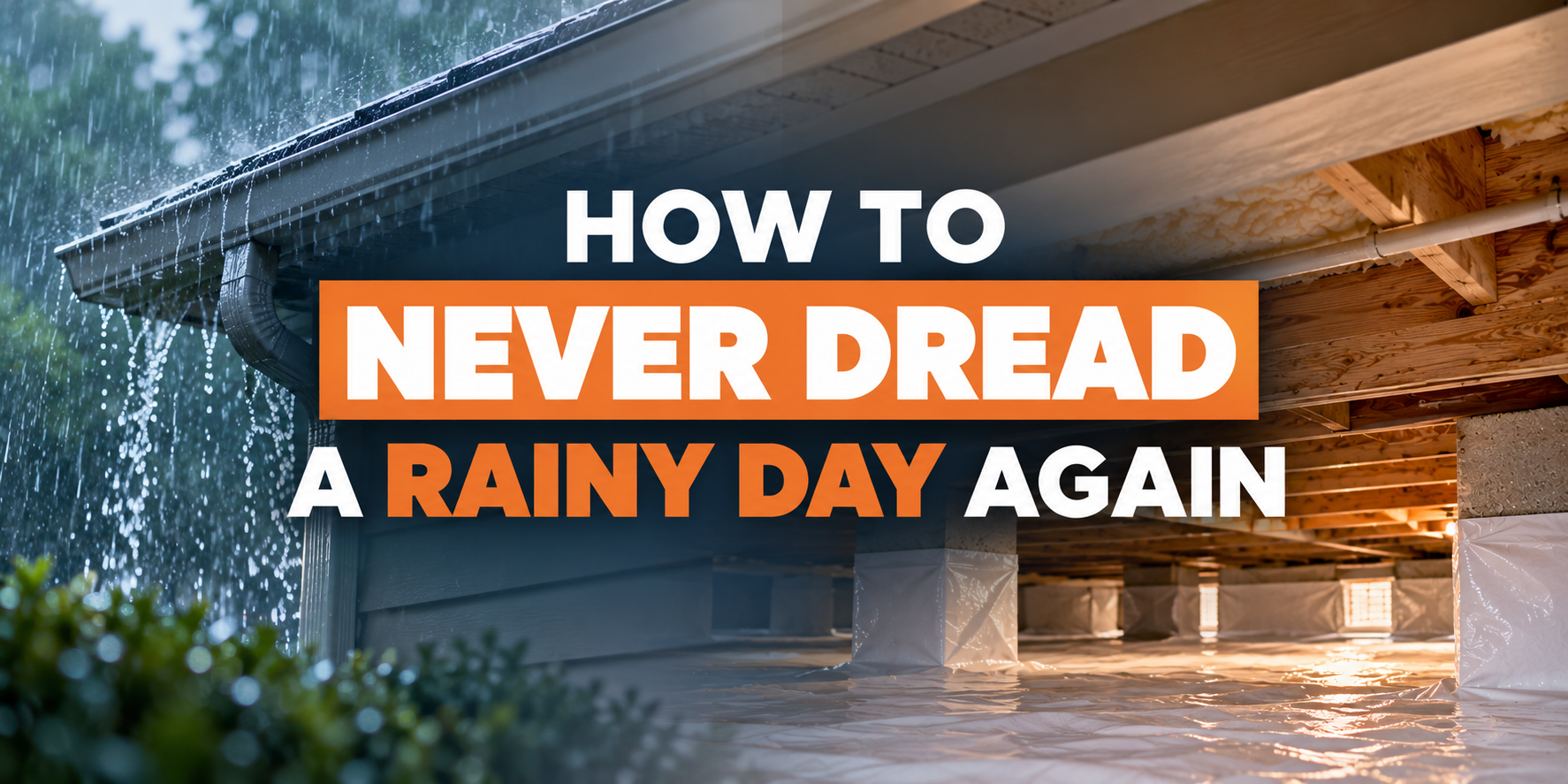
Not a lot of rain today, but enough to show you one of the biggest culprits we see with crawl space moisture problems: gutters that drain right at your foundation.
Most homeowners don't connect their gutter system to their crawl space. They seem like totally separate parts of the house. But here's the reality: your roof collects a massive amount of water, and all of it runs through those gutters. Where that water ends up makes all the difference.
If your downspouts are dumping hundreds of gallons right at the base of your crawl space every time it rains, you're basically flooding your own foundation. And by the time you notice the damage inside your house, that water's been causing problems for months—maybe years.
Let's talk about what's actually happening and why it matters for your home.
What Actually Happens When It Rains
Think about how much surface area your roof has. During a good rain, all that water is funneling into your gutters—we're talking hundreds, sometimes thousands of gallons depending on your roof size and how hard it's coming down.
The gutter system's whole job is to collect that water and get it away from your house. But when those downspouts just end right at your foundation—like the one in the video—all that water dumps straight down at the base of your crawl space.
It doesn't just sit on the surface. It soaks into the soil, works its way down along the footer, and starts penetrating through the concrete block. You can't see any of this happening because it's all underground.
Meanwhile, your crawl space is taking on moisture. Not all at once, but consistently. Every single rain. And most homeowners have no idea it's happening until they smell something musty, notice a crack in the wall, or find mold growing somewhere it shouldn't be.
That downspout that's been there for 20 years? It's been causing problems the whole time.
The Crawl Space Problems Bad Drainage Causes
When water's constantly dumping at your foundation, it creates a chain reaction of problems under your house.
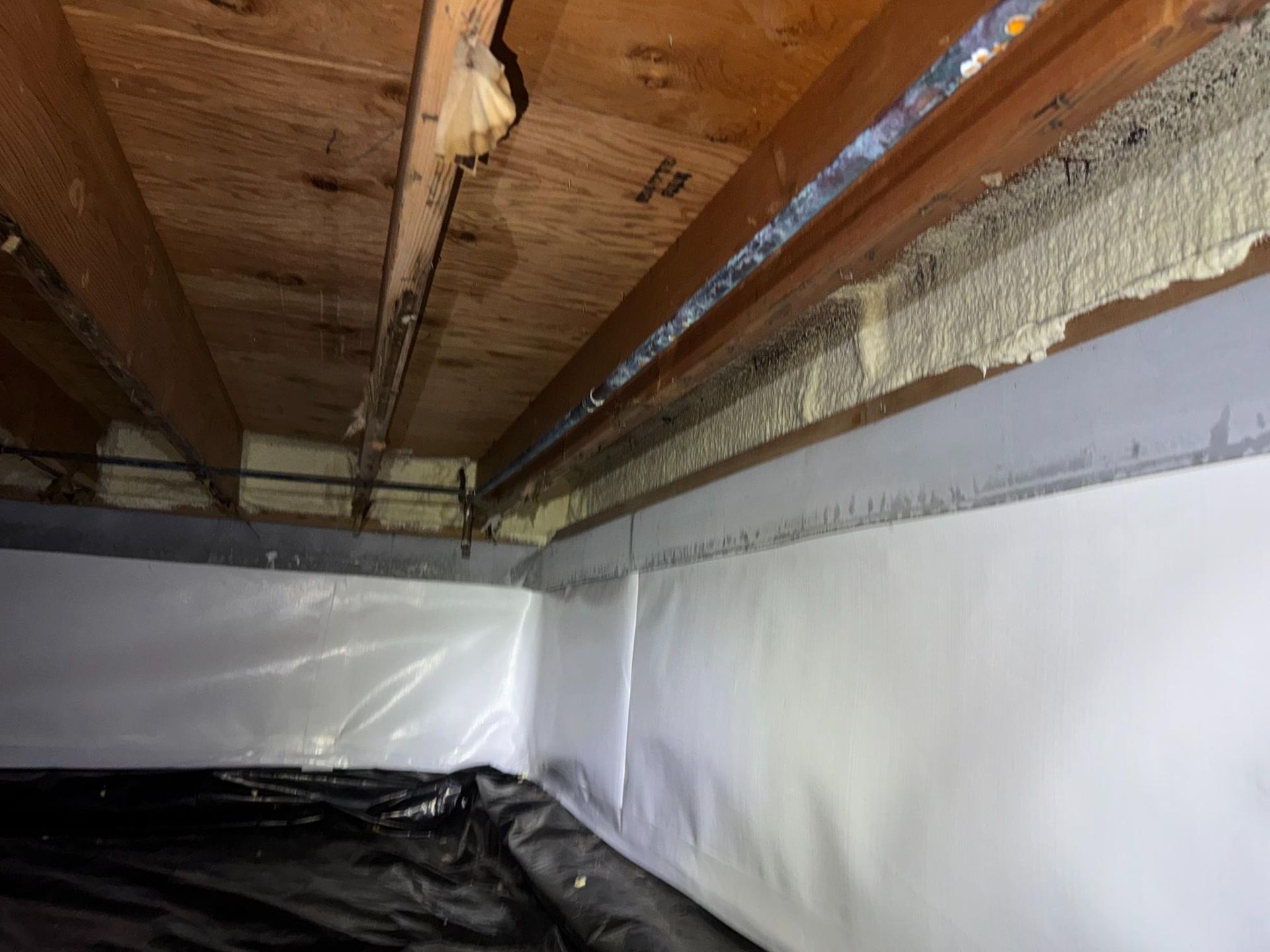
First, you've got moisture penetrating through the foundation itself. That water seeps down to the footer and works its way through the concrete block. Your crawl space starts staying damp—not flooded necessarily, but consistently wet enough to cause issues.
That ongoing moisture leads to mold growth. You might smell it upstairs before you ever see it. That musty smell that won't go away no matter how much you clean? It's probably coming from your crawl space.
Then you've got wood rot. Your floor joists, your subfloor, your sill plate—all that wood sitting in a damp environment starts breaking down. Soft spots in your floors. Sagging. Structural issues that cost serious money to fix.
And here's what a lot of people don't realize: that cracked corner you see inside your house, or the door that suddenly doesn't close right, or the gap appearing in your trim—those are often symptoms of foundation movement caused by water issues.
By the time you're seeing visible damage inside, the problem's been going on for a long time. You're not just dealing with a moisture issue anymore. You're dealing with structural damage, air quality problems, and repairs that could've been prevented if someone had just extended those downspouts years ago.
Why This Gets Overlooked
So why don't more homeowners catch this before it becomes a big problem?
Simple: gutters and crawl spaces feel like completely different systems. You think about gutters when leaves clog them up. You think about your crawl space when something goes wrong. You don't naturally connect the two.
Plus, both are kind of "out of sight, out of mind." You're not checking your downspouts regularly. You're definitely not going into your crawl space to see what's happening down there.
A lot of times, homeowners focus on the symptom they can see—the musty smell, the moisture, the sagging floor—without ever looking at what's causing it. And honestly, some contractors do the same thing. They'll jump straight to selling you an encapsulation system without ever walking around your house to see where your gutters are draining.
There's also this assumption that "it's always been like this, so it must be fine." Your downspouts have been there since the house was built. Nobody's ever said they were a problem. But just because something's old doesn't mean it's right.
The Simple Fix: Downspout Extensions
Here's the good news: fixing this is usually pretty straightforward.
Downspout extensions do exactly what they sound like—they extend your downspouts away from your foundation and out into your yard. Instead of dumping water right at the base of your house, they carry it 6, 8, 10 feet away where it can actually help your grass grow instead of destroying your crawl space.
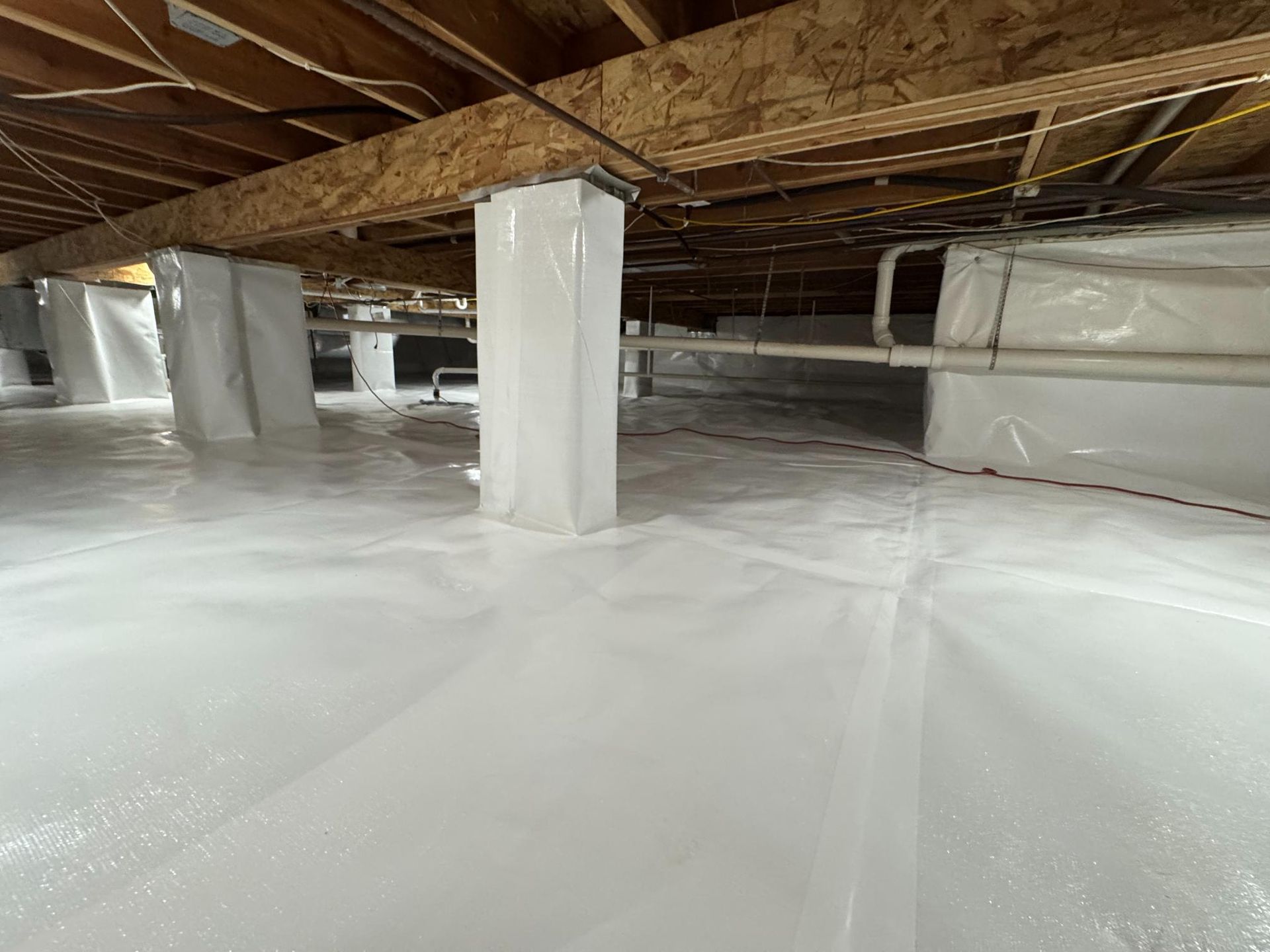
We often handle this before we even start an encapsulation. There's no point in sealing up your crawl space if water's still flooding the foundation every time it rains. Get the water away from the house first, then address what's already happening underneath.
Cost-wise, this is one of the most affordable things you can do to protect your home. Compared to crawl space repairs that can run thousands of dollars, extending downspouts is a fraction of that. And it prevents way bigger problems down the road.
Now, can you DIY this? Sure, if you're comfortable with it. You can get basic extensions at any hardware store. But there's more to it than just slapping on a piece of plastic pipe. You need to make sure the extensions are sloped properly so water actually flows away. You need to consider where that water's going—you don't want to just redirect it into your neighbor's yard or create a new problem somewhere else.
That's why we handle it as part of our assessment. We'll figure out the best way to route everything based on your property's layout and grading.
How to Check Your Own Drainage
You don't need to hire anyone to figure out if your downspouts are causing problems. Just wait for a good rain and take a walk around your house.
Look at where each downspout is depositing water. Is it right at the foundation? Is it pooling near the house? Or is it flowing away like it's supposed to?
Check for signs of soil erosion right at the downspout outlet. If you've got a little trench or depression forming, that's a lot of water hitting the same spot over and over.
Good drainage means water's being carried away from your foundation—at least 6 to 10 feet out into the yard where it can spread out and soak in without affecting your crawl space.
Problematic drainage is anything dumping right at the house, pooling against the foundation, or flowing back toward the house instead of away from it.
The best time to check is during or right after a heavy rain. That's when you'll actually see where the water's going. Don't wait until you've got cracks in your walls or musty smells in your house. By then, the damage is already happening.
Our Approach in Central Illinois
Every crawl space inspection we do starts with looking at drainage. Before we even get under the house, we're walking the property to see where water's going.
Here in Central Illinois, we deal with clay soil that doesn't drain great to begin with. Add in gutters dumping hundreds of gallons at your foundation, and you've got a recipe for crawl space problems. We see it constantly in Mahomet and the surrounding areas.
Our approach is simple: fix the cause, then address the damage. If your downspouts are flooding your foundation, we're extending those first. Then we'll encapsulate, install a dehumidifier, fix any structural issues—whatever your crawl space actually needs.
Some companies want to jump straight to the big-ticket repairs without ever mentioning that your gutters are half the problem. That's not how we operate. We'd rather give you a solution that actually lasts.
Because here's the thing: you can do the fanciest encapsulation in the world, but if water's still pouring in from bad drainage, you're just fighting a losing battle. Get the water away from the house, and half your problems disappear.
Book A Free Inspection Now
Your crawl space problems aren't going to fix themselves. But they are fixable. Let's get it done — the right way, permanently.
Or call us directly (217) 863-9559
Not Sure Where to Start?
If you're dealing with crawl space moisture, musty smells, or you just want to know what's actually going on under your house, give us a call.
We'll come out and do a full inspection—including checking your drainage. We'll walk your property, look at where your downspouts are sending water, and give you straightforward recommendations.
Sometimes it's a simple fix. Sometimes it's more involved. Either way, you'll know exactly what you're dealing with.
Reach out anytime. We're here in Mahomet, and we're ready to help.