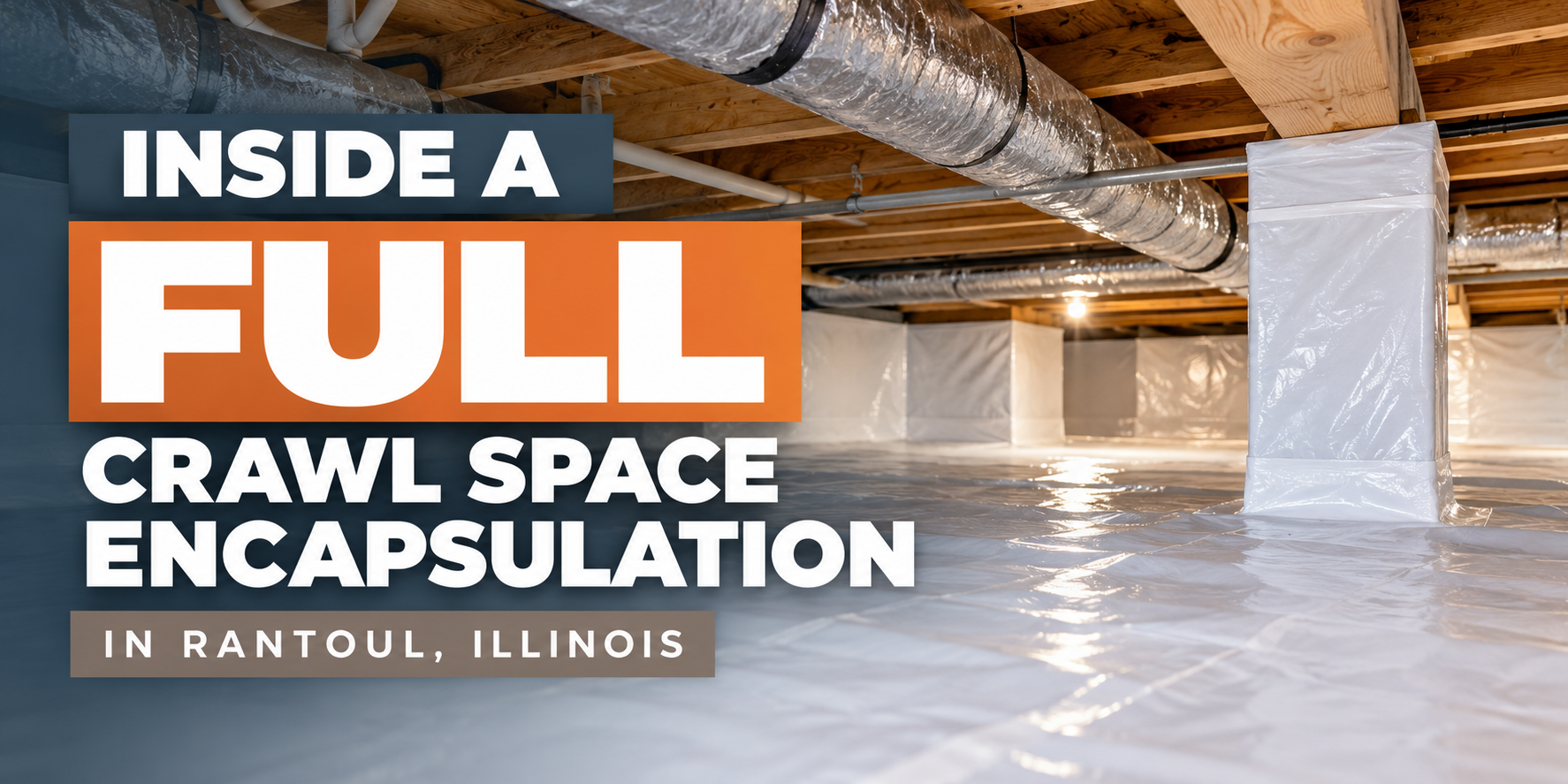
The Right Order for Crawl Space Repairs
Why Crawl Space Work Takes Time
Jeff and I were talking the other day about how crawl space work actually happens, and I realized a lot of homeowners don't know what to expect.
The most common question we get: "How long will this take?"
The honest answer? It depends on what we find when we get under your house.
A lot of people think crawl space repair is a one-and-done thing. Show up, fix it, leave. But the reality is, if there's water down there, we can't just ignore that and move straight to fixing your sagging floors. We have to work in stages—drainage first, then encapsulation, then structural repairs once everything's dry.
It might take a few weeks of coming and going to do it right. But doing it in the right order means each fix actually sticks. And that's the difference between a temporary patch and a permanent solution.
The Problem with One-Day Promises
You've probably seen the ads: "Complete crawl space repair in one day!" Sounds great, right? Get it all done and move on with your life.
Here's the problem: some crawl space issues just can't be rushed. Not if you want them fixed properly.
If your crawl space has standing water, you can't encapsulate over it and call it done. The moisture doesn't disappear just because you covered it with plastic. And if you try to level sagging floors while the wood is still wet, those supports are going to shift again as the wood dries and contracts.
Physics doesn't work on your timeline. Neither does moisture.
The big companies that promise one-day fixes are either skipping steps, or they're only handling part of the problem. They might seal up your crawl space without addressing the drainage issue causing the moisture. Or they'll install floor supports without waiting for the wood to dry and stabilize.
Six months later, you're calling someone else because the problem's back. That "one-day solution" just cost you twice.
We'd rather take the time to do it right the first time.
Stage One: Solving the Water Problem
Before we can do anything else, we have to deal with water. You can't encapsulate over wet ground. You can't fix structural issues while moisture is actively rotting the wood. Water has to be controlled first.
So what does that actually look like?
We're assessing where the water's coming from. Is it groundwater seeping up? Poor drainage around the foundation? Downspouts dumping right next to the house? All of the above?
Then we start directing it. We dig drainage pits, lay tile to channel the water where we want it to go instead of letting it pool under your house. Sometimes that means installing a sump pump. Almost always it means extending those downspouts so water's running away from your foundation, not toward it.
Once the drainage system is in place, we have to let things start drying out. We can't just flip a switch and make moisture disappear. The ground needs time to drain. The wood needs time to begin releasing the water it's been holding.
How long does this stage take? Depends on how much water we're dealing with. Could be a few days, could be a week or more.
But this is the foundation for everything else. If we skip this step or rush through it, nothing we do after this will last.
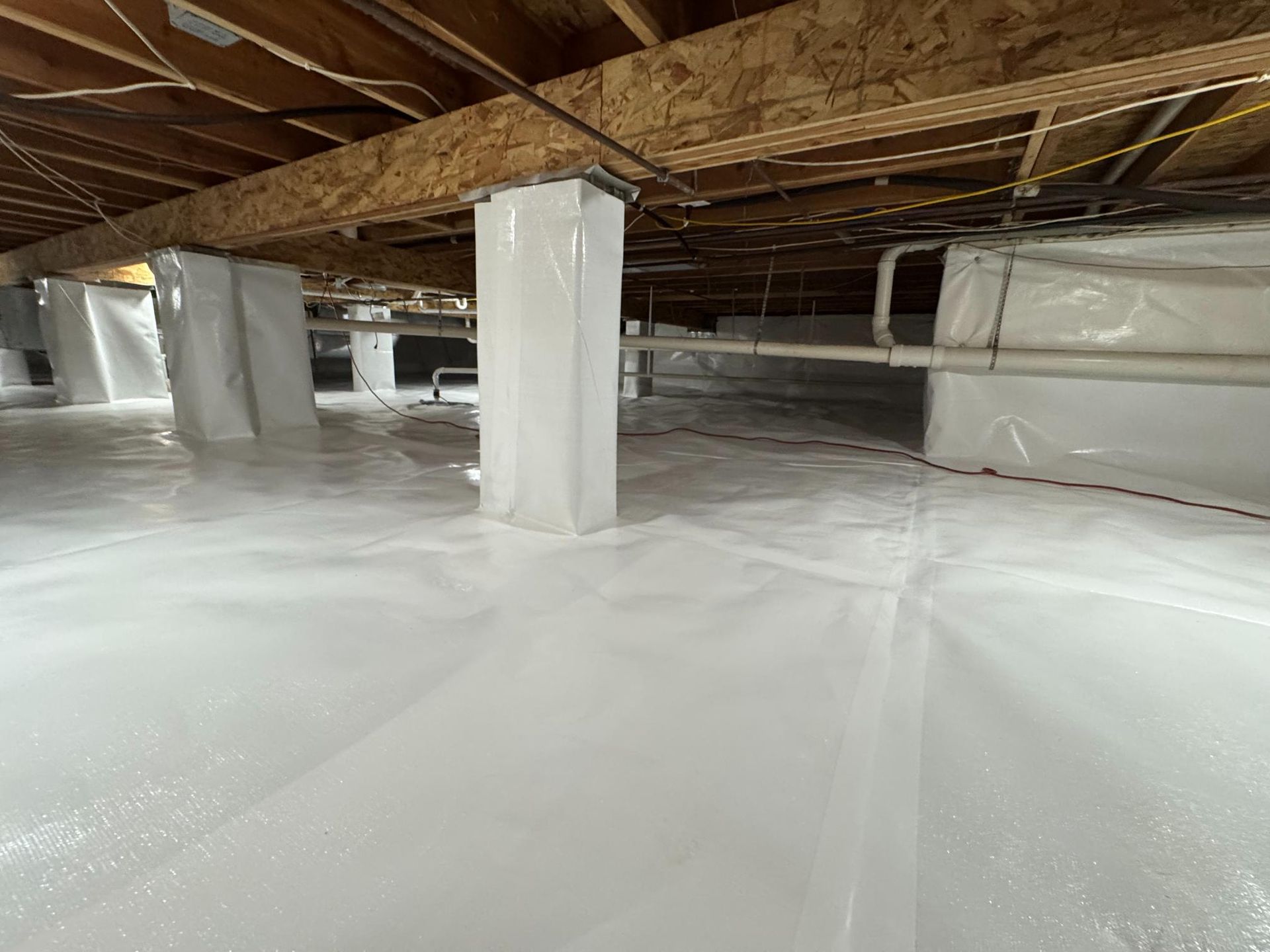
Stage Two: Encapsulation and Climate Control
Once the water's managed and things are drying out, now we can seal everything up.
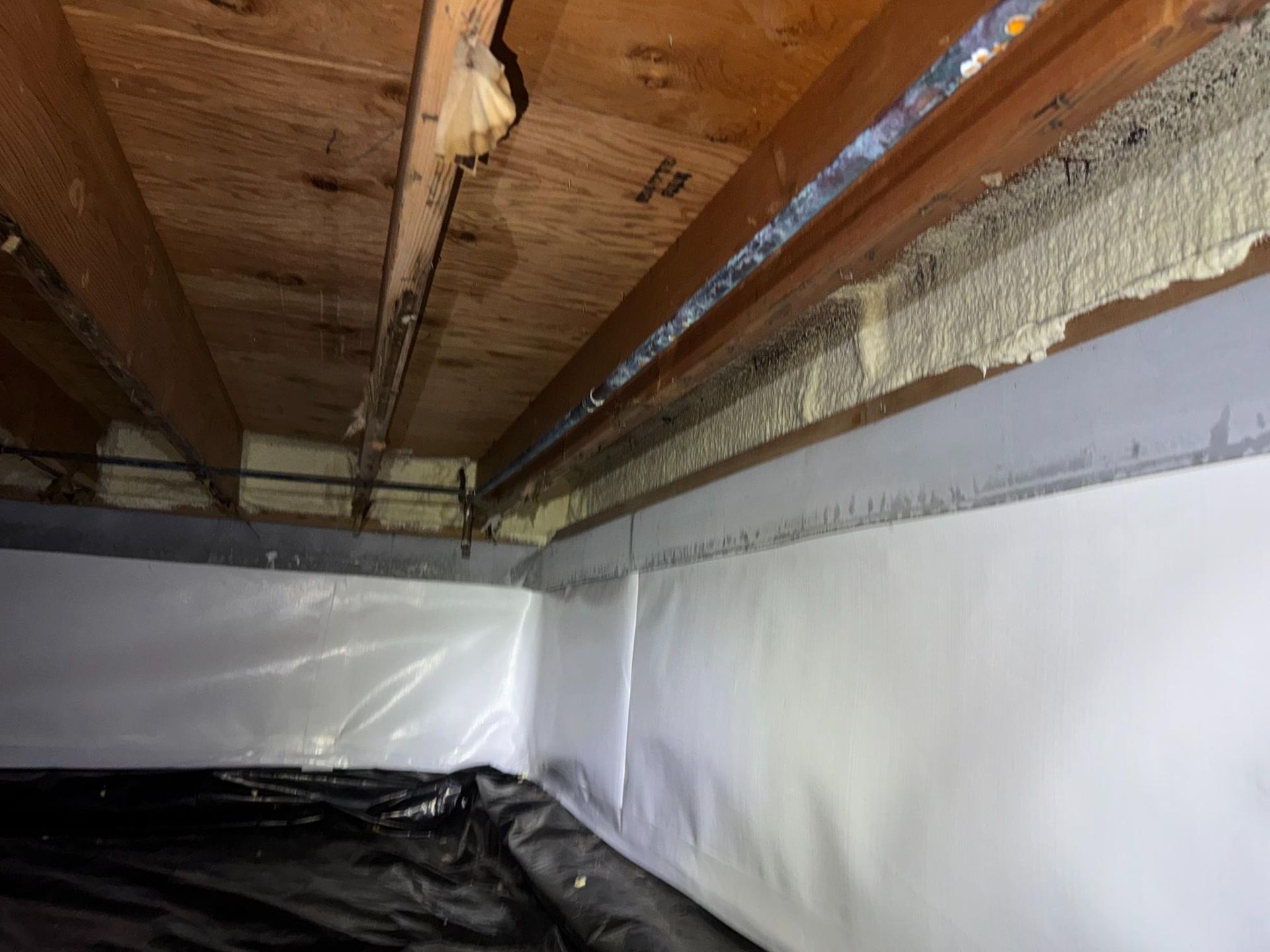
This is when we install the vapor barrier on the walls and floor. We're creating a sealed system that keeps moisture from the ground out of your crawl space air. The dehumidifier goes in to control humidity levels. Lights get strung up throughout the entire space so you—or the next contractor who needs to work down there—can actually see what you're doing.
But here's why we can't do this while water is still pooling: encapsulation traps whatever's underneath. If we seal up a wet crawl space, we're just locking that moisture in. The dehumidifier will run constantly trying to fight a losing battle. Your vapor barrier will fail because water's pushing up from below.
We need the drainage system working first. We need the ground starting to dry. Then the encapsulation actually does its job—keeping new moisture out instead of trapping old moisture in.
This stage also creates the workspace we need for structural repairs. Once the crawl space is clean, sealed, and properly lit, we can see what we're working with. We can assess the floor joists, check for rot, figure out exactly where supports need to go.
Trying to do precision structural work in a dark, wet, muddy crawl space? That's how mistakes happen. We're setting ourselves up for success in the next phase.
Stage Three: Structural Repairs
This is the stage most homeowners are thinking about from the beginning: fixing the sagging floors, getting rid of the squeaks, leveling everything out.
But it has to come last. Here's why.
Wet wood and dry wood behave completely differently. If we install floor supports while your joists are still saturated with moisture, those supports are going to shift as the wood dries and contracts. We might get your floor level today, but in three months it's going to sag again because the wood kept changing shape.
That's not a defect in our work—that's just trying to fix something before it's ready to be fixed.
So we wait. We let the drainage system do its job. We let the encapsulation and dehumidifier bring the moisture levels down. We give the wood time to stabilize at its new, drier state.
Then we go in and install floor supports, replace rotted beams if needed, and get everything level and solid. Because now we're working with stable materials. The fix we make today is going to stay fixed.
Could we rush this and do it all in one visit? Sure. Plenty of companies do. But you'd be calling us back in six months wondering why your floors are sagging again. And at that point, you've paid twice for the same repair.
We'd rather do it once and do it right.
Why the Multi-Visit Approach Actually Benefits You
I know what you're thinking: multiple visits sounds inconvenient. But here's the thing—we're working in your crawl space, not your living room.
You don't have to clear out furniture or move into a hotel. You can go about your normal routine while we're taking care of things underneath. Most of the time, you won't even know we're there except for seeing our truck in the driveway.
And each stage builds on the last one. The drainage work makes the encapsulation possible. The encapsulation makes the structural repairs effective. Skip a step or rush through one, and the whole system falls apart.
This approach also saves you money in the long run. A repair that lasts 20 years costs less than one you have to redo every few years. And when each stage is done right, you're not dealing with the same problems over and over.
Quality takes time. But it's time well spent when you're talking about the foundation of your home.
What to Expect: Realistic Timelines
So what does this actually look like timeline-wise?
For most crawl space projects, you're looking at two to four weeks from start to finish. That's not two to four weeks of daily work—it's us coming out for stage one, giving things time to dry, coming back for stage two, letting that settle, then finishing with stage three.
Weather can affect the schedule too. If we're extending downspouts and it rains for three days straight, we need to see how the drainage is actually performing before moving to the next stage. That's valuable information, not wasted time.
We'll keep you updated throughout the process. You'll know when we're coming back, what we're doing that day, and what we're waiting on before the next visit.
Some homeowners get anxious during the waiting periods. "Why aren't they back yet?" Usually, we're waiting for moisture levels to drop or for the ground to drain. That's not us being slow—that's us being thorough.
The timeline might feel longer than you expected. But the results last longer too.
Book A Free Inspection Now
Your crawl space problems aren't going to fix themselves. But they are fixable. Let's get it done — the right way, permanently.
Or call us directly (217) 863-9559
Ready to Do It Right?
If you're dealing with crawl space moisture, sagging floors, or you just want to know what's actually going on under your house, give us a call.
We'll come out and do a thorough inspection. We'll tell you exactly what we find, what order things need to happen, and give you an honest timeline based on your specific situation.
No pressure to rush into anything. Just Jeff or me explaining the process and helping you understand what your home actually needs.
Reach out anytime. We're here in Mahomet, ready to help.