I Had to Tell a Customer She Paid for Work That Didn't Fix Anything"
When "Fixed" Doesn't Mean Fixed
I got a call from a realtor friend recently. She'd already had floor supports installed under an investment property here in Mahomet. Paid thousands for it. But the floors were still sagging and bouncing.
She knows we do crawl space work, and she wanted a second opinion. So I went over and crawled under the house. And I had to have one of the hardest conversations you can have with a customer: the work you paid for didn't actually fix anything.
One of the jacks was loose enough to jiggle by hand. The "beam" was just a single 4x4. Nothing was on proper bases. Only two supports where there should have been at least six.
This shouldn't happen. But it does—more often than you'd think. And it's why I'm writing this.
What We Found Under the House
The first thing I noticed was movement. I put my hand on one of the jacks and pushed. It moved. A properly installed floor support shouldn't budge at all—it's carrying thousands of pounds of load.
Then I looked at what they were calling a "support beam." It was a single 4x4 piece of lumber. That's not a beam. That's a post. And it can't distribute load the way a real beam needs to.
The jacks themselves weren't sitting on proper bases. They were just placed on the dirt. Over time, those were going to sink—and they already were.
And there were only two of them. For a kitchen floor that was visibly sloping and bouncing when you walked on it, two supports weren't anywhere close to enough.
This wasn't a situation where the work was done okay but needed a little adjustment. This was work that was never going to solve the problem. Looking like it and actually doing the job are two very different things.
Why Improper Floor Supports Fail
Here's the thing about floor support work: physics doesn't care about good intentions or low bids. It only cares whether the structure can actually carry the load.
A single 4x4 post can't distribute weight the same way a properly built beam can. When you're supporting a section of floor—especially under a kitchen where you've got cabinets, appliances, and people walking around—you need a beam that spans across multiple floor joists and distributes that load evenly.
Then there's the base problem. When you set a jack directly on dirt or loose soil, it's going to sink over time. Especially in Central Illinois where we get freeze-thaw cycles and soil movement. Without a proper concrete footer or composite base, those jacks slowly settle into the ground.
The spacing issue is just as critical. Two jacks might have been enough if the problem was small and localized. But for a kitchen floor with noticeable sag and bounce, you need supports placed strategically to lift and hold the entire affected area.
So what looked "fixed" to the original contractor was never going to stay fixed. It was a temporary illusion that would fail slowly over months or years.
What Proper Floor Support Work Actually Involves
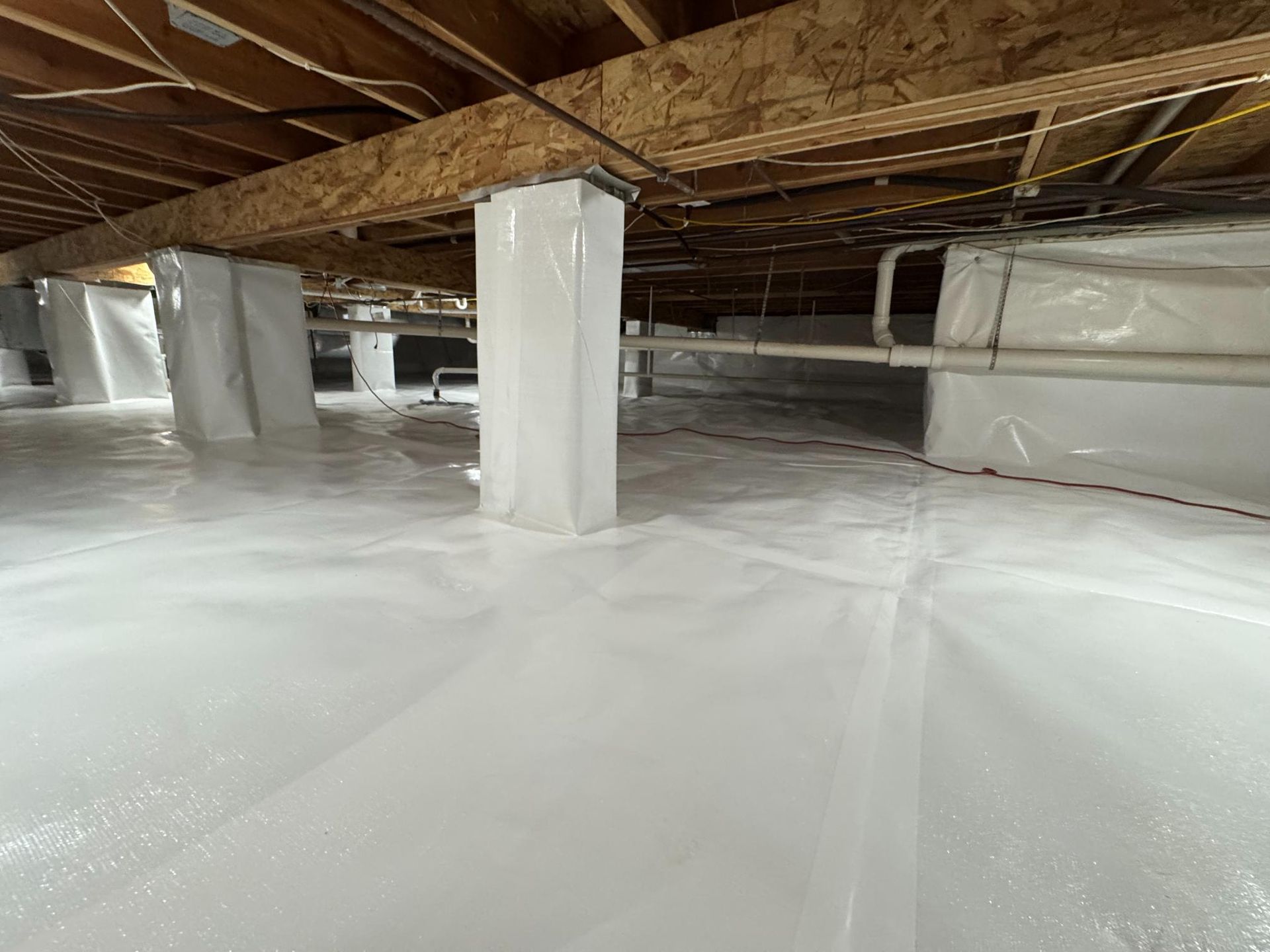
When we came back to redo this job, here's what we actually did. First, we pulled out the inadequate supports. Then we built real beams—multiple plies of 2x8 lumber fastened together. This creates a beam strong enough to span the distance and distribute weight properly across several floor joists.
We used fully adjustable galvanized jacks rated for the loads they'll be carrying. The adjustment mechanism lets us lift the floor gradually and precisely—you don't want to jack everything up at once. You lift slowly, let the house settle, come back and adjust.
Every jack sits on a proper base—either a concrete footer we pour or a heavy-duty composite pad designed not to sink. For this job, we installed six jacks instead of two, positioned to support the beam at the right intervals.
We warranty all of it for the life of the structure. Not one year, not five years—as long as that house is standing. Because when it's done right, we know it's not going to fail.
The Cost of Doing It Twice
This property is an investment for my realtor friend. She wanted to get the floor supports handled first, then come back later this year for a full crawl space encapsulation. Smart plan—fix the urgent structural issue, then address moisture when cash flow allows.
But now she's paid for floor supports twice. We gave her a discount because she's a repeat customer. But even with the discount, she's out significantly more money than if the work had been done right the first time.
This is what happens when you hire based solely on price. The cheapest bid isn't always the best value—especially when it means paying someone else to redo the work properly.
Other Issues We Found and Fixed
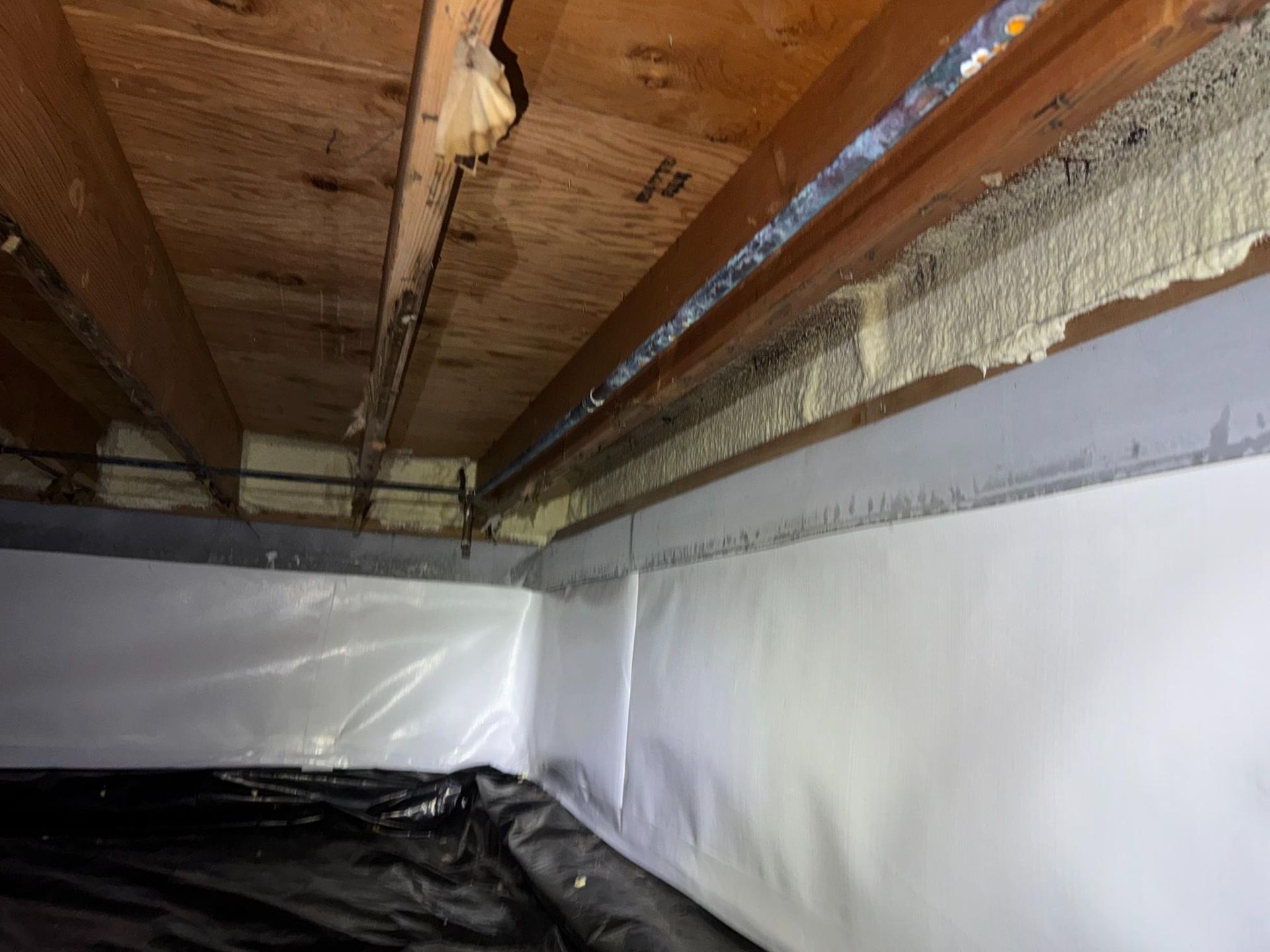
While we were down there, I noticed the crawl space entrance was a mess. It was cut into a window well, awkward to access, and whoever installed it didn't bother supporting the floor joist above the opening. They just cut the access hole and walked away.
So I dug it out properly, built a frame to support that joist, and made the entrance actually functional. Because if we're going to be back later this year to encapsulate the space, someone needs to be able to get in and out without gymnastics.
These are the kinds of things you notice when you actually care about the whole house, not just the specific task you were hired for. Good contractors see problems and fix them.
How to Avoid Paying Twice
If you're getting floor support work done, here are the questions to ask and red flags to watch for:
What kind of beams are they installing?
If the answer is "4x4 posts" or any single piece of lumber, that's a red flag.
What are the jacks sitting on?
The answer should involve poured concrete footers or heavy-duty composite base pads. If they're going straight on dirt, walk away.
How many supports are planned, and why?
There should be a reason based on span, load, and problem areas. "Two should do it" isn't a plan.
What's the warranty?
Our floor supports are warrantied for the life of the structure. If someone won't warranty the work, that tells you how confident they are.
Does the price seem too good to be true?
Proper materials and installation cost what they cost. You can't do this correctly for half the price of everyone else.
Book A Free Inspection Now
Your crawl space problems aren't going to fix themselves. But they are fixable. Let's get it done — the right way, permanently.
Or call us directly (217) 863-9559
If Your Floors Are Still Bouncing — Let's Talk.
If you've already had floor support work done and your floors are still sagging, bouncing, or sloping, give us a call. We'll come do a free inspection and give you an honest assessment of what's going on.
Maybe the work just needs adjustment. Maybe it needs to be redone. Either way, you'll get a straight answer from someone who's been doing this work for years.
No pressure, no sales pitch. Just real expertise and honest recommendations. We're here in Mahomet, and we serve all of Central Illinois.