Signs You Have Unwanted Guests in Your Crawl Space
You'll Smell Them Before You See Them
Hey, it's Chris. Spotted this little guy in the tree behind me the other day, and it got me thinking—if there's one hanging around your yard, there's a good chance you've got visitors under your house too.
Most homeowners don't realize they have animals in their crawl space until they smell something. By that point, whatever's down there has been making itself at home for a while.
Here in Central Illinois, crawl spaces are prime real estate for raccoons, possums, mice, and all sorts of critters looking for shelter. They get in through foundation vents, gaps around pipes, or damaged vapor barriers. And once they're in, they leave behind more than just a smell.
If you're noticing odors or hearing strange sounds from below, here's what you need to know—and what we can do to help.
The Most Common Signs of Crawl Space Animals
You don't always see the animal. But you'll notice the signs.
Strange odors are usually the first clue. Musty smells, sharp ammonia from urine, or that unmistakable smell of something that didn't make it back out. Those odors rise through your floors because your crawl space air becomes your indoor air.
Scratching or rustling sounds at night mean something's moving around down there. Raccoons and possums are nocturnal, so if you're hearing activity after dark, that's probably what you're dealing with.
Droppings near your crawl space access or around foundation vents are a dead giveaway. Mice leave small pellets. Raccoons leave larger, tubular droppings. Either way, it's a health hazard.
Disturbed insulation means something's been nesting. Animals pull down fiberglass insulation to build nests or just tear through it getting around. If your energy bills suddenly spike, damaged insulation might be why.
Increased pest activity upstairs—like flies or beetles appearing out of nowhere—often traces back to decomposition or waste in the crawl space.
And if your pets are acting strange near certain floors or vents, they're probably picking up on smells or sounds you can't detect yet.
Bottom line: if something feels off, it probably is. These signs don't go away on their own. They get worse.
Why Animals Are Attracted to Your Crawl Space
Your crawl space has everything an animal is looking for.
It's dark and protected. Nobody's down there checking on things regularly, so it's quiet and undisturbed. For a raccoon looking to nest or a possum seeking shelter, that's perfect.
Foundation vents are basically open doors. They were designed to provide airflow, but what they actually do is give animals easy access. Mice, snakes, raccoons—they all use those vents as highways into your home.
Gaps around pipes and utilities are another common entry point. Even small openings are enough for mice and rats. And once they're in, they leave scent trails that attract more.
The temperature is another draw. Crawl spaces stay warmer than outside in winter and cooler in summer. Add some insulation for nesting material and maybe a food source like insects, and you've got a five-star hotel for critters.
If your crawl space has a damaged or missing vapor barrier, there's probably moisture down there too. Moisture attracts insects, and insects attract predators like snakes and larger animals.
The problem isn't just that animals get in. It's that your crawl space makes it so easy for them to stay.
What's Actually Living Down There
Here in Central Illinois, we see the same animals over and over.
Raccoons are probably the most common. They're looking for a safe place to nest, especially in spring when they're raising babies. They're also destructive—tearing up insulation, leaving large droppings, and making a lot of noise.
Possums are nocturnal and quieter than raccoons, but they still leave waste and odors. They're drawn to crawl spaces for the same reasons: shelter and safety.
Mice and rats are a year-round problem. They reproduce fast, chew through materials, and leave droppings everywhere. Where there are rodents, there are usually snakes following the food source.
Stray cats sometimes use crawl spaces as shelter. They're less destructive than raccoons but still leave waste and can die under there if they get sick or injured.
Snakes aren't looking for your crawl space specifically—they're following mice and rats. But finding a snake under your house is usually a sign you've got a bigger rodent problem.
And here's the thing: if you've got one, you probably don't have just one. Animals leave scent trails. Others follow.
Why This Is More Than Just a Smell Problem
Most people call us because of the odor. But the smell is just the beginning.
About 50% of the air you breathe upstairs comes from your crawl space. So if there's animal waste, decomposition, or contamination down there, you're breathing that. It's not just unpleasant—it's a legitimate health concern, especially for kids or anyone with respiratory issues.
Animal droppings and urine carry bacteria and pathogens. Raccoon feces can carry roundworm eggs. Rodent droppings can spread hantavirus. When that material dries out and becomes airborne, it circulates through your home.
Then there's the structural damage. Animals tear up insulation, which means your HVAC system works harder and your energy bills go up. They chew through vapor barriers, which lets moisture back in and undoes any encapsulation work you might have had done. Nesting materials and debris create fire hazards if they're near electrical.
Dead animals bring their own problems. Decomposition attracts insects—flies, beetles, maggots. Those insects then move into your living space. The smell can last for weeks, even after the body is removed, because the contamination soaks into surrounding materials.
A lot of homeowners try to handle this themselves. They'll remove the visible animal or carcass and think that's enough. But without proper cleanup, contamination treatment, and sealing the entry points, you're just waiting for the next visitor.
This isn't a DIY situation. It's a health and home protection issue that needs to be handled correctly.
How We Handle Unwanted Crawl Space Guests
When you call us about animals in your crawl space, we don't just remove whatever's down there and call it a day. That's treating the symptom, not the problem.
Here's our complete approach:
Safe removal comes first. We handle animal removal humanely when possible and safely dispose of anything that didn't make it out alive. We've got the equipment and experience to do this without exposing ourselves—or you—to health risks.
Thorough cleanup and treatment is next. We don't just grab the carcass and leave. We clean the affected area, treat it for contamination, and remove soiled insulation or materials that can't be salvaged. This is the part most people skip, and it's why the smell comes back.
Identifying entry points is critical. We inspect the entire crawl space to find how animals are getting in. Foundation vents, gaps around pipes, damaged screens, holes in the vapor barrier—we find them all.
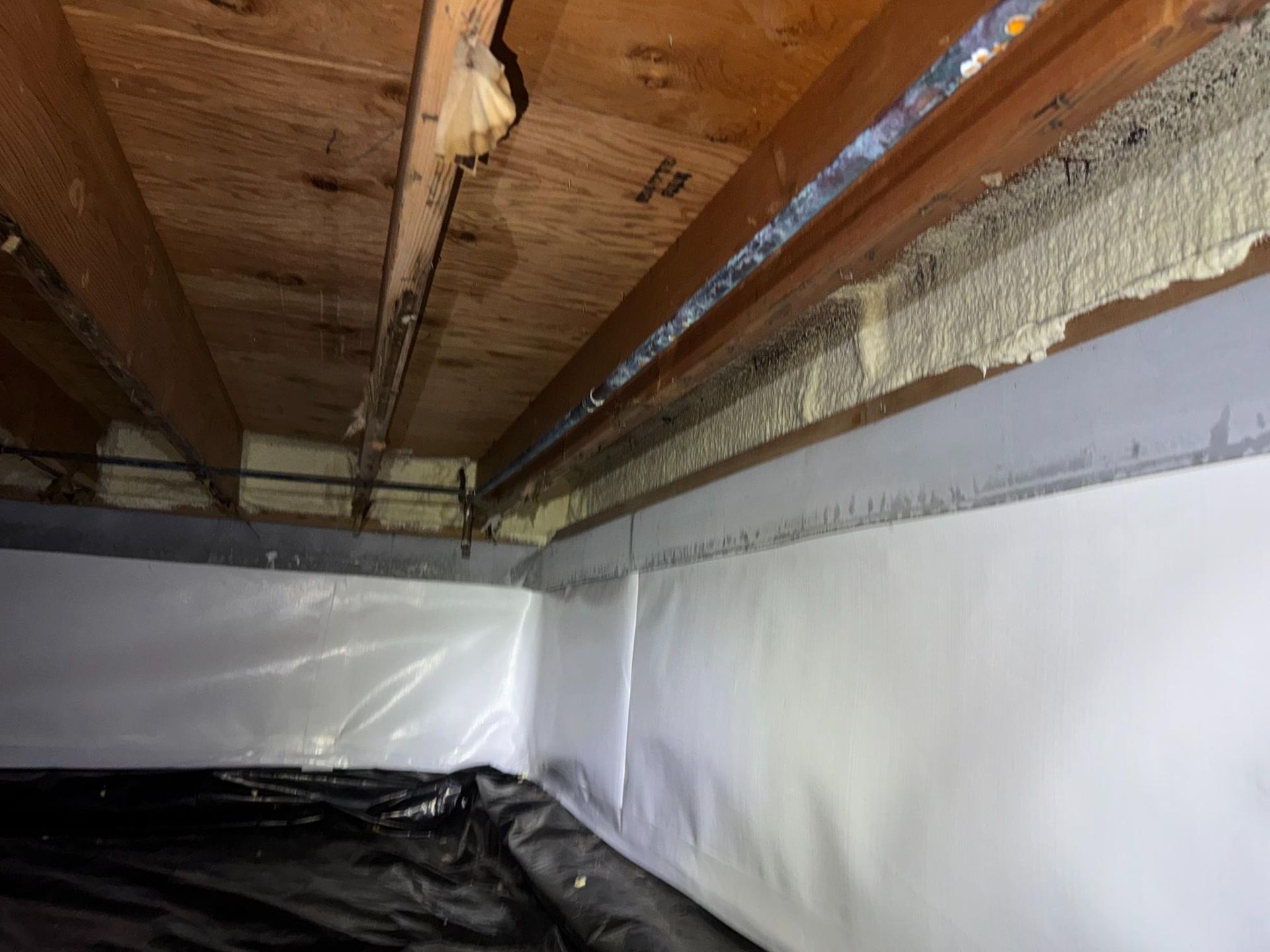
Sealing and repair means closing those entry points permanently. We seal vents, repair damage, and make sure nothing can get back in the same way.
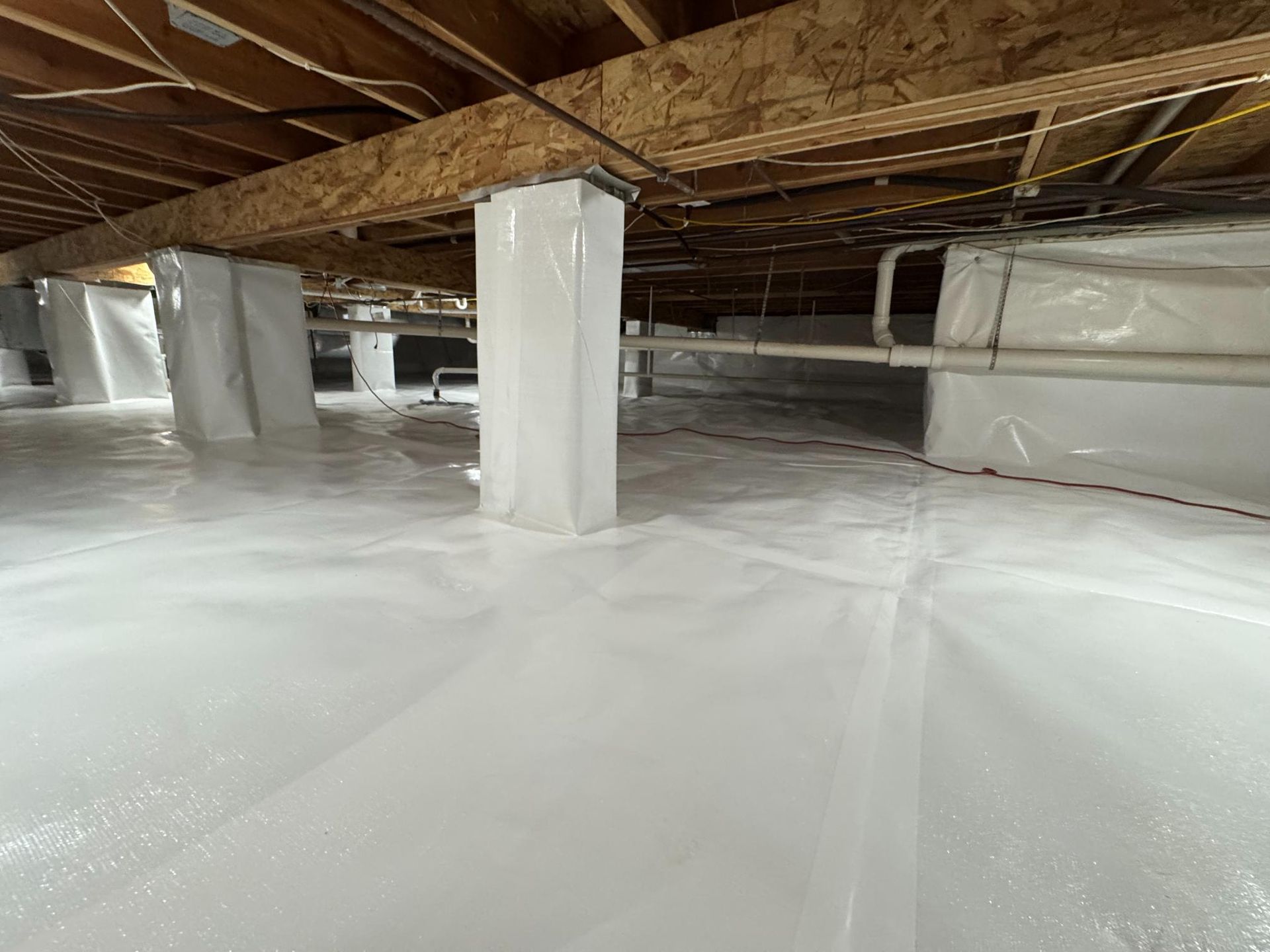
Full encapsulation is often the best long-term solution. Sealed vents, proper vapor barrier, dehumidification—it creates an environment that's no longer attractive or accessible to animals.
The difference between calling pest control and calling us is that we solve the whole problem. Pest control removes the animal. We remove the animal, clean up the damage, and make sure it doesn't happen again.
Preventing Future Visitors
Once your crawl space is clean and sealed, you're done dealing with this problem. That's the goal.
Encapsulation is the best prevention because it eliminates the entry points and removes the conditions animals are looking for. Sealed foundation vents mean no open doors. A proper vapor barrier means no insect food sources for rodents to follow. Controlled humidity means the space isn't attractive to pests looking for moisture.
We also install lighting throughout the crawl space so future inspections are easy. When your HVAC tech or plumber needs to get under there, they can actually see if something's getting in before it becomes a bigger problem.
Regular inspections catch issues early. We recommend checking your crawl space at least once a year. Look for new gaps, damaged seals, or signs of activity. Catching an animal trying to get in is a lot easier than dealing with one that's been nesting for months.
Once your crawl space is properly sealed and maintained, you've got peace of mind. No more smells, no more scratching sounds, no more surprise guests.
Book A Free Inspection Now
Your crawl space problems aren't going to fix themselves. But they are fixable. Let's get it done — the right way, permanently.
Or call us directly (217) 863-9559
Strange Smells or Sounds? Let's Take a Look
If you're noticing odors coming from below, hearing scratching at night, or you just want to know what's actually going on under your house, give us a call.
We'll come out and do a full inspection with documentation. If there's an animal problem, we'll handle the removal, the cleanup, and the prevention so you don't deal with it again.
Chris or I will personally assess your situation. No pressure, no gimmicks—just honest answers about what's happening and what needs to be done.
We've been doing this work in Mahomet and Central Illinois our whole lives. Your crawl space isn't just another job to us—it's part of your home, and we'll treat it that way.
Reach out anytime. We're here to help.