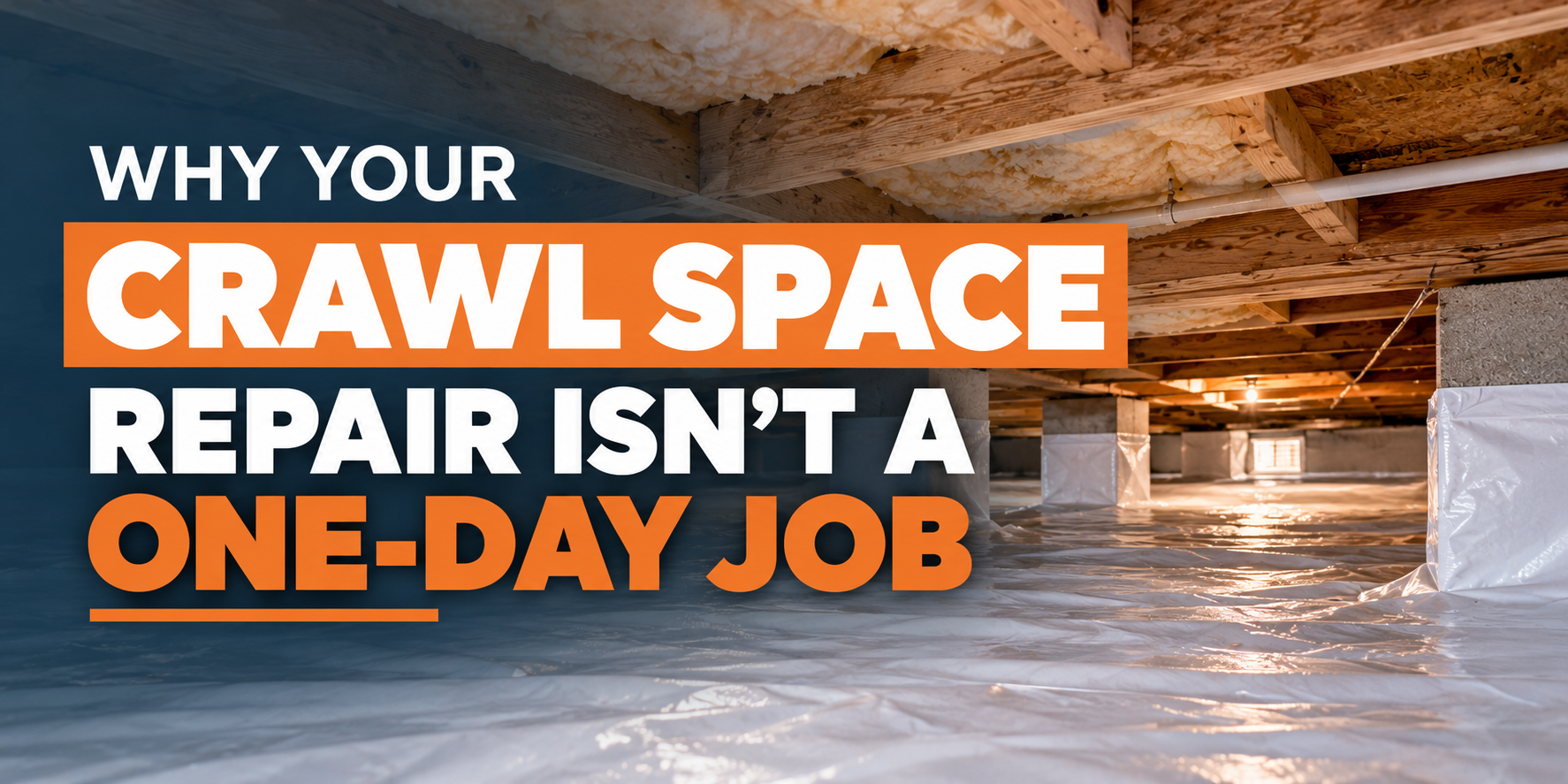
Inside a Full Crawl Space Encapsulation in Rantoul, Illinois
When a homeowner finally makes the call, something shifts.
We come out and do a thorough inspection. We get under the home and look at everything — and we show you what we're seeing in real time so there are no surprises when we sit back down with you. You'll know exactly what's down there. You'll know exactly what it takes to fix it. And you'll have a clear picture of what your home looks like after the work is done.
No pressure. No scare tactics. Just an honest look at what's happening and a straightforward plan to address it.
Most homeowners tell us the same thing after that first visit.
They wish they hadn't waited as long as they did.
A Full Crawl Space Encapsulation, Start to Finish
Most crawl space companies show up, do the work, and leave. You never really know what happened down there. You just hope it was done right.
We think that's backwards.
This is a full crawl space encapsulation we completed in Rantoul, Illinois. Real job, real crew, real work. We're going to walk you through exactly what we did, what we found, and why every piece of it matters for the health and stability of this home.
Because when you hire someone to work under your house, you deserve to know what's actually going on down there. Not a sales pitch. Not a big number on a piece of paper. Just honest, transparent work you can see for yourself.
That's how we operate at My Guys.
What You See Before We Even Go Inside
Before we ever open a crawl space, you can tell a lot about a crew by how they show up.
Vehicles parked properly. Job site clean and organized. A full debris bag sitting outside from everything we pulled out of that crawl space before we started sealing anything in.
That last part matters more than people realize. A lot of crews will encapsulate right over existing debris, old materials, and leftover junk from previous work. Out of sight, out of mind.
We don't do that. Everything comes out first. Then we seal.
The saws are set up outside because this job includes floor supports—which we'll get to in a minute. But even that detail tells you something. A well-organized crew thinks ahead. And a crew that thinks ahead does better work.
What's Happening Inside This Crawl Space
Walk into this crawl space mid-job and here's what you'd see.
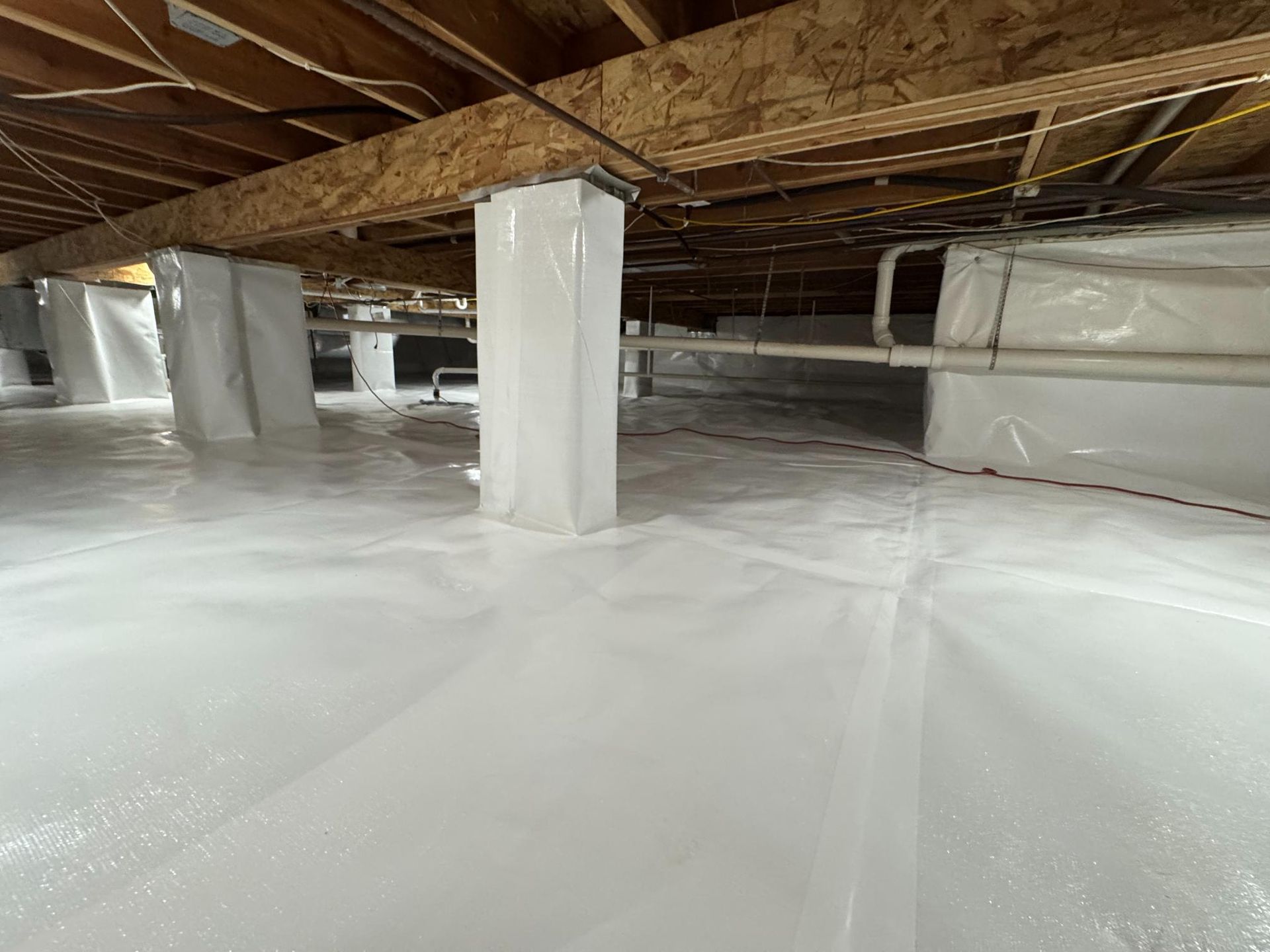
Dylan is down at one end pulling the floor seal into place. This isn't just laying plastic on the ground—it's carefully fitted, overlapped, and positioned so every inch of that crawl space floor is properly covered. No gaps, no shortcuts.
Ryan is working on the finishing touches, taping the seams. This is one of those details that separates a real encapsulation from a cheap one. Unsealed seams let moisture back in. Properly taped seams keep it out. It sounds simple, but it's the difference between a system that works and one that fails in two years.
The dehumidifier is hung up and ready to go. Not sitting on the ground where it can get damaged or flooded—properly mounted and positioned to manage humidity throughout the entire space.
And then there's the floor support work.
While we were down there, we found a joist that had been cut to make room for a plenum—part of the HVAC system. That cut joist wasn't going to fix itself. So we installed two galvanized steel floor supports with an I-beam to properly carry the load that joist was no longer handling.
That's not an upsell. That's just seeing a problem and fixing it while we're already there.
Why a Cut Joist Is More Than a Crawl Space Problem
A cut joist doesn't always announce itself.
Sometimes it's a soft spot in the floor you've gotten used to. Maybe a slight bounce when you walk across the kitchen. A door that doesn't quite close right anymore. Easy to ignore. Easy to blame on an old house.
But here's what's actually happening: when a joist gets cut—whether for plumbing, HVAC work, or whatever reason—the load it was carrying doesn't just disappear. It shifts. To the joists next to it, to the subfloor above it, to whatever is nearby. Over time, that shifting adds up.
Left alone, a cut joist becomes a sagging floor. A sagging floor becomes a structural problem. A structural problem becomes a very expensive repair.
Most crawl space crews aren't looking for this. They're focused on moisture, vapor barrier, and getting the job done. Which is fine—moisture control is important. But if you've got someone experienced down there, someone who understands floor framing systems and not just vapor barriers, they're going to catch things like this.
We caught it here. Two galvanized steel floor supports and an I-beam later, that load is properly carried and that floor isn't going anywhere.
That's the difference between a crew that shows up to do one thing and a crew that actually looks out for your home.
What a Complete Solution Actually Includes
A real crawl space encapsulation isn't just one thing. It's a system.
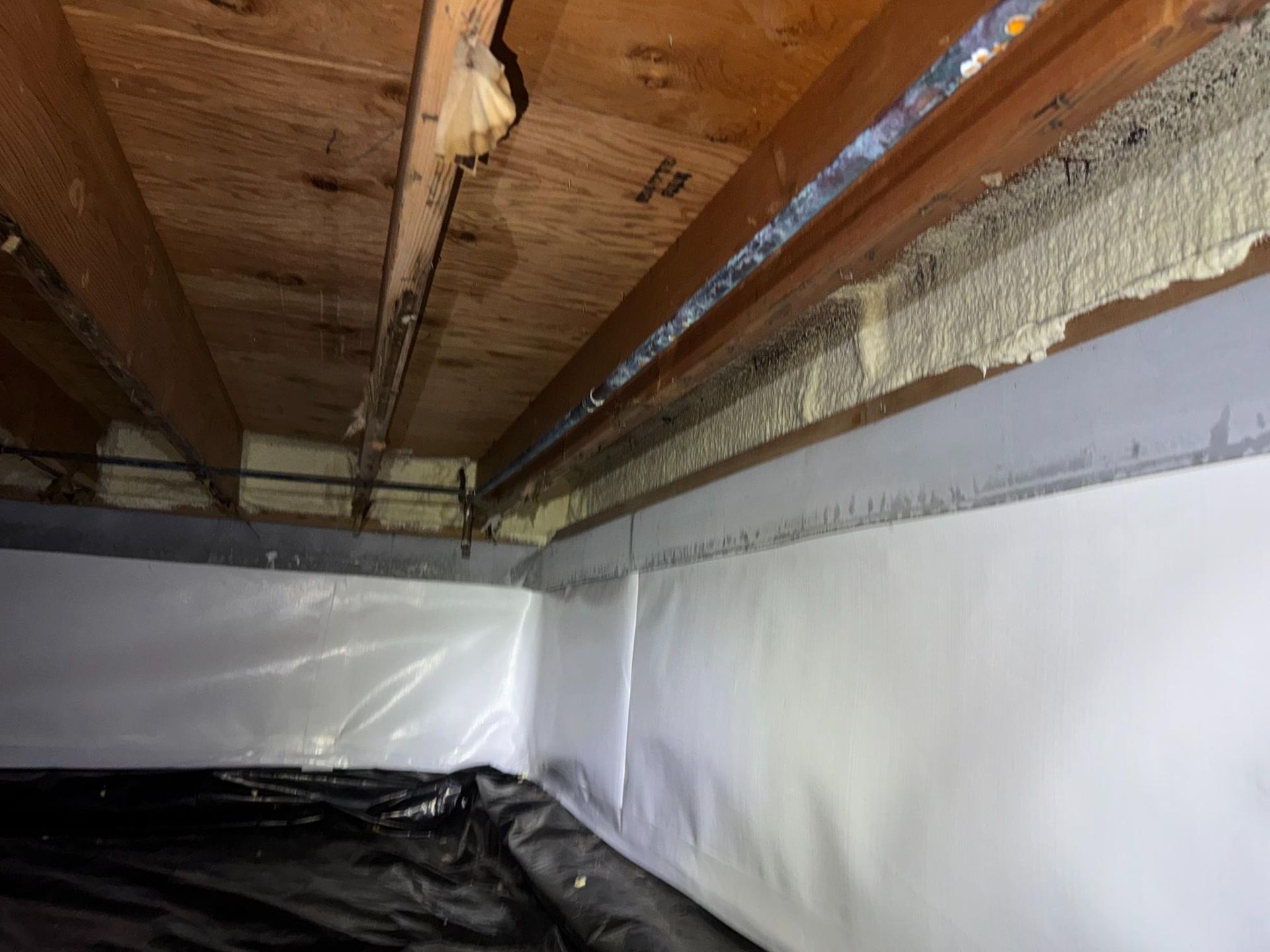
Every element works with the others. The floor seal controls ground moisture. The wall seal stops moisture from coming in through the foundation walls. The taped seams make sure nothing gets through the gaps. The dehumidifier manages the humidity level inside the sealed space. The floor supports protect the structural integrity of your floor framing.
Take one of those pieces away and the whole system is weaker for it.
That's why we don't cut the job short. When we're under your house, we're looking at the full picture. Not just the moisture problem you called us about, but everything that affects the health and stability of that space.
On this Rantoul job, we pulled out all the debris before sealing. We properly installed the floor seal and taped every seam. We hung the dehumidifier correctly. And we addressed the cut joist that most crews would have ignored.
When we left, every piece of that system was in place and working together.
What Homeowners Should Expect From Any Crawl Space Company
Whether you hire us or someone else, here's what you should expect from any crawl space crew that comes to your home.
A clean, organized job site from the moment they arrive to the moment they leave. Debris removed before anything gets sealed in. Seams properly taped, not just laid down and hoped for. A dehumidifier that's correctly positioned, not just plugged in somewhere convenient.
And communication. You should know what they found, what they did, and why. Not after the fact—throughout the process.
Ask to see the finished space. A crew that does good work will show you without hesitation. A crew that cuts corners will find a reason not to.
Watch for these red flags:
- Debris left behind after the job
- No lighting installed in the finished space
- Unwilling to walk you through what they found
- Structural issues noticed but not addressed
- Rushed final walkthrough
Good crawl space work isn't invisible. It looks clean, it's well lit, and every detail is something the crew is proud to show you.
Book A Free Inspection Now
Your crawl space problems aren't going to fix themselves. But they are fixable. Let's get it done — the right way, permanently.
Or call us directly (217) 863-9559
Let's Take a Look Under Your Home
If you're not sure what's going on in your crawl space, that's exactly why we do inspections.
We'll come out, get under your house, and show you exactly what we find. The moisture levels, the floor framing condition, the ventilation situation—all of it documented with photos and explained in plain language.
No pressure. No big number on a piece of paper without context. Just Chris or me giving you an honest assessment of what's happening and what, if anything, needs to be done.
Reach out anytime. We serve Rantoul, Mahomet, and communities throughout Central Illinois.