Sagging Floors? Here's What's Happening Under Your House
What's Really Going On Beneath Your Feet
That's Austin crawling through a murky crawl space right now with a 12-foot treated beam. We're installing floor supports under this house today because the floors upstairs are sagging and bouncing.
Most homeowners never go under their house. Can't blame you—it's not exactly inviting down there. But what's happening in that crawl space is directly affecting the floors you walk on every day.
Those squeaky spots in your kitchen? That soft feeling near the bathroom? The way your floor bounces a little when you walk across it? All of that is your house telling you something's wrong underneath.
Today I'm going to show you what's actually causing sagging floors, what it takes to fix them properly, and why some floor support jobs last decades while others fail in a few years.
Why Floors Start Sagging in the First Place
Floor joists are the horizontal beams that support your floors. They span from one side of your house to the other, and they're only designed to cover a certain distance without needing help.
The problem is, a lot of houses—especially older ones—have joists spanning farther than they should. Maybe the builder cut corners. Maybe the house has settled over the years and things have shifted. Either way, those joists start to sag under the weight.
Add moisture to the equation, and it gets worse. Damp crawl spaces weaken wood over time. What started as an undersupported floor joist now becomes an undersupported and weakened floor joist.
That's why the problem gets worse, not better. The wood keeps sagging. The moisture keeps doing damage. And upstairs, you're noticing more squeaks, more bounce, maybe even cracks in your tile or doors that don't close right anymore.
This isn't something that fixes itself. Left alone, you're looking at real structural damage and a much bigger repair bill down the road.
What We're Actually Looking At Under This House
In this particular crawl space, the main beam running across the middle of the house is sagging. That beam is supposed to support all the floor joists above it, but it's doing a poor job right now because it doesn't have enough support underneath.
You can see it when you get down there. The beam has dropped. The joists are following it down. And upstairs, the homeowner's dealing with bouncing floors.
So we're installing a 12-foot treated 2x8 beam system with adjustable support jacks. That beam will run perpendicular to the main beam and support it at two critical points. We've got another beam going in on the other side too.
Austin's positioning everything right now. Once these beams and jacks are in place and properly adjusted, they'll take the load off that sagging main beam and stabilize the entire floor system.
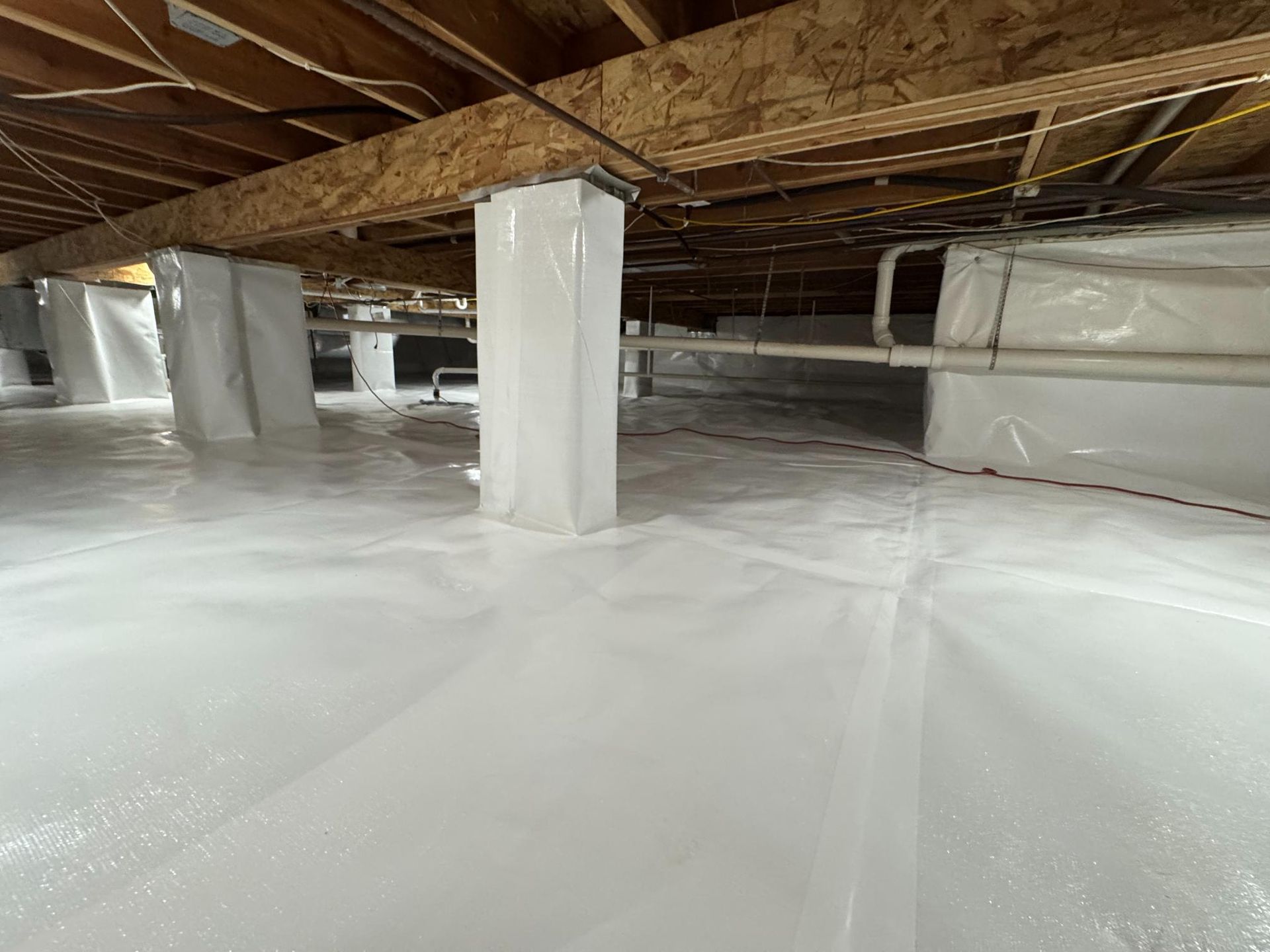
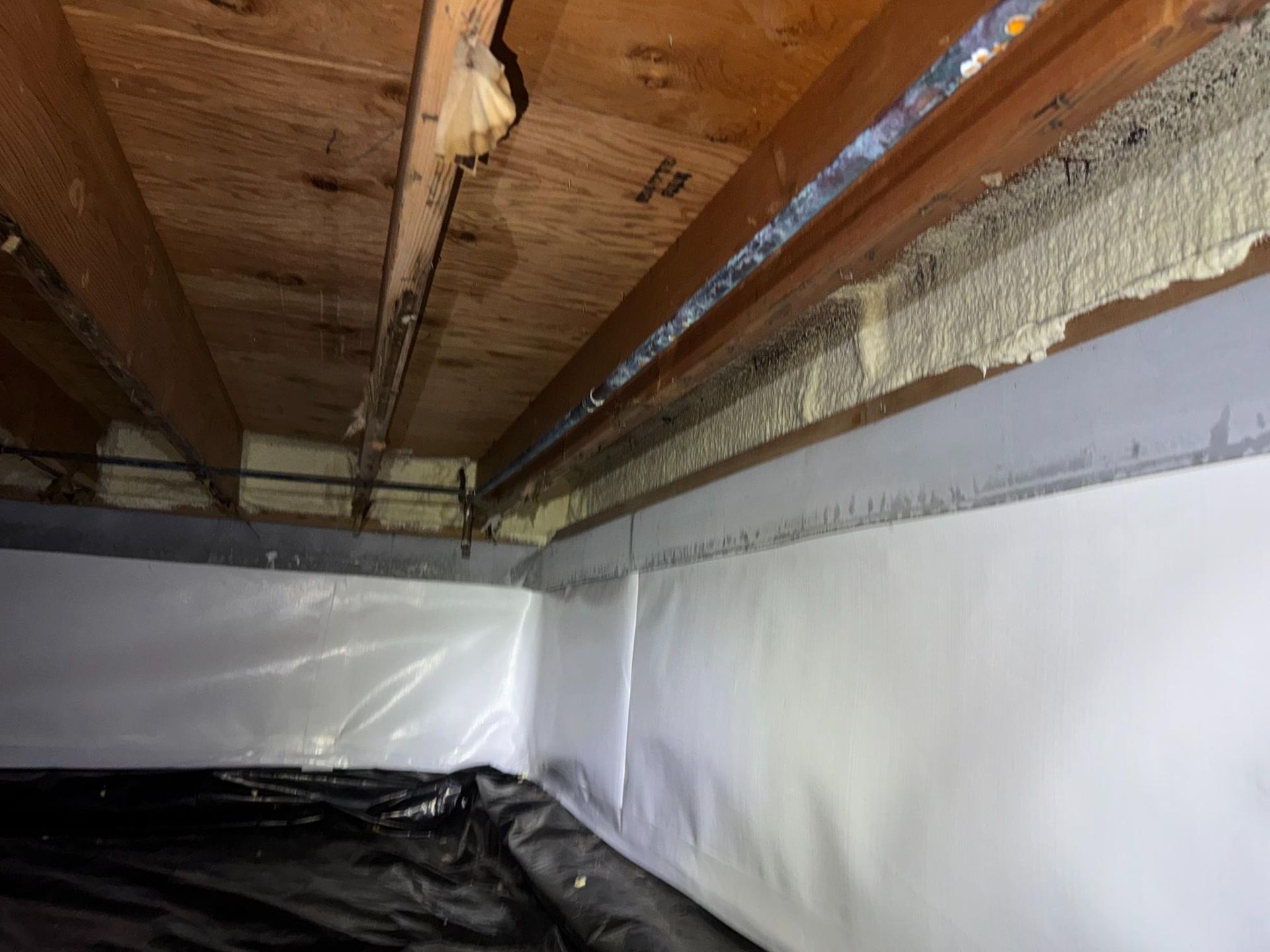
This crawl space also needs encapsulation—there's moisture down here that contributed to the problem. But we can't seal up a crawl space when the structure is still failing. Fix the foundation first, then protect it.
What Proper Floor Support Installation Involves
Here's something worth thinking about when you're choosing a contractor: where does your money actually end up?
When you hire a big national company—Groundworks, Helitech, Basement Systems, any of those franchises—your payment goes to a corporate office somewhere else. Maybe out of state, maybe across the country. It pays for executive salaries you'll never meet. Marketing campaigns in regions you'll never visit. Shareholder returns for people who have no connection to Central Illinois.
When you hire My Guys, that same money stays right here in Mahomet and the surrounding area.
It pays for groceries at our local stores. Gas at local stations. It goes toward our kids' schools and activities. It supports our families who shop at the same places you do, whose kids might play on the same teams as yours.
Chris and I aren't building a corporate empire. We're just trying to build a good life here in the town we've always called home. Every dollar you spend with us goes right back into this community.
That's the real impact of choosing local. It's not just about getting personalized service or supporting the "little guy." It's about keeping money circulating in your own community. Strengthening the local economy. Supporting families who are your actual neighbors.
We're not just another contractor option. We're part of the same community you are. And when you support us, you're supporting that.
The Difference Between Quick Fixes and Real Solutions
I've seen plenty of floor support jobs that failed. And it's always the same reasons.
Untreated lumber that rotted out. Cheap jacks that rusted through. No footings, so the supports just sank into the dirt over time. Or the worst one: somebody just eyeballed the spacing, threw in a couple jacks, and called it good without actually fixing the problem.
Those jobs might feel solid for six months, maybe a year. Then the floors start sagging again because the "fix" wasn't built to last.
Real floor support work costs more because you're paying for materials that won't fail and installation that's done right. Treated beams. Galvanized jacks. Proper footings. Actual load calculations.
You're also paying for someone who knows what they're doing. Austin's been in crawl spaces long enough to know how to position supports, how to adjust them correctly, and how to make sure the whole system works together.
Cheap jobs are cheap for a reason. And when they fail, you're paying twice—once for the bad work, and again to fix it properly.
Why Sequence Matters: Structure First, Then Protection
A lot of homeowners call us wanting crawl space encapsulation. They've got moisture issues, musty smells, maybe some mold growing. And yeah, encapsulation will solve those problems.
But if we get down there and find sagging floor joists or a failing support system, we can't just ignore that and seal everything up. You can't encapsulate over structural problems and expect good results.
That's why we're doing floor supports on this job first. Fix the structure, make sure everything's stable and level, then come back and encapsulate to protect it all from future moisture damage.
It's the right order. Structure first, protection second.
And here's the thing: proper encapsulation will actually prevent a lot of future floor problems. When you control the moisture in a crawl space, you're protecting the wood from weakening. You're stopping rot before it starts. You're making sure those support beams and floor joists last as long as they're supposed to.
So yeah, we'll be back to seal this crawl space. But today's work—the supports Austin's installing right now—that's the foundation everything else builds on.
What to Look For (And Ask About) When Hiring
If you're getting quotes for floor support work, here are some questions worth asking:
Are you using treated lumber or regular wood? (Regular wood will rot in a crawl space.)
What kind of jacks are you installing? (Make sure they're galvanized, not the kind that rust out.)
What's going under the jacks for footings? (If the answer is "nothing" or "just the dirt," that's a problem.)
How are you calculating the spacing and load? (If they can't explain it, they're probably guessing.)
Can I see the work when you're done? (Good contractors will show you. Bad ones will make excuses.)
Red flags to watch for: contractors who say "you just need a jack or two" without actually inspecting. Companies that give you a price over the phone without seeing the crawl space. Anyone pushing you to decide immediately.
The cheapest bid is usually cheap for a reason. You're not just paying for materials and labor—you're paying for expertise, quality work, and a solution that actually lasts.
Book A Free Inspection Now
Your crawl space problems aren't going to fix themselves. But they are fixable. Let's get it done — the right way, permanently.
Or call us directly (217) 863-9559
Ready to Get Your Floors Fixed Right?
If your floors are bouncing, squeaking, or sagging, don't wait for it to get worse.
Give us a call and we'll come do a thorough inspection. We'll show you exactly what's happening under your house, why it's happening, and what it'll take to fix it properly.
No pressure. No gimmicks. Just Chris or me explaining the situation and giving you an honest assessment.
And if we do the work, you'll see the difference between a quick fix and a real solution.