How We Fixed Bouncy Floors Without Cracking the Joists
The Problem with Maxing Out Floor Jacks Too Soon
We just finished installing floor jacks on a crawl space here in Central Illinois. Three supports under the main beam, plus two custom beams we built to handle the load. The floors were bouncy, sagging in spots under the baseboard trim. We fixed that.
But here's what we didn't do: crank those jacks all the way up to make everything perfectly level.
Most companies would've maxed out the pressure, collected their check, and moved on. Problem is, the wood down here is wet. And if you apply full leveling force to wet floor joists, you're asking for cracked lumber and new problems down the road.
So we're doing this in stages. Stop the bounce now, encapsulate to dry things out, then come back and finish leveling once the wood has stabilized.
Takes longer. Lasts decades.
What We Actually Did on This Job
The homeowners called because their floors felt bouncy when they walked across certain rooms. In some spots near the baseboard trim, you could see visible sagging.
When we got into the crawl space, the issue was clear: the floor joists needed support. But they were also holding a lot of moisture. You could feel it in the air, see it on the wood.
We installed three galvanized jacks under the main beam—that's the primary structural member running through the middle of the crawl space. Then we built two 2x8 support beams to distribute the weight properly across the floor system.
As soon as we set those jacks, the bounce stopped. We got enough lift to fix the sagging spots the homeowners were worried about. The floors feel solid now instead of springy.
But we didn't keep cranking. We stopped short of full leveling pressure because the wood's not ready for it yet. It needs to dry out first.
That's not us being cautious for no reason. That's understanding how wood behaves when it's saturated with moisture—and what happens when you force it before it's ready.
Why You Can't Rush Floor Leveling in Wet Crawl Spaces
Here's what happens when you crank floor jacks all the way up on wet wood: you can crack the joists.
Wet lumber is weaker and more flexible than dry lumber. It bends more easily under pressure. When wood is saturated with moisture, it hasn't got the structural integrity it's supposed to have.
So when you apply maximum leveling force to wet floor joists, you're putting enormous pressure on wood that's already compromised. Sometimes it holds. Sometimes it doesn't. And when it doesn't, you've just traded bouncy floors for cracked structural members—which is a much bigger problem.
The smart move is to let the wood dry out first. Once it's back to normal moisture levels, it regains its strength. Then you can apply the pressure needed to get everything level without risking damage.
But that takes time. And a lot of companies won't wait because time costs money. They've got another job across town this afternoon and three more lined up for the rest of the week. Maxing out the jacks and moving on is faster.
We don't operate that way. We'd rather stage the work and do it right than rush through and hope nothing breaks.
Because if those joists crack six months from now, we're the ones who have to come back and fix it. And more importantly, you're the one living with floors that should've been done properly the first time.
The Staged Approach: How It Actually Works
Here's how we're handling this job, step by step.
Stage one is what we just finished: install the supports, stop the bounce, and stabilize the structure. The floors feel solid now. The sagging is fixed. But we're not forcing everything perfectly level yet because the wood's still wet.
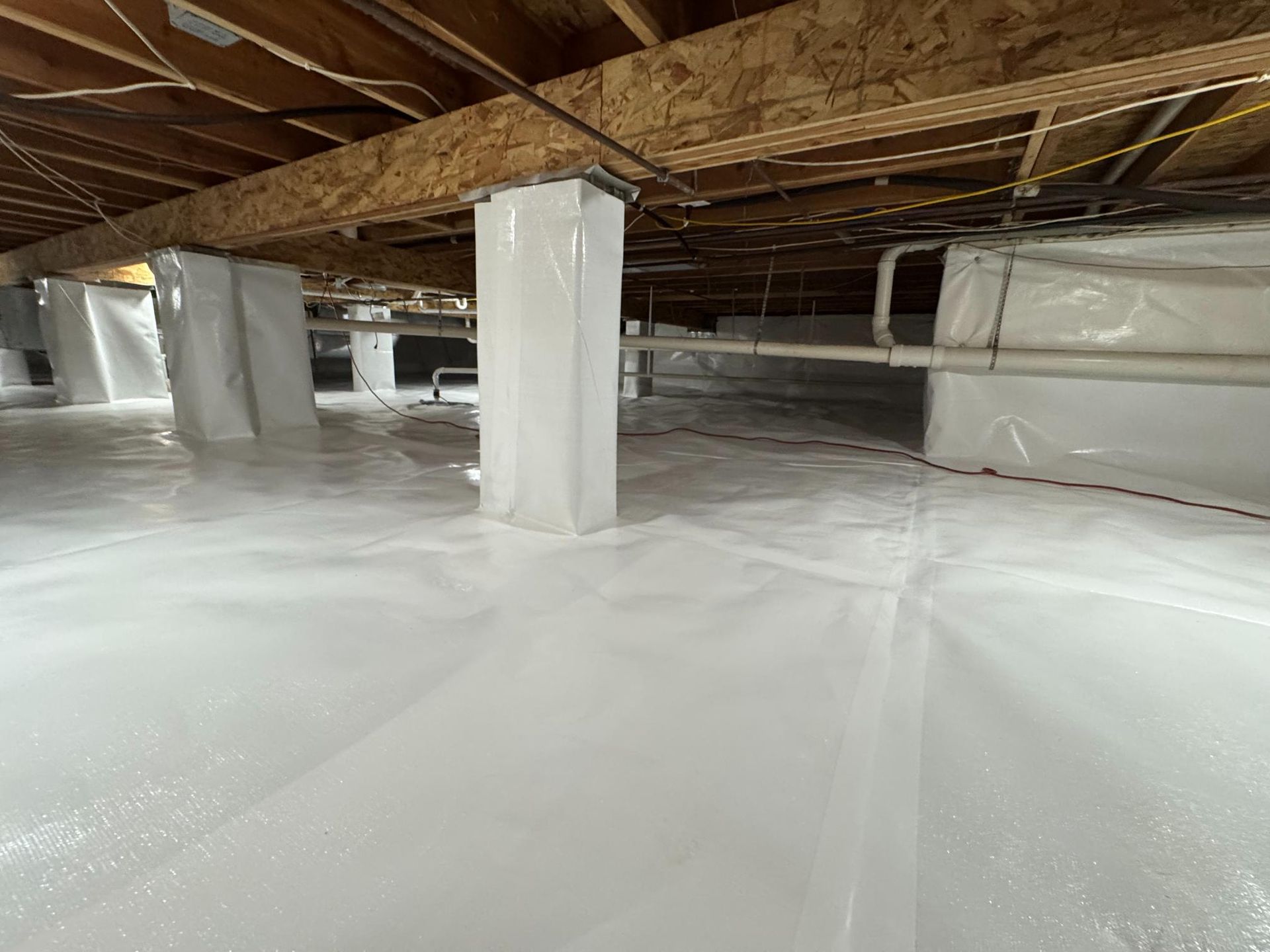
Stage two is encapsulation. We're coming back to seal this crawl space, install a dehumidifier, and get the moisture under control. That's what allows the wood to dry out and stabilize. Once the humidity drops and stays low, those floor joists will return to their normal strength.
Stage three happens after the encapsulation has been running for a while and the wood has dried. We'll come back, adjust the jacks to finish leveling everything, and make sure it's all dialed in properly. At that point, the wood can handle the pressure without any risk of cracking.
Does it take longer than doing it all at once? Yes. But it also means these floors will stay level for decades instead of sagging again in two years when the moisture comes back.
That's the difference between "fixed" and "solved." Fixed means the problem looks better right now. Solved means it's not coming back.
Homeowners notice the difference immediately after stage one—the bounce is gone. But the real transformation happens after stage two, when the whole system dries out and stabilizes for good.
How to Know If Your Crawl Space Has Moisture Issues
If your floors bounce more in the summer than in the winter, that's a moisture problem.
If you've got a musty smell that seems to come from nowhere, or you notice your floors feel softer during humid months, that's your crawl space talking to you.
Visible condensation on the floor joists, damp insulation hanging down, or a general feeling of humidity when you open the crawl space access—all signs that moisture is the real issue, not just weak supports.
Here's the thing: bouncy floors are almost always a symptom, not the cause. The cause is usually moisture weakening the wood over time. Humidity gets into the crawl space, soaks into the joists, and slowly degrades their strength. Eventually, they start to sag or bounce under normal weight.
You can install jacks to support the weakened wood, and that helps. But if you don't control the moisture, you're just supporting wood that's going to keep getting weaker.
That's why floor support jobs and encapsulation work so well together. The jacks fix what's already happened. The encapsulation stops it from happening again.
What Happens After Encapsulation
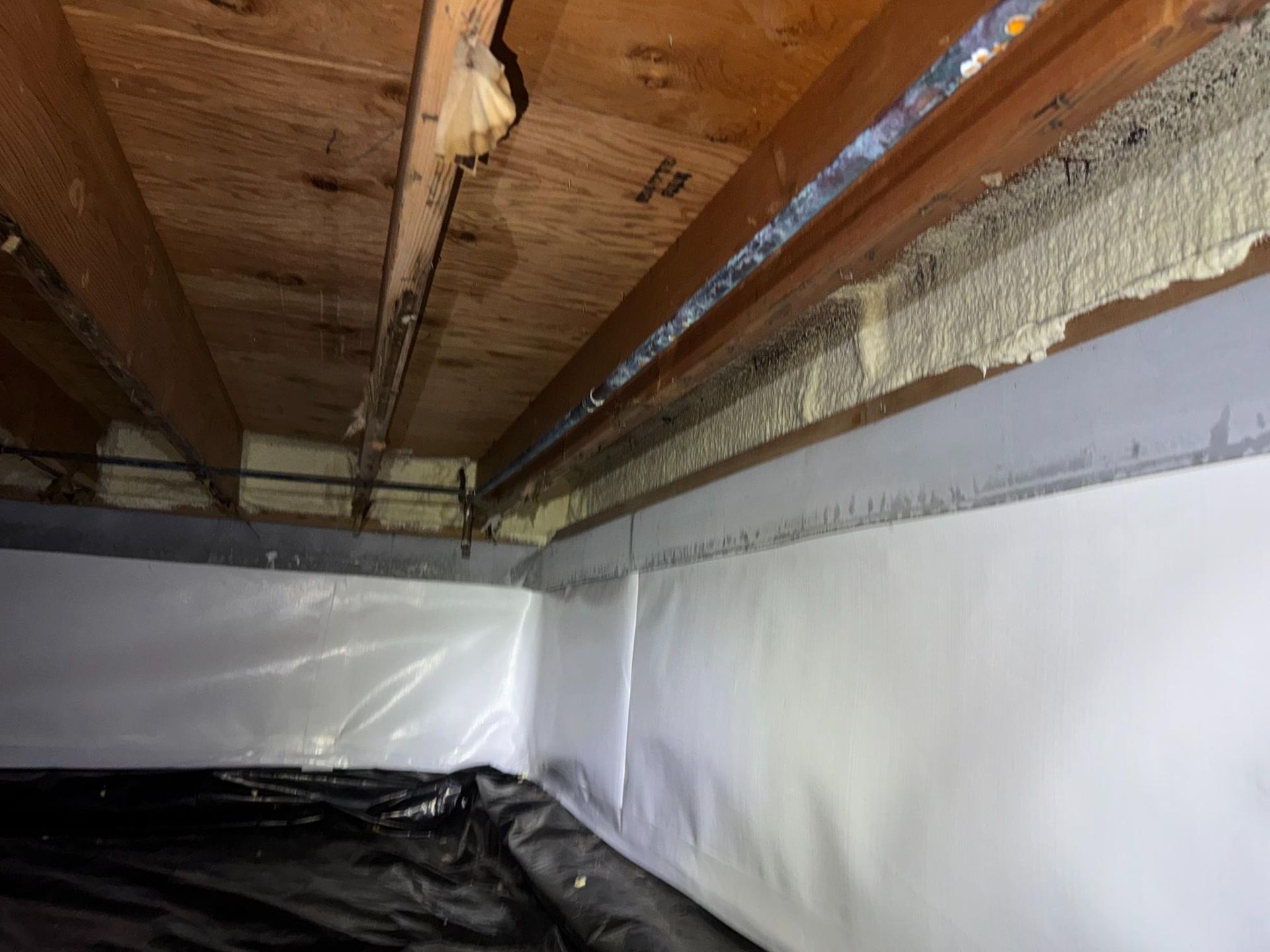
Once we encapsulate this crawl space and get the dehumidifier running, everything changes.
The humidity drops. The air down there goes from damp and musty to dry and clean. And most importantly, the wood starts drying out.
As the floor joists lose that excess moisture, they regain their original strength. The fibers tighten back up. The structural integrity returns. At that point, we can come back and finish leveling without any worry about cracking anything.
But the benefits go beyond just being able to adjust the jacks. When your crawl space stays dry year-round, your floors stay stable year-round. No more seasonal bounce. No more sagging that gets worse every summer when the humidity climbs.
This is what separates a temporary fix from a permanent solution. Jacks alone might help for a while, but moisture will keep working against you. Jacks plus moisture control means the problem is actually solved.
Homeowners tell us the difference is night and day. The floors feel solid in July just like they do in January. And that's how it's supposed to be.
Our Approach to Floor Support Work in Central Illinois
We don't rush structural work. Period.
Chris and I are both owner-operators, which means when we do a job, we're accountable for how it holds up five years from now, not just five days from now. We're not handing your project off to a crew we hired last week and hoping for the best.
We live here in Mahomet. We've both been here our entire lives. Our reputation isn't some abstract business thing—it's personal. If we cut corners or do sloppy work, we're going to hear about it at the coffee shop, the gas station, or our kids' football games.
That's why we explain the staged approach upfront. We're not trying to upsell you on encapsulation just to pad the invoice. We're telling you what your crawl space actually needs for a fix that lasts.
Some jobs can be done in one visit. This one needs to be done in stages because the wood's too wet. We'd rather be honest about that than pretend we can do it all at once and risk problems later.
Transparency matters more than speed.
Book A Free Inspection Now
Your crawl space problems aren't going to fix themselves. But they are fixable. Let's get it done — the right way, permanently.
Or call us directly (217) 863-9559
Get a Thorough Floor Support Assessment
If your floors are bouncy, sagging, or just don't feel as solid as they used to, give us a call.
We'll come out, inspect your crawl space, and tell you honestly what's going on. If it's a moisture issue, we'll tell you. If jacks alone will handle it, we'll tell you that too.
No pressure, no games. Just Chris or me explaining what we found and what we'd recommend.
We're here in Mahomet, and we're ready to help.