The Hidden Obstacle We Found on Day Two of This Mattoon Crawl Space Job
When a homeowner finally makes the call, something shifts.
We come out and do a thorough inspection. We get under the home and look at everything — and we show you what we're seeing in real time so there are no surprises when we sit back down with you. You'll know exactly what's down there. You'll know exactly what it takes to fix it. And you'll have a clear picture of what your home looks like after the work is done.
No pressure. No scare tactics. Just an honest look at what's happening and a straightforward plan to address it.
Most homeowners tell us the same thing after that first visit.
They wish they hadn't waited as long as they did.
When the Job Throws You a Curveball
Day two of a crawl space job in Mattoon, Illinois. We've got two crawl spaces to encapsulate, and the bigger one is almost finished. Wall seal done. Crawl seal done. Taping and cleanup underway. Things are moving along exactly the way they should.
Then we move to the smaller one.
That's where we find it. An old concrete slab and foundation sitting right in the middle of everything we need to do. Wall seal, dimple mat, crawl drain, sump pump—all of it needs to happen in this space. And right now, there's a concrete obstacle making sure none of that is straightforward.
This is the part of crawl space work most contractors don't talk about. The part where the job stops going according to plan.
What We Were There to Do
Before we get into the obstacle, it helps to understand what a full crawl space encapsulation actually involves. Because this wasn't a simple job to begin with.
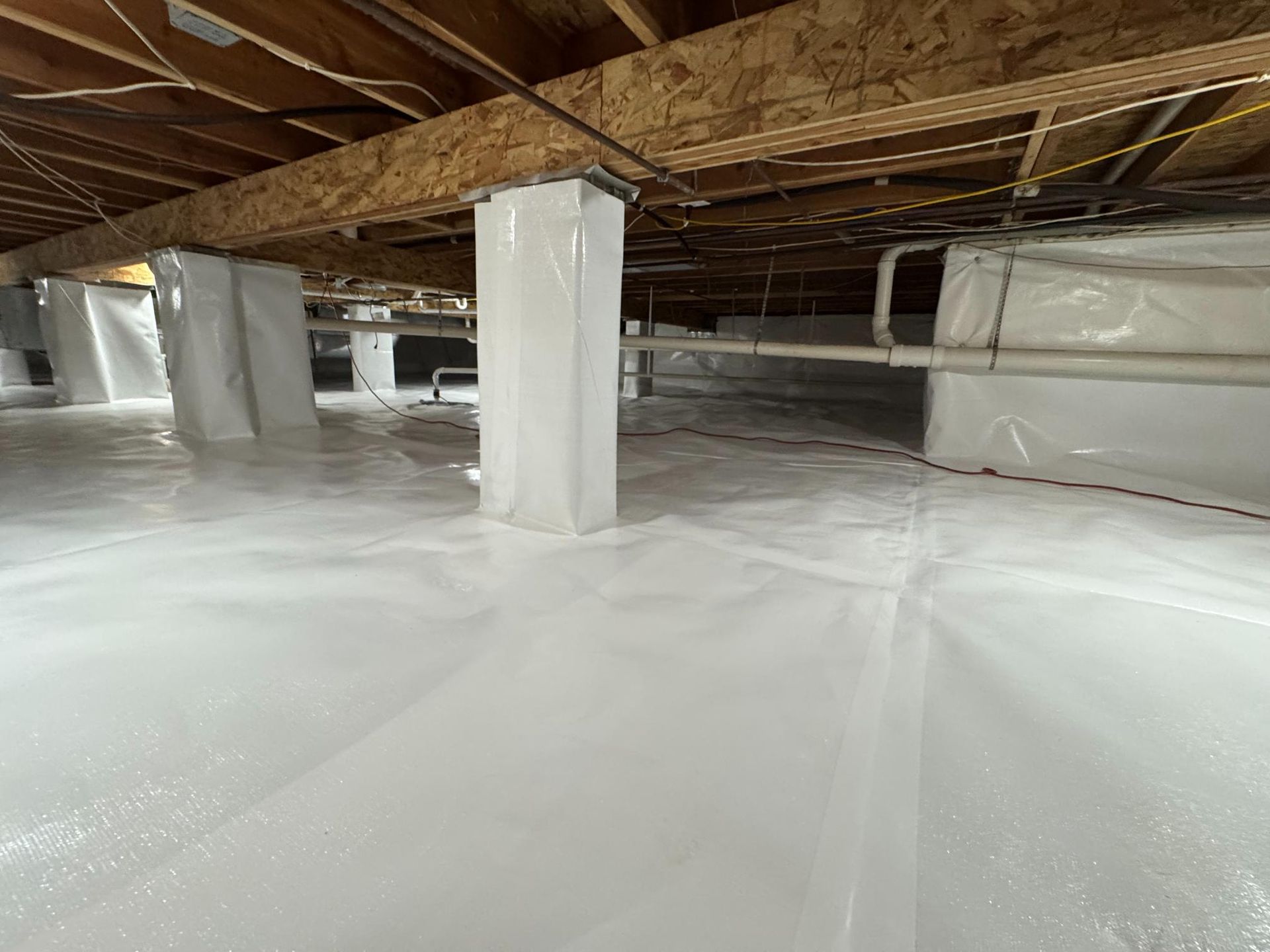
For this Mattoon home, we were installing wall seal along the perimeter walls—that's the thick liner that goes up the foundation walls to keep moisture from seeping in from the sides. Then crawl seal across the entire floor, which is your vapor barrier that prevents ground moisture from rising up into your home. Dimple mat on top of that to create a drainage layer. A crawl drain system to channel any water that does get in. And a sump pump to collect and remove that water automatically.
Each of these elements works together. Skip one, and the whole system is compromised. Do one incorrectly, and you've got the same moisture problems you started with—just hidden under a fresh layer of materials.
That's why we take each part of the installation seriously. Even the smaller crawl space. Even when it's the end of day two and everyone's ready to wrap up.
Especially then.
What We Actually Found
When Ryan ducked into the smaller crawl space on day two, it was immediately clear something was in the way.
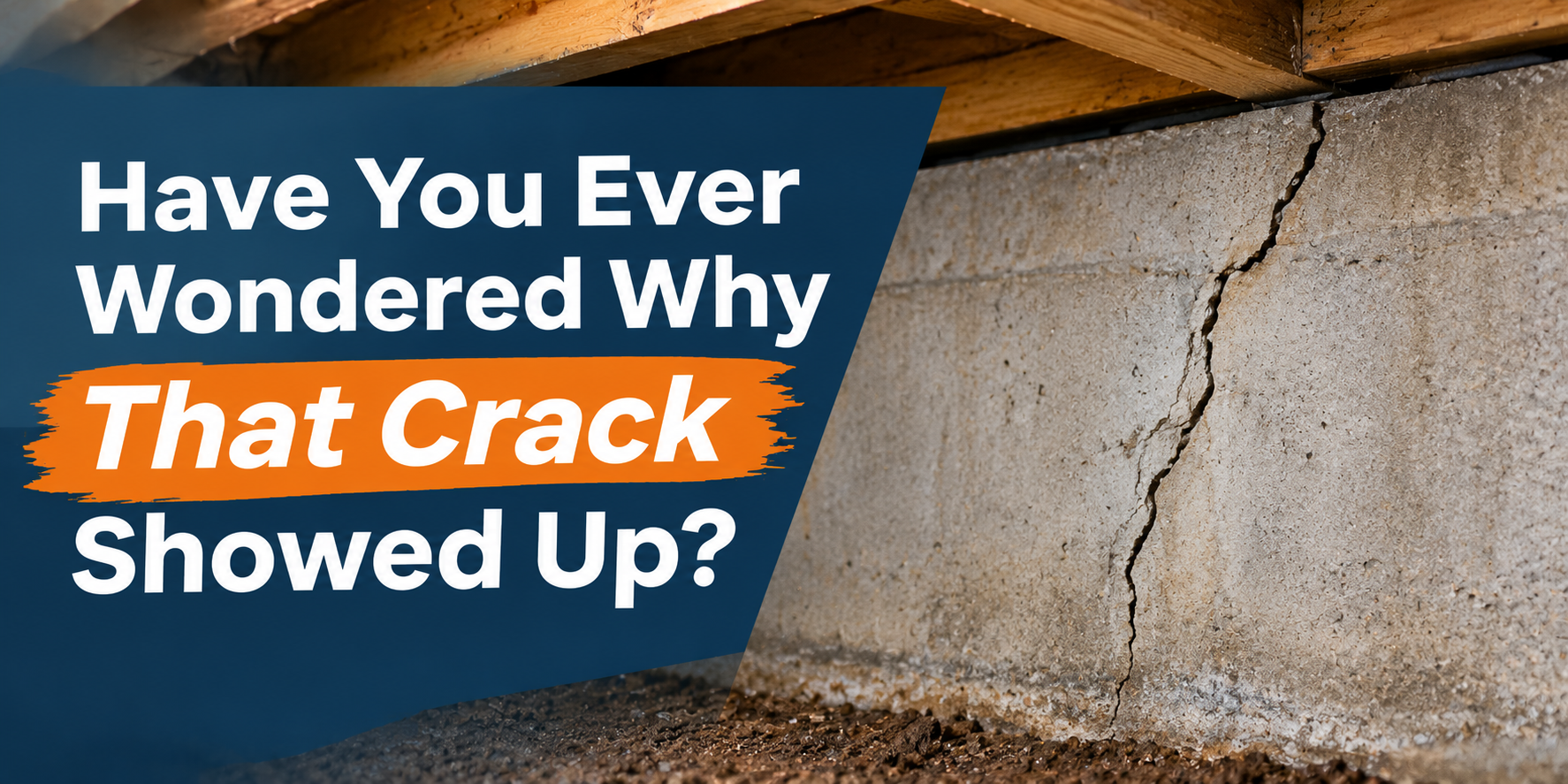
An old concrete foundation. A slab sitting right where the wall seal needs to go, right where the dimple mat needs to lay, right where the crawl drain needs to run. Not a small inconvenience—a real obstacle that changes the entire installation approach.
Here's the thing about old concrete in crawl spaces: it's usually a remnant from a previous structure, an old addition, or an earlier foundation system that never got fully removed. It doesn't mean anything is wrong with the home. It just means the crawl space has a history. And that history has to be worked around.
The first instinct for some crews would be to panic, make excuses, or tell the homeowner it can't be done the way it was quoted. Our first instinct was to stop, turn on the headlamp, and figure it out.
That's a small but important difference.
Why Unexpected Obstacles Happen
No two crawl spaces are the same. That sounds simple, but most homeowners don't fully appreciate what it means until they're in the middle of a job.
Every home has a story. Additions built decades apart. Old plumbing rerouted and abandoned. Foundation work done by crews long gone. Previous encapsulation attempts using materials that have since deteriorated. In Central Illinois especially, we see homes that have been added onto, modified, and repaired over generations. Each of those changes leaves something behind under the house.
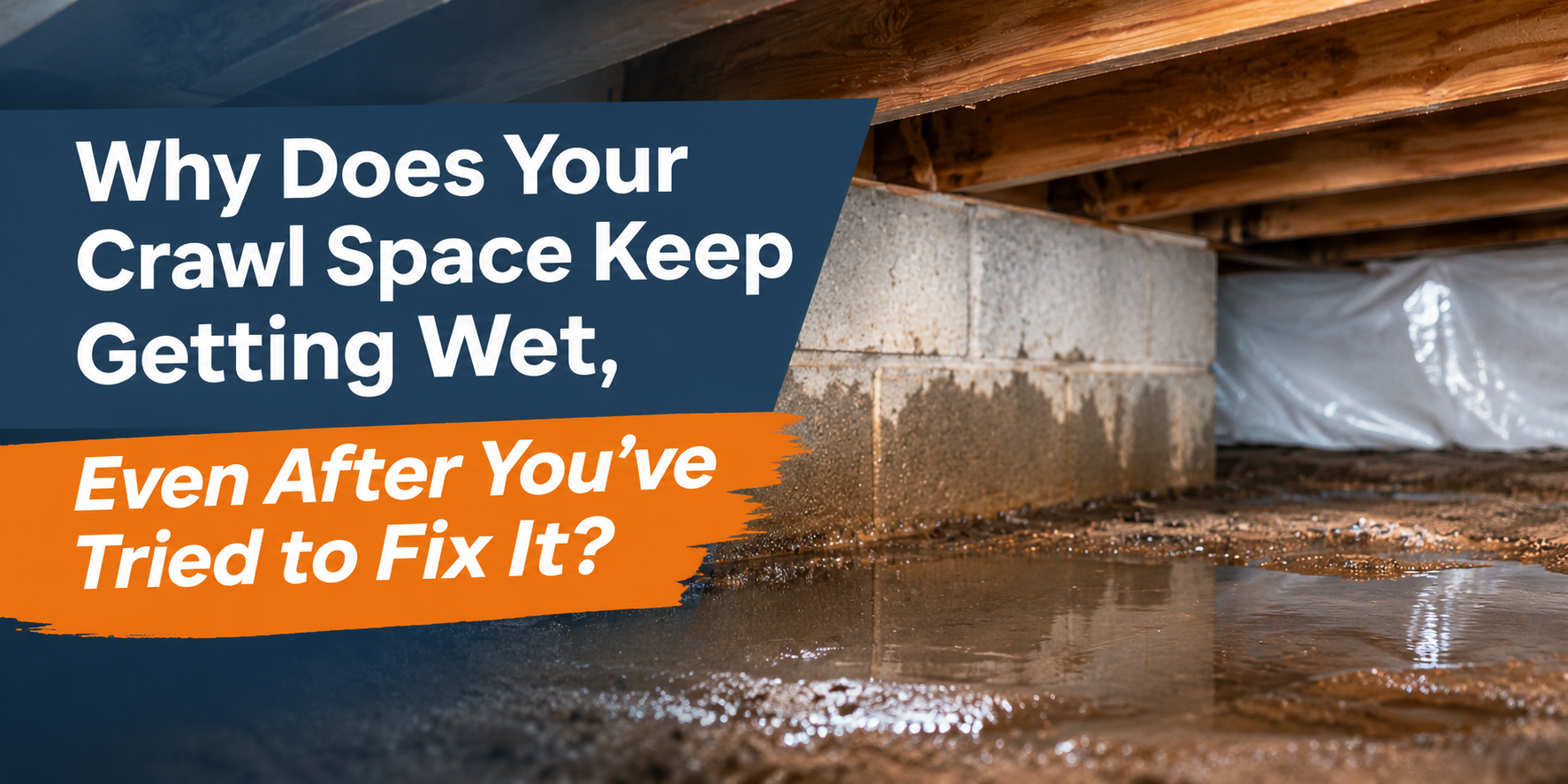
That's why a crawl space inspection can only tell you so much. You can spot the obvious issues—standing water, deteriorating vapor barrier, sagging insulation. But sometimes you don't know exactly what you're dealing with until you're actually in there doing the work.
This is also why experience matters more than price when you're hiring for this kind of job. A crew that's only seen straightforward crawl spaces is going to struggle the moment something unexpected shows up. And something unexpected almost always shows up.
What Separates a Good Crew from a Bad One
When a crawl space job hits an obstacle, there are really only a few ways a crew can respond.
The first is walking away. Telling the homeowner the job can't be done as quoted, packing up, and leaving them with an unfinished crawl space and a bigger problem than they started with. It happens more than you'd think.
The second is upselling before solving. Calling the homeowner before even analyzing the situation and telling them the price just went up. No explanation, no options, no problem-solving—just a bigger number before anyone's even figured out what the solution looks like.
The third is skipping the problem area. Installing everything around the obstacle and hoping nobody notices the gap in coverage. This is probably the most dangerous response because the homeowner has no idea the job wasn't completed properly. The moisture will find that gap eventually.
Then there's the approach we take: stop, assess, and figure it out.
It's not always fast. It's not always easy. But it's the only response that actually serves the homeowner. You stop when you hit an obstacle because rushing through it creates bigger problems down the road. You analyze it because the right solution depends on understanding exactly what you're dealing with. And then you get it done—completely, correctly, without cutting corners.
That's what day two in Mattoon looked like for us.
What This Means for Your Crawl Space Quote
Here's something worth knowing before you get quotes for crawl space work: the number on paper doesn't always reflect what the job actually requires.
That's not necessarily dishonest. Sometimes it's just the reality of crawl space work. A contractor can give you an accurate quote based on what they can see during an inspection. But what's behind an old foundation wall, or underneath deteriorating materials, or hidden in a corner they couldn't quite reach—that's a different story.
The question isn't whether surprises will happen. It's how your contractor handles them when they do.
Before work begins, it's worth asking a few simple questions. How do you handle unexpected obstacles? Do you communicate changes before charging for them? Have you worked on older homes with unusual foundation layouts?
The answers will tell you a lot. A contractor who's thought through these scenarios in advance is a contractor who's been in enough crawl spaces to know that surprises are part of the job. That kind of experience is worth paying for.
Book A Free Inspection Now
Your crawl space problems aren't going to fix themselves. But they are fixable. Let's get it done — the right way, permanently.
Or call us directly (217) 863-9559
Let's Find Out What's Under Your Home
Every crawl space is different. Some jobs go smoothly from start to finish. Others throw curveballs on day two.
Either way, you deserve a crew that knows how to handle both.
If you're dealing with moisture issues, musty smells, or you just want to know what's actually going on under your home in Mattoon, Mahomet, or anywhere in Central Illinois—reach out. Chris, Jeff, or Ryan will come out personally, do a thorough inspection, and walk you through exactly what we find.
No pressure. No surprises. Just honest answers from people who actually do this work.