The Reason Why Central Illinois Crawl Spaces Have Moisture Problems
The Hidden Reason Moisture Keeps Coming Back
If you own a home in Central Illinois with a crawl space, there is a good chance moisture has crossed your mind at some point. Maybe you noticed a smell. Maybe someone mentioned it during a home inspection. Maybe you have just always wondered what is going on down there.
You are not imagining it. And your home is not broken.
The answer to why this keeps happening has nothing to do with how your house was built. It has everything to do with the ground it was built on.
The Ground Under Your Home Is Always Moving
Central Illinois sits on a relatively high water table. That means the point where the ground becomes saturated with water is not very far down.
How far down are we talking?
In many parts of the Champaign-Urbana area, you can start hitting water seepage when you dig as shallow as two feet. In most cases across Central Illinois, that saturated zone starts somewhere between two and ten feet below the surface.
That might not mean much on its own. But here is where it gets relevant to your home.
Now Think About Your Crawl Space
When a home is built on a crawl space foundation, the construction crew digs down into the ground before they ever pour a footer or lay a block. A standard crawl space goes roughly five feet into the earth. Sometimes a little deeper depending on the footer.
So picture it this way. You have a water table that starts as shallow as two feet in some spots. You have a crawl space that sits five feet into that same ground. Those two things overlap. Every single time.
That is not a construction defect. That is not a sign that something went wrong when your house was built. That is just the reality of building a crawl space home in Central Illinois. The ground here holds water close to the surface, and your crawl space sits right inside that zone.
Why This Does Not Fix Itself
Here is what makes this different from a one-time water problem like a flood or a burst pipe. This is not an event. It is a condition.
The water table does not go away. It rises and falls with the seasons, with rainfall, with the natural movement of groundwater in the soil. That means the pressure pushing moisture toward your crawl space is always there to some degree. Some months it is worse than others. But it never fully stops.
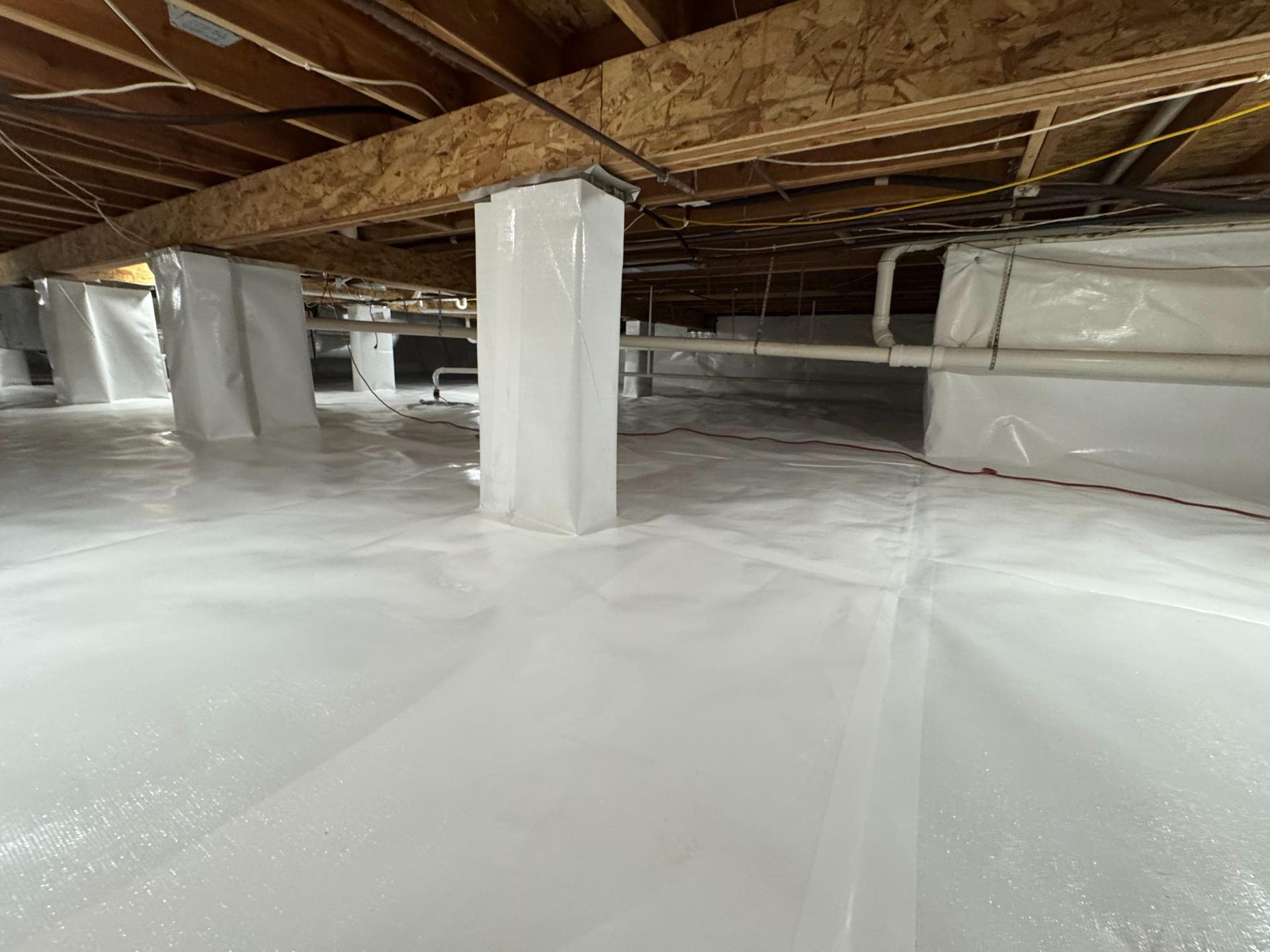
Moisture moves through soil and concrete and block. It evaporates up from the ground inside the crawl space. It finds every gap and crack it can. And once it is in that space, it stays there because crawl spaces do not get much airflow or sunlight to dry things out naturally.
Over time that moisture does not just sit there. It gets to work.
What Happens When Moisture Sits in a Crawl Space
This is the part most homeowners do not find out until the problem is already expensive.
Wood absorbs moisture. Over time that means floor joists and support beams can soften, warp, and in serious cases begin to rot. That is the structure your floors and your home sit on top of.
Insulation holds moisture too. The fiberglass batts that are common in crawl spaces act like a sponge. Once they are wet they lose their ability to do their job and they become a place where mold can grow.
And here is the thing about a crawl space that most people do not realize. The air in your crawl space does not stay in your crawl space. It moves up into your living area. Researchers who study air movement in homes estimate that a significant portion of the air you breathe on your first floor came up from below. If that air is carrying moisture, mold spores, or the smell of decay, it is coming with it.
This is why people notice musty smells in their home and cannot figure out where they are coming from. This is why some families deal with allergy symptoms that seem worse inside the house than outside. The crawl space is connected to the living space whether you can see that connection or not.
This Is a Central Illinois Problem — Not Just Your Problem
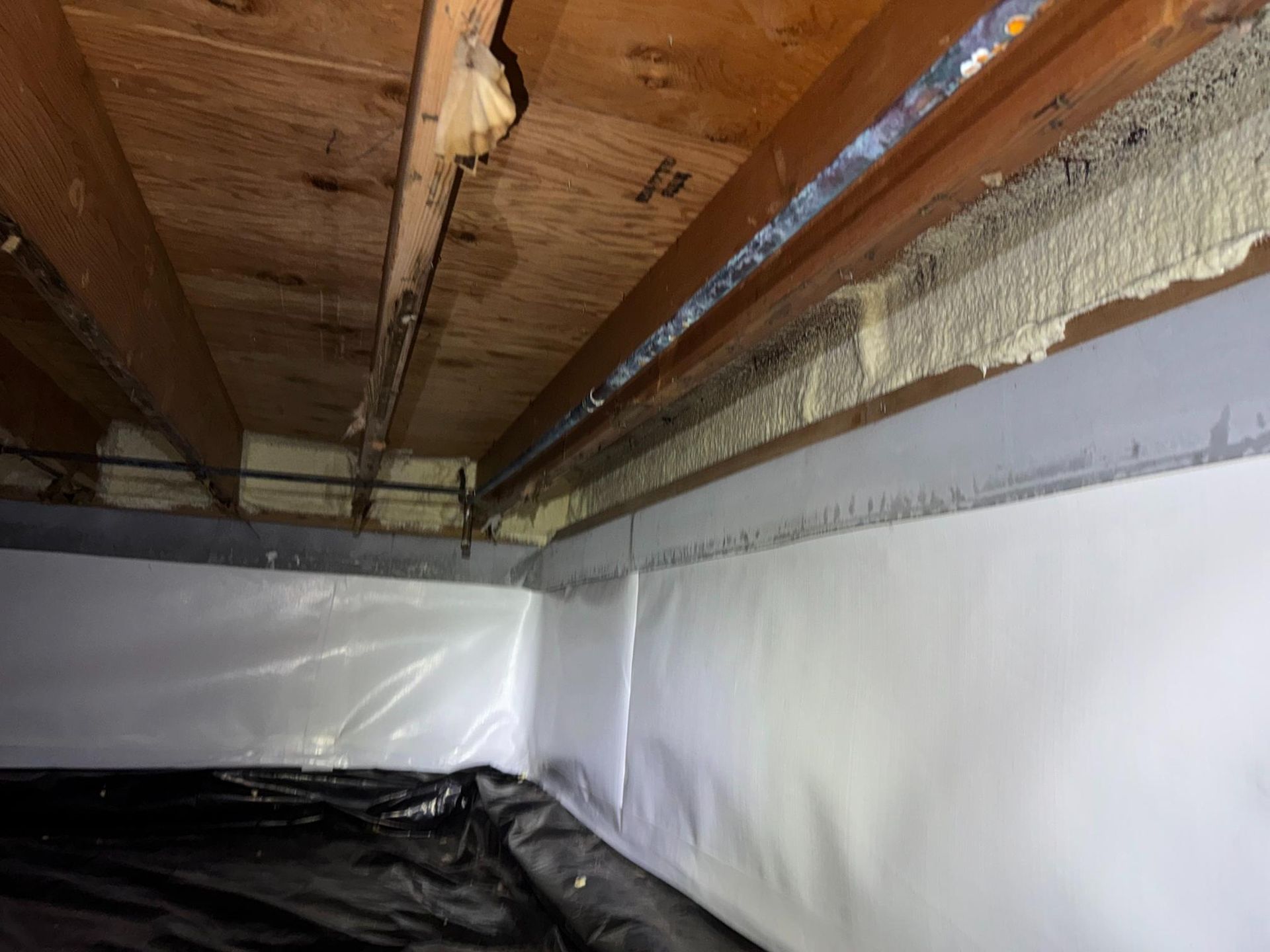
One of the most important things to understand is that you are not alone in this. This is not a you problem or a your house problem. This is a regional condition that affects a significant number of crawl space homes across Champaign-Urbana and the surrounding area.
The homes on your street are likely dealing with the same thing. The difference is not whether the water table affects them. The difference is whether someone has done something about it.
That matters because it means this is a known and solvable problem. It is not a mystery. It is not a worst case scenario. It is something that the right approach addresses directly and permanently.
Book A Free Inspection Now
Your crawl space problems aren't going to fix themselves. But they are fixable. Let's get it done — the right way, permanently.
Or call us directly (217) 863-9559
Find Out What's Really Happening Under Your Home
If your Central Illinois home has a crawl space and you have ever wondered why moisture keeps showing up, now you know. The water table in this region runs shallow. Your crawl space sits right inside that zone. That is not bad luck. That is just geography.
The good news is that geography is not destiny. The problem is understood, the solution is proven, and the right team can walk you through exactly what your specific crawl space needs.
If you want to know what is actually going on under your home, we are happy to take a look. No pressure, no guesswork — just an honest look at what is there and a straight answer about what it would take to fix it.