
Walk Your Yard After It Rains. Here's What To Look For

Jeff Robinson • July 27, 2026

When that customer asked us if they should really seal up their vents, they weren't being difficult. They were being careful. They wanted to understand what they were agreeing to before they agreed to it.


That's exactly the right instinct.


The answer just happens to be different than what most people expect. Sealing your crawlspace vents — when it's done as part of a proper encapsulation — isn't risky. It's the point. It's what makes everything else work.


Building science caught up to this a while ago. We just don't always get the memo as homeowners because nobody sits us down and explains it.
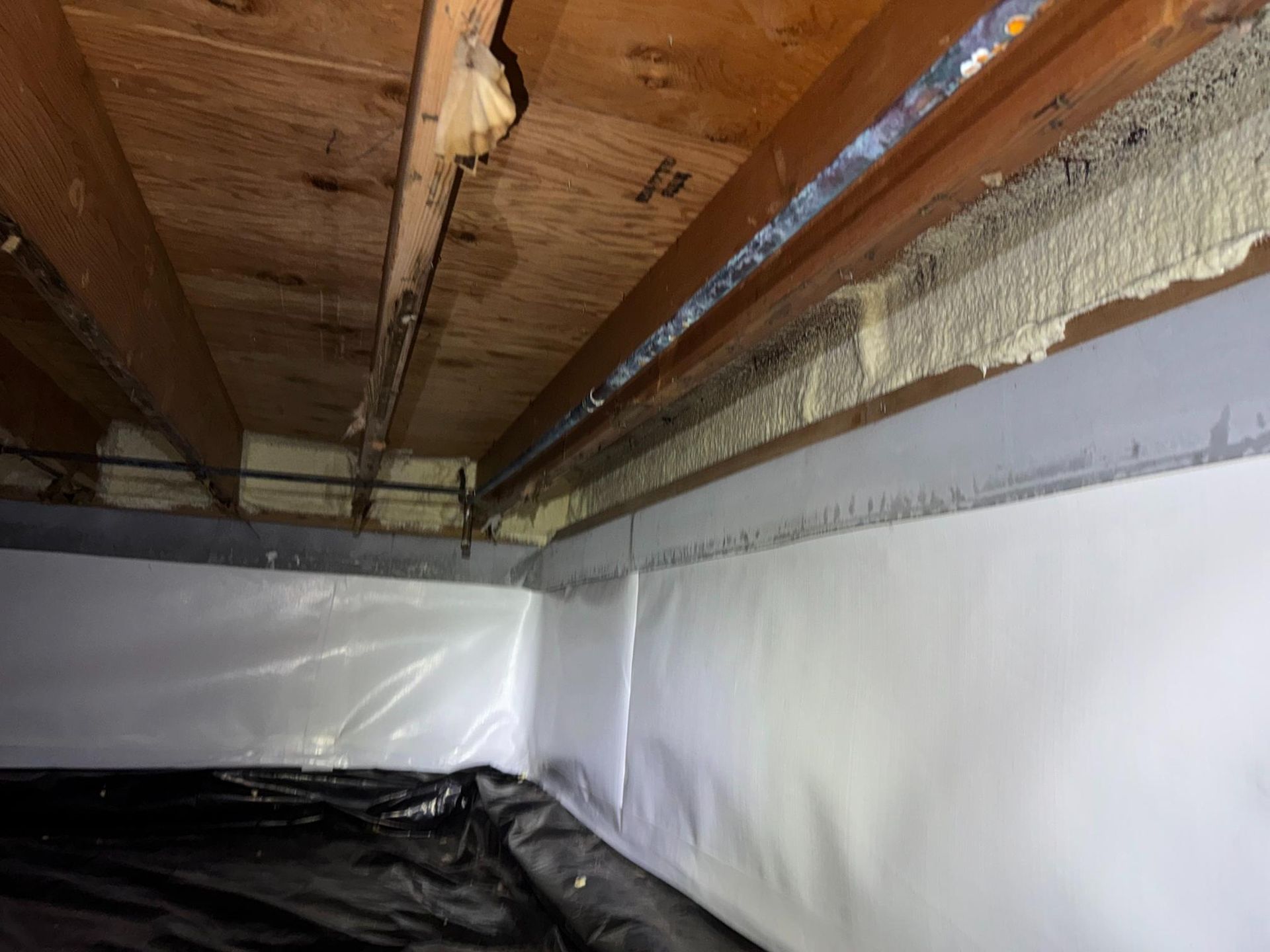
A crawl space with spray foam insulation on the rim joists, white vapor barrier walls, and a black ground liner.

Your Crawlspace Problem May Start Outside

Most people never think about their crawlspace until something feels wrong.


Maybe there's a smell. Maybe the floor feels a little soft in one spot. Maybe someone mentioned moisture and now you can't stop thinking about it.


Here's the thing — by the time you notice something inside your house, water has usually been working on the problem for a while. And in a lot of cases, it started outside. Not under your house. Outside it.


That's the part most people miss.

Your Crawlspace Doesn't Create Moisture. It Collects It

Your crawlspace sits at the lowest point of your home. It doesn't generate water on its own. What it does is collect whatever finds its way in.


And the most common way water finds its way in? It starts at ground level. Right outside your foundation walls.


When it rains, water hits the ground around your house. Where that water goes next matters more than most homeowners realize. If the ground around your foundation is moving water away from the house, you're in good shape. If it's not — if water is sitting near your foundation or running toward it — that water is looking for somewhere to go.


A lot of the time, it goes under your house.

What We Found On A Recent Job

We got called out to a house not long ago where one corner of the crawlspace was holding a lot of moisture. Very damp. The kind of damp that tells you water has been finding its way in for a while.


Before we did anything inside the crawlspace, we went outside.


We ran a PVC pipe and buried it 20 feet out from the house. The goal was simple — intercept the water before it ever reached the foundation and redirect it away from the house.


That one step outside changed everything happening inside.


This is how we approach crawlspace work. You don't just treat what you can see under the house. You figure out where the water is coming from and deal with it there first.

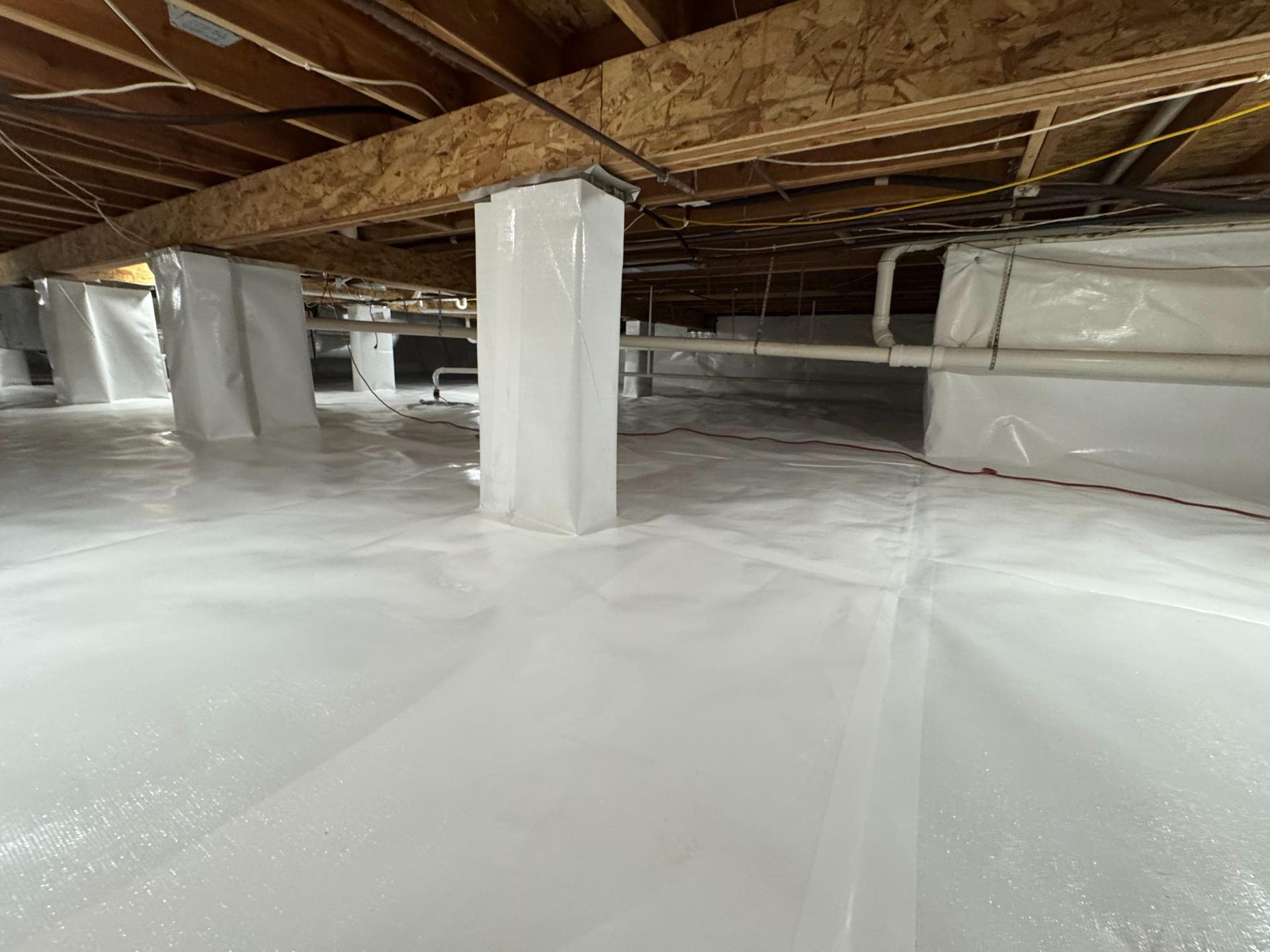
A crawl space with white plastic vapor barrier covering the ground and wrapping around the support pillars and walls.

Walk Your Yard After It Rains

You don't need any special tools or training to do this. You just need to pay attention.


The next time you get a good rain, give it a few minutes and then walk around the outside of your house. Here's what to look for:


Where is water pooling?

Look for low spots in the yard where water collects and sits. The closer those spots are to your foundation, the more attention they deserve.


Which direction is the ground sloping?

Ideally the ground around your house should slope away from the foundation — not toward it. If you're standing at your foundation and the yard slopes down toward the house, water is following that slope every time it rains.


Where are your downspouts dumping water?

A lot of homes have downspouts that end just a foot or two from the foundation. Every time it rains your gutters are collecting water from your entire roof and depositing it right next to your house. Extensions that carry water further out — at least 6 feet, ideally more — make a real difference.


Are there any spots where water runs along the foundation wall?

Sometimes you can actually watch it happen during a heavy rain. Water sheeting off a roof, landing near the foundation, running along the wall. That water is finding every crack and gap it can.


Does anything drain toward the house from a neighboring yard or higher ground?

If your property sits lower than the land next to it, you may be collecting other people's runoff on top of your own.

What To Do With What You Find

Some of what you find you can address yourself. Downspout extensions are inexpensive and easy to install. Regrading a small area near the foundation is something a handy homeowner can tackle with a few bags of soil and an afternoon.


But some of what you find points to something bigger. If water is consistently moving toward your foundation from multiple directions, or if you've got a grading issue that covers a large area, that's worth a real conversation.


And if you're already seeing signs of moisture inside the crawlspace — that musty smell, damp insulation, condensation on surfaces — what's happening outside is almost certainly part of the story.


The exterior is always the first place we look. Not because the inside doesn't matter, but because fixing the inside without addressing the outside is like mopping the floor while the faucet is still running.

Book A Free Inspection Now

Your crawl space problems aren't going to fix themselves. But they are fixable. Let's get it done — the right way, permanently.

Or call us directly (217) 863-9559

The Problem Starts Outside Your Crawlspace

Your crawlspace is not the source of your moisture problem. It's where the problem shows up.


The source is usually water. And water usually starts outside.


Walking your yard after a good rain costs you nothing. It takes ten minutes. And it might show you exactly why your crawlspace has been struggling — and what needs to happen to fix it for good.


If you're in Central Illinois and you want a second set of eyes on what you're seeing, we're happy to take a look. No pressure. No scary sales pitch. Just an honest conversation about what's going on with your home.

Based in

Mahomet, Illinois Serving all of Central Illinois.

Business Hours

Mon Fri - 8am to 5pm

Sat Sun - Closed

Text overlay: “Day 3 walking through a completed crawl space job” over a bright crawl space interior
By Jeff Robinson August 1, 2026
It's a little after 4 PM on day three, and we're wrapping up this crawl space encapsulation job here in Central Illinois. Piers are wrapped. Floor's sealed. Sump pits are swapped out. Everything's spray foamed. The work's done, and it's done right.
Damaged crawl space with torn insulation and dirt, overlaid text:
By Jeff Robinson August 1, 2026
So we're working on a crawl space here in Fairmount, and I wanted to introduce you to the contractor who started this job. Everyone, meet George. George is a turkey. Literally. All jokes aside, this crawl space is a perfect example of something we see way too often: a contractor came in, started the encapsulation work
Crawl space encapsulation graphic with before-and-after phases and moisture barrier installation shown in sections
By Jeff Robinson July 31, 2026
That's Ryan giving you a tour of a crawl space job we're working on right now outside Mahomet. Debris is already hauled out. Lights are already hung. Trenches are dug for the drain tile. The crew's in the middle of it.