We Inspected a Crawl Space That Was Encapsulated 10 Months Ago. Here's What We Found
When a homeowner finally makes the call, something shifts.
We come out and do a thorough inspection. We get under the home and look at everything — and we show you what we're seeing in real time so there are no surprises when we sit back down with you. You'll know exactly what's down there. You'll know exactly what it takes to fix it. And you'll have a clear picture of what your home looks like after the work is done.
No pressure. No scare tactics. Just an honest look at what's happening and a straightforward plan to address it.
Most homeowners tell us the same thing after that first visit.
They wish they hadn't waited as long as they did.
A Brand New Encapsulation That Was Already Failing
Got a call this morning from a homeowner here in Mahomet. She'd had her crawl space fully encapsulated about 10 months ago by a national company. Big name, lots of advertising, the kind of brand that makes you feel like you're making a safe choice.
Then we had a heavy rain. She went down to check and found standing water sitting on top of her brand new vapor barrier.
She called the company. Never really heard back.
So she found our advertising, figured she'd get a second opinion, and called us. Chris or I always answer, so we got her scheduled and I went out to take a look.
What I found when I got down there is exactly why we tell every homeowner to get multiple opinions before signing any contract—and to hold their contractor accountable when something goes wrong.
First Impressions vs. Reality
Here's the thing about a bad crawl space job: it doesn't always look bad at first.
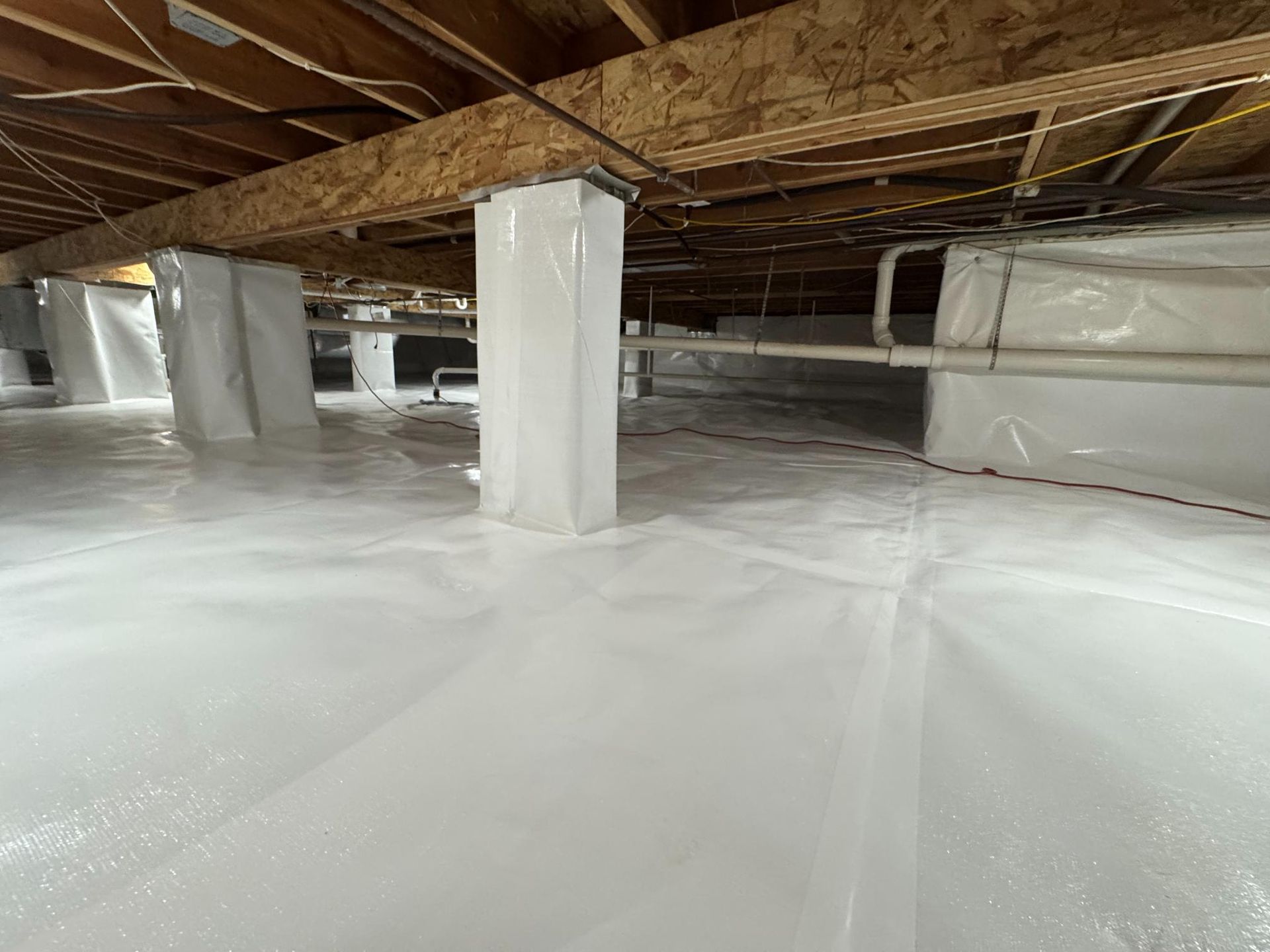
When I dropped down into this crawl space, my first impression was actually pretty decent. Bright white vapor barrier covering the floor. Walls covered. Two dehumidifiers running. At a quick glance, it looked like a solid encapsulation job. The kind of thing that would make most homeowners feel confident they got what they paid for.
But I don't do quick glances. That's not how we inspect.
The more I moved through that space, the more things started jumping out at me. Small details that most homeowners would never notice. Things that look fine on the surface but tell a completely different story once you know what you're looking at.
That's the problem with crawl space work. It's out of sight. Most people never go back down there after the job is done. So if a crew cuts corners or installs something incorrectly, there's a good chance nobody's going to catch it—until a heavy rain forces the issue.
This homeowner got lucky in a way. The water showed up early enough that the damage hasn't compounded yet. That's not always the case.
Every Problem We Found
Once I really got into this inspection, the problems kept adding up. Here's exactly what I found:
The vapor barrier was installed backwards. The wall covering is supposed to come down and tuck underneath the floor liner. On this job, it was laid on top of it and taped down. That might sound like a small detail, but it's not. Water that gets behind that wall covering now has a direct path under the barrier instead of being redirected away from it.
The fasteners holding the plastic to the walls were driven into the foam insulation board, not into the concrete behind it. Foam board doesn't hold fasteners long term. As that foam shifts or deteriorates, the whole wall seal starts pulling away. Which is exactly what was already happening in multiple spots around this crawl space—wall seal falling down less than a year after installation.
The top edge of the vapor barrier along the walls wasn't sealed at all. That's one of the most important details of an encapsulation. If the top isn't sealed, moisture can still travel down behind the barrier and defeat the whole purpose of the job.
Both dehumidifiers were undersized for the spaces they were covering. A dehumidifier that's too small for the square footage it's managing can't keep up. It just runs constantly without ever really solving the humidity problem.
And then there was an entire section of the crawl space that was never encapsulated. Not partially done—completely untouched. She didn't even know it existed. They just put a dehumidifier in there and called it a day.
What This Means for Your Home
Every one of those problems has a consequence.
Vapor barrier installed backwards means water has a path it shouldn't have. Fasteners in foam means the wall seal is already working itself loose. Unsealed top edges mean moisture is still getting in right where it's supposed to be stopped. Undersized dehumidifiers mean the humidity level in that crawl space is never really under control.
And that entire unencapsulated section? That's just an open invitation for moisture, mold, and pests.
Here's what people don't always realize: crawl space problems don't stay in the crawl space. Remember, about 50% of the air you breathe upstairs comes from down there. When humidity isn't controlled, it works its way into your floor joists and framing. Wood starts to absorb moisture. Over time that leads to softening, warping, and structural damage that's expensive to fix.
Ten months in, this homeowner is already seeing standing water after rain. Left alone, those installation mistakes will keep compounding. What's a warranty repair today becomes a major renovation down the road.
This is why getting it done right the first time matters so much.
The Warranty Problem
Here's where things get frustrating.
This homeowner is still under warranty. So when I finished the inspection and laid out everything I found, I didn't quote her a single repair. That's not the right move here. She paid for a job that should have been done correctly, and she has every right to have that company come back and fix it.
What I did instead was give her advice on how to go back to them and communicate what she found. Document everything. Put it in writing. Be specific about each problem. Don't just say "it's not working"—say exactly what's wrong and reference the warranty terms she signed.
The challenge is that big national companies can be hard to hold accountable after the check clears. Getting someone back out is sometimes a fight.
But a warranty is only as good as the company standing behind it. Before you hire anyone for crawl space work, ask them directly: how do you handle warranty calls? What's your response time? Who do I contact if something goes wrong?
A company that's hard to reach before you sign is going to be even harder to reach afterward.
What a Proper Encapsulation Actually Looks Like
Since we're talking about everything that went wrong, let's talk about what right actually looks like.
When we do a crawl space encapsulation, the wall covering comes down and tucks underneath the floor liner. Not on top of it. That way any moisture that gets behind the wall barrier gets directed away from the space, not trapped underneath it.
Fasteners go into concrete. Not foam. Concrete holds. That vapor barrier isn't going anywhere.
The top edge of the wall covering gets sealed. Every section, all the way around the perimeter. No gaps, no open edges where moisture can sneak back in.
Dehumidifier sizing is based on the actual square footage of the space. Not a one-size-fits-all approach. A properly sized dehumidifier runs efficiently and actually maintains the humidity level it's supposed to.
And every section of the crawl space gets done. Not just the parts that are easy to access or the parts the homeowner knows about. All of it.
When we finish a job, we do a full video walkthrough so you can see exactly what was done and where. You shouldn't have to take anyone's word for it. Good work stands up to documentation.
That's not us going above and beyond. That's just finishing the job the way it was supposed to be finished.
What to Do If You Think Your Encapsulation Was Done Wrong
If you've had crawl space work done and something doesn't feel right, trust that feeling.
Start by going back down there and looking. Or have someone you trust take a look. Check for wall seal that's pulling away from the walls. Look for areas where the vapor barrier seems loose or improperly installed. Check whether the dehumidifier is actually maintaining a reasonable humidity level.
Document everything before you call the company. Photos, video, notes on what you're seeing. The more specific you can be, the harder it is for them to dismiss your concerns.
Put your warranty claim in writing. Email is better than a phone call because it creates a record. Be clear, specific, and reference the terms of your warranty.
If they're unresponsive, don't just let it sit. Follow up consistently and keep records of every interaction.
And if you're unsure whether what you're seeing is actually a problem, get an independent second opinion. That's exactly why we went out to this home in Mahomet this morning. No charge, no pressure. Just an honest look at what's going on.
Book A Free Inspection Now
Your crawl space problems aren't going to fix themselves. But they are fixable. Let's get it done — the right way, permanently.
Or call us directly (217) 863-9559
Let's Find Out What's Under Your Home
If you've had crawl space work done and you're not sure it was done right, we're happy to come take a look.
We'll do a thorough inspection, show you exactly what we find, and give you an honest opinion. No sales pitch, no pressure. Just Chris or me telling you what we see and what we'd recommend.
And if you're thinking about getting crawl space work done for the first time, we'd love the opportunity to show you what a proper job looks like before you sign anything.
Reach out anytime. We're here in Mahomet and we're ready to help.