
Where Should Your AC's Water Line Actually Drain?

Jeff Robinson • November 21, 2026

When a homeowner finally makes the call, something shifts.


We come out and do a thorough inspection. We get under the home and look at everything — and we show you what we're seeing in real time so there are no surprises when we sit back down with you. You'll know exactly what's down there. You'll know exactly what it takes to fix it. And you'll have a clear picture of what your home looks like after the work is done.


No pressure. No scare tactics. Just an honest look at what's happening and a straightforward plan to address it.


Most homeowners tell us the same thing after that first visit.


They wish they hadn't waited as long as they did.

A Simple Question With a Surprising Answer

Every air conditioner makes water while it runs. That water has to go somewhere — and where it goes says a lot about how the job was done.


Under one home, I found the water line just cut and left to drip onto a pile of nails. No pump. No real drain. Whoever installed it probably figured the ground would soak it up.


It won't. And it shouldn't have to.

How It's Supposed to Work

Your AC's water line should run to a pump. That pump pushes the water outside, or into a proper drain line. That's it. Simple system, when it's done right.


When that line is cut short and just left to drip onto the floor, there's no pump, no real drain, and no way for that water to leave the crawlspace the way it's supposed to.

Why This Happens More Than You'd Think

Most homeowners never go under their own house. There's no reason to — until something feels off. So a shortcut like this can sit there for years, completely out of sight, with nobody ever checking it.


It's not always carelessness. Sometimes it's just an assumption that the ground will handle it. But assumptions aren't the same as doing it right.

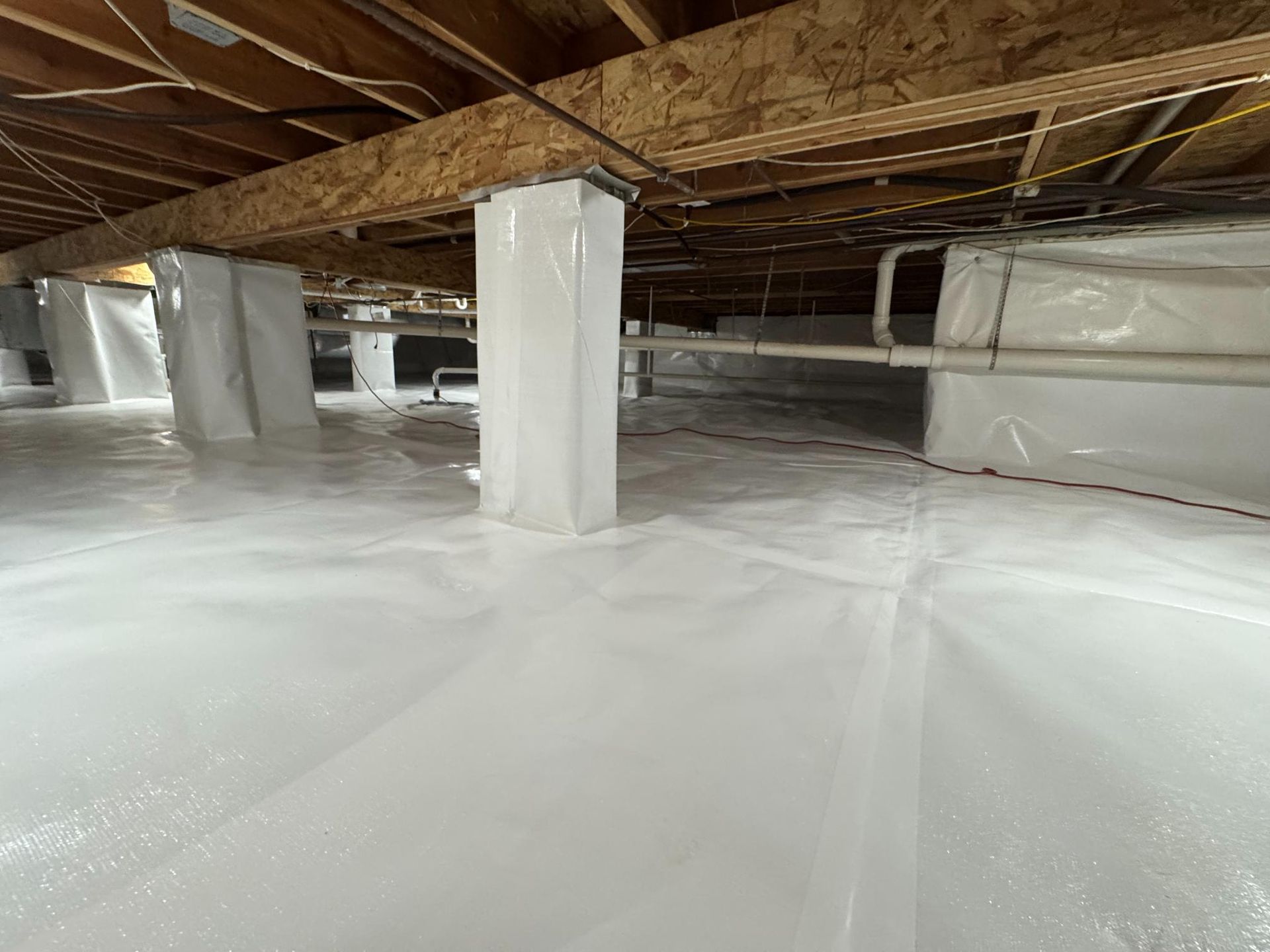
A crawl space with white plastic vapor barrier covering the ground and wrapping around the support pillars and walls.

One Question Worth Asking

You don't need to crawl under your own house to start figuring this out. Just ask your HVAC company:


"Where does my AC's water line actually go?"


If they can give you a clear, confident answer, that's a good sign. If they can't, it might be worth a second look.

Book A Free Inspection Now

Your crawl space problems aren't going to fix themselves. But they are fixable. Let's get it done — the right way, permanently.

Or call us directly (217) 863-9559

Not Sure Where Your AC's Water Is Going?

Water from your air conditioner shouldn't be collecting beneath your home. Even a small drainage issue can create unnecessary moisture problems when left unchecked.


At My Guys Crawl Space, we take the time to inspect what's happening beneath your home, identify potential moisture problems, and help you understand what needs attention.


Contact My Guys Crawl Space today to schedule an inspection and find out what's really happening beneath your home.

Based in

Mahomet, Illinois Serving all of Central Illinois.

Business Hours

Mon Fri - 8am to 5pm

Sat Sun - Closed

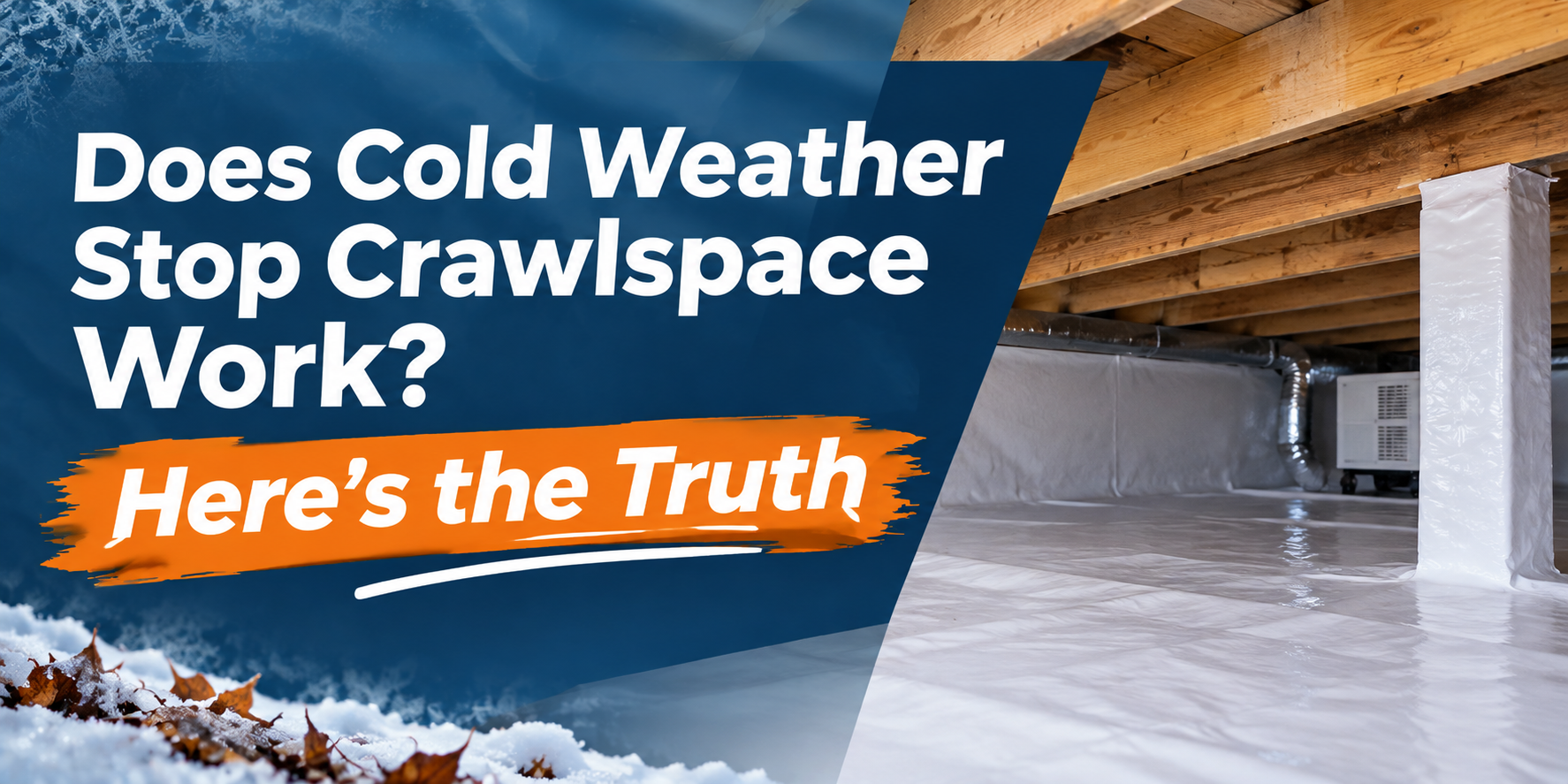
Graphic asks, “Does cold weather stop crawlspace work?” over a split view of a wooden crawlspace and a snowy outdoor scene.
By Jeff Robinson • November 23, 2026
Every year, around this time, we hear the same question. "How late can we go before it's too cold to work?"

Crack in a concrete wall beneath a wooden roof, with text asking, “Have you ever wondered why that crack showed up?”
By Chris Burdette • November 23, 2026
Most homeowners see a crack in the corner of a wall and think the same thing: the house is just getting old. It's an easy assumption. Houses settle. Walls shift. That's normal, right?

Promotional banner showing a flooded crawl space beneath a house, with text asking why it stays wet after repairs.
By Jeff Robinson • November 23, 2026
Every other canvas so far has had to make room for the anthropological angle alongside something else — the reel had footage to work around, the blog had structure to build, GBP will have to balance local/functional needs. The tweet has none of that. No image, no structure, no job-site proof needed. It's just the belie