Bringing Crawl Space Education to CI Living!
When a homeowner finally makes the call, something shifts.
We come out and do a thorough inspection. We get under the home and look at everything — and we show you what we're seeing in real time so there are no surprises when we sit back down with you. You'll know exactly what's down there. You'll know exactly what it takes to fix it. And you'll have a clear picture of what your home looks like after the work is done.
No pressure. No scare tactics. Just an honest look at what's happening and a straightforward plan to address it.
Most homeowners tell us the same thing after that first visit.
They wish they hadn't waited as long as they did.
What Every Central Illinois Homeowner Should Know About Their Crawl Space
Got the chance to head up to Champaign recently and sit down with CI Living on Channel 3. Not to run an ad. Not to push a sale. Just to talk to homeowners about something most people never think about until something goes wrong.
Their crawl space.
Here in Central Illinois, we see the same problems over and over. Musty smells nobody can track down. Floors that feel a little soft. Humidity that makes the whole house uncomfortable. And almost every time, it traces right back to what's happening underneath the home.
So if you missed the segment, here's everything we covered. Because every homeowner in this area deserves to understand what's going on under their feet.
So What Actually Is a Crawl Space?
A crawl space is exactly what it sounds like — a narrow area underneath your home that you can crawl through but not stand up in. Usually anywhere from one to three feet high.
Not every home has one. Homes built on slabs sit directly on concrete. Homes with full basements have that instead. But a lot of homes here in Central Illinois — especially older builds — sit on a crawl space foundation.
Down there you'll typically find your floor joists, your plumbing lines, your HVAC ductwork, and whatever vapor barrier the original builder installed. Sometimes that barrier is in decent shape. A lot of the time it isn't.
Most homeowners have never been down there. Some don't even know they have one.
And that's completely understandable. It's dark, it's tight, and there's nothing about it that makes you want to go exploring. But what happens in that space affects your entire home — and that's exactly why it matters.
Why Your Crawl Space Affects Your Whole Home
Here's something most homeowners don't realize: about 50% of the air circulating through your home comes from underneath it.
Think about that for a second. The air your family breathes every day — in the kitchen, in the bedrooms, in the living room — is heavily influenced by what's happening in that dark, narrow space under your floors.
When there's excess moisture down there, it doesn't stay down there. It moves upward. Into your subfloor, into your floor joists, into your walls, and eventually into the air your family is breathing every single day.
That's where the musty smell comes from. That's why some floors feel soft or springy in spots. That's why some Central Illinois homes feel humid and uncomfortable even when the air conditioning is running fine.
And because nobody sees it happening, it usually goes on for months. Sometimes years. The problem quietly gets worse while life goes on upstairs.
That's the "out of sight, out of mind" trap. And it's one of the most expensive traps a homeowner can fall into. Because moisture damage to floor joists, subfloor, and structural framing doesn't get cheaper the longer you wait.
The good news is that once you understand what's happening down there, fixing it is straightforward. But you have to know it's a problem first.
The Most Common Crawl Space Problems We See in Central Illinois
After years of inspections across Mahomet, Champaign, and the surrounding area, we see the same issues come up again and again.
Moisture and humidity buildup is the big one. Central Illinois gets hot, humid summers and cold winters. That combination is hard on crawl spaces. Warm, moist air finds its way in through vents and gaps, hits the cooler surfaces underneath your home, and condensation starts forming. Left alone, that moisture creates the perfect environment for everything else on this list.
Deteriorating vapor barrier — or no barrier at all — is extremely common in older homes. The plastic sheeting that was installed years ago breaks down over time. It tears, it shifts, and eventually it stops doing its job.
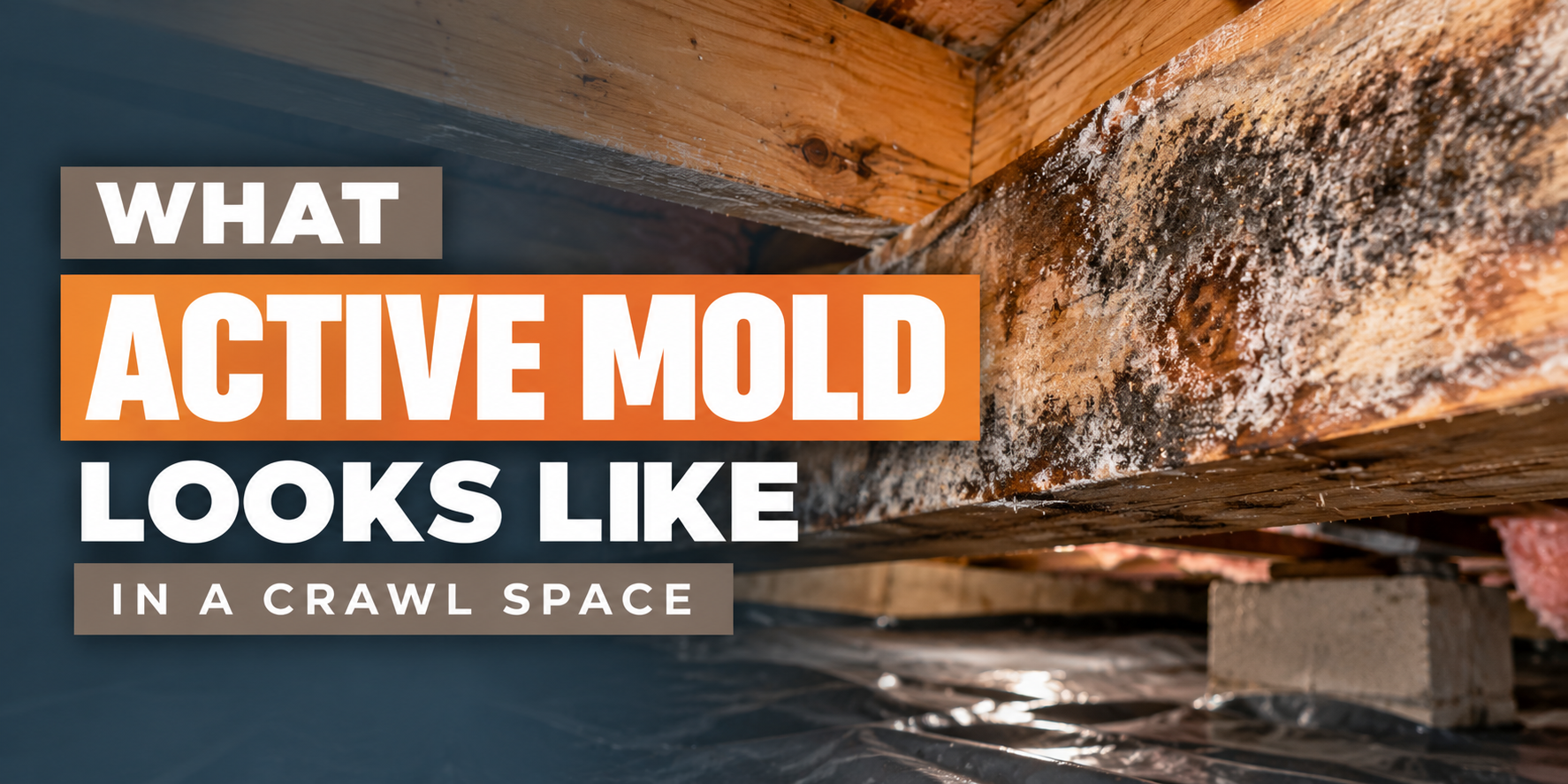
Mold and biological growth follow moisture almost everywhere. Once humidity levels get high enough, mold doesn't need much of an invitation.
Pest problems are another regular discovery. Insects and rodents love dark, undisturbed spaces. A poorly sealed crawl space is an open door.
And sagging or damaged floor joists show up more than most homeowners expect. Long-term moisture exposure weakens wood over time. That soft, springy feeling underfoot isn't just annoying — it's a structural warning sign.
None of these problems announce themselves loudly. They just quietly get worse. Which is exactly why a proper inspection matters so much.
What a Healthy Crawl Space Actually Looks Like
Most homeowners have no reference point for what a properly maintained crawl space should look like. So here's a simple picture.
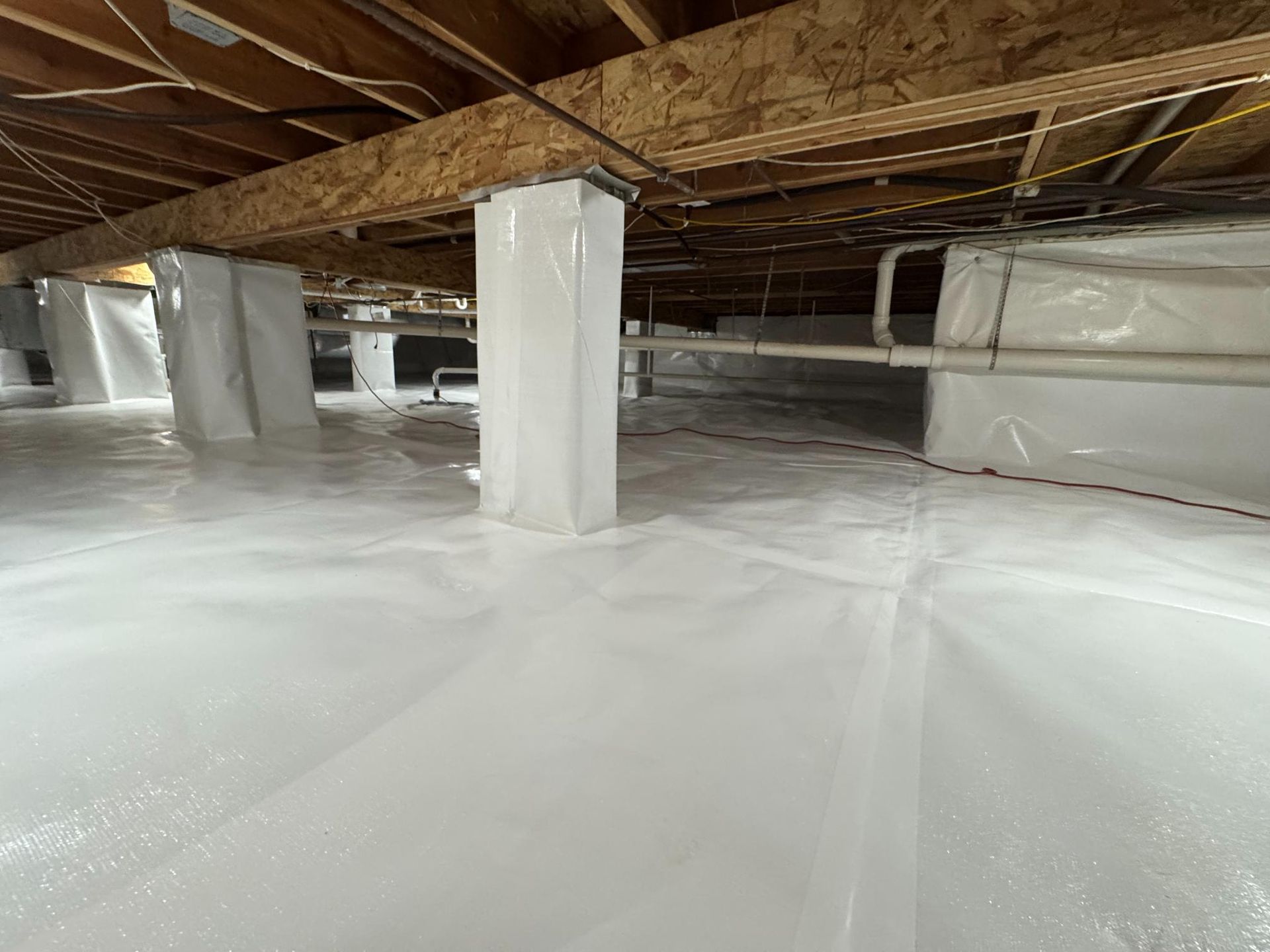
It's clean and dry. There's a heavy-duty vapor barrier covering the entire floor and running up the walls, properly sealed at the seams. Humidity levels are controlled — usually with a dehumidifier sized for the space. If there's a history of water intrusion, a crawl drain system and sump pump handle that before it becomes a problem.
The space is lit. You can actually see what you're looking at. Vents are sealed so outside air isn't constantly bringing in new moisture. Insulation is properly installed where it needs to be.
And everything is accessible. If your HVAC tech, plumber, or home inspector needs to get in there, they can do their job without fighting through a dark, cluttered mess.
That's what encapsulation does. It takes a neglected, problem-prone space and turns it into a clean, protected part of your home that works for you instead of against you.
It's not glamorous work. But the difference it makes is real.
How to Know If Your Crawl Space Needs Attention
You don't have to go under your home to know something might be wrong down there. Most of the time your house will tell you first.
A musty smell that lingers no matter how much you clean is one of the most common signs. If it's worse in certain rooms or after it rains, there's a good chance moisture is the culprit underneath.
Floors that feel soft, springy, or uneven underfoot are another one. A little give in the floor isn't normal. It's a sign that something in the floor framing system needs attention.
Higher than normal humidity throughout the house — even with your HVAC running — can point straight to the crawl space. Same with allergy symptoms that seem worse indoors than outside.
If you're noticing any of these things, it's worth having someone take a look. Not because it's automatically a disaster, but because the earlier you catch it the simpler and less expensive the fix tends to be.
Don't wait for it to get worse. It will.
Book A Free Inspection Now
Your crawl space problems aren't going to fix themselves. But they are fixable. Let's get it done — the right way, permanently.
Or call us directly (217) 863-9559
Let's Talk About Your Crawl Space
If anything in this article sounded familiar — the musty smell, the soft floors, the humidity — it's worth a conversation.
Chris and I do free inspections throughout Mahomet and Central Illinois. We'll get under your home, show you exactly what we find, and give you an honest picture of what's going on. No pressure, no surprises.
If there's a problem, we'll tell you. If there isn't, we'll tell you that too.
Reach out anytime. Either Chris or I will answer personally.