
What Active Mold Looks Like in a Crawl Space
When a homeowner finally makes the call, something shifts.
We come out and do a thorough inspection. We get under the home and look at everything — and we show you what we're seeing in real time so there are no surprises when we sit back down with you. You'll know exactly what's down there. You'll know exactly what it takes to fix it. And you'll have a clear picture of what your home looks like after the work is done.
No pressure. No scare tactics. Just an honest look at what's happening and a straightforward plan to address it.
Most homeowners tell us the same thing after that first visit.
They wish they hadn't waited as long as they did.
What We Found During a Routine Inspection in Decatur
We were out in Decatur recently doing a routine crawl space inspection when we spotted something on the wood joists that needed a closer look.
Discoloration. Raised texture. And when Jeff rubbed his fingers across it—it smeared. Wet underneath.
That's active mold growth. And that homeowner had been dealing with a musty smell upstairs for months.
Here's the thing most people don't realize: that smell isn't a cleaning problem. It's not old carpet or the dog or something a candle is going to fix. It's coming from underneath the house. And until someone actually goes down there and addresses what's causing it, it's not going anywhere.
What Active Mold Actually Looks Like
A lot of people assume mold is obvious. Black, fuzzy, impossible to miss. But in a crawl space, active fungal growth can look a lot more subtle than that.
Here's what we look for:
Discoloration on the wood. It can show up as gray, white, or greenish patches on your floor joists or beams. But discoloration alone doesn't tell the whole story.
Raised texture. When mold is actively growing, it sits up off the surface of the wood. You can see it when you get the light at the right angle.
The finger test. This is the real tell. When Jeff rubbed his fingers across the growth in this Decatur crawl space, it smeared—and the wood underneath was wet. That combination means it's active. It's still feeding, still spreading.
Dry staining looks completely different. Old water stains or past mold that's no longer active won't smear. It'll be flat, dry, and fixed to the surface.
That distinction matters because active growth needs to be dealt with now. It's not going to dry out and go away on its own—not as long as the humidity problem underneath that house stays unsolved.
Other Warning Signs in the Same Space
Active mold was the headline in this crawl space, but it wasn't the only thing telling a story.
Running along the perimeter of the walls was a distinct water line. That kind of marking means water has been sitting in this space at some point—enough to leave a visible ring around the entire crawl space.
Now, this particular crawl space already had a drain system installed. So that water line could be old—from before the drain was put in. That's why Jeff doesn't just assume the worst. He verifies. Is the drain system working? Is the water line evidence of a solved problem or an ongoing one? That answer changes everything about what the homeowner actually needs.
But regardless of the water line, one thing was clear: the humidity level in this space was extremely high. You could feel it. And high humidity is the real driver behind everything else—the mold growth, the musty smell, the deteriorating wood. It all comes back to moisture.
A good inspection doesn't just find the obvious problem. It reads the whole space.
Why That Musty Smell Won't Go Away On Its Own
If you've been dealing with a musty smell in your home and can't figure out where it's coming from, there's a good chance it's coming from below.
About 50% of the air you breathe upstairs comes from your crawl space. That's not a scare tactic—it's just how air moves through a home. Warm air rises, and as it does, it pulls air up from below. So whatever is happening in your crawl space is directly affecting the air quality in your living space.
When there's active fungal growth feeding on moisture down there, that smell travels. Your HVAC system picks it up and circulates it through every room. You open a vent and it comes right in.
Candles mask it for an hour. Air fresheners buy you a day. But the source keeps producing, keeps spreading, keeps sending that smell upstairs.
And here's the harder truth: the longer active mold goes untreated, the more surface area it covers. What starts on one joist spreads to the next. What starts small becomes a much bigger and more expensive problem to address.
The smell is your house telling you something. It's worth listening to.
The Difference Between Mold Remediation and Encapsulation
This is where a lot of homeowners end up paying twice for the same problem.
Mold remediation treats what's already growing. A remediation company comes in, kills the existing mold, cleans the affected surfaces, and leaves. And sometimes that's a necessary first step—we're not saying it isn't.
But if the humidity problem that caused the mold in the first place is still there, the mold comes back. It's only a matter of time.
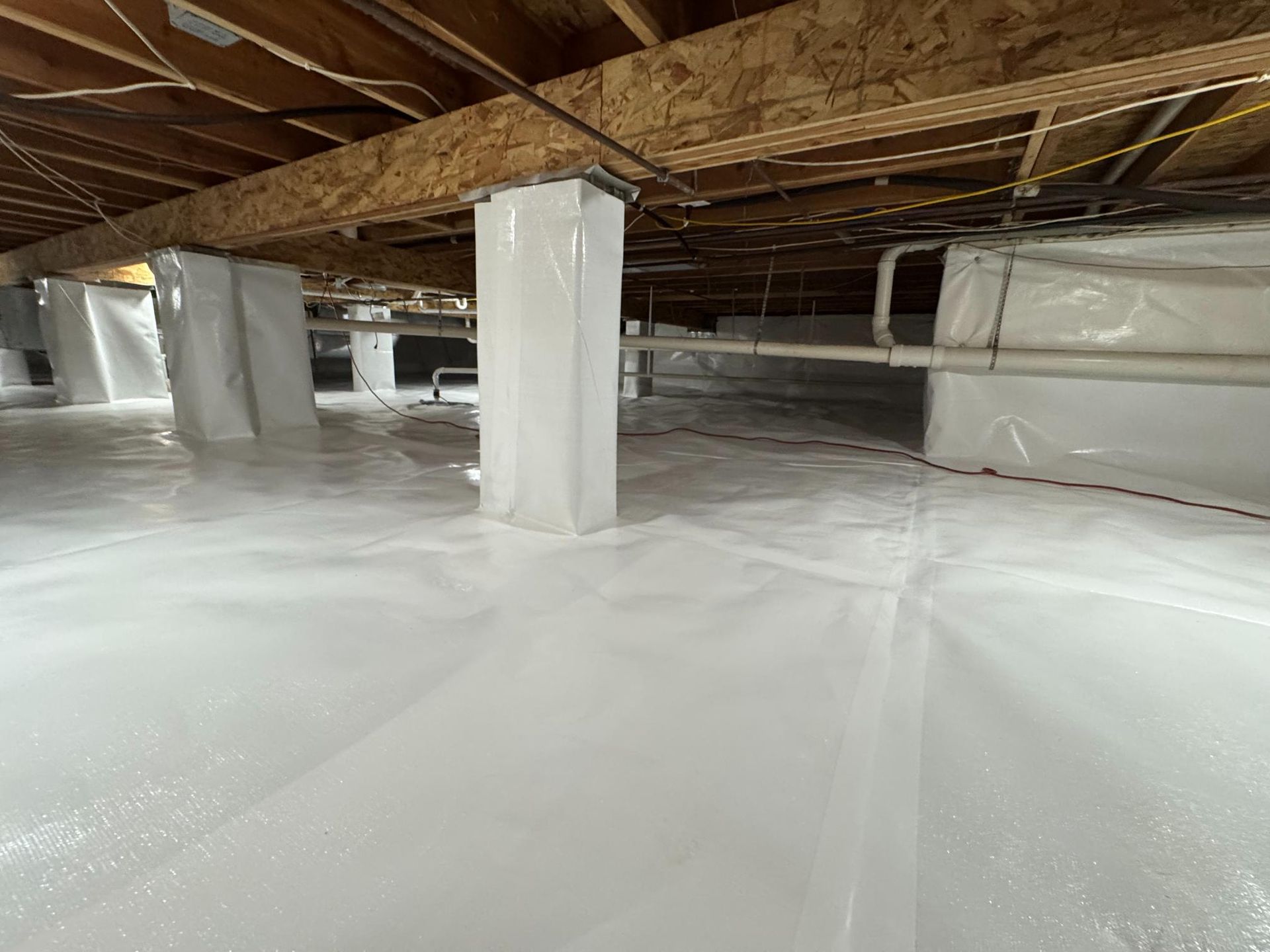
Encapsulation addresses the environment. Seal the vents, insulate the rim joist, line the crawl space with proper polyethylene, add a dehumidifier—now you've removed the conditions mold needs to survive. No excess moisture, no food source, no growth.
That's the difference between treating a symptom and solving the actual problem.
We see it regularly. Homeowners who've already spent money on remediation but never fixed the underlying humidity issue. A year or two later, the smell is back and the mold is back with it.
Fix the environment first. That's what makes the solution last.
What the Fix Actually Looks Like
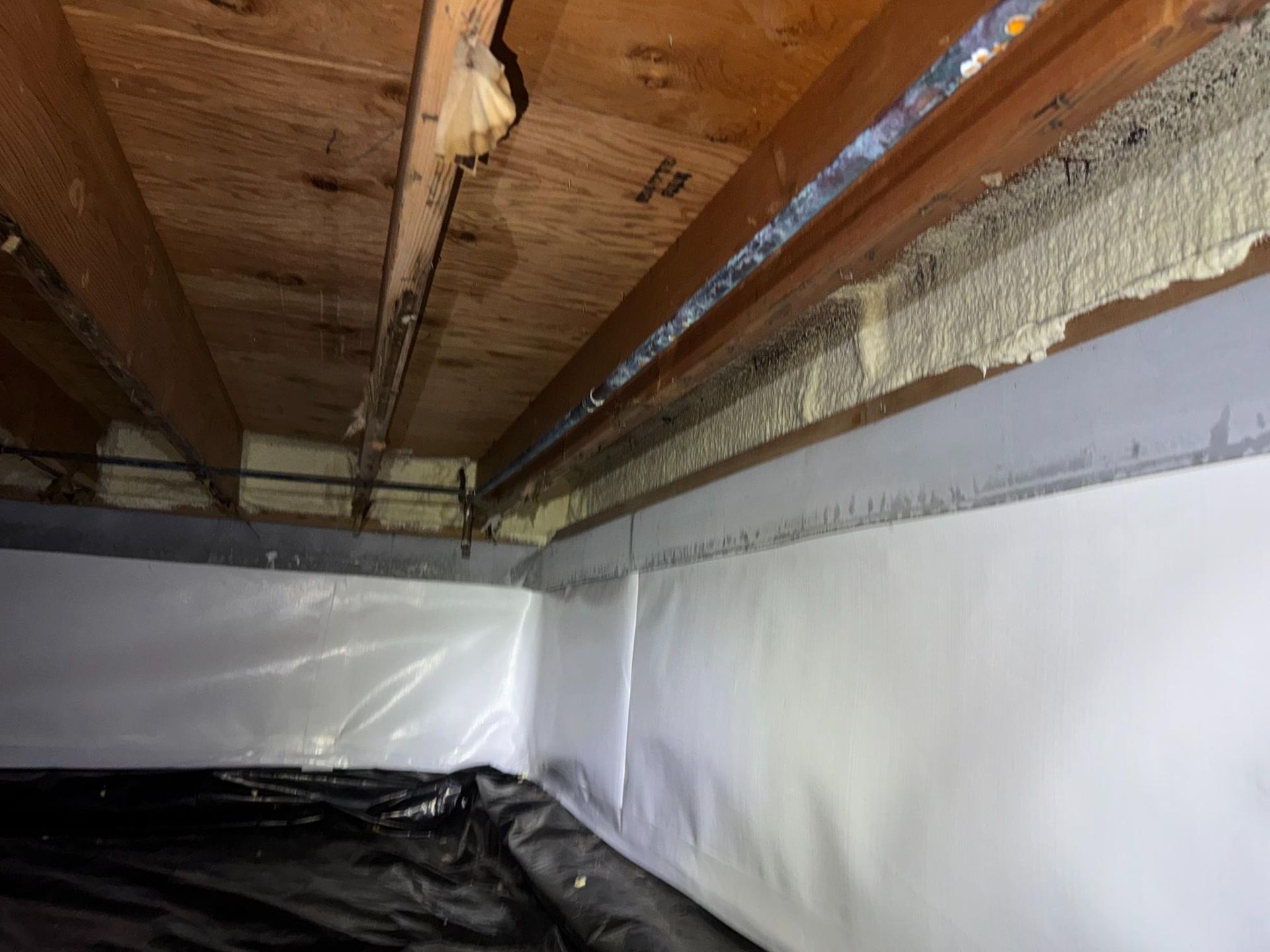
Here's the good news about this particular Decatur crawl space: despite the mold growth and high humidity, it's actually a solid candidate for encapsulation. Very little debris, existing drain system already in place, good overall structure. The problem is real but the solution is straightforward.
Here's what that solution looks like:
Seal the vents. Open crawl space vents let outside humidity pour in, especially during Central Illinois summers. Closing them off is step one.
Spray foam the rim joist. That's the gap where your foundation meets your floor framing. It's one of the biggest entry points for moisture and outside air. Sealing it makes a significant difference.
Line the crawl space with polyethylene. A proper vapor barrier installed across the floor and up the walls creates a sealed environment that controls moisture from the ground up.
Add a dehumidifier. This manages whatever humidity remains inside the sealed space and keeps levels where they need to be year round.
The result: a clean, dry, sealed crawl space that doesn't give mold anything to feed on. That's how the smell goes away and stays gone.
Book A Free Inspection Now
Your crawl space problems aren't going to fix themselves. But they are fixable. Let's get it done — the right way, permanently.
Or call us directly (217) 863-9559
Ready to Find Out What's Actually Happening Under Your Home?
If you've got a musty smell you can't track down, or you just want to know what's actually going on under your house, we're here to help.
Chris or I will answer when you call. We'll come out, do a full inspection with photo and video documentation, and explain exactly what we find in plain language. No pressure, no big number on a little piece of paper without explanation.
Just honest answers about what's happening under your home and what it's going to take to fix it.
We serve Decatur, Mahomet, and all of Central Illinois.