Finishing a Tri-Level Crawl Space Encapsulation in Mahomet
The Final Stages of Getting It Right
We're wrapping up an encapsulation job here in Mahomet. Tri-level home, which is probably the most common situation we see needing this kind of work.
The walls are up, vapor barrier's in place, and now we're doing the finishing touches. Dehumidifier's going in. Sump pits are getting lined up. The crew's making sure everything works the way it's supposed to before we call it done.
This is what the final stages of crawl space work actually look like when you do it right. Not rushing to the next job. Not skipping the systems that make the whole thing work long-term. Just taking the time to finish what we started.
Tri-levels are everywhere around here, and they almost all have the same crawl space issues. But once you fix them properly, they stay fixed.
Why Tri-Level Homes Almost Always Need This Work
The way tri-levels are built just creates problems. You've got three different levels, each at a different temperature. Air moves between them in ways that trap moisture in the crawl space. Add in the fact that part of the house sits right on the ground while other parts don't, and you've got a recipe for humidity issues.
We see it constantly in Mahomet and the surrounding areas. Musty smells. Soft floors. That damp feeling in certain rooms. Sometimes visible mold on the floor joists. A lot of homeowners don't realize their tri-level is the reason—they just know something doesn't feel right.
The good news is these homes are straightforward to fix. The layout that causes the problem also makes the solution pretty clear. You encapsulate the crawl space, seal the walls, control the humidity with a dehumidifier, and set up drainage to handle any water that shows up.
Once it's done right, the moisture problem goes away. The air quality improves. Those soft spots in the floor start to stabilize. And you're not wondering anymore why one part of your house always feels different than the rest.
What's Happening in the Final Stages
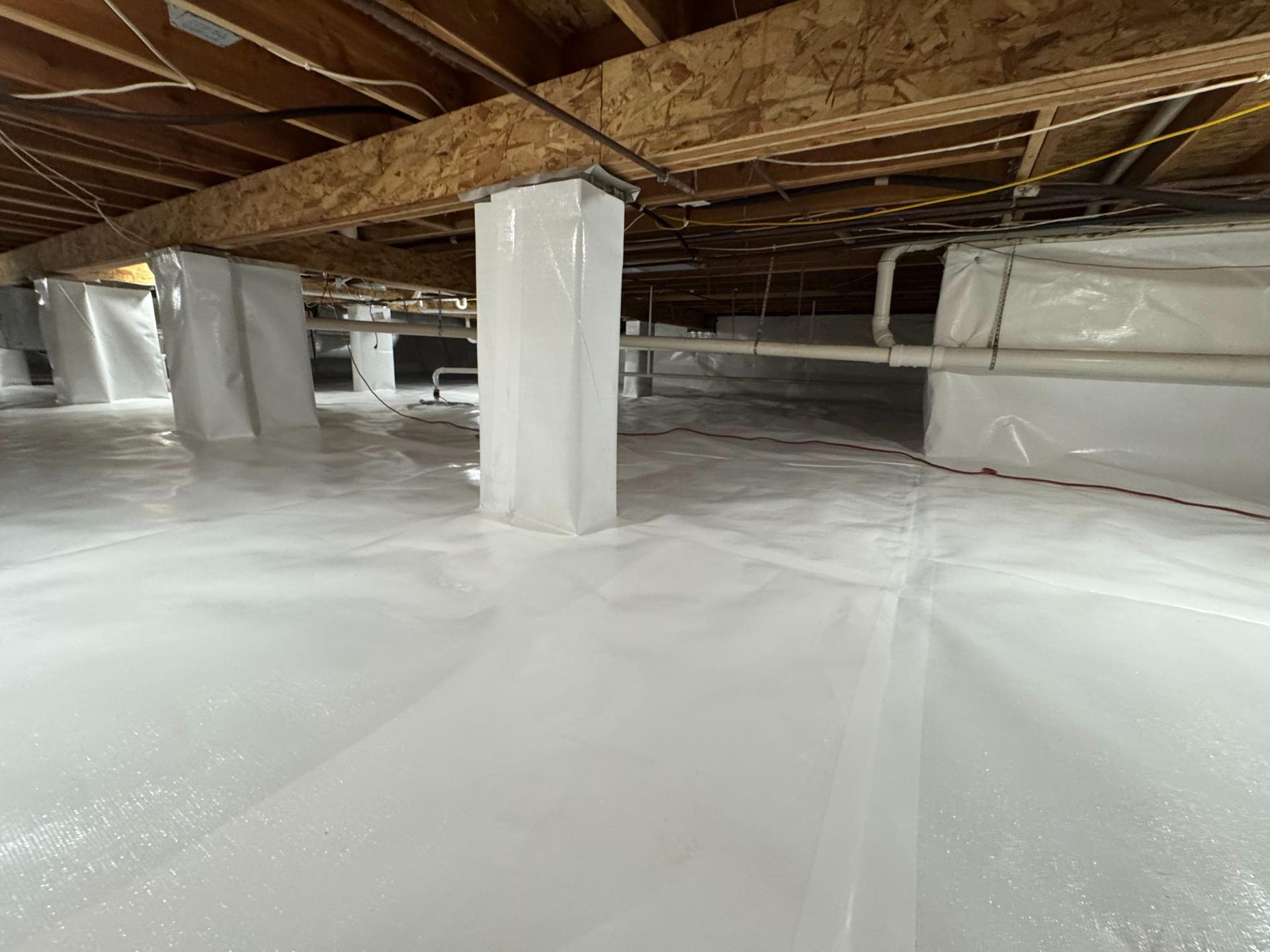
By the time we get to this point, the heavy work is already done. We've cleaned out all the old debris, removed the deteriorating vapor barrier, and put down fresh material. The walls are sealed. The crawl space already looks completely different than when we started.
But now comes the part that actually makes the system work.
The dehumidifier is going in. This isn't just setting a unit on the ground and plugging it in. It needs to be positioned right, properly installed, and set to the correct humidity level—usually around 50-55%. Too high and you're still getting moisture problems. Too low and you're wasting energy.
The sump pits are getting lined. These handle any water that manages to get under or around the vapor barrier. When it rains heavy or the ground gets saturated, water finds a way. The sump system catches it and pumps it out before it becomes a problem.
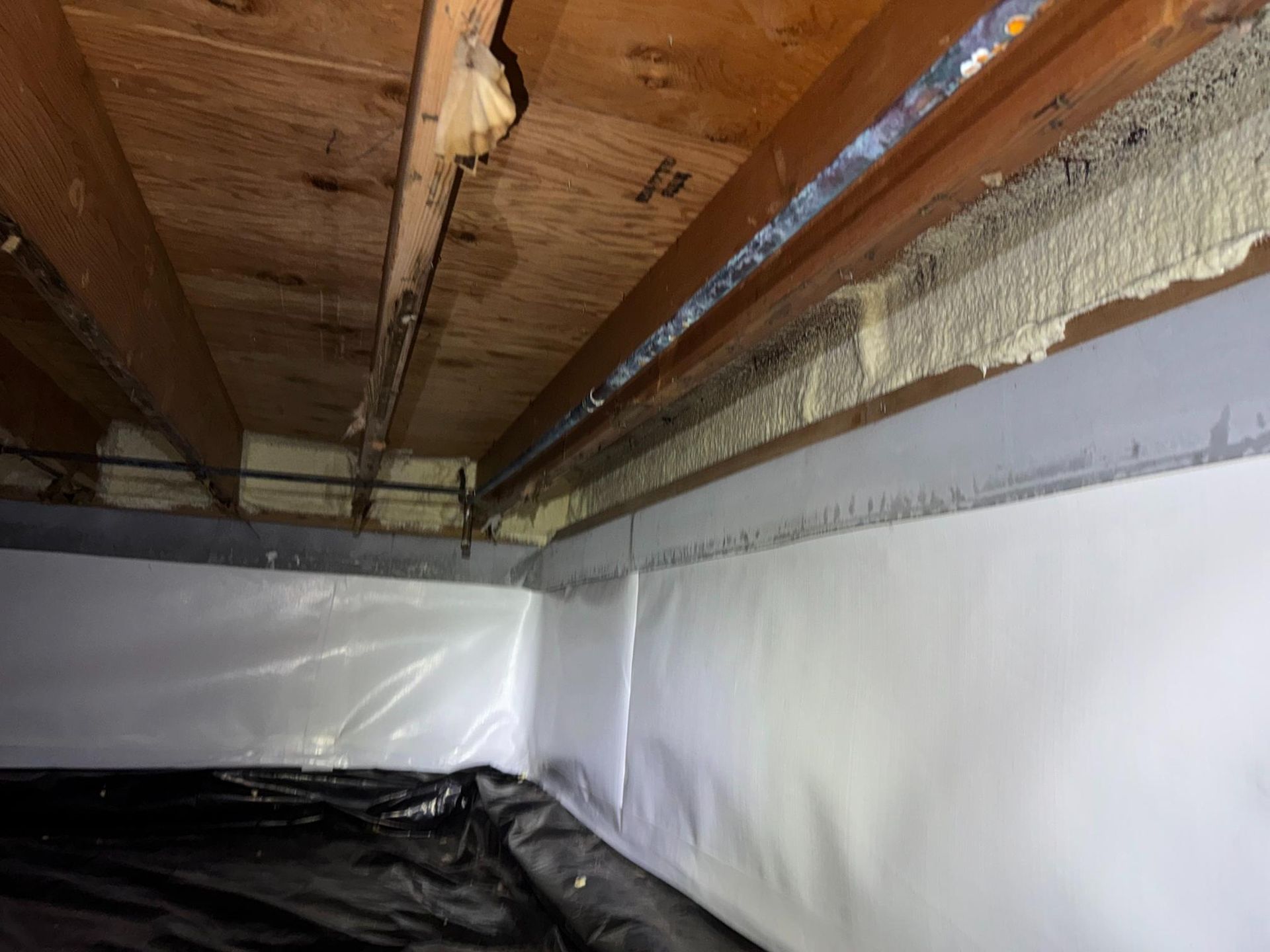
We're also doing the final checks on the wall seal, making sure there aren't any gaps or areas we missed. Installing lighting if we haven't already. Cleaning up any last bits of material or dust.
This stage usually takes a few hours. Some crews rush through it because the "impressive" part is done and they want to get to the next job. But this finishing work is what separates an encapsulation that lasts from one that fails in a year or two.
We're not leaving until it's actually complete.
The Systems That Keep Your Crawl Space Dry Long-Term
Here's what a lot of homeowners don't understand about crawl space encapsulation: the vapor barrier alone doesn't solve your moisture problem.
The barrier stops ground moisture from coming up through the dirt. That's important. But it doesn't do anything about humidity in the air or water that seeps in from outside. You need systems to handle those.
That's where the dehumidifier comes in. It pulls moisture out of the air and keeps humidity levels where they need to be. Without it, you can seal up the crawl space perfectly and still end up with condensation, mold, and that musty smell. Because humid air is still getting in, and now it's trapped.
The sump pits handle drainage. Even with good exterior grading and gutters, water still finds its way under houses—especially during heavy rain. The sump catches it before it pools on your vapor barrier and pumps it away from your foundation.
These aren't optional upgrades. They're part of what makes encapsulation actually work.
We've seen plenty of jobs where other companies skipped the dehumidifier to save money. Or put in sump pits but didn't line them properly. Every time, the homeowner calls us a year later with the same moisture issues they paid to fix.
A complete system works. A partial one just kicks the problem down the road.
What You Should See When Your Job Is Almost Done
If you've hired someone to encapsulate your crawl space, here's what the final stages should look like:
The vapor barrier should be clean and properly installed—no wrinkles, tears, or gaps. Walls sealed all the way around. You shouldn't see exposed foundation or dirt anywhere.
A dehumidifier should be going in or already installed. Not just sitting there, but actually set up and running at the right settings.
Sump pits should be lined and functional. If your crawl space needs drainage (most do), you should see a proper sump system ready to handle water.
Lighting should be installed throughout the space. Not just one bulb near the entrance, but enough light that you or a future contractor can actually see what you're doing down there.
The space should be getting cleaner, not messier. The crew should be picking up materials, not leaving them scattered around.
And here's a big one: the crew should still be working carefully. If they're rushing around trying to get out of there as fast as possible, that's a red flag. Good finishing work takes time.
You should feel comfortable asking questions. If the crew won't explain what they're doing or show you the work, something's wrong.
The Mahomet Difference: Why Location Matters
Chris and I have lived in Mahomet our entire lives. We've been friends since fourth grade. When we work on your tri-level, we're not a crew from out of town that disappears when the job's done.
We're your neighbors. We see you at the grocery store, at football games, around town. Our reputation isn't just online reviews—it's what people say about us at the coffee shop on Monday morning.
That changes how we approach every job. We know tri-levels inside and out because we've been working on them in this area for years. We understand how Central Illinois weather affects these homes. We know what works and what doesn't because we've seen it long-term.
When you hire a big company, you get whoever they send. Could be someone's second week on the job. Could be a crew that's never worked in this area before. You just don't know.
When you hire My Guys, you get Chris or me. We're on the job. We're accountable. And we're going to be right here in Mahomet when you need us five years from now.
What Happens After We Leave
Once we finish and clean up, your crawl space is completely transformed. Clean, bright, properly sealed, and equipped with systems that actually work.
The dehumidifier keeps humidity levels stable year-round. The sump system handles water before it becomes a problem. The vapor barrier and wall seal keep moisture from coming up through the ground or in from outside.
That means better air quality upstairs. More stable floors. No more musty smells or damp feeling in certain rooms. And when your HVAC tech or plumber needs to get under your house, they can actually work in there without complaining.
But the biggest difference is peace of mind. You're not wondering if it was done right or if problems are going to come back. The job's complete. The systems are working. And your home's protected the way it should be.
Book A Free Inspection Now
Your crawl space problems aren't going to fix themselves. But they are fixable. Let's get it done — the right way, permanently.
Or call us directly (217) 863-9559
Let's Talk About Your Crawl Space
If you're dealing with moisture issues in your tri-level—or any home in Central Illinois—give us a call.
We'll come out and do a thorough inspection. Show you exactly what's going on under your house. Walk you through what needs to be done and why. No pressure, no gimmicks. Just Chris or me explaining the situation and what we'd recommend.
And if we do the work, you'll see what complete crawl space encapsulation actually looks like. From start to finish. Done right.
Reach out anytime. We're here in Mahomet, and we're ready to help.