
How We Make Sure Your Crawl Space Is Still Working Six Months After We Leave
When a homeowner finally makes the call, something shifts.
We come out and do a thorough inspection. We get under the home and look at everything — and we show you what we're seeing in real time so there are no surprises when we sit back down with you. You'll know exactly what's down there. You'll know exactly what it takes to fix it. And you'll have a clear picture of what your home looks like after the work is done.
No pressure. No scare tactics. Just an honest look at what's happening and a straightforward plan to address it.
Most homeowners tell us the same thing after that first visit.
They wish they hadn't waited as long as they did.
A Crawl Space That Keeps Working Long After We're Gone
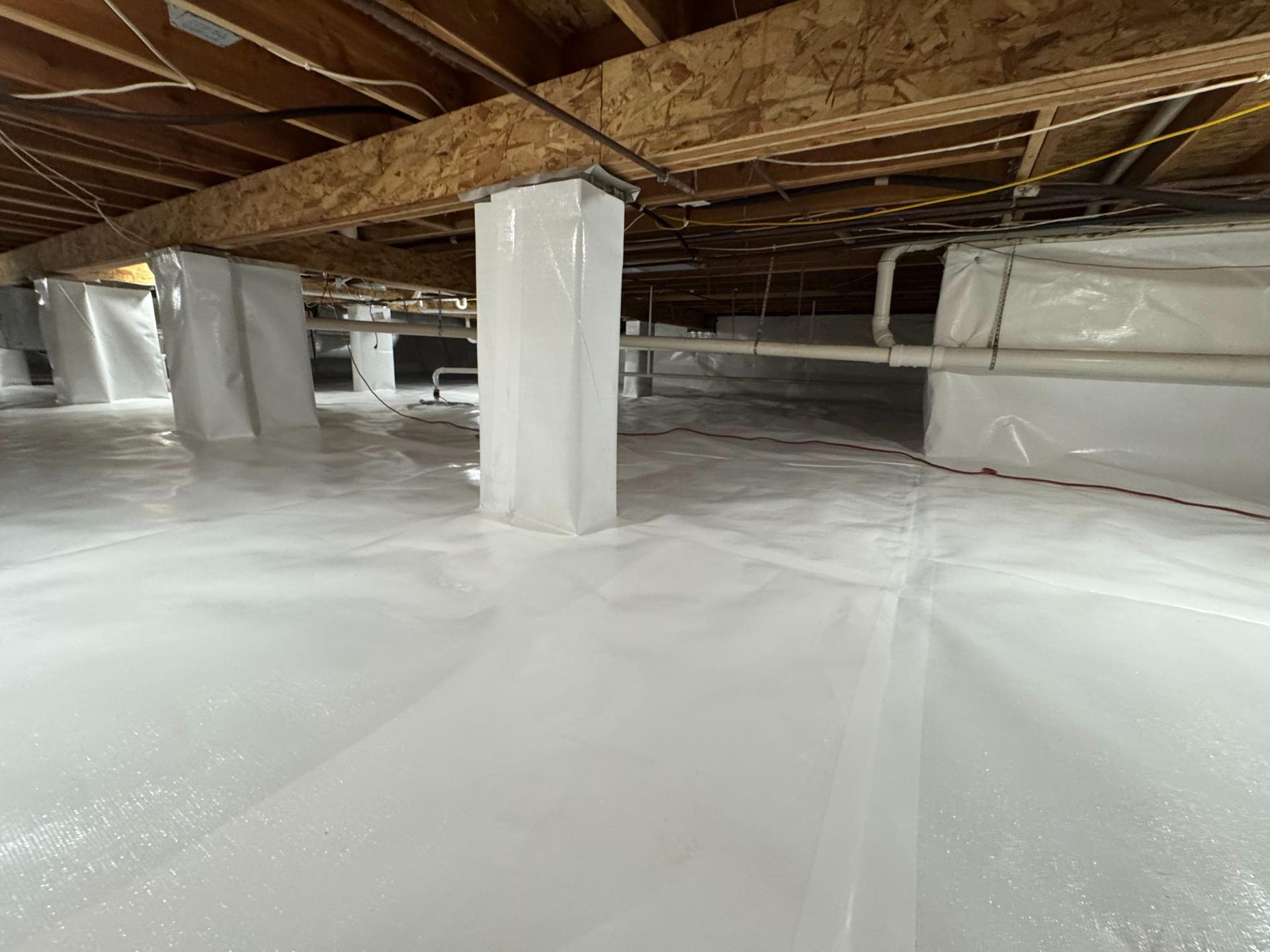
We're wrapping up a crawl space encapsulation in Champaign today. Two thousand square feet, sump system, dehumidifier, lights throughout. Jackson and Dylan are finishing up the exterior discharge while I do a final walkthrough inside.
And as I'm walking through this crawl space—clean, bright, properly sealed—I'm thinking about something most companies never consider once the job is done.
What happens six months from now?
Most contractors seal things up, collect payment, and move on. You're left with a finished crawl space and no real way to know if it's actually doing its job. No way to know if the humidity is staying in a healthy range. No way to know if something's quietly failing underneath your feet.
That's the gap we're trying to close. Not just finishing the job—making sure it keeps working long after we're gone.
What We Do Differently Before We Even Leave
Before we even talk about monitoring, let's talk about what happens during the job itself.
On this Champaign crawl space, we noticed the sump discharge was running through a flexible line. Flexible lines kink. They get crushed. They wear out over time. So we upgraded it to hard pipe with a pop-up emitter on the outside that routes water cleanly away from the foundation.
Nobody asked us to do that. We just saw it and took care of it.
That's how we approach every job. When we're already down there and something's going to cause a problem later, we fix it. Not because it adds to the ticket, but because leaving a known problem behind isn't finishing the job—it's just finishing the easy parts.
Small decisions like that are the difference between an encapsulation that holds up for years and one that starts failing quietly six months after the crew drives away.
The details matter. Especially the ones nobody sees.
What a Properly Finished Crawl Space Actually Looks Like
When we do a final walkthrough on a finished encapsulation, here's what you should see.
Lights throughout the entire space. Not just near the access point—all the way back. Every pier, every beam, every corner visible without a flashlight. On this Champaign job, the crawl space runs close to 2,000 square feet. You can see all of it clearly from one end to the other.
Clean vapor barrier properly installed across the floor and up the walls. No bunching, no gaps, no shortcuts. Every pier wrapped. Everything sealed the way it's supposed to be.
And the dehumidifier running and actually working. We turned this one on a couple hours before the final walkthrough. Humidity was sitting in the upper 70s when we fired it up. By the time we did our walkthrough, it was already down to 64% and dropping.
That's not just a number. That's proof the system is doing its job.
Here's why that matters: any future contractor who needs to get under this house—HVAC tech, plumber, home inspector—can actually see what they're doing. They're not fighting through a dark, cramped, cluttered space. They can get in, do their job, and get out.
A properly finished crawl space isn't just sealed. It's functional, accessible, and working. There's a big difference between those two things.
The Monitoring System Nobody Else Is Talking About
Here's the part most companies skip entirely.
Once the job is done and the crew drives away, how do you know your crawl space is still working? How do you know the dehumidifier is keeping up? How do you know humidity isn't climbing back up while you're going about your normal life upstairs?
The honest answer is: without some kind of monitoring, you don't.
That's why we install a wireless humidity sensor—what we call a TempPro—in every home we encapsulate. The sensor lives inside your house, not in the crawl space. It monitors conditions underneath your home in real time and gives you a simple, clear reading without you ever having to open the access hatch.
Here's how we use it: if humidity in your crawl space climbs above 55%, you'll know. That's the threshold where moisture starts causing problems—encouraging mold growth, stressing your floor framing, affecting your air quality. At 55%, we want to know about it before it becomes something serious.
So instead of finding out six months later when you notice a musty smell or a soft spot in your floor, you catch it early. You call us. We come figure it out.
Nobody goes into their crawl space regularly. That's just reality. So we give you a way to keep an eye on it without ever having to go down there yourself. That peace of mind is part of what we're providing—not just the encapsulation itself.
Why This Matters More Than the Installation Itself
A crawl space encapsulation is only as good as what happens after it's installed.
Think about it this way: if your dehumidifier fails six months after the job and nobody catches it, humidity climbs back up. Moisture starts working on your floor framing again. Mold finds a foothold. The air quality in your home starts suffering. Everything the encapsulation was supposed to prevent starts happening anyway.
And you'd have no idea. Because nothing looks different upstairs. Not yet.
By the time you notice something—a smell, a soft floor, higher energy bills—the damage has already been building for months. That's an expensive problem that started as a small one.
The monitoring system doesn't replace the encapsulation. It protects your investment in it. It's the difference between a job that's done and a home that's actually protected.
Most companies think their responsibility ends when the crew drives away. We don't. Your crawl space should keep working for years. And we want to make sure it does.
What to Ask Your Crawl Space Contractor
Before you hire anyone to work on your crawl space, here are some questions worth asking.
Do you install any kind of monitoring system after the job is done? If the answer is no, ask them how you're supposed to know if something fails. A good contractor should have an answer for that.
What's your follow-up process after installation? Do they schedule a return visit? Do they check in? Or do they just hand you an invoice and disappear?
How will I know if the dehumidifier stops working? This one catches a lot of companies off guard. If they don't have a clear answer, that tells you something.
Red flags to watch for: contractors who rush through the final walkthrough, companies that can't explain what they installed or why, and anyone who seems uncomfortable when you ask detailed questions about the finished work.
A contractor who's done the job right has nothing to hide. They'll welcome your questions, walk you through everything they installed, and be upfront about what to expect going forward. If they're not, keep looking.
Book A Free Inspection Now
Your crawl space problems aren't going to fix themselves. But they are fixable. Let's get it done — the right way, permanently.
Or call us directly (217) 863-9559
Find Out What's Really Happening Under Your Home
If you're not sure what's going on in your crawl space - or you've had work done and you're wondering if it's actually holding up - we'd be glad to come take a look.
We offer free inspections throughout Champaign, Mahomet, and Central Illinois. Chris or I will come out personally, do a thorough walkthrough, and give you an honest picture of what we find.
No pressure. No big sales pitch. Just straight answers about what's going on under your home and what, if anything, needs to be done.
Reach out anytime at DoneByMyGuys.com and we'll get something scheduled.