What a Half-Finished Sump Pit Installation Actually Means for Your Home
When a homeowner finally makes the call, something shifts.
We come out and do a thorough inspection. We get under the home and look at everything — and we show you what we're seeing in real time so there are no surprises when we sit back down with you. You'll know exactly what's down there. You'll know exactly what it takes to fix it. And you'll have a clear picture of what your home looks like after the work is done.
No pressure. No scare tactics. Just an honest look at what's happening and a straightforward plan to address it.
Most homeowners tell us the same thing after that first visit.
They wish they hadn't waited as long as they did.
When the Job Gets Left Half Done
We got a call from a shop owner in Decatur, Illinois. Another company had come in, started a crawl space drainage job, and never finished it. The sump pits were installed. The trench was partially dug. Some rock had been laid down. And then the crew just... stopped showing up.
But here's the part that really got us: one of the discharge lines wasn't even fully connected. That means the sump pit—the thing that's supposed to pump water out—had nowhere to send it.
The system was sitting there looking like work had been done. But it wasn't protecting anything.
This happens more than most people realize. And every time it does, a homeowner or business owner is left holding the bill for work that isn't finished—while the problem underneath keeps getting worse.
What We Actually Found
When we got on site, here's what we were looking at.
Two sump pits had already been installed in the back of the space. One of the discharge lines—the pipe that carries water away from the pit and out of the building—wasn't fully connected. Just sitting there. Disconnected.
The trench that channels water toward the sump pits had been partially dug around the perimeter. Some sections were done. Some weren't. Parts of it had already been filled with rock, which is normally one of the last steps before encapsulation.
So the job was frozen somewhere in the middle. Not done enough to work. Too far along to just ignore.
We had to start by getting those discharge lines properly connected before anything else made sense. Then finish digging the trench all the way around the perimeter. Once the drainage is complete and working the way it's supposed to, we'll finish with encapsulation and dimple mat.
It's a real job. It just should've already been done.
Why Incomplete Work Is Sometimes Worse Than No Work At All
Here's what most people don't think about: a half-finished drainage system doesn't give you half the protection. It gives you none.
That disconnected discharge line is the perfect example. The sump pit is there. The pump is there. But if the water has nowhere to go, the whole system is just sitting in your crawl space doing nothing. Meanwhile, moisture is still getting in. Still building up. Still affecting your air quality, your floor framing, everything above it.
And the partial trench? Digging up the perimeter and leaving it unfinished can actually disrupt the ground in ways that change how water flows under your building. You've disturbed the soil without solving the drainage problem.
The worst part is the false sense of security. A business owner or homeowner looks at that crawl space and sees sump pits, some rock, a partially sealed perimeter. It looks like progress. It looks like something was done. So they wait. They assume it's mostly handled.
It's not.
Water doesn't wait for a contractor to come back and finish the job. It keeps moving, keeps building, keeps doing damage. Every week that system sits incomplete is another week the real problem goes unsolved.
A job that's never started is at least honest about where things stand. A job that's half done can hide a serious problem right up until it becomes a much more expensive one.
Why Does This Keep Happening
This isn't a one-off situation. We see incomplete contractor work regularly, and it usually comes down to a few things.
Some companies take on more jobs than they can realistically handle. They get the deposit, start the work, and then get pulled to the next job before this one is finished. Days turn into weeks. The customer keeps calling. The crew keeps saying they'll be back.
Others run into a problem mid-job they don't know how to solve. Rather than being upfront about it, they quietly move on and hope the customer doesn't push too hard.
And when the company isn't local? There's even less accountability. They're not running into you at the hardware store or seeing you around town. Your job is just an address on a work order.
That's one of the reasons Chris and I stay focused on Central Illinois. We live here. We know people here. When we take on a job in Decatur or Mahomet or anywhere in between, our name goes with it. We can't just disappear. We wouldn't want to.
What Finishing This Job Actually Required
Before we could do anything else, we had to make sure the foundation of the system was actually working.
First: getting both discharge lines properly connected. That's non-negotiable. If water has nowhere to go, nothing else we do matters. The sump pits need to be able to do their job before we build anything around them.
Then: finishing the trench all the way around the perimeter. Not halfway. Not most of the way. All the way around, properly dug and filled with rock so water has a clear path to flow toward the pits.
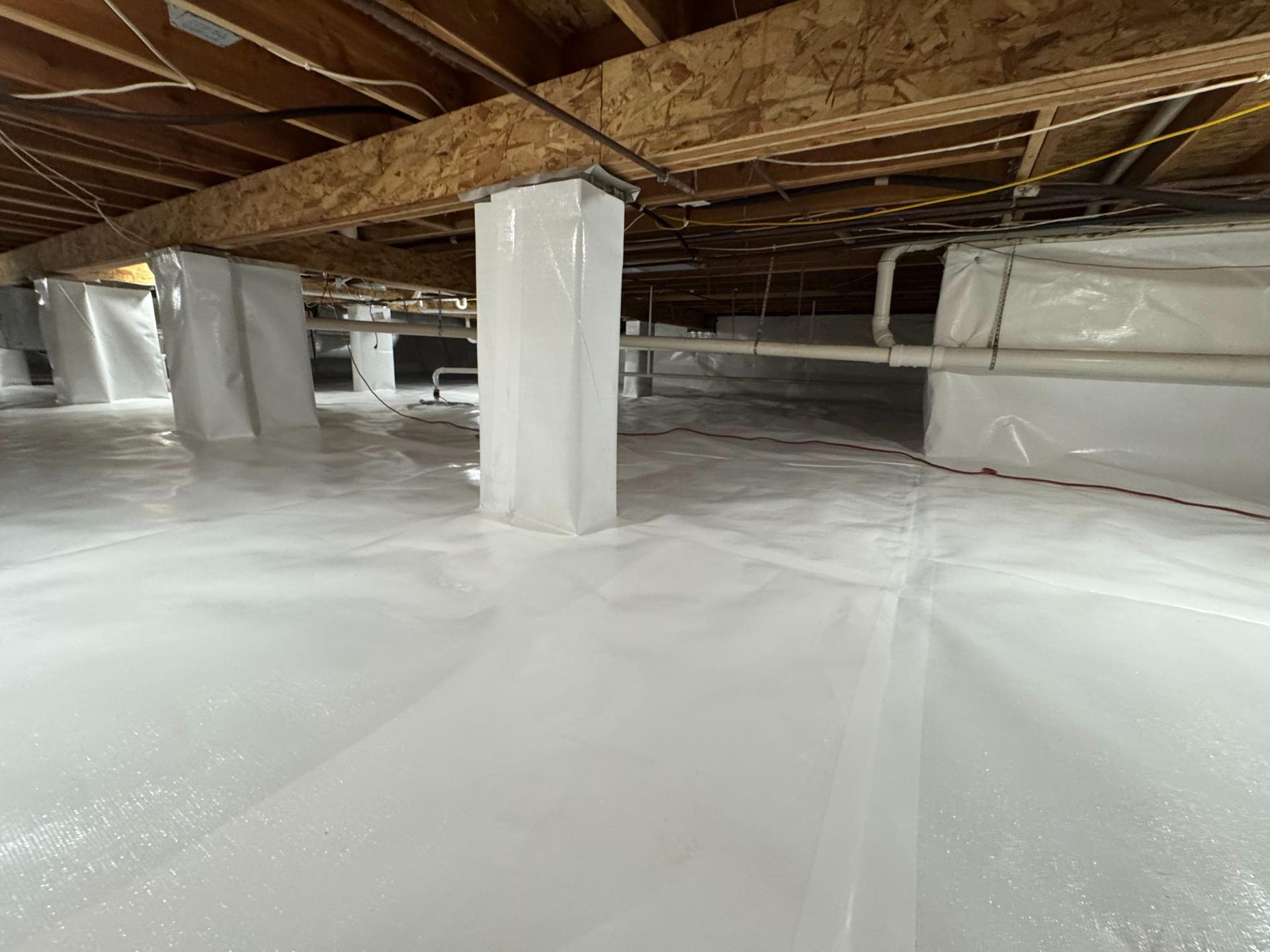
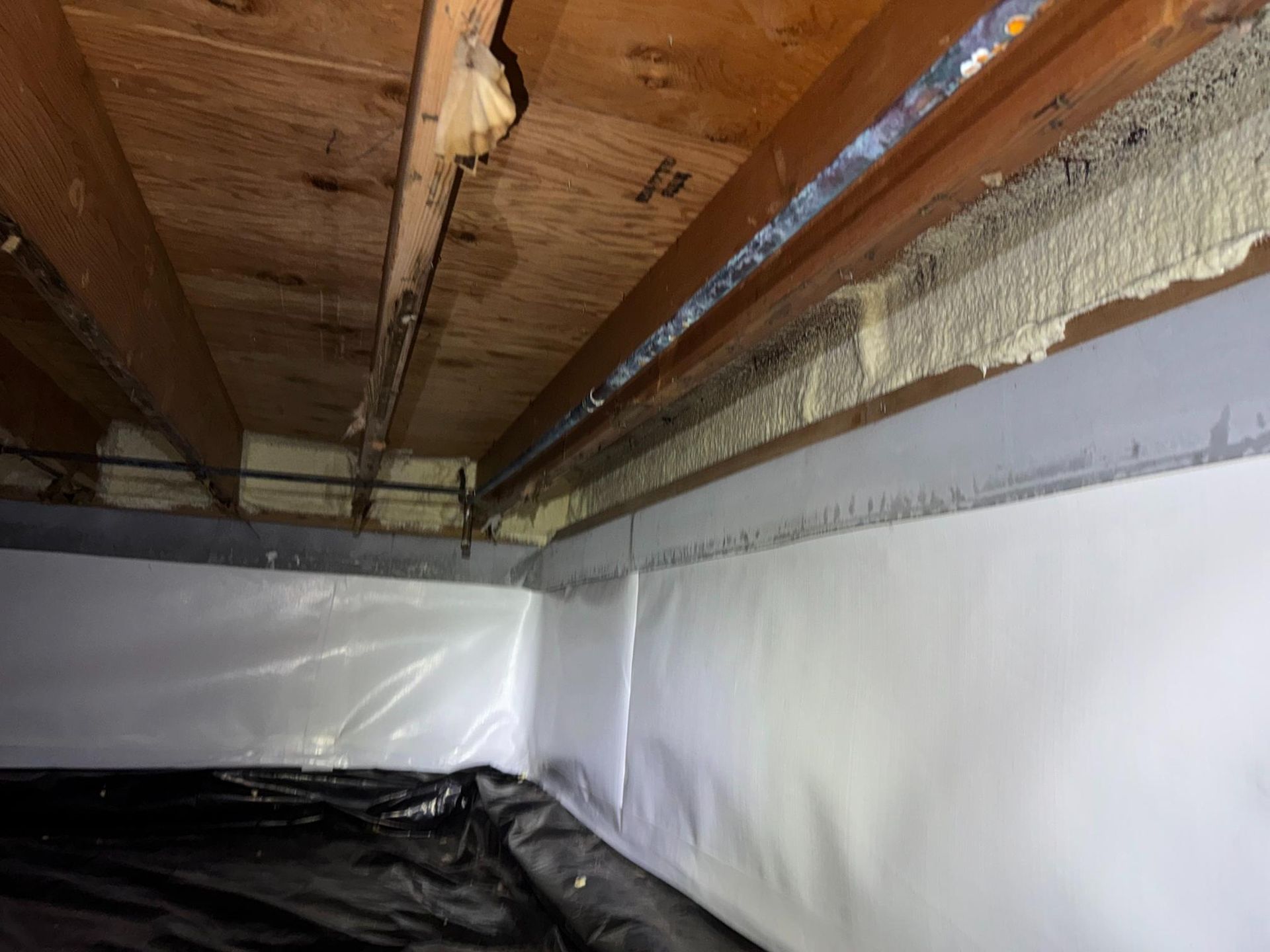
Once the drainage is complete and functioning the way it's supposed to, we finish with dimple mat and full encapsulation. The dimple mat creates a channel along the floor for any water that gets in to move freely toward the drainage system. The encapsulation seals the walls and floor, controls humidity, and protects the structure above.
Each step builds on the last. Skip one or leave one half done and the whole system is compromised. That's not how we do things.
Questions to Ask Before You Hire a Crawl Space Contractor
Before anyone starts work under your home or building, ask these questions directly. The answers will tell you a lot.
Do you start and finish jobs consecutively, or do you work multiple jobs at once? A crew that's bouncing between three jobs at the same time is a crew that's mentally already somewhere else when they're at your place.
Who will actually be on site doing the work? Is it the owner? A trained crew? A subcontractor they called last minute? You deserve to know.
What happens if you run into an unexpected problem mid-job? How a contractor answers this question tells you everything about their problem-solving and their honesty.
Can I see documentation of completed work before you start? Before and after photos, video walkthroughs, finished project examples. Any reputable contractor should have these readily available.
Do you offer follow-up inspections after the job is complete? Good crawl space work includes making sure everything is still functioning the way it should down the road.
Red flag: if a contractor gets uncomfortable or vague with any of these questions, pay attention to that feeling.
Book A Free Inspection Now
Your crawl space problems aren't going to fix themselves. But they are fixable. Let's get it done — the right way, permanently.
Or call us directly (217) 863-9559
Ready to Get It Done Right?
If you've had crawl space or drainage work started but never completed, or you just want to know what's actually going on under your home or building, reach out to us directly.
Chris or Jeff will answer personally. We'll come out, take a look at what's been done, and give you an honest assessment of where things stand and what still needs doing.
No pressure. No surprises. Just straight answers from people who actually do the work.