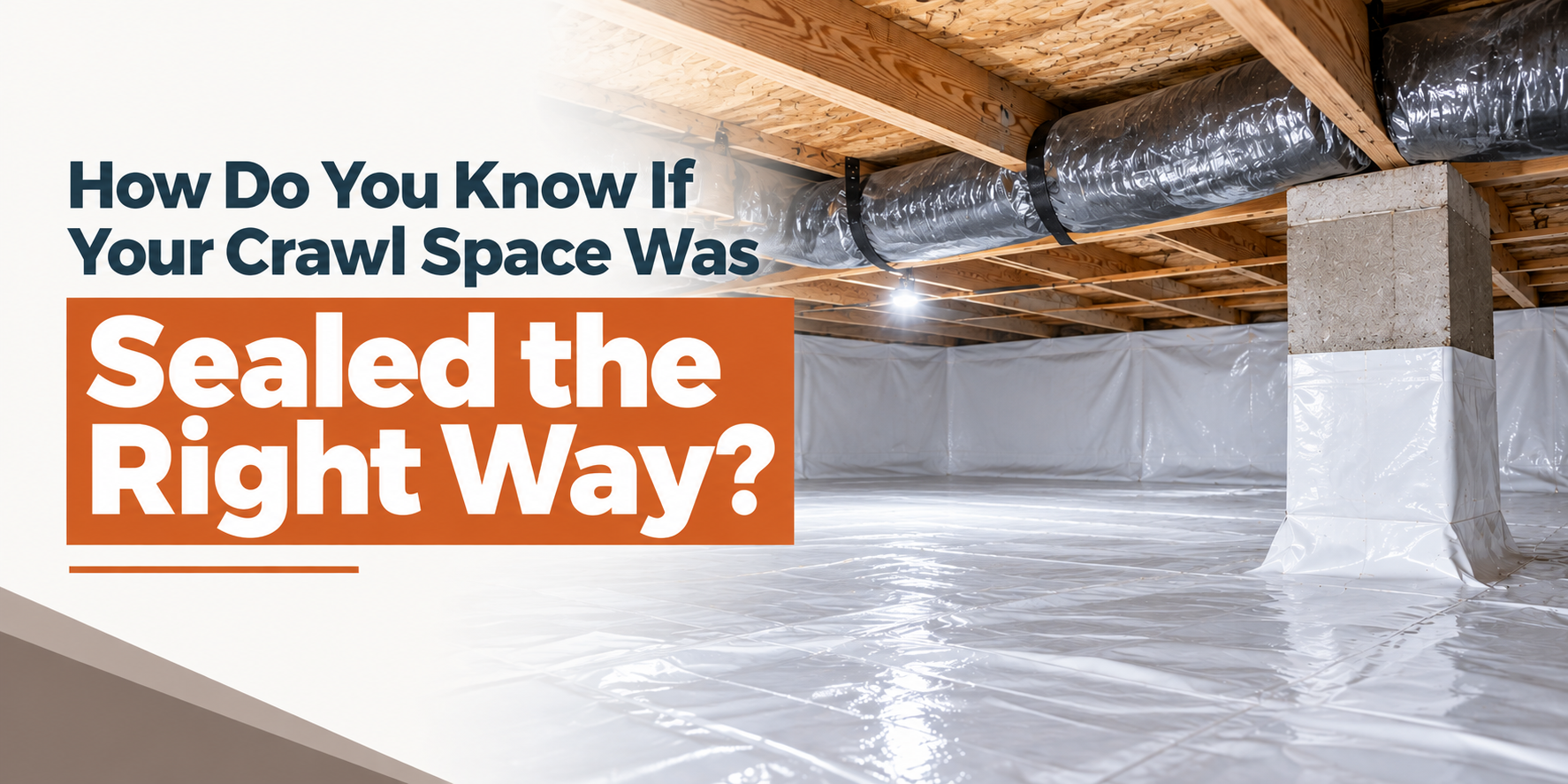
A Morning in Champaign: What We Do During a Crawl Space Encapsulation
When a homeowner finally makes the call, something shifts.
We come out and do a thorough inspection. We get under the home and look at everything — and we show you what we're seeing in real time so there are no surprises when we sit back down with you. You'll know exactly what's down there. You'll know exactly what it takes to fix it. And you'll have a clear picture of what your home looks like after the work is done.
No pressure. No scare tactics. Just an honest look at what's happening and a straightforward plan to address it.
Most homeowners tell us the same thing after that first visit.
They wish they hadn't waited as long as they did.
A Real Crawl Space Encapsulation in Progress
This is Ryan checking in from a crawl space job in Champaign, Illinois. It's early, the crew is already under the house, and there's a lot happening at once.
This one is a full encapsulation. Narrow space but it runs long, so there's plenty of ground to cover. We've got sump pit discharge to run, pier bases to wrap, wall seal going up, lights being wired, and spray foam going into the joist pockets.
Most homeowners never see this side of the job. They get a quote, sign off, and the next time they look it's done. But there's a lot that happens in between—and understanding what should be happening is how you know whether it was done right.
Meet the Crew
A job like this doesn't happen with one guy and a prayer.
Jackson is spray foaming the windows. Dylan is in the back hanging wire and running lights throughout the space. Dennis is measuring pier bases so we can get those wrapped correctly. Alex is our newest team member—just started with us, already proving he belongs here.
When everyone has a clear role and knows what they're doing, the job moves the way it should. No confusion, no corners cut, no one waiting around for direction.
That matters more than most people realize. A crawl space encapsulation has a lot of moving parts. When the crew isn't organized, steps get missed. And the steps that get missed are usually the ones you won't notice until years down the road when something goes wrong.
What Goes Into a Crawl Space Encapsulation
Here's what's actually happening on this job right now.
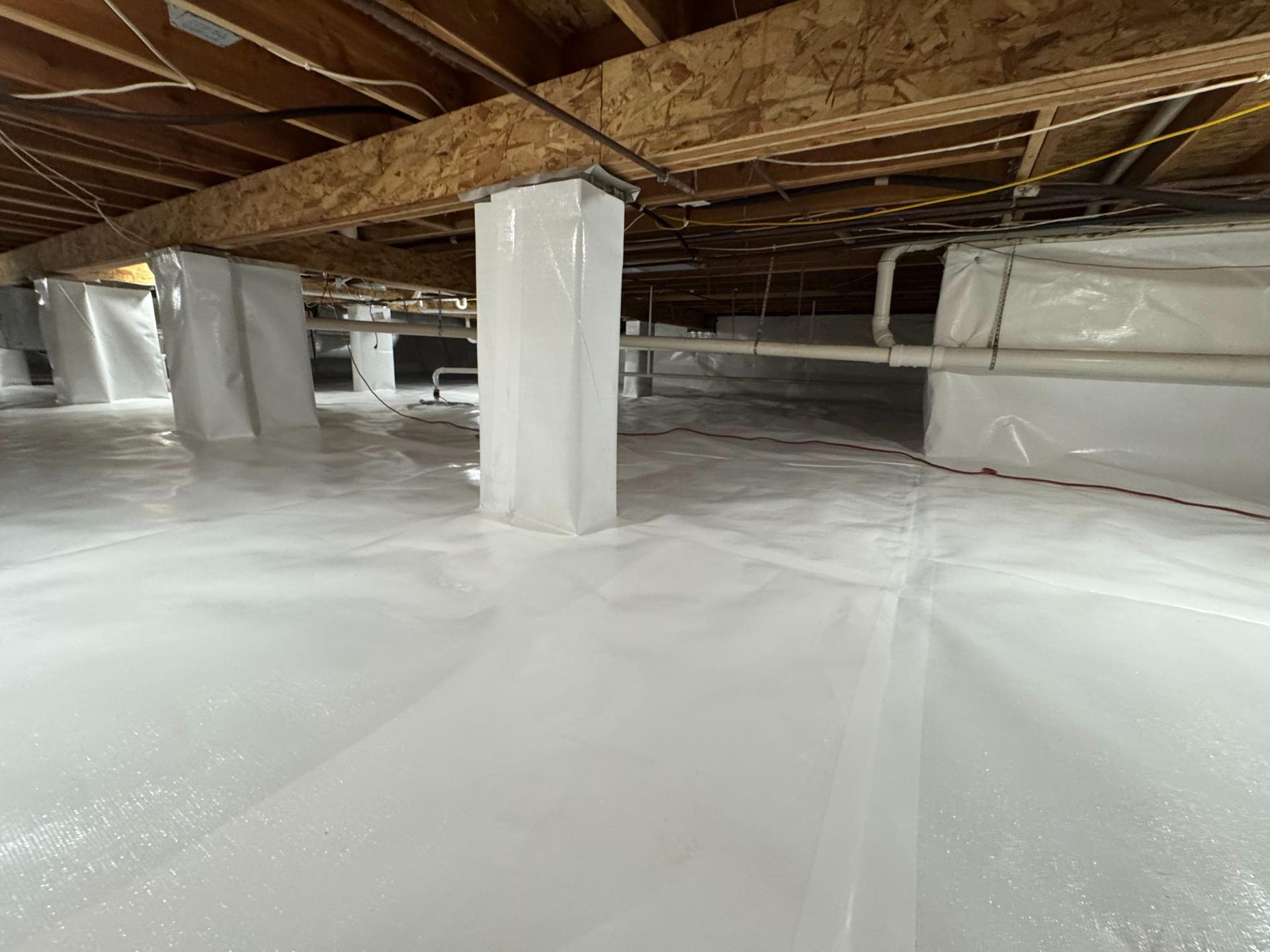
Wall seal first. This goes up along the perimeter where the walls meet the floor. It's the foundation of the whole system, so we start here. Everything else builds on top of it.
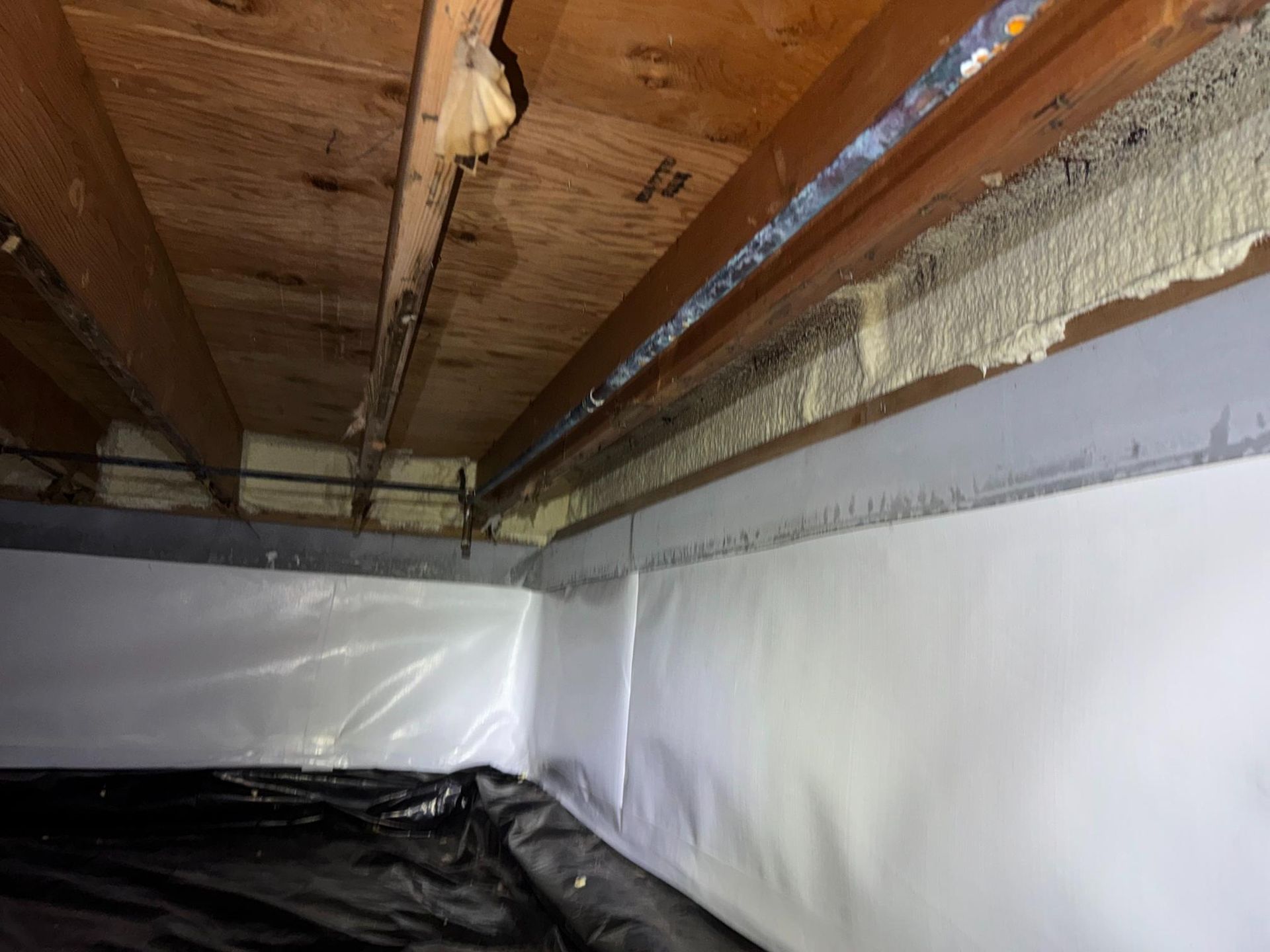
Spray foam in the joist pockets. These are the gaps where your floor joists meet the foundation wall. Outside air gets in through these openings and drives up humidity levels in the crawl space. This job already had some spray foam in place, which saved us some time. But when it's not there, we put it in. It's not optional.
Vapor barrier on the floor. This is the heavy-duty plastic sheeting that covers the ground and keeps ground moisture from rising up into the space. It gets sealed at the seams and tied into the wall seal so nothing gets through.
Lights wired throughout. Not just one bulb near the access point. Lights that run the length of the space so every corner is visible. Your HVAC tech, your plumber, your home inspector—anyone who needs to get under your house can actually see what they're doing.
Pier bases measured and wrapped. We've got piers on this job that needed to be worked around carefully. Dennis is getting measurements now so the bases get wrapped correctly and the supports are properly protected.
Sump pit discharge line. The sump pump needs somewhere to send the water it collects. We're running that discharge line today so it exits the crawl space properly instead of just draining back into the ground underneath your home.
Every one of these elements works together. Skip one and the whole system is compromised.
Why the Order of Operations Matters
There's a reason we start with the wall seal before anything else goes in.
Once the vapor barrier is down and sealed, it's a lot harder to go back and fix what's underneath it. Same with the spray foam—if that goes in after the barrier, you've already lost the seal at the joist pockets. The sequence matters because each step protects the integrity of the next one.
A narrow but long crawl space like this one adds another layer of challenge. You can't just work from one end to the other. You have to think ahead about where materials are going, how the crew moves through the space, and what needs to happen before you box yourself into a corner.
That's the difference between a crew that's done this before and one that's figuring it out as they go. Experienced crews adapt to what the space gives them without cutting corners to make it easier. Inexperienced ones cut corners because they don't know what they're compromising.
What Homeowners Should Know Before Hiring
Before you sign off on any crawl space work, ask these questions:
How many people will be on the job? A full encapsulation is not a one-man project. If someone is quoting you a job this size with one crew member, ask how long it will take and why.
Who is actually doing the work? Not who sold you the job—who is physically going to be under your house. Some companies send whoever is available that day. That's not good enough.
Will the owner be involved? When the owner is on the job or directly overseeing it, the standard of work is different. There's direct accountability for what gets done and how.
What does the finished space look like? Ask to see photos of previous jobs. A properly finished crawl space is clean, bright, and fully lit. If they can't show you that, there's a reason.
The crew showing up matters just as much as the materials going in. Both have to be right for the job to hold up long term.
What You Should See When the Job is Done
When we do a final walkthrough on a job like this, here's what you should see.
The wall seal runs clean along the entire perimeter. No gaps, no lifted edges, no sections that got rushed because the crew was tired at the end of the day.
Lights run the length of the space. Every corner is visible. You shouldn't need a flashlight to see what's going on under your own home.
The vapor barrier is clean, properly sealed at the seams, and tied into the wall seal. No bunching, no exposed ground, no sections that got cut short.
Pier bases are wrapped and the supports are solid. Sump discharge is routed correctly and exits the space properly.
And the space is clean. No leftover materials, no debris, no tools forgotten in a corner.
We do a video walkthrough when every job is finished so you can see all of it yourself. Not because we have to. Because you deserve to know exactly what you paid for and what's protecting your home.
That's the difference between done and done right.
Book A Free Inspection Now
Your crawl space problems aren't going to fix themselves. But they are fixable. Let's get it done — the right way, permanently.
Or call us directly (217) 863-9559
Ready to See What's Under Your Home?
If you've got moisture issues, musty smells, soft floors, or you just want to know what's actually going on under your house—we'd love to come take a look.
We'll do a full inspection, show you exactly what we find, and walk you through what we'd recommend. No pressure, no big number on a little piece of paper without explanation.
Just honest answers from people who actually do this work every day.
Reach out anytime. Chris or Jeff will get back to you personally.