
Should You Seal Your Crawlspace Vents? Here's the Truth

Jeff Robinson • July 24, 2026

The Truth About Open Crawlspace Vents

If you've ever looked at your crawlspace vents and wondered whether they should be open or closed — you're asking the right question. And you're definitely not the only one.


A customer asked us that exact question recently. There was a little hesitation in their voice. Like maybe sealing them up felt like the wrong move. Like something bad might happen if the air couldn't get in.


That hesitation makes complete sense. Here's why.

Where the Idea Comes From

For a long time, open vents were standard practice. The thinking was simple: fresh air comes in, moisture goes out. Ventilation prevents problems. It's the same reason you crack a window when a room smells stale or run a fan after a shower.


That logic feels right because in most situations, it is right.


But crawlspace vents are a different story — and the building science behind them has changed a lot in recent years.

What Crawlspace Vents Were Actually Designed to Do

Crawlspace vents were designed to let air pass through on specific kinds of days. We're talking low humidity, decent wind, mild temperatures. The kind of day where outside air is actually drier than the air sitting under your home.


On those days, open vents do what they're supposed to do. The air moves through. Moisture levels drop. Everything works the way it was intended.


The problem is those days are rare.


Here in Central Illinois, that kind of weather shows up maybe six times a year. The rest of the year — we're dealing with heat, cold, and humidity that has no business getting into your crawlspace. But if those vents are open, it's getting in anyway.

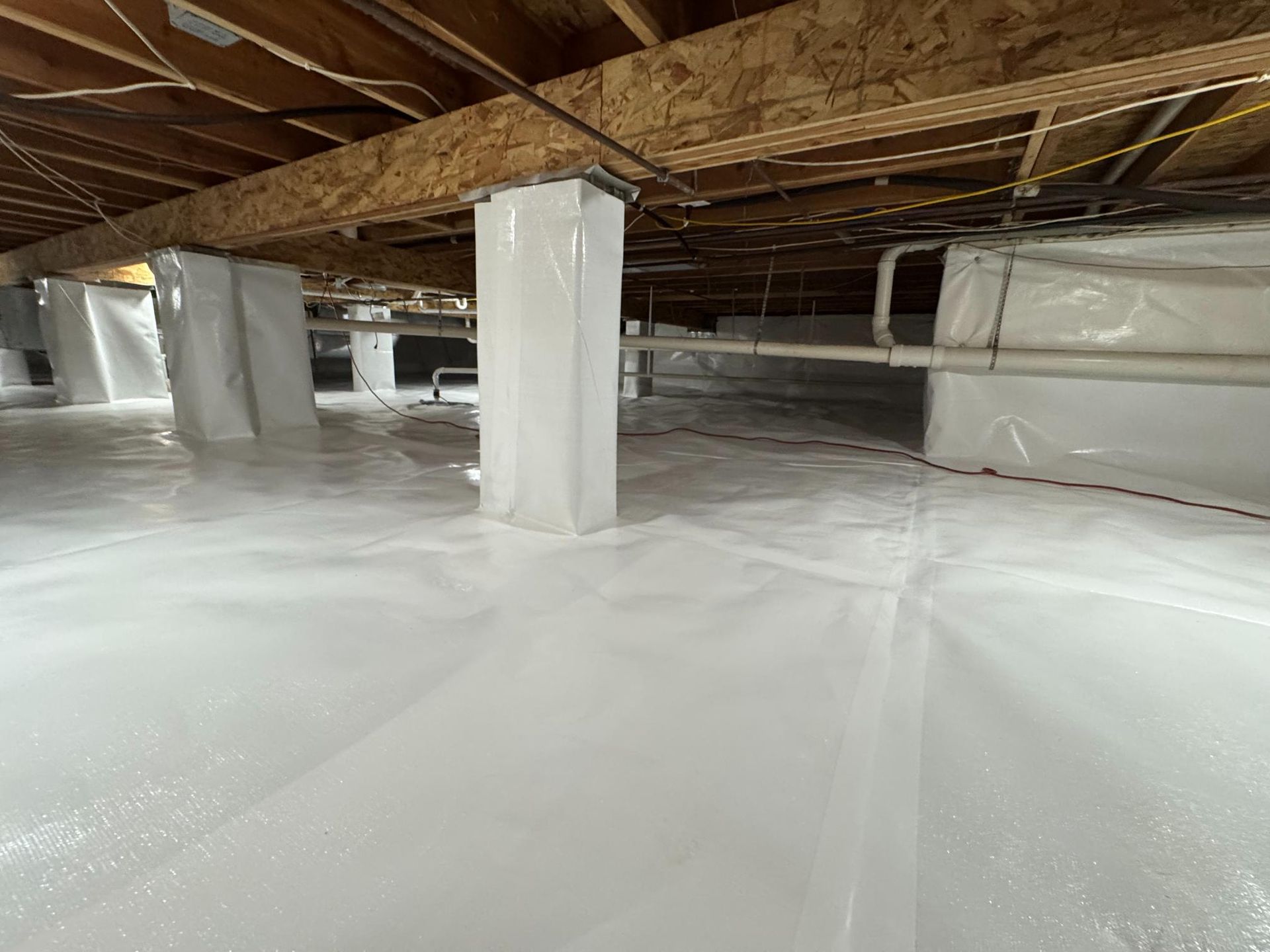
A crawl space with white plastic vapor barrier covering the ground and wrapping around the support pillars and walls.

What Actually Happens When Vents Stay Open

When humid outside air enters a cool crawlspace, it doesn't just pass through. It settles. It hits your floor joists, your pipes, your insulation — and it leaves moisture behind.


That moisture is where problems start.


Mold finds it. Wood rot finds it. Pests find it. And slowly, the air quality in your living space starts to reflect what's happening in the crawlspace below it — because air moves up. Whatever is down there eventually makes its way into your home.


Open vents don't prevent this. In most conditions, they're the reason it happens.

So What Does Sealing Them Actually Do?

When your crawlspace is properly encapsulated and the vents are sealed, you're creating a controlled environment. No outside air getting in. No humidity settling on surfaces it shouldn't touch. No condensation building up where you can't see it.


The crawlspace stops being a liability and starts being a non-issue.


Your floors feel more stable. Your home holds temperature better. The air you're breathing upstairs isn't being filtered through whatever was growing down below. And you're not setting yourself up for a repair bill down the road because moisture quietly did its work for years before anyone noticed.

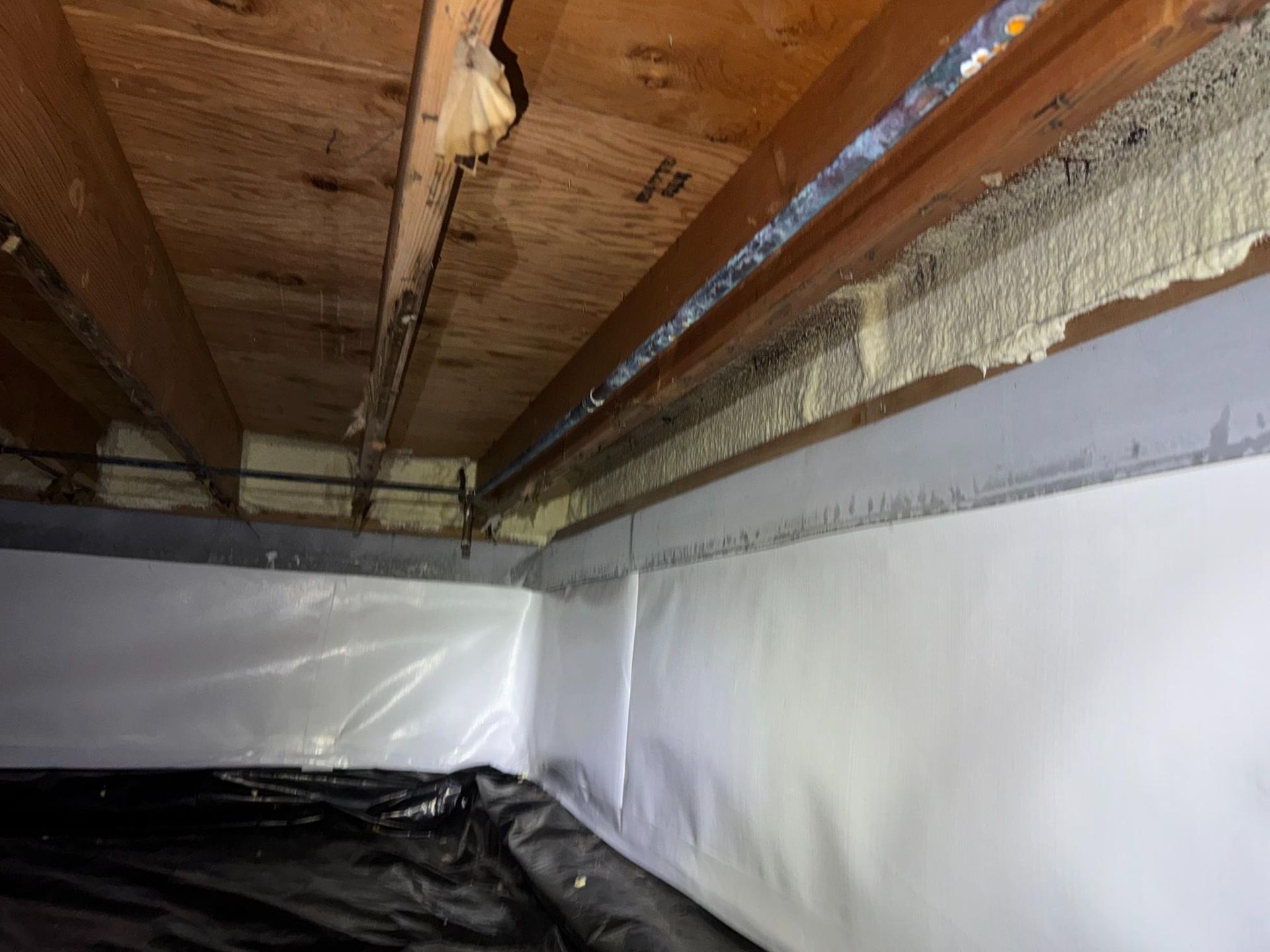
A crawl space with spray foam insulation on the rim joists, white vapor barrier walls, and a black ground liner.

The Question Is a Good One

When that customer asked us if they should really seal up their vents, they weren't being difficult. They were being careful. They wanted to understand what they were agreeing to before they agreed to it.


That's exactly the right instinct.


The answer just happens to be different than what most people expect. Sealing your crawlspace vents — when it's done as part of a proper encapsulation — isn't risky. It's the point. It's what makes everything else work.


Building science caught up to this a while ago. We just don't always get the memo as homeowners because nobody sits us down and explains it.

Book A Free Inspection Now

Your crawl space problems aren't going to fix themselves. But they are fixable. Let's get it done — the right way, permanently.

Or call us directly (217) 863-9559

Not Sure What's Going On in Your Crawlspace?

If you've got vents and you're not sure whether they're helping or hurting, that's worth finding out. My Guys serves homeowners across Central Illinois and we're happy to take a look and give you a straight answer.


No pressure. No scary sales pitch. Just an honest conversation about what's actually happening under your home — and what, if anything, needs to be done about it.


Reach out to My Guys today and let's take a look together.

Based in

Mahomet, Illinois Serving all of Central Illinois.

Business Hours

Mon Fri - 8am to 5pm

Sat Sun - Closed

Graphic: “Day 2 Update: Why You Wake Up Congested Every Morning” beside a frosted window
By Jeff Robinson July 24, 2026
Here's something most homeowners never hear: about 50% of the air you breathe inside your home comes up from your crawlspace. Not from outside. Not from your vents. From below your feet. That means whatever is sitting under your house — moisture, stale air, organic material — is making its way up into the rooms where
Day 2 update: Urbanna crawl space insulation progress with wet, reflective floor and exposed beams
By Jeff Robinson July 23, 2026
End of day two on this Urbana crawl space encapsulation, and we're right where we need to be. Full encapsulation is complete. Sump pit's been relocated to the proper spot. Dehumidifier is getting installed. Tomorrow we'll wrap up the final details and this homeowner will have a completely transformed crawl space.
Text reads “End of Day One: Where We’re at on This Encapsulation” over a crawlspace photo.
By Jeff Robinson July 21, 2026
It's a little after 5:00, and we're wrapping up day one on this crawl space encapsulation here in Central Illinois. Here's what we got done today: floors are leveled, sump pit lifted and relocated, about three-quarters of the wall seal is up, dimple mat installed, and the discharge line is mostly complete.