Stair-Step Cracks in Your Basement? Here's What's Happening
Those Cracks Aren't Just Cosmetic
We're down in Taylorville today working on a basement that's showing the classic signs of a bowing wall. Horizontal crack running across the middle. Stair-step cracks climbing up from the corners. The kind of thing that's easy to ignore because it's in the basement and everything still feels solid.
But here's the reality: those cracks are your wall telling you it's under serious pressure. And walls under pressure don't fix themselves—they get worse.
A lot of homeowners see these cracks and think, "I'll keep an eye on it." The problem is, by the time you notice them getting bigger, the damage has already been building for years. Every winter that goes by, every freeze-thaw cycle, adds more pressure.
If you're seeing stair-step cracks in your basement, here's what's actually happening and what you need to know.
What's Actually Causing Your Wall to Bow
Your foundation wall is dealing with constant lateral pressure—basically, the soil outside is pushing inward on the wall.
Here's how it happens: water gets into the soil next to your foundation. When temperatures drop, that water freezes and expands. That expansion pushes against the wall. Then it thaws. Then it freezes again. Every single winter, the cycle repeats.
In this Taylorville job, there's a driveway right up against the house. That makes the problem worse because hard surfaces like driveways and sidewalks channel water straight down into the soil. That water has nowhere to go except against your foundation.
It's not one big event that causes the damage. It's years of small freeze-thaw cycles building up. The pressure accumulates slowly, which is why homeowners don't notice until the cracks appear.
By the time you see a horizontal crack in the middle of your wall or stair-step cracks at the corners, that wall has been under pressure for a while. The crack isn't the beginning of the problem—it's your wall showing you the damage that's already there.
And here in Central Illinois, we get hit hard with freeze-thaw cycles. Our winters are cold enough to freeze the ground, but we also get enough thaw periods to make the cycle repeat over and over. That's brutal on foundation walls.
How to Recognize the Warning Signs
Here's what to look for if you're worried about your basement walls:
The most obvious sign is a horizontal crack running across the middle of the wall. It might start small, but it's telling you the wall is bending inward at that point.
Stair-step cracks at the corners are another big one. They usually start low and work their way up, following the mortar lines between blocks. If you see this pattern, your wall is definitely moving.
Sometimes you'll notice the wall itself looks like it's pushing inward, even if the bow is slight. Stand at an angle and look down the length of the wall—if it's not straight, that's a problem.
You might also see separation between the wall and the floor, or gaps where the wall meets the ceiling. That's the wall literally pulling away as it bows.
The key difference between normal settling and actual structural movement is whether the cracks are getting wider. Hairline cracks that stay the same size for years might just be settling. Cracks that grow, or new cracks that keep appearing? That's active movement.
If you're seeing any of these signs, it's time to get an inspection.
What Happens If You Ignore It
Bowing walls don't get better on their own. They get worse.
Here's the progression: you start with small cracks. Then the wall bows a little more each year. Eventually, if enough pressure builds up, you're looking at serious structural failure—a wall that collapses inward.
Every winter makes it worse because the freeze-thaw cycle isn't stopping. That lateral pressure keeps building. The cracks keep widening. The bow keeps increasing.
The cost difference between fixing it now and fixing it after major failure is massive. Wall supports to stabilize a bowing wall? That's a manageable repair. Rebuilding a collapsed foundation wall? That's tens of thousands of dollars and a major construction project.
There's also the impact on your home's value. Foundation issues scare buyers. If you ever want to sell, an unaddressed bowing wall is going to come up in the inspection, and it's going to cost you either in repairs or in negotiating power.
Real talk: this isn't a DIY situation. You can't patch the crack with concrete and call it fixed. The crack is just a symptom—the real problem is the pressure behind the wall.
How Wall Support Systems Actually Work
The wall supports we're installing in this Taylorville basement use the weight of the house itself to stabilize the wall.
Here's how it works: we install a bracket system that anchors into the floor at the bottom and ties into the floor joists at the top. Those brackets create a vertical support that counteracts the lateral pressure pushing the wall inward.
Think of it like this: the soil outside is pushing the wall one direction. The wall support system uses the thousands of pounds of weight from your house pushing down to hold that wall in place. We're not just patching over the problem—we're creating actual structural support.
The brackets sit against the wall at strategic points where the bowing is happening. Once installed, they stop further movement. The wall isn't going to keep bowing because now it's being held by something stronger than the soil pressure outside.
Installation is straightforward. We anchor the floor brackets into the concrete slab. Then we install the upper brackets between the floor joists in the ceiling above. The system ties together and locks the wall in position.
This isn't a cosmetic fix where we fill the crack and paint over it. That would do nothing to address the actual pressure. Wall supports are a real structural solution that stops the movement and protects your foundation long-term.
And once they're in, they work. The wall stays stable. The cracks stop widening. Your foundation is secure.
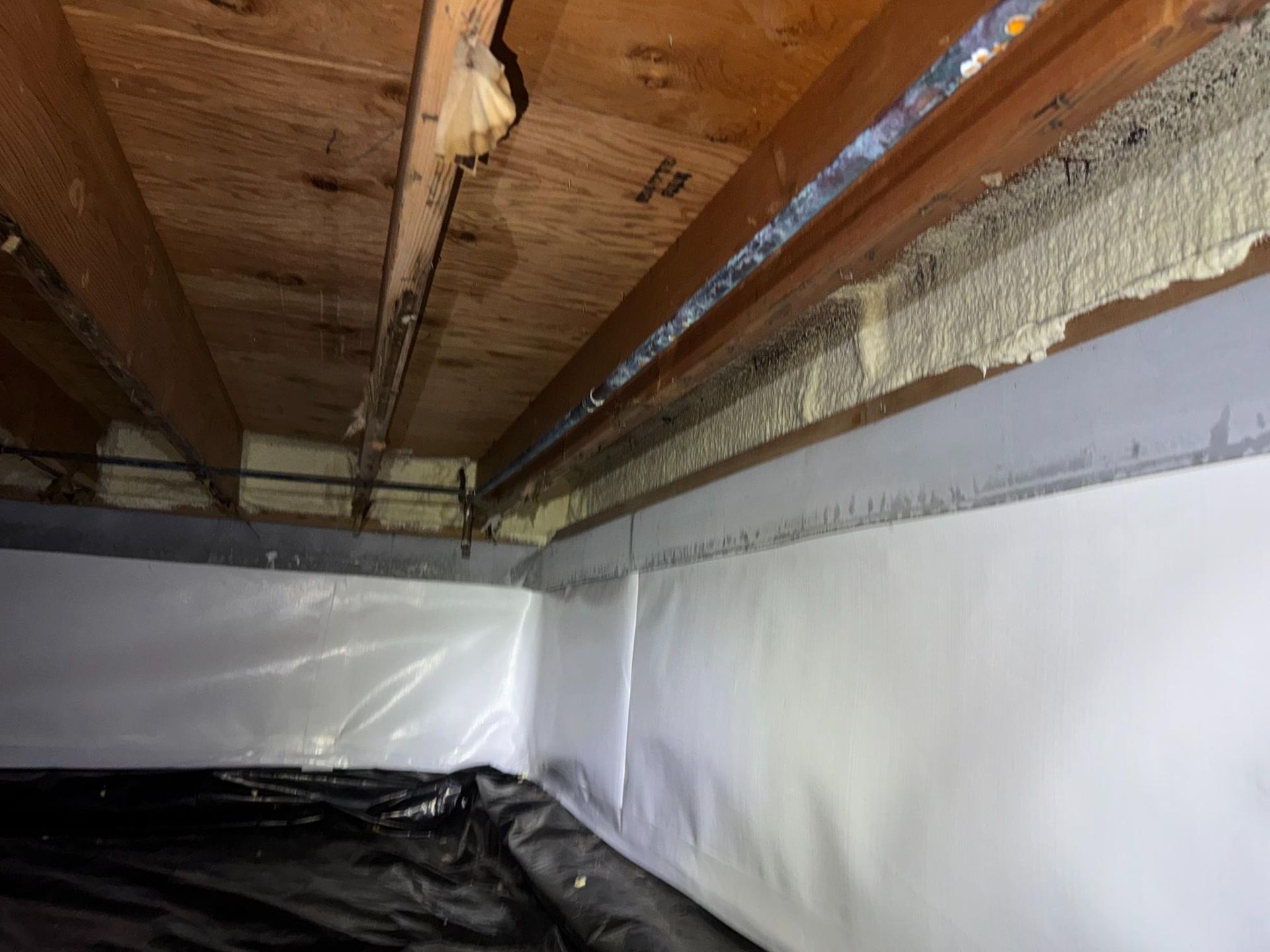
Why This Job Was More Than Just Wall Supports
This Taylorville job is a good example of how foundation problems are usually connected.
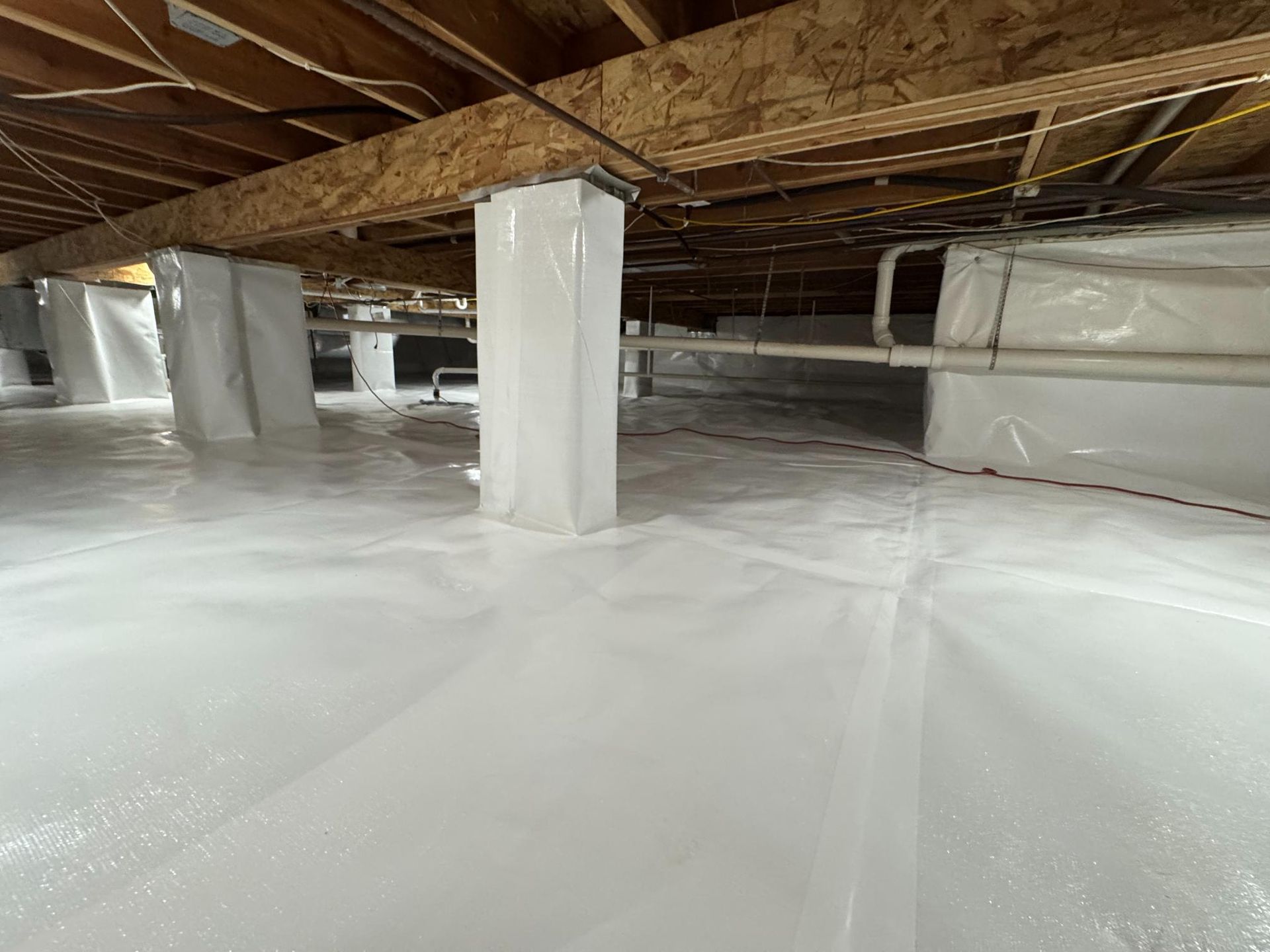
We're installing wall supports in the basement, but we're also doing a crawl space encapsulation in another part of the house. Same root issue—water and soil pressure—just showing up in different areas.
That's why we don't just look at the one thing you called us about. When we're inspecting a bowing basement wall, we're also checking your crawl space. When we're doing encapsulation work, we're looking at your foundation walls. These systems are all connected, and water finds every weakness.
If we'd only addressed the basement wall and ignored the crawl space moisture, we'd be doing this homeowner a disservice. They need both problems solved, not just the one they noticed first.
That's the difference between a comprehensive approach and a band-aid solution. We're not here to patch one symptom and leave. We're here to understand what's happening with your entire foundation and fix it right.
What Central Illinois Homeowners Should Know
Foundation pressure issues are common around here. Our soil composition and our freeze-thaw cycles create the perfect conditions for bowing walls.
Central Illinois winters are brutal on foundations. We get cold enough to freeze the ground deep, but we also get warming periods that cause thawing. That constant freeze-thaw-freeze pattern puts relentless pressure on foundation walls year after year.
Older homes in Champaign, Taylorville, Mahomet—all over this area—are especially vulnerable because construction methods 50 or 60 years ago didn't account for the kind of lateral pressure these walls face over time.
This isn't unique to one neighborhood or one type of house. We see these issues across Central Illinois because the conditions that cause them are everywhere.
Chris and I have lived in Mahomet our entire lives. We know these homes. We know this soil. We know what Central Illinois weather does to foundations. When we inspect your basement, we're not guessing—we've seen these problems hundreds of times in homes just like yours.
Local experience matters when you're diagnosing foundation issues.
Book A Free Inspection Now
Your crawl space problems aren't going to fix themselves. But they are fixable. Let's get it done — the right way, permanently.
Or call us directly (217) 863-9559
Don't Wait Until It Gets Worse
Get an inspection sooner rather than later. The longer you wait, the more damage accumulates and the more expensive the fix becomes.
When we come out, we'll do a full foundation assessment—not just the wall you're worried about, but your entire foundation system. We'll show you exactly what's happening, why it's happening, and what needs to be done.
Honest evaluation, too. Not every crack needs wall supports. But if yours does, we'll explain why and walk you through the solution.
No pressure. No gimmicks. Just Chris or me explaining what's going on and giving you the information to make a good decision.