The First Thing We Fix Before Any Crawl Space Encapsulation
It's Not Always a Crawl Space Problem
Ryan and Dennis showed up to a job in Mahomet this morning, and the first thing they're doing isn't in the crawl space at all. They're outside digging trenches for downspout extensions.
Four downspouts that are currently dumping water right next to the foundation. Before we hang dehumidifiers, before we seal vents, before we do anything inside the crawl space, we're moving that water away from the house.
Here's why: a lot of crawl space moisture problems start above ground. You can install the best encapsulation system money can buy, but if you're still flooding your own foundation every time it rains, that system is fighting a losing battle.
Good crawl space work starts with good drainage. Not because we're trying to upsell you on extra services, but because fixing the inside without addressing the outside just doesn't work.
Where Crawl Space Moisture Actually Comes From
Most homeowners assume crawl space moisture means there's something wrong with the crawl space itself. Bad vapor barrier, foundation cracks, whatever. And sometimes that's true.
But more often than not, the problem starts with water that shouldn't be near your foundation in the first place.
Here's what happens: Rain hits your roof. Your gutters collect it and send it down through the downspouts. If those downspouts dump water right next to your house—which is exactly where most of them end—that water has to go somewhere. It doesn't just disappear.
It runs down along your foundation walls. It pools next to your house. And in Central Illinois, it sits there through freeze and thaw cycles all winter long.
Eventually, that water finds its way into your crawl space. Through cracks, through the foundation itself, through gaps around pipes or vents. And once it's in there, you've got moisture problems.
Sealing up the crawl space doesn't fix that. You're just trapping the symptoms while the actual cause—poor drainage—keeps dumping water exactly where it shouldn't be.
The Freeze-Thaw Problem in Central Illinois
Here's what makes this especially bad in Central Illinois: our winters.
When water sits next to your foundation and the temperature drops, it freezes. When it warms up, it thaws. Then it freezes again. Over and over, all winter long.
Every time water freezes, it expands. That expansion puts pressure on your foundation. Your foundation contracts and shifts trying to accommodate it. When it thaws, everything contracts back. Then the cycle repeats.
Do that enough times—and we're talking dozens of freeze-thaw cycles every winter in Mahomet—and you start getting cracks. Small ones at first. Then bigger ones. Your foundation settles unevenly. Gaps open up around penetrations. The structure shifts just enough to create pathways for water.
And now that water you were dumping next to your foundation? It's got a direct route into your crawl space.
This doesn't happen overnight. It takes years. But that's the problem—by the time you notice moisture in your crawl space, the foundation damage is already done. You're not just dealing with a drainage issue anymore. You're dealing with foundation repairs that could've been prevented by moving a downspout six feet away from your house.
That's why we don't skip this step. We've seen too many crawl spaces where the real problem was sitting right there in plain sight the whole time—a downspout dumping water exactly where it shouldn't be.
Why Most Companies Skip This Step
So if drainage is this important, why don't other crawl space companies address it?
Simple: it's not as profitable.
Trenching downspout extensions is labor-intensive. You're outside digging, running pipe, making sure grades are right. It takes time. And compared to selling a big encapsulation package or an expensive dehumidifier system, the margins just aren't there.
It's easier to show up, seal some vents, throw down vapor barrier, install a dehumidifier, and call it done. That's a clean, high-ticket job that doesn't require getting dirty digging trenches in someone's yard.
But here's what happens: six months later, the homeowner still has moisture issues. The dehumidifier's running constantly. There's still that musty smell. And the company that did the work will tell them they need additional services—better sump pump, exterior waterproofing, maybe even foundation repair.
What they won't tell them is that the original job was incomplete from day one. You can't fix a moisture problem from the inside when you're still creating it from the outside.
What Proper Downspout Extension Actually Does
On this Mahomet job, we're moving these downspouts out to specific points. One to the edge of the patio. One to the edge of the flowerbed. The goal is getting water at least six to eight feet away from the foundation—farther if the grade allows it.
That distance matters because it gives water somewhere to go that isn't down along your foundation walls. When it rains, that water disperses into your yard instead of pooling next to your house.
No more sitting against the foundation through freeze-thaw cycles. No more finding pathways into your crawl space. No more saturating the soil right where you're trying to keep things dry.
This isn't complicated work, but it's necessary work. And when we're done with the full encapsulation—vapor barrier, sealed vents, dehumidifiers, the whole system—it's actually going to work. Because we're not asking it to fight against gallons of water being dumped next to the foundation every time it rains.
That's the difference between a system that works and one that's just treating symptoms.
The Complete Moisture Management Approach
Here's how we think about crawl space work: it's a system, not a single fix.
You start outside with drainage. Get water moving away from the foundation. Make sure downspouts aren't dumping where they shouldn't. Check the grading around the house. Address any obvious water management issues before you ever step into the crawl space.
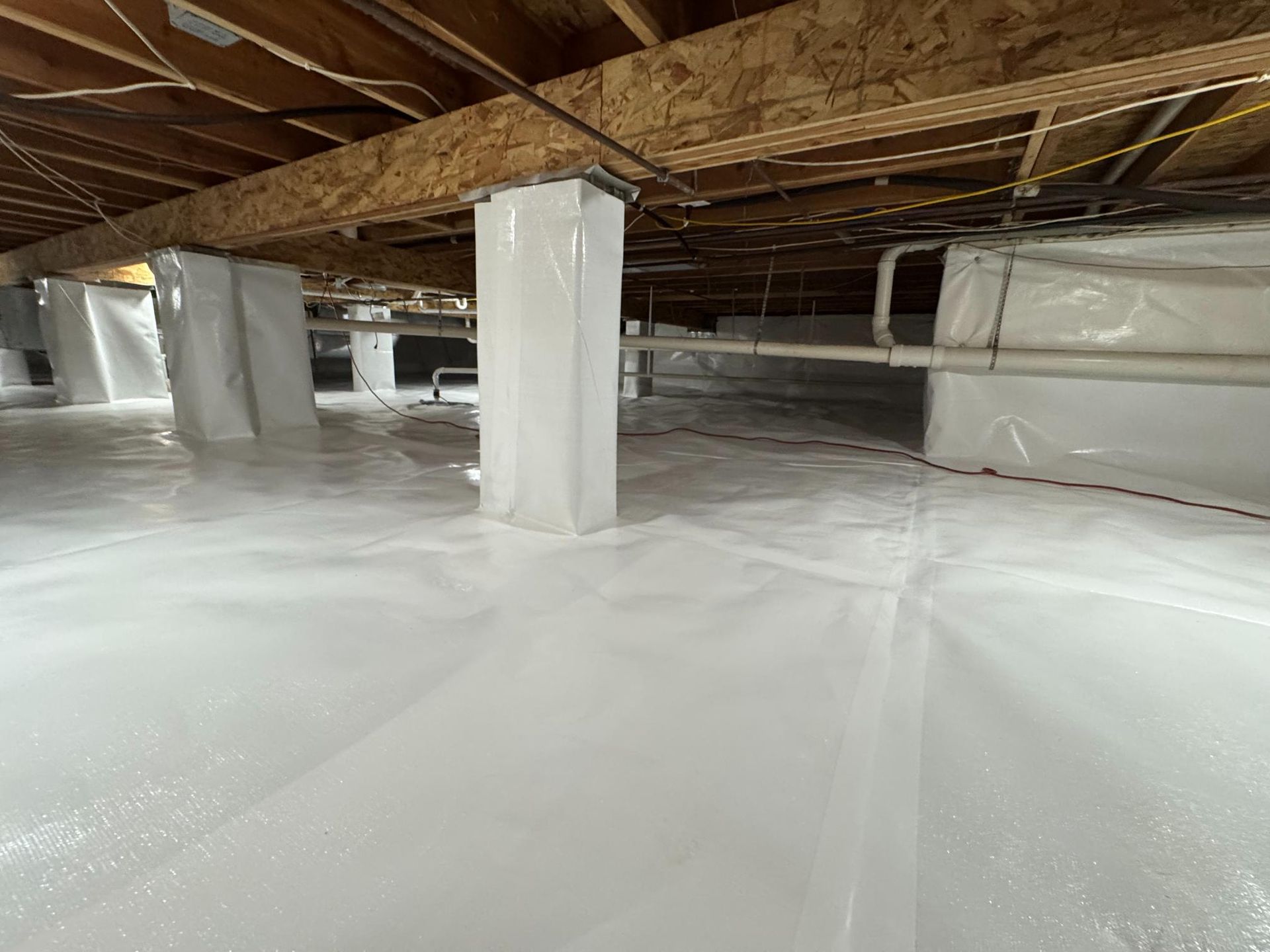
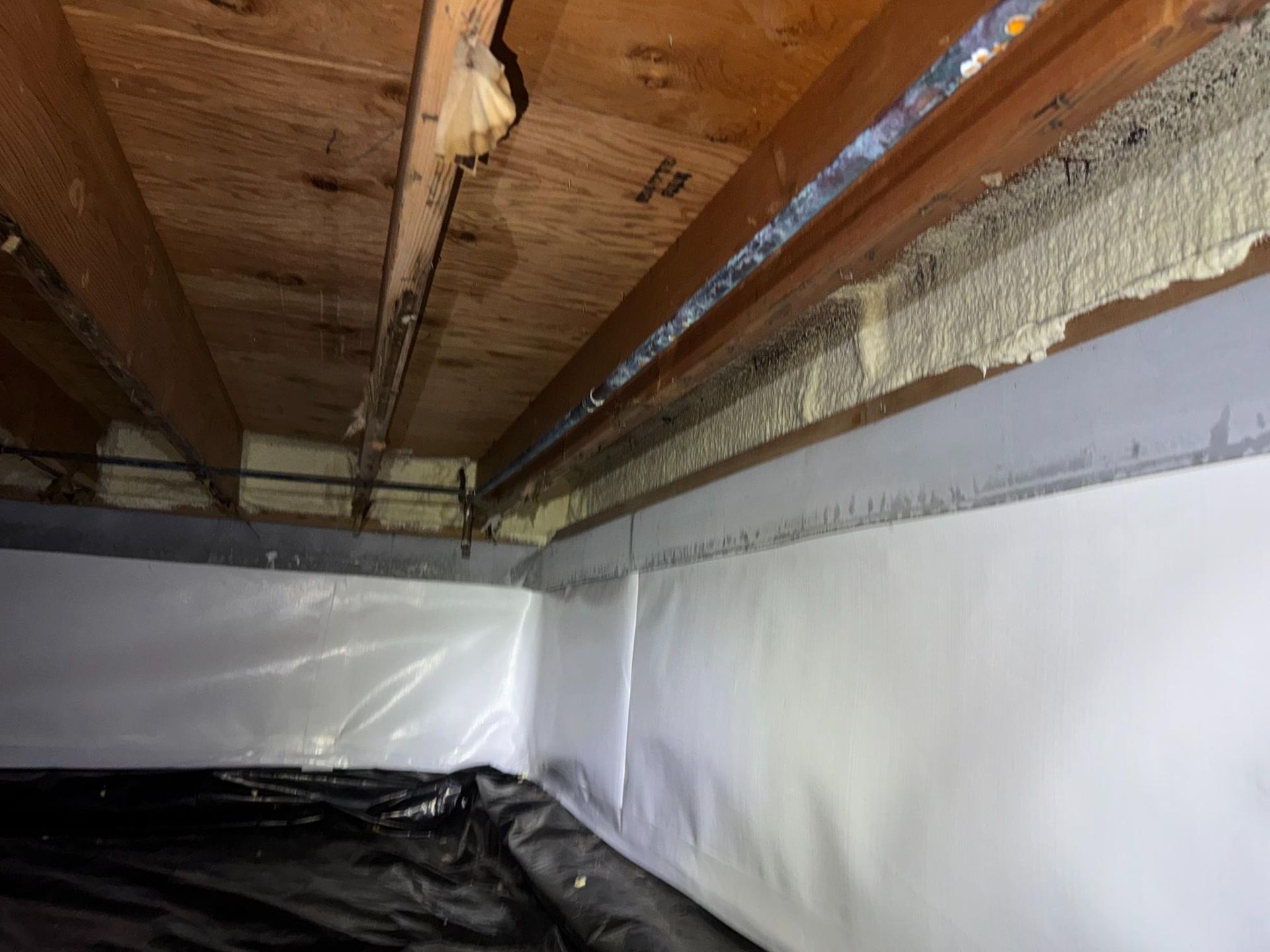
Then you move inside. Seal the vents so you're not pulling in humid outside air. Install proper vapor barrier across the floor and up the walls. Insulate if needed. Add a dehumidifier to control whatever moisture is left.
Each piece supports the others. The drainage work makes the encapsulation effective. The encapsulation makes the dehumidifier manageable instead of running constantly. Everything works together to actually solve the problem instead of just managing symptoms.
That's what "comprehensive" means. Not upselling you on services you don't need, but making sure every part of the moisture issue gets addressed.
We've seen too many crawl spaces where someone did half the job. Great encapsulation, but the downspouts are still dumping next to the foundation. Or perfect drainage, but no vapor barrier so ground moisture is still an issue. Partial solutions lead to recurring problems.
When we show up to a job in Mahomet, we're looking at the whole picture. That's why Ryan and Dennis are outside digging trenches before they touch the crawl space. Because we're not interested in band-aids—we're interested in solutions that actually last.
What to Look For With Your Own Downspouts
You don't need to hire someone to check if your downspouts are causing problems. Walk around your house after a good rain and look.
Where does the water go when it comes out of your downspouts? Is it running away from your house, or pooling next to the foundation?
Check for water staining on your foundation walls. Dark streaks or discoloration usually mean water's been sitting there regularly.
Look for erosion around your foundation. If there are channels worn into the soil or mulch right next to your house, that's water flow you need to redirect.
See if water pools anywhere near your foundation. Those low spots are collecting water that should be draining away.
If your downspouts end within a couple feet of your house, that's a problem waiting to happen. Especially in Central Illinois where freeze-thaw cycles are tough on foundations.
Simple extensions—whether you DIY them or hire someone—can prevent thousands in future foundation and crawl space repairs. This is one of those fixes where a little prevention goes a long way.
Book A Free Inspection Now
Your crawl space problems aren't going to fix themselves. But they are fixable. Let's get it done — the right way, permanently.
Or call us directly (217) 863-9559
Ready to Fix It Right From the Start?
If you're dealing with crawl space moisture, musty smells, or you just want to know what's actually happening under your house, we'll come take a look.
Our inspection covers everything—drainage, grading, downspouts, and what's happening in the crawl space itself. We'll show you the whole picture, not just the parts that are easy to fix.
No pressure, no gimmicks. Just Chris or Jeff walking you through what we find and what we'd recommend.
Give us a call. We're right here in Mahomet, and we're ready to help.