The Hidden Water Source That's Damaging Homes in Central Illinois
What Central Illinois Homeowners Should Know
The Hidden Water Source Damaging Central Illinois Homes
Most homeowners think about water damage in obvious ways. A leaky roof. A busted pipe. A flooded basement. Those are the things that show up fast and demand attention.
But there's another kind of water problem. One that builds slowly, stays out of sight, and by the time you notice it — it's already done real damage.
We found one recently. And it started with something almost every home in Central Illinois has: a central air conditioner.
Your AC Makes Water. Did You Know That?
Here's something most people have never been told.
When your air conditioner runs, it pulls humidity out of the air inside your home. That's part of what makes it comfortable on a hot August day. But that humidity has to go somewhere. It gets collected and drained out through what's called a condensate drain line.
On a normal day in a Central Illinois summer, a standard AC unit can produce anywhere from 5 to 20 gallons of water. Every single day.
That water needs to be routed to a pump and then pushed outside or into a proper drain line. That's how it's supposed to work. That's the right way to do it.
But that's not always what happens.
What We Found in This Crawlspace
We got into a crawlspace recently and found something that should not have been there.
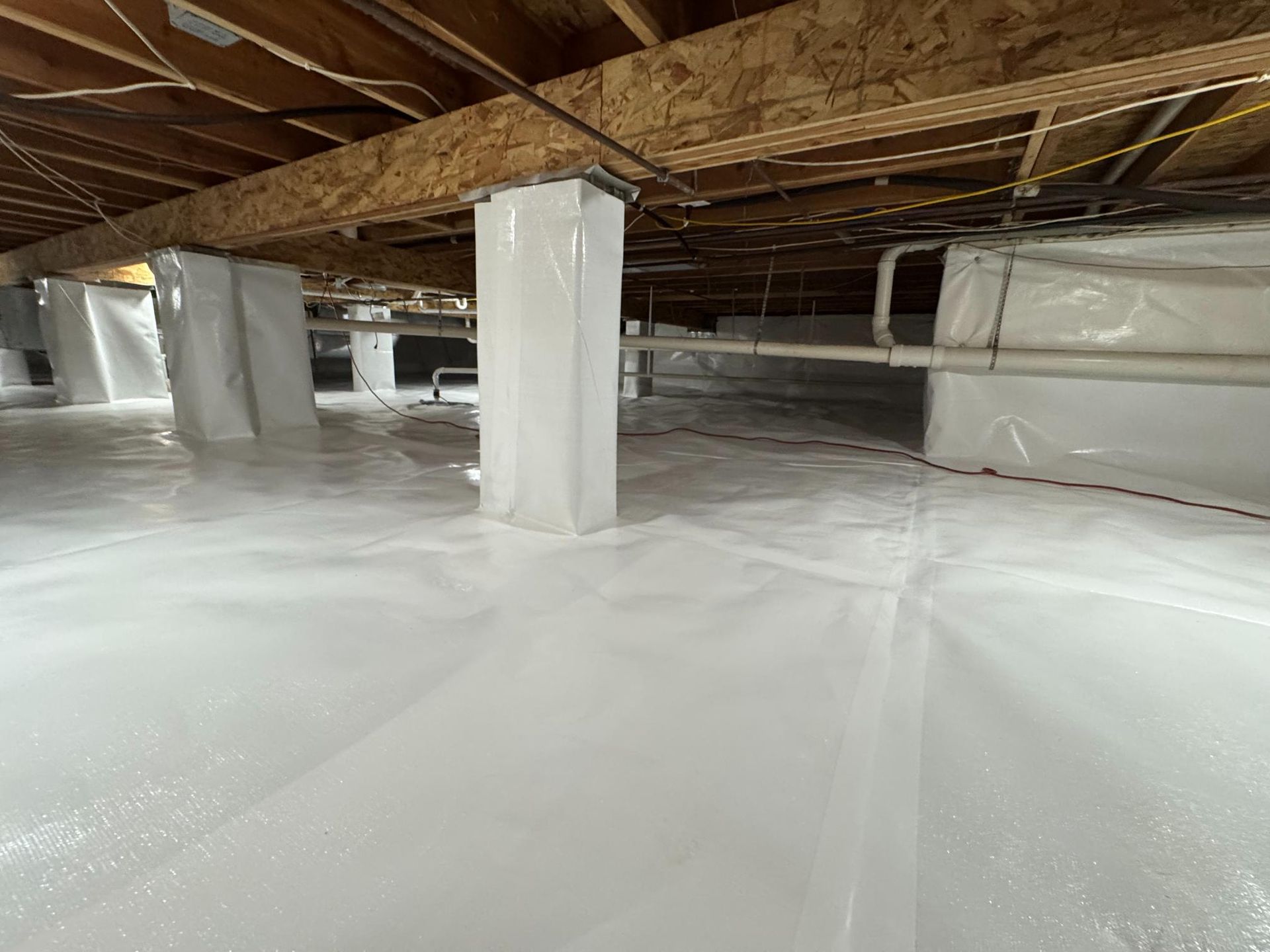
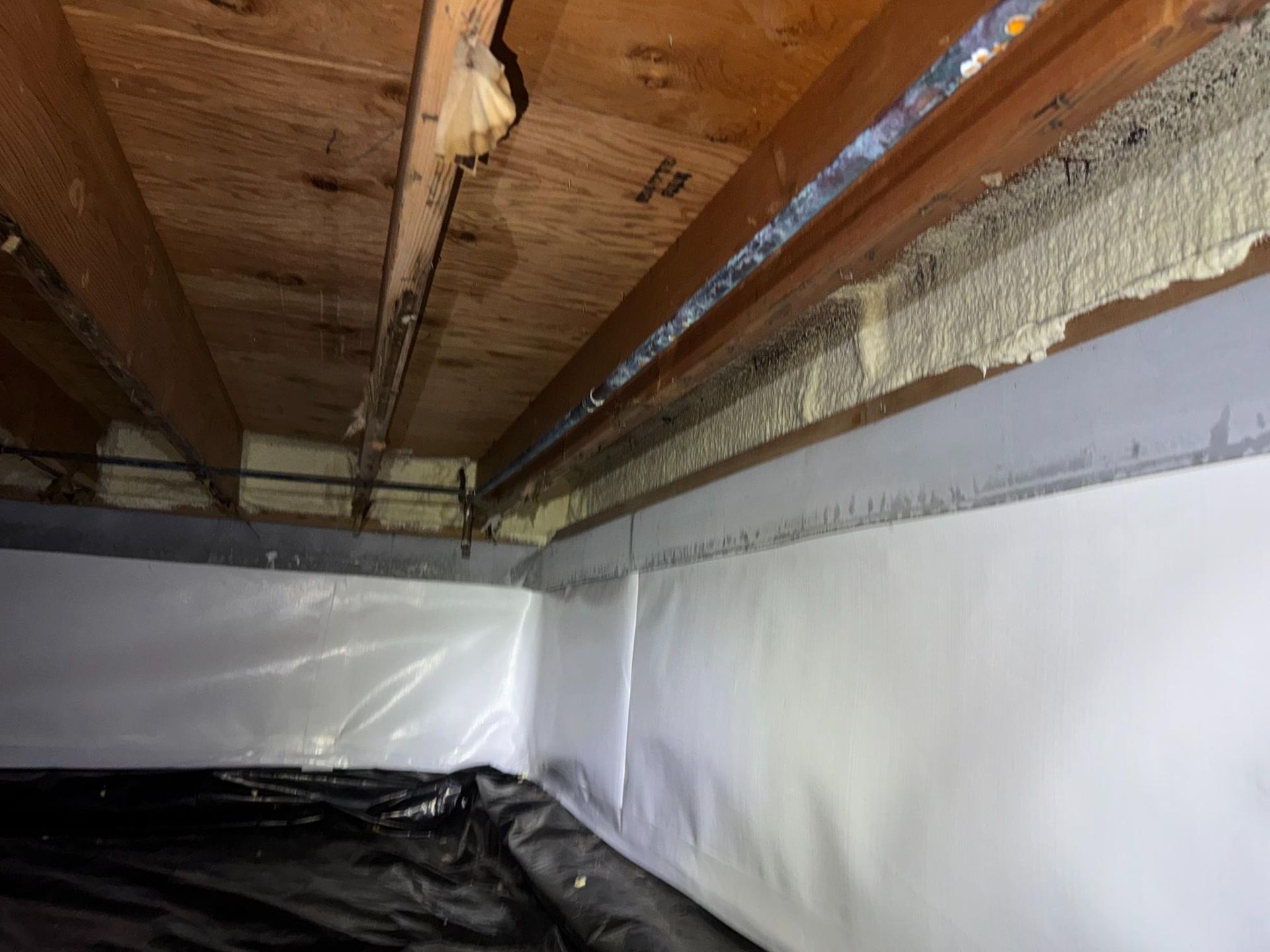
The condensate drain line — the one responsible for carrying all that water out of the home — had been terminated right there on the crawlspace floor. Whoever installed it had cut a hole in the plastic vapor barrier and let the line drain straight down onto the ground.
The thinking was probably something like — it's just going into the dirt. No big deal.
It is a big deal.
That vapor barrier exists for a reason. It's there to keep ground moisture from rising up into the crawlspace. Cutting a hole in it and then adding a daily water source on top of it is about the worst thing you can do to a crawlspace floor.
And nobody knew. Because nobody looked.

What Happens Next — And It Doesn't Take Long
Here's where the numbers start to matter.
Let's say that drain has been dripping since the HVAC system was installed. Even at the low end — 5 gallons a day — that's 150 gallons a month sitting in that crawlspace. Over a year that's 1,800 gallons of water that was never supposed to be there.
That moisture doesn't just sit still. It moves. It rises. It gets into the wood framing above it. And once wood stays damp long enough, a few things start to happen:
Wood rot sets in. The floor joists and beams that hold up your home start to soften and break down. This is structural damage. It is expensive to fix.
Mold finds a home. Mold needs two things: moisture and something to grow on. A damp crawlspace gives it both. And because your crawlspace air moves up into your living space, that mold doesn't stay in the crawlspace.
Pests move in. Termites and other wood-destroying insects are drawn to damp wood. A consistently wet crawlspace is an open invitation.
Your air quality suffers. Studies suggest that as much as 50% of the air in your living space comes from below — from your crawlspace. What's down there matters more than most people realize.
None of this happens overnight. That's exactly what makes it dangerous. By the time it shows up as a soft spot in your floor or a musty smell in your home, the damage is already well underway.

This Is Not a Freak Occurrence
We want to be honest with you about something.
What we found in that crawlspace was not a one-in-a-million mistake. This kind of thing happens because crawlspaces are invisible. Most homeowners never go down there. Most contractors know that. And some of them — not all, but some — take shortcuts they know won't be discovered.
Routing a condensate drain correctly takes a little more time and a little more material. Letting it drip onto the floor takes almost none. When nobody's watching and nobody's checking, the temptation to cut that corner exists.
We know this because we've seen it more than once. We've gone into crawlspaces behind other contractors and found exactly this kind of work. Done wrong. Hidden from view. Costing homeowners money they didn't know they were going to spend.

What You Can Do Right Now
You don't need to be a contractor to protect yourself here. You just need to ask one question.
Where does my condensate drain terminate?
Ask your HVAC technician. Ask your home inspector. If you're having a new system installed, ask before they leave. A correct answer involves a pump and an exit point — either outside the home or into a proper drain line. If someone can't answer that question clearly, that's worth paying attention to.
If you have an older home and you've never had your crawlspace looked at by someone who actually knows what they're looking for — that's worth doing. Not because something is definitely wrong. But because the only way to know is to look.
Book A Free Inspection Now
Your crawl space problems aren't going to fix themselves. But they are fixable. Let's get it done — the right way, permanently.
Or call us directly (217) 863-9559
The Bottom Line
Your home is working hard every day in ways you can't see. Most of the time everything is fine. But sometimes something gets installed wrong, stays hidden, and does quiet damage for months or years before anyone catches it.
That's what we do. We go into the spaces most people avoid, with a camera, and we show you exactly what's there. No guessing. No scary sales pitches. Just an honest look at what's happening under your home — and a straight answer about what to do about it.
If you've got questions about your crawlspace or you just want to know what's down there, we're happy to take a look.
That's what we're here for.