The Work That Happens Before We Even Start Encapsulating
The Part of the Job Nobody Sees
Good morning from just outside Mahomet. The crew's already been here for an hour, and we haven't touched a single piece of vapor barrier yet.
Jackson's running electrical for a sump pump relocation. Dylan's pulling old insulation out of the rim joist. And we're hauling cinder blocks and concrete chunks out of the crawl space—stuff that's been sitting down there for who knows how long.
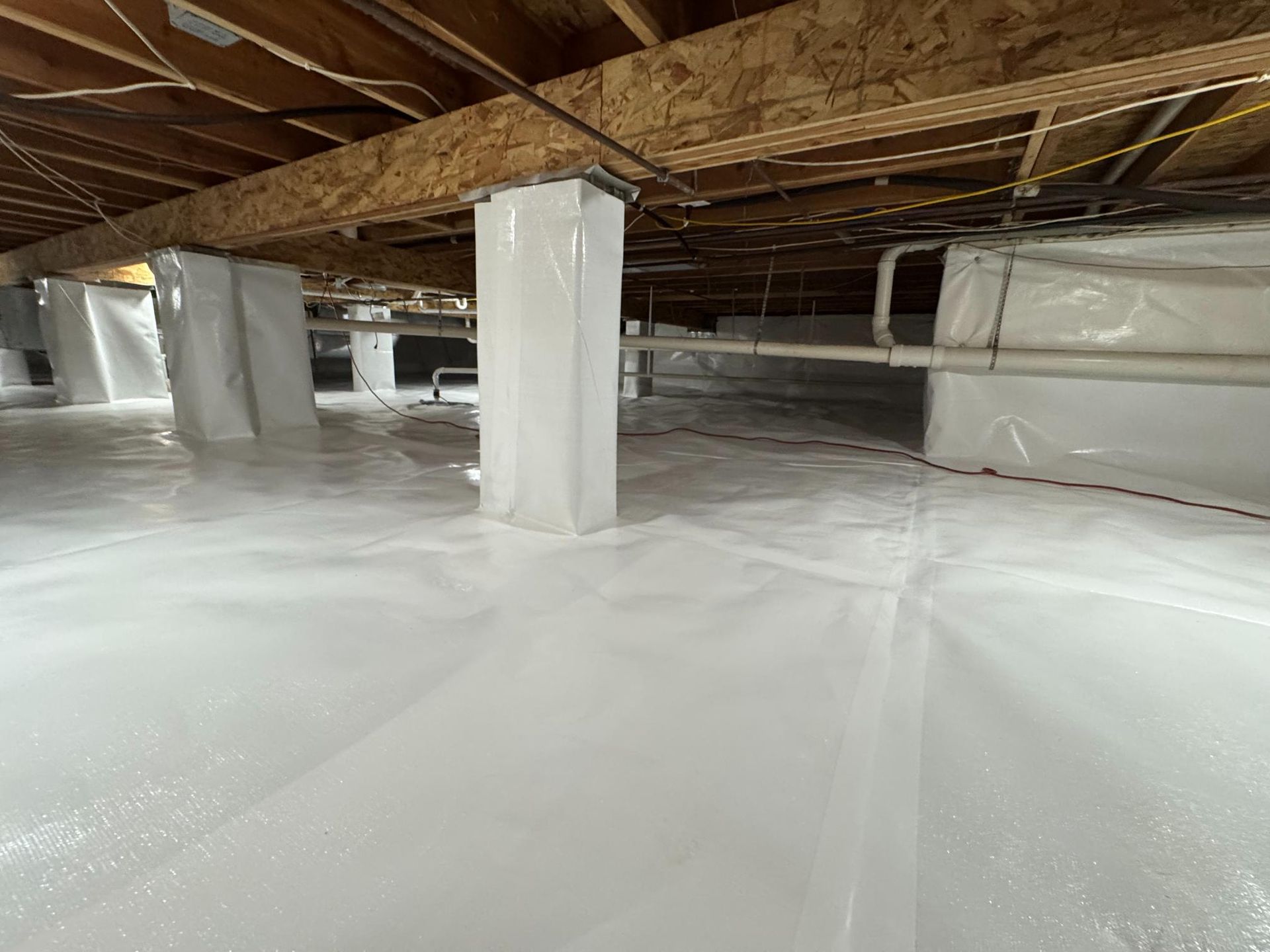
On paper, this is a straightforward encapsulation job: wall seal, crawl seal, sump basin and pump, spray foam. But before any of that happens, we've got to prep the space properly.
This is the work most homeowners never see. It's also the work that determines whether your encapsulation actually lasts or fails in five years.
Let me show you what's really happening down here.
What We're Pulling Out Before Anything Goes In
First things first: everything that doesn't belong has to come out.
Today, that's cinder blocks, concrete chunks, and old insulation that's been trapping moisture against the wood. We're bagging it up and hauling it out completely—not just pushing it to the side or covering it up with new material.
Here's why that matters: if you encapsulate over debris and moisture, you're not fixing the problem. You're just hiding it. That trapped moisture will keep breaking down your floor joists. The debris will settle and create low spots in your vapor barrier. And in a few years, you'll be dealing with the same issues all over again.
Some companies will look at this stuff and say, "Eh, it's fine. Just throw the plastic over it." They're trying to save time and get to the next job. But we're not rushing to the next job—we're focused on getting this one right.
Everything comes out. The space gets cleaned. Then—and only then—do we start the actual encapsulation.
Relocating Systems That Aren't Working Right
There's already a sump basin and pump in this crawl space. So why is Jackson down here running new electrical and moving it?
Because it's not in the right spot.
A sump system only works if it's located at the lowest point of your crawl space—where water naturally wants to collect. If it's placed wrong, water pools somewhere else, your pump never kicks on, and you've got a moisture problem that won't go away.
We see this all the time. A previous crew installed the basin wherever was easiest for them, not where it actually needed to go. Or they ran electrical that's not up to code. Or they used a pump that's undersized for the space.
We could work around it. Plenty of companies would. But "working around" a poorly placed system means your encapsulation won't perform the way it should.
So we're relocating it. Running proper electrical. Making sure the basin is positioned where it'll actually catch water and drain it out of your crawl space.
It takes more time. It costs a bit more in materials and labor. But here's the thing: a sump system that's in the wrong place is basically useless. And we're not encapsulating a crawl space just to have it fail because the drainage doesn't work.
Get the systems right first. Then seal everything up.
Pulling Old Insulation and Prepping Surfaces
While Jackson's handling the sump relocation, Dylan's up in the rim joist area pulling out old fiberglass insulation.
That insulation has been up there for years, and it's done exactly what fiberglass does in a damp crawl space: it absorbed moisture, sagged away from the wood, and stopped insulating anything. Now it's just a wet mess hanging in the way.
It all has to come out before we can spray foam.
Spray foam is an amazing product—it seals air leaks and insulates at the same time. But it only works if it's applied to clean, dry surfaces. If we spray over old insulation or moisture-damaged wood without prepping it first, we're trapping problems behind the foam.
So we pull everything out. We check the wood for any rot or damage. We make sure surfaces are ready to accept the foam properly.
This is the kind of step that separates a quality job from a quick one. It's not complicated—it's just thorough. And thoroughness is what makes crawl space work last.
Why This Phase Takes Time (and Why That's Good)
Right now, we've got a crew doing simultaneous work on multiple systems. Electrical. Debris removal. Insulation demo. Surface prep.
This isn't a one-person job. It's not something you knock out in three hours and move on.
And honestly? That's exactly what you want.
When a company tells you they can encapsulate your crawl space in half a day, they're skipping something. Maybe they're leaving debris in place. Maybe they're not relocating systems that need to be moved. Maybe they're spraying foam over wet insulation. Maybe they're just rolling out vapor barrier and calling it done.
Fast isn't always good. Especially not when we're talking about sealing up your crawl space for the next twenty years.
The prep work we're doing today—hauling concrete, running electrical, pulling insulation, cleaning surfaces—this is the foundation. The vapor barrier and spray foam get all the attention because that's the part you can see. But if the foundation isn't right, none of that matters.
We're investing time now so your encapsulation actually works. So your sump pump drains water correctly. So your spray foam seals air leaks instead of trapping moisture. So you're not calling us back in five years because shortcuts caught up with you.
Quality takes time. We'd rather do it right once than do it twice.
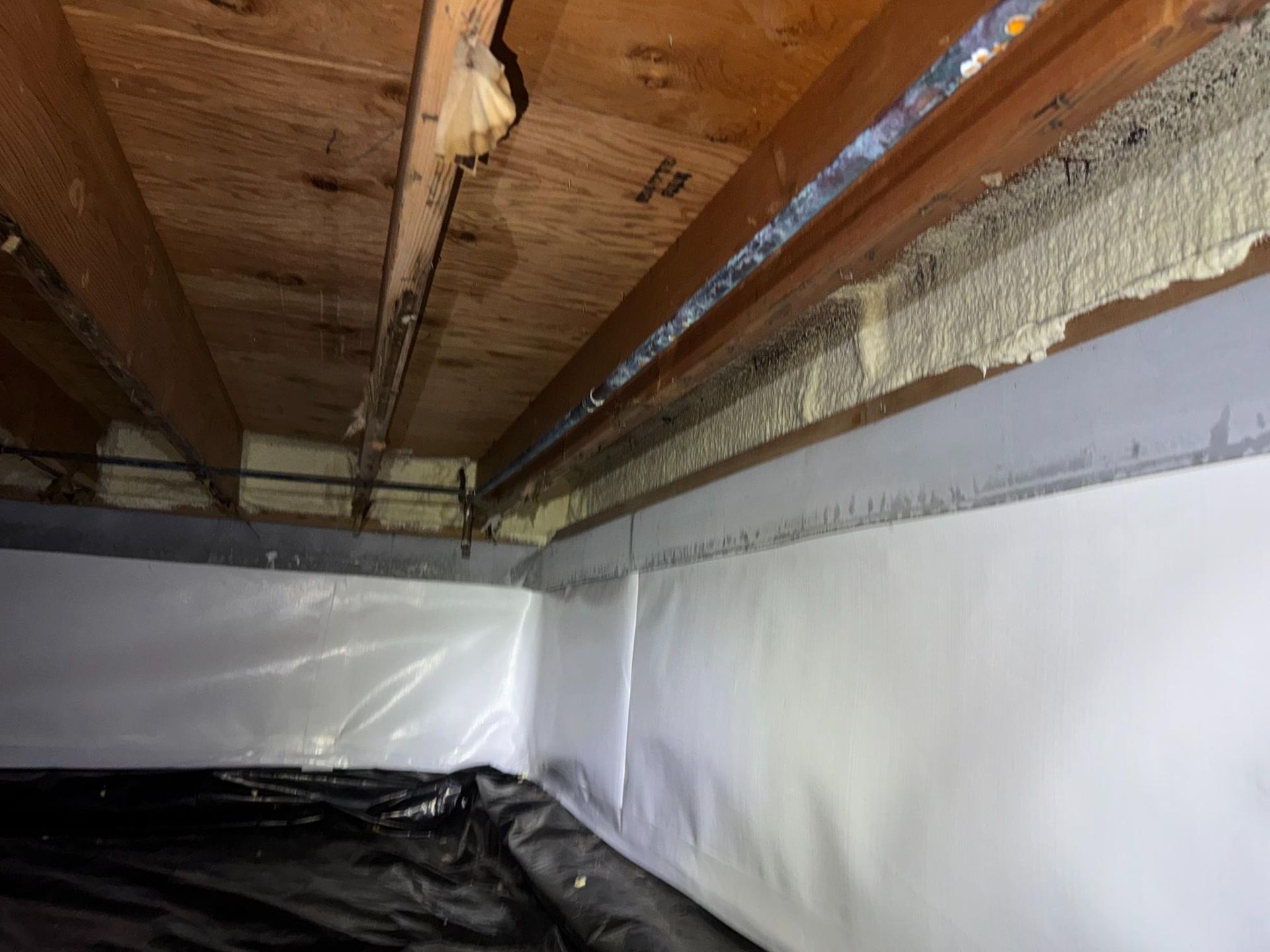
What Happens When Companies Skip the Prep
We've all seen it. A homeowner calls us out because their crawl space encapsulation "isn't working," and when we get down there, we find out why.
Vapor barrier laid right over old debris and standing water. Sump pump in the wrong spot, so moisture just sits there. Spray foam applied over wet insulation that's still trapping moisture behind it. Old concrete chunks creating lumps and tears in the plastic.
The encapsulation didn't fail because the materials were bad. It failed because the prep work was skipped.
And here's the frustrating part: now the homeowner has to pay twice. Once for the job that was done wrong, and again to fix it properly.
Companies skip prep work to save time and move faster. More jobs per week means more revenue. But it also means more callbacks, more failures, and more homeowners stuck with crawl spaces that don't actually work.
You can do this fast, or you can do it right. We choose right every time.
Our Approach to Every Job in Central Illinois
Chris and I don't run multiple crews across three states. We're right here in Mahomet, and we're on your job.
When you hire us, you're getting people who actually care about the quality of work we leave behind. Not because it's good marketing—because we live here. We see you around town. Our reputation isn't just a business asset, it's personal.
That's why we don't rush the prep work. Why we train our crew to do things thoroughly, not quickly. Why we relocate systems even when it would be easier to work around them.
Jackson knows how to run electrical correctly because we taught him. Dylan knows why old insulation has to come out because we showed him what happens when it doesn't. This crew isn't just following a checklist—they understand why each step matters.
Small company, owner-operated, accountable to our neighbors. That's not a tagline. That's how we actually operate.
And it shows up in the prep work. The part nobody sees, but everybody benefits from.
Book A Free Inspection Now
Your crawl space problems aren't going to fix themselves. But they are fixable. Let's get it done — the right way, permanently.
Or call us directly (217) 863-9559
Ready to See How We Do Things Differently?
If you're dealing with crawl space issues or just want to know what's actually happening under your house, give us a call.
We'll come out, do a thorough inspection, and show you exactly what we find. We'll walk you through what needs to happen and why—including all the prep work most companies skip.
No pressure. No gimmicks. Just Chris or me explaining the work and answering your questions.
Reach out anytime. We're here in Mahomet, and we're ready to help.