What We Fixed on a Crawl Space Job in Decatur That Another Company Left Behind
When a homeowner finally makes the call, something shifts.
We come out and do a thorough inspection. We get under the home and look at everything — and we show you what we're seeing in real time so there are no surprises when we sit back down with you. You'll know exactly what's down there. You'll know exactly what it takes to fix it. And you'll have a clear picture of what your home looks like after the work is done.
No pressure. No scare tactics. Just an honest look at what's happening and a straightforward plan to address it.
Most homeowners tell us the same thing after that first visit.
They wish they hadn't waited as long as they did.
When the Last Company Leaves Problems Behind
Dennis and Ryan just finished up a crawl space job in Decatur, and I wanted to show you what we had going on before we wrapped everything up.
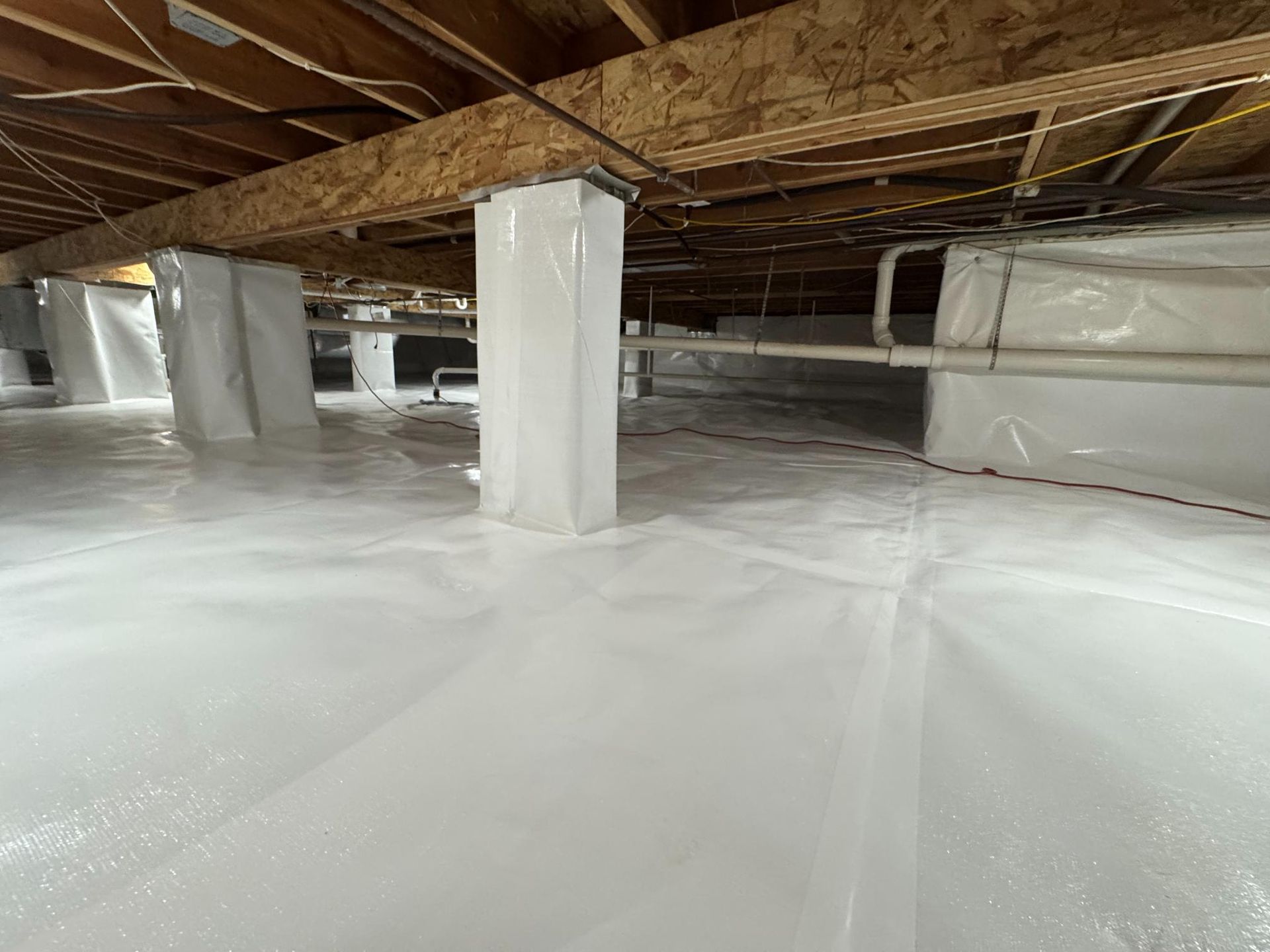
This one had it all. Dimple mat, drain tile, walls and piers wrapped, vapor barrier on the floor, dehumidifier hung, and condensate lines properly routed to the sump pit.
But here's the part that really mattered on this job: there was already a sump system installed when we got there. A previous company had done work in this crawl space. And when we dug into it, we found out pretty quickly why it wasn't functioning the way it should.
If you've had crawl space work done and assumed everything is working correctly—this one's worth reading.
What We Found When We Got There
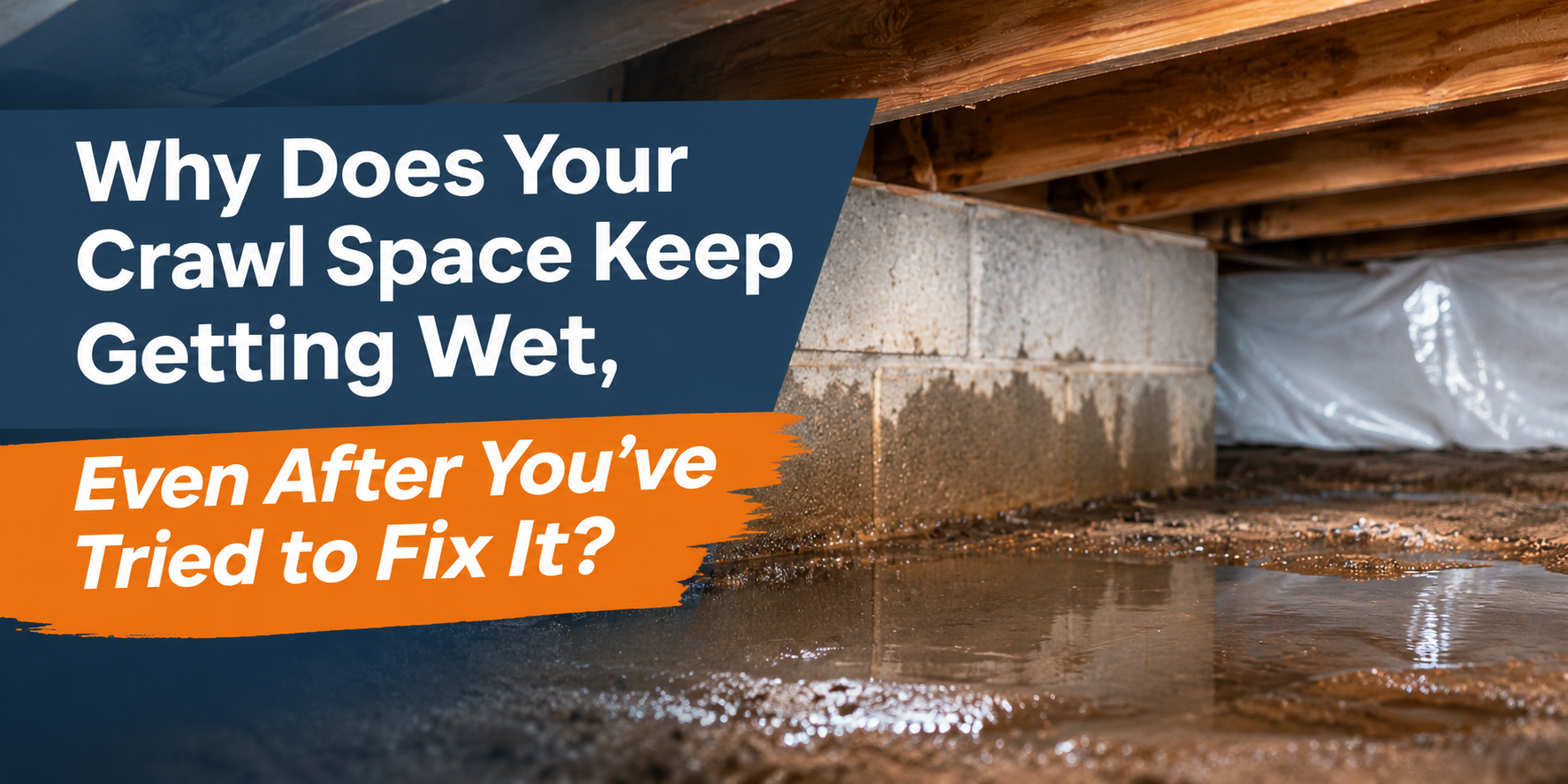
There were two sump pits in this crawl space. The original one was sitting directly underneath the access point. The second had been installed by a previous company at some point after.
The problem was the second pit wasn't functioning properly. When we traced back why, the answer was pretty straightforward: the connections weren't glued. They were just sitting together. No sealant, no adhesive, nothing actually holding them in place.
So any water that made it into those pipes wasn't being directed anywhere useful. It was leaking right back into the crawl space.
And here's what makes that so frustrating: from the outside, everything looked done. There was a sump pump. There were pipes. A homeowner looking at that setup would have no reason to think anything was wrong.
But the system wasn't moving water out of the home. It was just sitting there looking like it was doing its job while the moisture problem continued underneath the surface.
That's the part that gets me every time.
What a Complete Crawl Space System Actually Involves
Since we did a full install on this job, I want to walk you through what that actually looks like—because there's a lot more to it than most people realize.
It starts with dimple mat. That's the textured plastic sheeting that goes down on the floor before anything else. It creates a drainage layer so water that gets into the crawl space has somewhere to go instead of just sitting on the ground.
On top of that goes the vapor barrier, sealed properly across the entire floor and up the walls. We also wrap the piers—those concrete support columns—because moisture doesn't just come through the ground. It comes from every surface down there.
Drain tile runs along the perimeter, collecting water and directing it toward the sump pit. That's where the sump pump lives, and its whole job is to take that collected water and move it out of your home.
Then there's the dehumidifier. Ours gets hung—not just set on the floor—and its condensate line gets routed directly into the sump pit. That's important. If that line just dumps onto the floor, you're sending moisture right back into the space you're trying to dry out.
Every single one of these components depends on the others working correctly. The dimple mat feeds the drain tile. The drain tile feeds the sump. The dehumidifier feeds the sump. Pull one piece out of that chain and the whole system underperforms.
How We Fixed It
Once we identified the problem, the fix was straightforward—but it had to be done right.
We traced every connection in the existing sump system and found the joints that weren't sealed. Then we reattached and properly glued each one so the pipes were actually connected, not just resting against each other.
We also extended the condensate line from the dehumidifier to route into the new pit instead of the old one sitting under the access point. And we made sure the other condensate line in the space was draining correctly too.
Then we tested everything. We didn't pack up and leave until we verified that water was moving the way it was supposed to—into the pit and out of the home.
That last part matters more than people realize. Installing components is one thing. Making sure they all work together as a functioning system is another. A lot of crews stop at installation. We don't call a job done until we've confirmed everything is actually doing what it's supposed to do.
The False Security Problem
Here's what bothers me most about a situation like this one.
That homeowner had paid for crawl space work. There was a sump pump installed. There were pipes running through the space. Everything looked like it had been taken care of.
But the moisture problem never stopped. It just kept developing underneath the surface while the homeowner assumed they were protected.
That's the danger of a system that looks done but isn't functioning. It doesn't just fail to solve the problem—it hides it. And the longer it goes undetected, the more damage accumulates. Wood stays damp. Humidity stays high. Mold has time to develop. Floor joists start to deteriorate.
By the time someone realizes the system wasn't working, the problem is usually a lot bigger than it would have been if it had been caught early.
A sump pump that isn't properly connected is honestly worse than no sump pump at all. At least with nothing installed, you know you have a problem. With a non-functioning system, you think you're covered—and that false sense of security is what costs homeowners the most in the long run.
Book A Free Inspection Now
Your crawl space problems aren't going to fix themselves. But they are fixable. Let's get it done — the right way, permanently.
Or call us directly (217) 863-9559
Ready to Check on Your Crawl Space?
If you've had crawl space work done and you're not sure everything is functioning correctly, we're happy to come take a look.
If you're dealing with moisture issues despite having a system already installed, that's worth investigating.
And if you've never had your crawl space inspected at all, there's no better time to find out what's actually going on under your home.
Reach out anytime. Chris or I will answer personally, and we'll schedule a time to come out and take a thorough look.