Day One of a Full Crawl Space Job: What's Actually Happening
Inside a Real Crawl Space Installation
We started a full crawl space job in Mahomet this morning, and by the time I'm recording this, we're already two-thirds done with the perimeter trench. Electrical's run, lights are installed, and the new sump pump location is prepped and ready.
This isn't a small job. We're relocating a sump pump that wasn't installed right, running a complete perimeter drain system, and encapsulating the entire crawl space—floors and walls. It's the kind of work that solves problems permanently instead of just managing symptoms.
A lot of homeowners never see what actually happens during crawl space work. They just know a crew shows up, things get loud for a while, and eventually someone says it's done. So here's what's really going on when we do a full system installation—no shortcuts, no mysteries, just the real process.
What This Job Actually Includes
This homeowner isn't just getting one thing fixed. They're getting a complete system that works together to keep water out of their crawl space for good.
Here's what that means:
Relocating the sump pump. The old one wasn't deep enough and was in the wrong spot. Water was pooling everywhere except where the pump could actually reach it.
Full perimeter drain. We're trenching all the way around the crawl space to intercept water before it gets near the foundation. That trench gets lined with gravel, fitted with perforated pipe, and directed to the new sump location.
New electrical and lighting. Proper lighting throughout so future service work is easy and inspections are thorough.
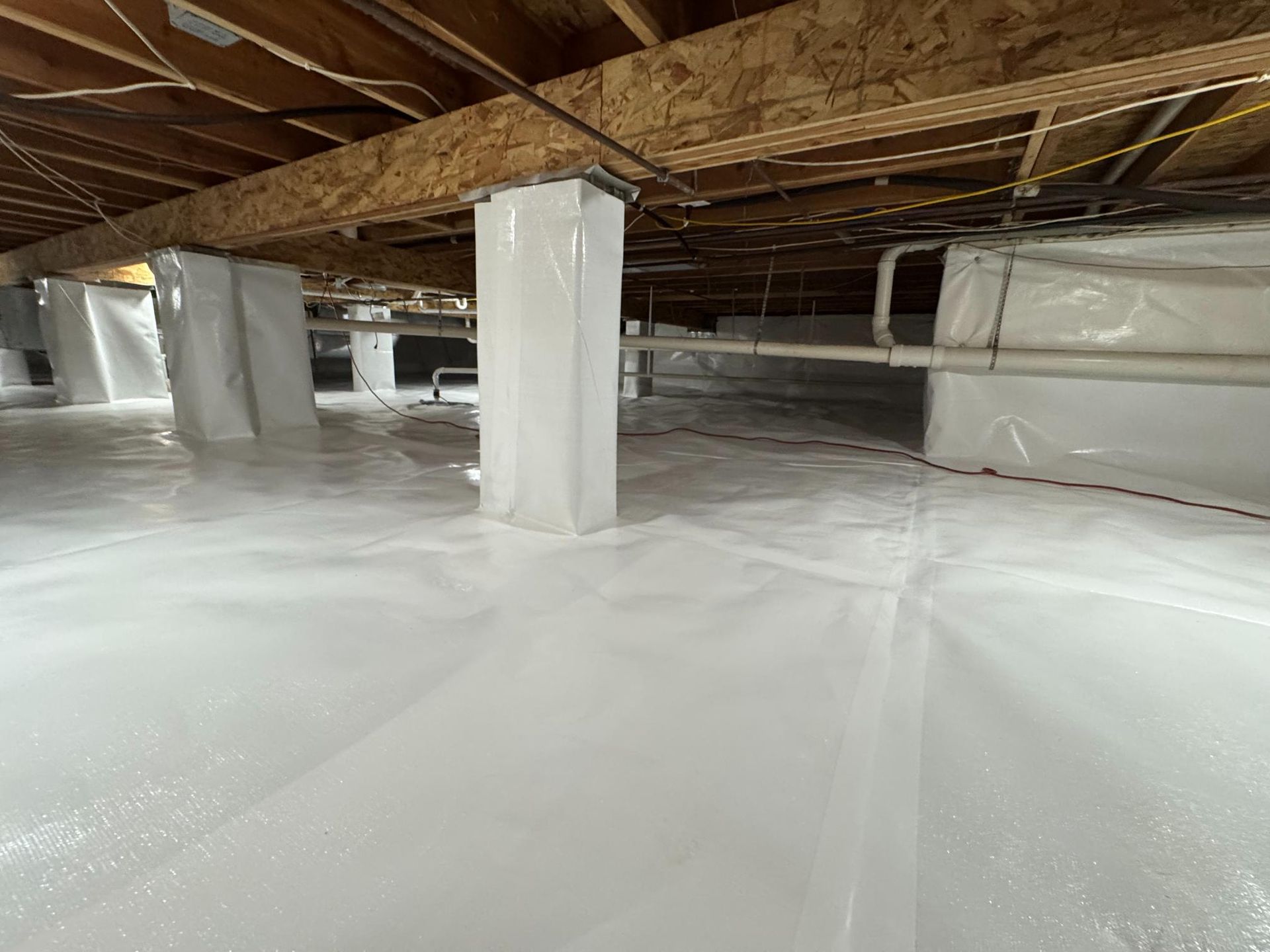
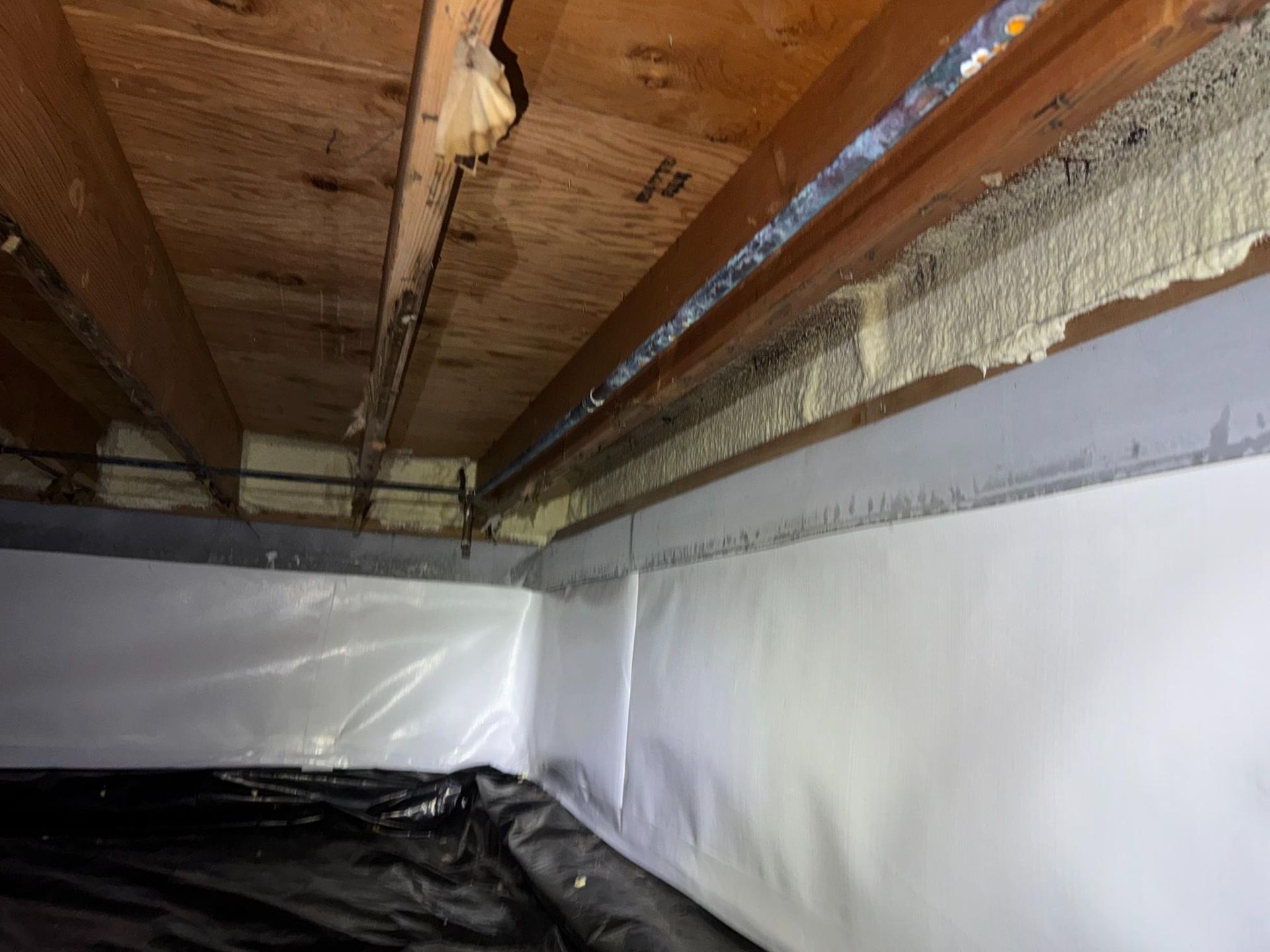
Complete encapsulation. Sealing the floors and walls to keep moisture out and air quality protected.
Each piece supports the others. The drain catches the water, the sump moves it out, the encapsulation keeps moisture from coming back in. You can't do half of this and expect it to work—it's designed as a system, not a collection of separate fixes.
Why the Old Sump Pump Had to Move
The existing sump pump in this crawl space had two problems: it wasn't installed deep enough, and it was in the wrong location.
Here's why that matters. Water flows to the lowest point—that's just basic physics. If your sump pump isn't at the absolute lowest spot in your crawl space, water sits everywhere else before it ever reaches the basin. You've got a pump running, maybe even working fine, but half your crawl space is still wet because the water never makes it there.
The depth issue is just as bad. A shallow sump basin can't collect water effectively. It fills up fast, the pump cycles constantly, and you're still dealing with moisture problems because the system can't keep up.
We see this all the time with quick installations. Digging a proper sump basin is hard work—you're going deep, dealing with clay or rock, making sure it's positioned right. Some crews just don't want to put in that effort. They dig enough to say they installed a pump, set it wherever is easiest, and call it done.
So we're relocating this one to the far corner where gravity naturally moves water. We're digging it to the proper depth so it actually functions. Dennis and Dylan already have the hole ready. When we're done, water will flow exactly where it needs to go, and the pump will handle it the way it's supposed to.
That's the difference between having a sump pump and having one that works.
The Perimeter Drain System Explained
A full perimeter drain does exactly what it sounds like—it goes all the way around your crawl space to catch water from every direction.
The trench we're digging runs along the inside perimeter of the foundation. We'll fill it with gravel and install perforated drain pipe that collects any water trying to get under the house. That pipe slopes toward the sump pump, so everything flows in one direction—out.
When it rains, water doesn't just come from one side. It can seep through foundation walls, come up through the ground, flow in from poor grading around the house. A perimeter system intercepts all of it before it becomes a problem inside your crawl space.
Not every crawl space needs a full perimeter drain. Sometimes a partial system handles the issue. But when you're dealing with consistent moisture, standing water, or a property where the grading just doesn't work in your favor, a full perimeter is the permanent solution.
This job needed it. Water was coming from multiple directions, the old sump wasn't in the right spot to handle it, and the homeowner was tired of dealing with the same problem every heavy rain.
Once this system is installed, they won't have to hope the weather cooperates or worry about the next storm. The drain catches the water, directs it to the pump, and the pump moves it out. Every single time.
Why We Work Fast But Not Rushed
By the end of day one, we've already got the electrical run, lights installed, the new sump location dug, and two-thirds of the perimeter trench complete. Tomorrow we'll finish the trench, install the drainage system, relocate the pump, and seal everything up.
That's not us rushing. That's us working efficiently because we know exactly what we're doing.
A lot of contractors drag jobs out. They start Monday, show up for a few hours Tuesday, disappear Wednesday, maybe come back Thursday. Meanwhile your crawl space is torn apart, you've got equipment sitting around, and you're just waiting for them to finish.
We don't operate that way. When we start a job, we stay on it until it's done. Our crew isn't bouncing between five different projects. We're focused on this one, pushing through systematically, and finishing it right.
Working fast doesn't mean cutting corners. It means having a plan, sticking to it, and not wasting time. This homeowner won't be waiting weeks for their crawl space to be functional again. They'll have a complete system installed, tested, and ready to protect their home.
What You Should See on Day One
If a crew shows up to start your crawl space job, you should see real progress by the end of that first day.
Not just tools unloaded and a hole started. Actual work completed. Lights installed. Electrical run. Significant trenching done. Materials organized and ready for the next phase.
On this job, by the time we wrapped up today, the new sump location was dug and prepped. The perimeter trench was two-thirds complete. Lighting was installed throughout. Electrical was connected and tested. Tomorrow we finish—we're not starting over or "getting back to where we left off."
Red flags? A crew that shows up, moves some stuff around, and leaves without visible progress. Contractors who promise to "get started" but nothing looks different after they leave. Teams that disappear for days between visits with vague excuses about other jobs or supply issues.
Quality crawl space work moves forward every single day we're on site. You should see the progress. You should know exactly what's happening. And you shouldn't be left wondering when they're coming back to actually finish.
How the Full System Comes Together
Tomorrow we'll finish the perimeter trench and install the drain pipe. The gravel goes in, the pipe gets positioned and sloped correctly, and everything gets directed to the new sump pump location.
Then the sump pump gets relocated and connected. We test it to make sure it's cycling properly and moving water out efficiently.
After that, encapsulation. We seal the crawl space floor with heavy-duty vapor barrier. The walls get sealed. Everything gets secured properly so it's not shifting or coming loose.
Each piece supports the others. The perimeter drain catches water before it gets inside. The sump pump moves it out. The encapsulation keeps moisture from evaporating back into your crawl space and affecting your indoor air quality.
That's a complete system. Not a partial fix where you're hoping it's enough. Not a "let's try this and see" approach. A designed solution that handles water from every angle and keeps your crawl space dry permanently.
This homeowner is getting exactly that. By tomorrow, they'll have a crawl space that works the way it should.
Book A Free Inspection Now
Your crawl space problems aren't going to fix themselves. But they are fixable. Let's get it done — the right way, permanently.
Or call us directly (217) 863-9559
Ready to See What Real Crawl Space Work Looks Like?
If you're dealing with moisture problems, standing water, or a sump pump that's running but not actually solving anything, we can help.
We'll come out, inspect your crawl space thoroughly, and explain exactly what you need. No dragging the job out for weeks. No disappearing between visits. Just focused, efficient work that gets your crawl space protected.
Reach out to Jeff or Chris directly. We're here in Mahomet, and we're ready to help.