How We Fixed Sagging Floors and Moisture Problems in This Mattoon Home
Eight Floor Jacks and a Full Encapsulation
Just wrapped up a job here in Mattoon, and I wanted to walk you through what we did because it's a perfect example of how floor problems and crawl space issues go hand in hand.
We installed eight floor jacks total—four in the basement, four in the crawl space. Custom cut each one to fit exactly right, supporting two-by-eight beams we built to handle the load. Then we encapsulated the entire crawl space to seal out moisture and protect all that structural work.
Most contractors will do one or the other. Fix your floors, or seal your crawl space. But here's the thing: those two problems are connected. And if you only fix half of it, you're just buying time before the issue comes back.
Let me show you why we approached this Mattoon home the way we did.
What We Found in This Mattoon Home
The homeowner called us about sagging floors. They could feel the bounce when walking across certain rooms, and doors weren't closing quite right anymore. Classic signs that the floor system needed support.
But when we got into the crawl space to inspect, we found exactly what we expected: moisture problems.
The humidity down there was breaking down the wood. Floor joists showing signs of deterioration. The crawl space wasn't sealed, so ground moisture was constantly affecting everything above it. That's why the floors were sagging in the first place.
Here's what most homeowners don't realize: sagging floors aren't just about age or weight. They're usually about conditions. Specifically, the moisture conditions in your crawl space weakening your floor system over time.
So yeah, this home needed floor supports. But it also needed the crawl space sealed and protected. Because installing jacks under deteriorating wood without fixing what's causing the deterioration? That's not solving the problem. That's just propping it up temporarily while the real issue keeps getting worse.
We needed to address both.
The Floor Support Work: Structure First
We started with the structural repairs. Eight adjustable floor jacks—four supporting the basement area, four in the crawl space itself.
Each jack gets custom cut to the exact height needed. We're not just cranking adjustable posts to whatever seems close. We measure, we cut, we install it right. Because proper fit means proper support.
Then we built the beams. For this job, we used two-by-eights married together—that's two boards fastened side by side to create a stronger, more stable beam. These beams sit on top of the jacks and run perpendicular to the floor joists above.
Here's why that matters: a single jack supporting a single joist doesn't do much. But a beam spanning across multiple joists distributes the weight properly. You're stabilizing a whole section of floor, not just one board.
We position each jack carefully, make sure the beam is making solid contact with multiple joists, and then gradually adjust to lift and stabilize. Not all at once—you don't want to shock the system. Slowly, evenly, getting everything back to where it should be.
When we're done, those floors aren't just "less saggy." They're properly supported. Stable. Level. Built to handle the load they're carrying every day.
But installing supports is only half the job. Because if we just walked away at this point, we'd be leaving the homeowner with the same conditions that caused the problem in the first place.
Why Encapsulation Was Just as Important
Those floor jacks we just installed? They're supporting wood. And wood deteriorates in high humidity.
That's the problem most contractors ignore. They'll come install supports, collect their money, and leave. The floors feel better for a while. But the crawl space is still damp, still humid, still slowly breaking down that wood. Five years later, you're sagging again.
We weren't going to let that happen here.
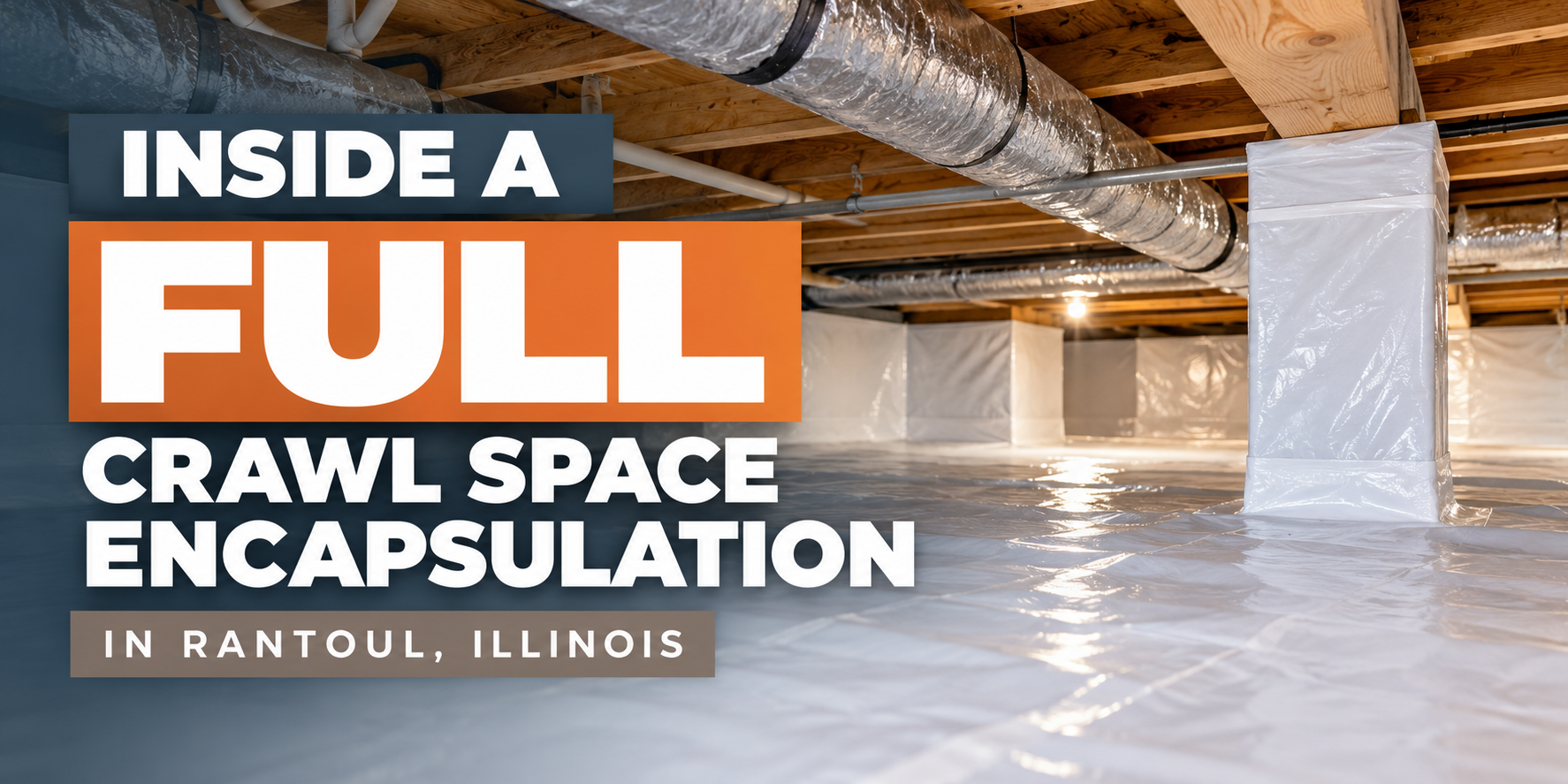
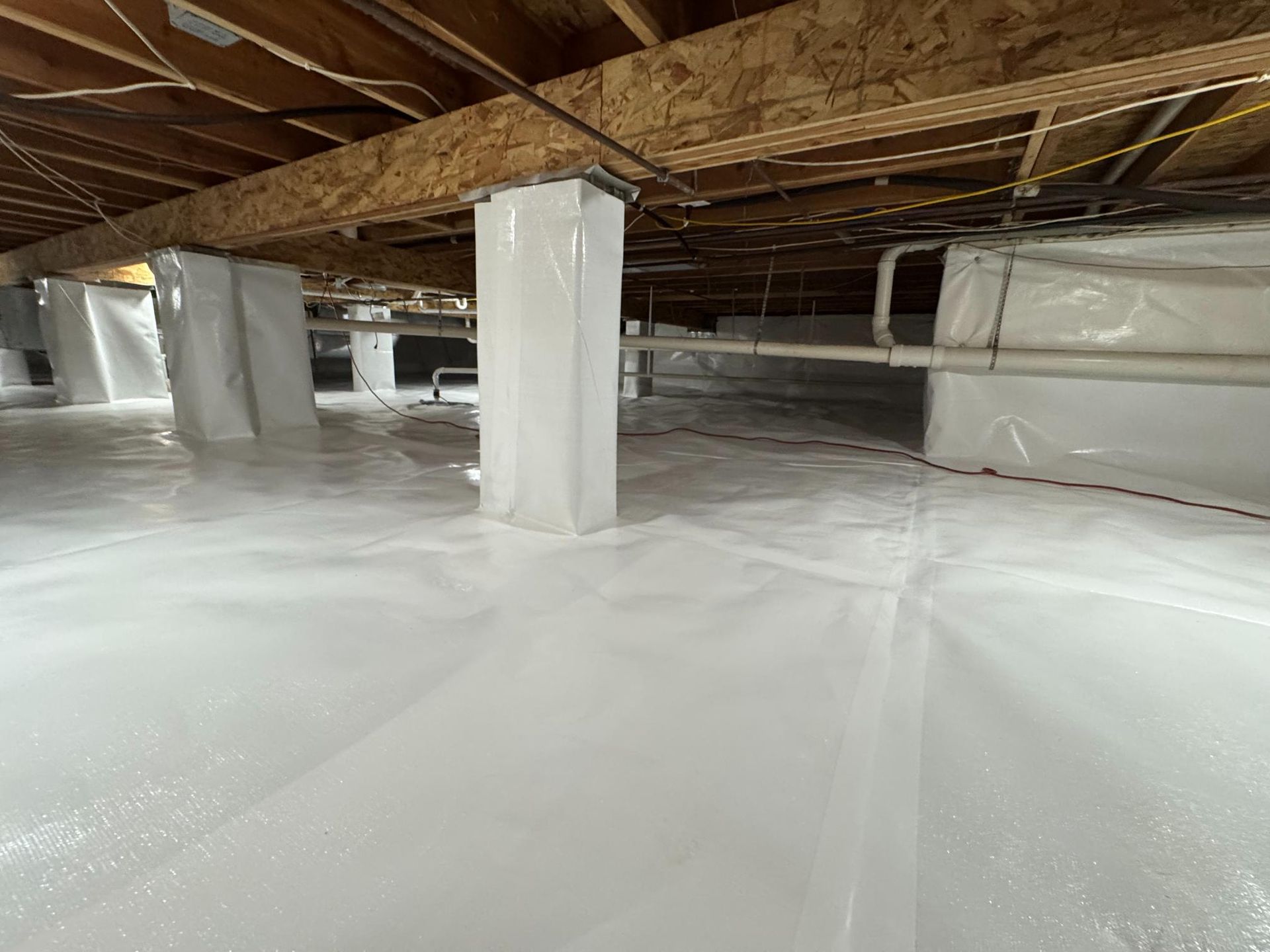
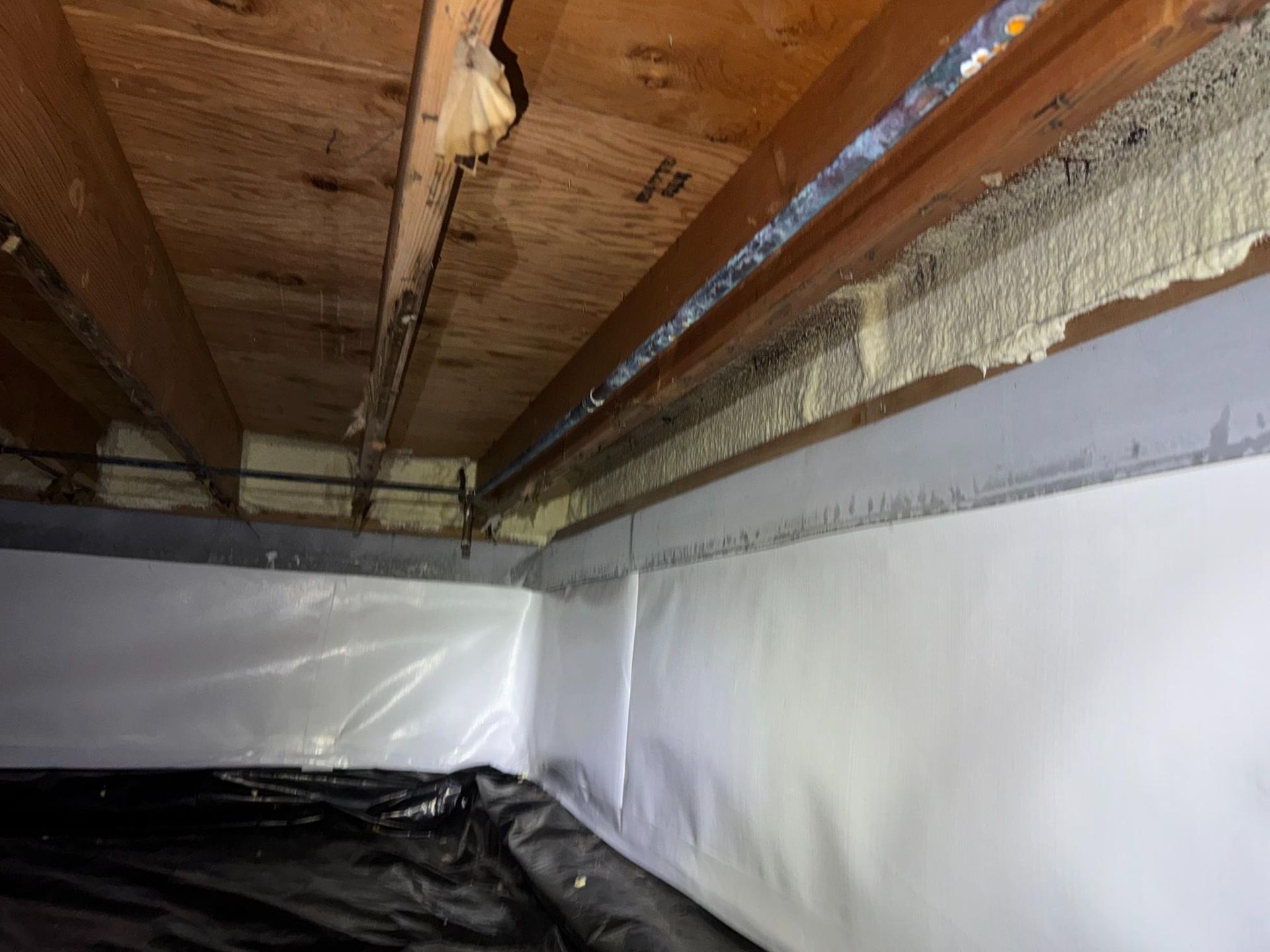
After the structural work was done, we encapsulated the entire crawl space. Clean vapor barrier across the floor, sealed up the walls, addressed all the moisture entry points. The goal is to create a dry, controlled environment that protects everything we just fixed.
Because here's the reality: about 50% of the air in your home comes from your crawl space. If that space is humid and damp, it's affecting your indoor air quality, your energy bills, and the longevity of your floor system.
Encapsulation stops ground moisture from getting in. It keeps humidity levels where they should be. It protects your floor joists, your insulation, your ductwork—everything down there.
And most importantly for this job, it protects those eight floor jacks and beams we just installed. We just invested time and effort into stabilizing this home's foundation. The encapsulation makes sure that work lasts.
You can't fix sagging floors and ignore the moisture. Well, you can. But you'll be fixing them again in a few years.
How the Two Jobs Work Together
Structure without protection is a temporary fix. Protection without structure doesn't solve the immediate problem. You need both.
The floor jacks give this Mattoon home the support it needs right now. They lift, they stabilize, they make the floors solid again. That's the immediate solution.
The encapsulation protects that structural work for the long term. It keeps the conditions dry so the wood stays healthy. It prevents the problem from coming back. That's the lasting solution.
Some contractors only want to do one or the other. Either they're crawl space guys who'll seal everything up but won't touch structural work. Or they're foundation guys who'll install supports but don't care about moisture control.
We do both because that's what actually fixes the problem.
It costs more upfront than just throwing some jacks under your house, sure. But you're not going to be calling us back in five years because your floors are sagging again. You're not going to be dealing with the same humidity issues. You're not going to be wondering why the "fix" didn't last.
You fix it right the first time, or you fix it twice. We'd rather do it right.
What This Mattoon Homeowner Got
When we finished this job, the homeowner didn't just get level floors. They got a complete solution.
The floors are solid and stable now. No more bounce when you walk across the room. Doors close properly. The structure is properly supported with eight custom-fit jacks and beams built to last.
But they also got a dry, sealed crawl space. Clean vapor barrier throughout. Proper moisture control. An environment that's protecting their floor system, their air quality, and their home's foundation for years to come.
We documented everything with photos and video. Showed them exactly what we found, what we did, and what the finished work looks like. No surprises, no questions left unanswered.
And most importantly, they got peace of mind. They're not wondering if the fix will hold. They're not worried about the problem coming back. They know both the structure and the conditions have been addressed.
That's what a complete job looks like. Not just treating the symptom, but actually solving the problem.
What to Look for If You're Dealing with Sagging Floors
If you've got sagging or bouncy floors, don't just hire someone to throw a few jacks underneath and call it done.
Get a full crawl space inspection. You need to know what's causing the sag, not just how to prop it up. Is there moisture? Humidity issues? Wood deterioration? Poor ventilation? All of that matters.
Ask any contractor who quotes floor work: what are the conditions like in the crawl space? Are they addressing moisture? What's their plan for protecting the structural work they're about to do?
Red flags to watch for: contractors who only want to install supports without even mentioning the crawl space environment. Or guys who say "the humidity isn't that bad" without actually measuring it. Or companies that want to upsell you on encapsulation but can't explain why it matters for your specific situation.
The complete approach costs more upfront, yeah. But it saves you money long-term because you're not fixing the same problem twice. You're addressing structure and conditions together.
That's not upselling. That's just fixing it right.
Book A Free Inspection Now
Your crawl space problems aren't going to fix themselves. But they are fixable. Let's get it done — the right way, permanently.
Or call us directly (217) 863-9559
Get a Complete Inspection
If you're dealing with sagging floors, bouncy spots, or doors that won't close right, we can help.
We'll come out and do a thorough inspection—looking at both your floor structure and your crawl space conditions. We'll show you exactly what's going on and what it'll take to actually fix it.
No pressure to do everything at once. But you deserve to know the full picture so you can make the right decision for your home.