Day Two: Breaking Down a Crawl Space Installation
When a homeowner finally makes the call, something shifts.
We come out and do a thorough inspection. We get under the home and look at everything — and we show you what we're seeing in real time so there are no surprises when we sit back down with you. You'll know exactly what's down there. You'll know exactly what it takes to fix it. And you'll have a clear picture of what your home looks like after the work is done.
No pressure. No scare tactics. Just an honest look at what's happening and a straightforward plan to address it.
Most homeowners tell us the same thing after that first visit.
They wish they hadn't waited as long as they did.
This Is What Day Two Looks Like
Day two on this crawl space job and nobody's standing around.
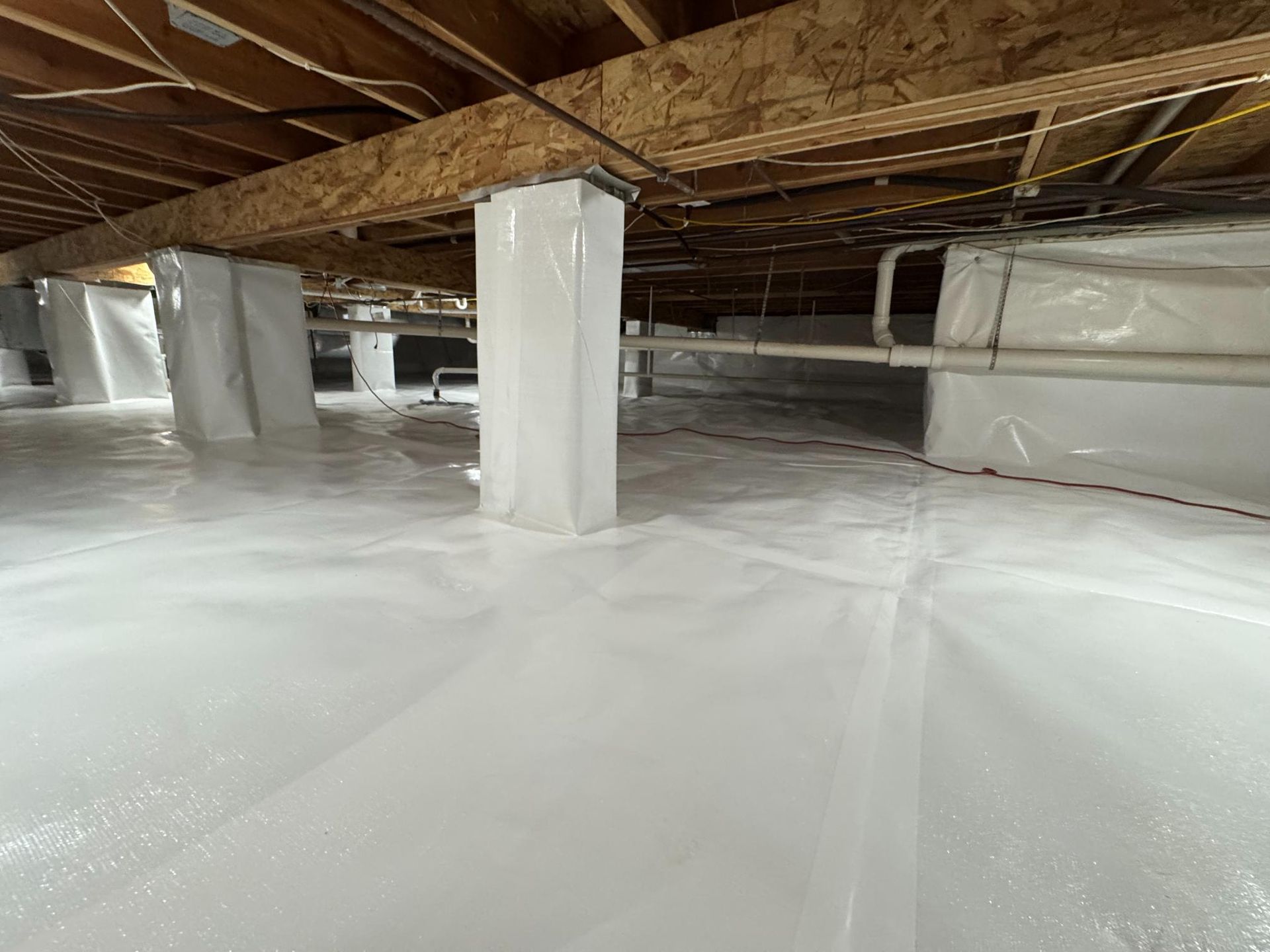
Jackson's running the discharge line. Dennis and Dylan are laying dimple mat. I'm taping right behind them as they go. And we already swapped out the old sump pump while we were at it.
Four people. Four jobs. All happening at the same time.
This is what a crawl space installation actually looks like when a crew is focused on your home and not splitting their attention across three other job sites across town.
We put this out there because a lot of homeowners have no idea what should be happening during a crawl space job. They just know someone's under their house making noise. So let's break it down.
What's Actually Happening on Site
Here's what each part of the crew is doing and why it matters.
The sump pit is dug first. That's the hole in the ground where water collects before the pump pushes it out. Without it, water just sits under your home and causes damage.
Jackson is running the discharge line. That's the pipe that carries water from the sump pump to the outside of your home. It needs to drain far enough away that water doesn't just find its way back under the house.
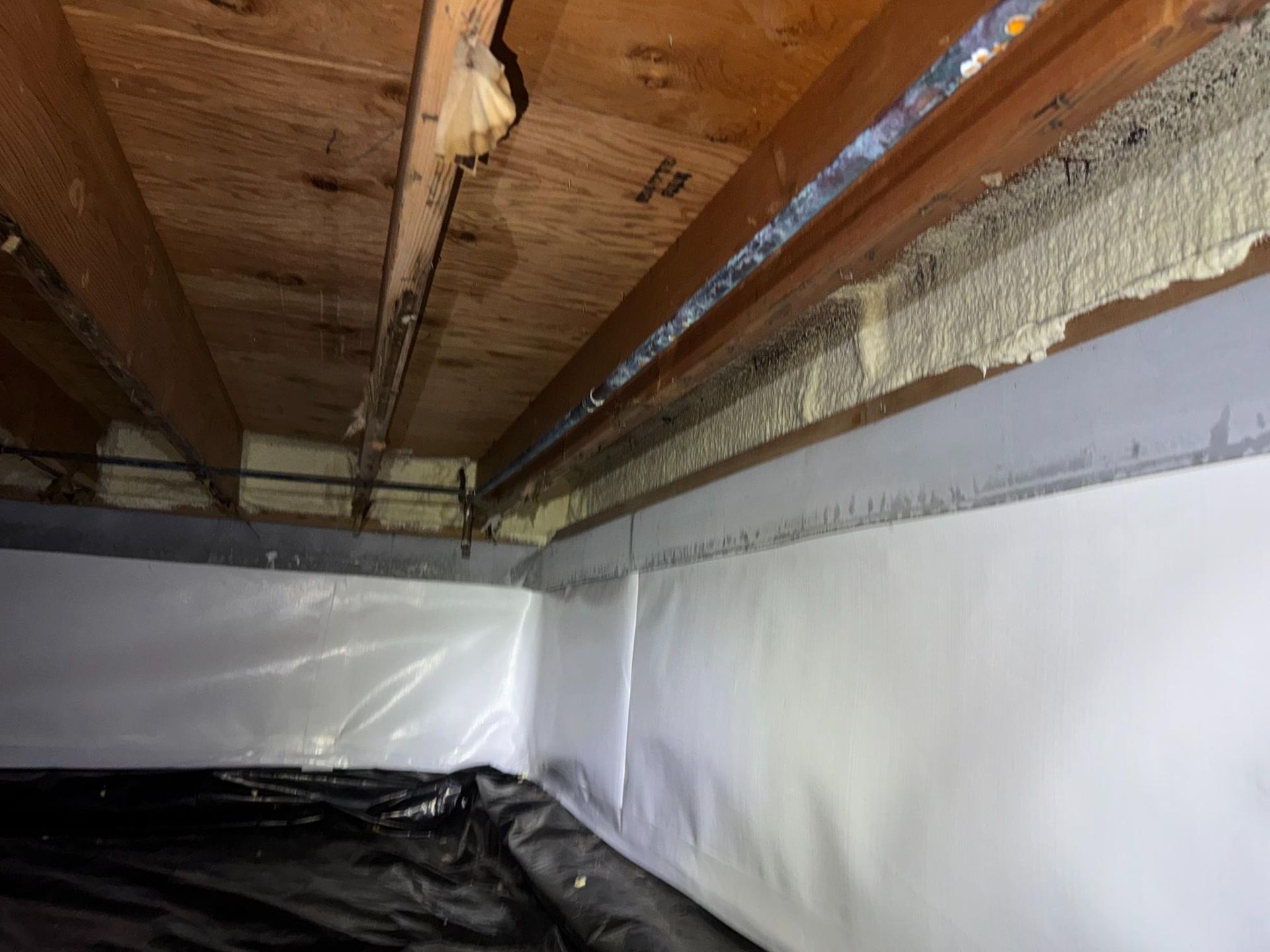
Dennis and Dylan are laying dimple mat. Think of it as a textured plastic layer that goes on the crawl space floor. It creates a channel for water to move toward the sump pit instead of just sitting on the ground.
And taping seals everything together. Every seam, every edge. Without proper taping, moisture finds the gaps and gets back in.
Each step builds on the last. That's why rushing any part of it matters—and why we don't.
Why the Sump Pump Swap Matters
While we were in there, we found the old sump pump needed to go.
So we replaced it.
That might sound simple, but it's actually one of the bigger differences between a crew that's paying attention and one that's just checking boxes. A lot of contractors will finish the job they were hired to do and leave everything else for someone else to deal with. Or worse, they'll notice a problem and not mention it at all.
When we're in your crawl space, we're looking at the whole picture. If something's not right, we're going to tell you. And if we can fix it while we're already down there, that's almost always the smarter, cheaper option than scheduling a separate visit later.
Finding and replacing that pump on day two means your drainage system works the way it's supposed to from day one of completion. Not after another appointment, another wait, another crew.
That's just how thorough work gets done.
What a Real Installation Schedule Looks Like
Here's something worth asking any contractor before they start work on your home: how many other jobs are you running at the same time as mine?
It's not a rude question. It's a smart one.
Because there's a real difference between a crew that's fully committed to your job and a crew that's bouncing between three different houses all week. When your crawl space is open and mid-installation, your home is exposed. Moisture is still getting in. Whatever problem we came to fix is still happening until the job is complete.
Every extra day that work drags on is another day your home is sitting vulnerable.
We schedule jobs so that when we start, we stay. If it's a multi-day job, we're there each day consecutively until it's finished. No "we'll be back next week." No leaving your crawl space open while we squeeze in work for someone else.
That's not just about being considerate. It's about quality. Work done in focused, consecutive days is more consistent than work done in scattered pieces over two or three weeks. The crew stays in the same headspace. The materials are handled correctly. Nothing gets forgotten between visits.
Your job gets our full attention until it's done. That's the only way we know how to work.
What Homeowners Should Expect During Installation
So what does all of this actually look like from your side of things?
Honestly, for most of the day, you just hear noise. Digging, movement, equipment running. It can feel a little unsettling not knowing exactly what's happening under your house.
That's why we check in with you throughout the day. Progress photos, quick updates, a knock on the door if something comes up. We don't want you sitting upstairs wondering what's going on down there.
Before we start, we'll walk you through the plan. How many days we expect it to take, what we're doing and in what order, and who to reach out to if you have questions while we're working.
When we're done for the day, we'll let you know where things stand. And when the job is fully complete, we do a full walkthrough—photos, video, the whole thing—so you can see exactly what was done and why.
No surprises. No mystery. Just clear communication from start to finish.
What to Ask Any Crawl Space Contractor Before They Start
Before anyone goes under your house, get answers to these questions.
How many jobs are you running at the same time as mine? A focused crew finishes faster and does better work. If they're juggling multiple job sites, your home isn't their priority.
Will the same crew be here every day until it's done? Consistency matters. Different people showing up each day means nobody fully owns the quality of the finished product.
What happens if you find something unexpected? This is a big one. You want a contractor who addresses problems as they find them—not one who ignores them or uses them as an excuse to add surprise charges later.
Who do I contact if I have questions during the job? You should always have a direct line to someone who can actually answer your questions. Not a call center. Not a voicemail.
If a contractor gets defensive about any of these questions, that tells you something. Good contractors expect to be held accountable. It's part of the job.
Book A Free Inspection Now
Your crawl space problems aren't going to fix themselves. But they are fixable. Let's get it done — the right way, permanently.
Or call us directly (217) 863-9559
Ready to Talk About Your Crawl Space?
If you've been burned by a contractor who disappeared mid-job, or you just want to know what a real installation looks like from start to finish, we're happy to talk.
Jeff or Chris will answer personally. We'll come out, take a thorough look at what's going on under your home, and give you straight answers about what needs to be done and what it will cost.
No pressure. No disappearing acts. Just honest work from people who actually live here.