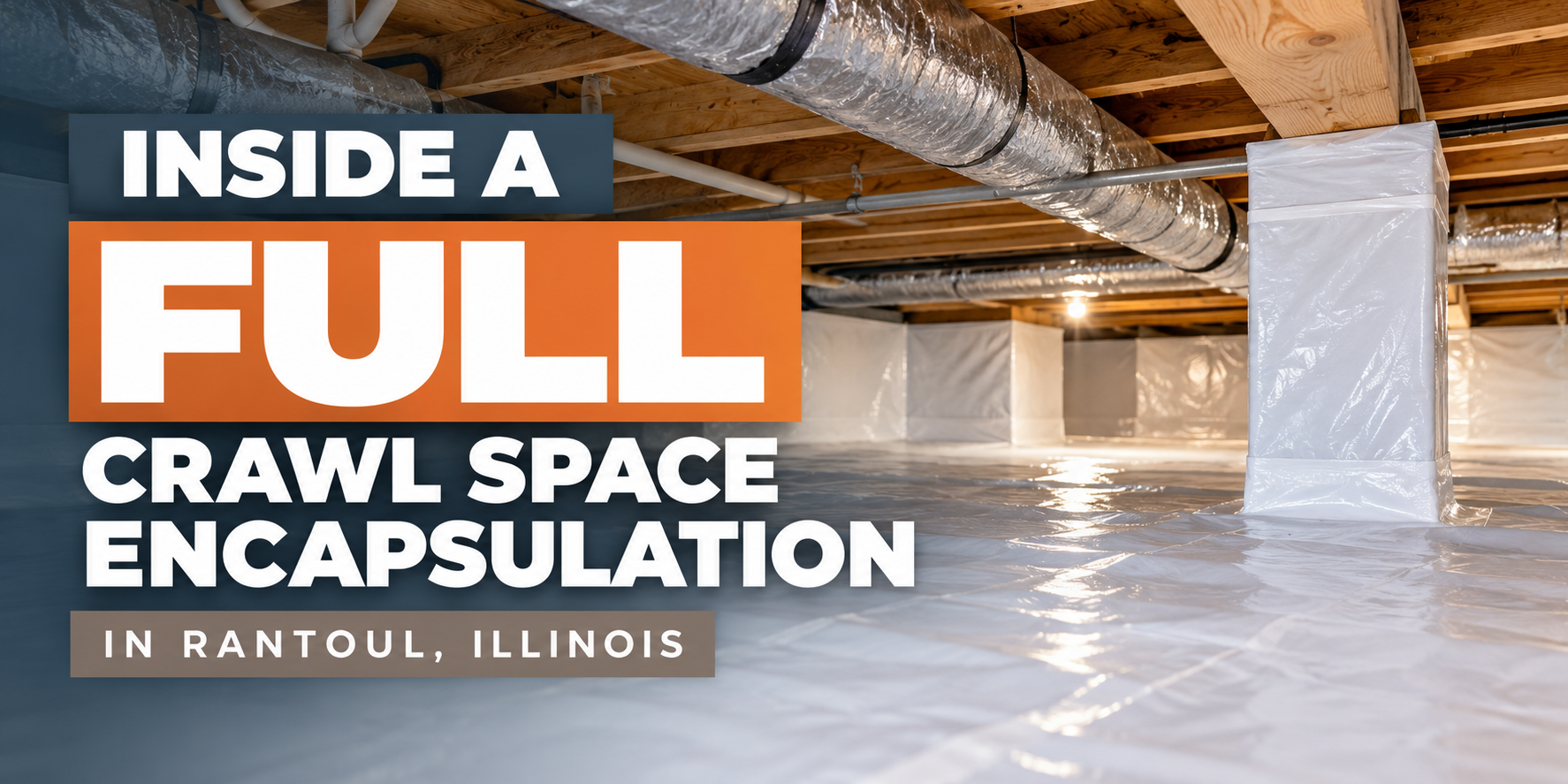
The Difference Between Covering the Problem and Actually Solving It
When a homeowner finally makes the call, something shifts.
We come out and do a thorough inspection. We get under the home and look at everything — and we show you what we're seeing in real time so there are no surprises when we sit back down with you. You'll know exactly what's down there. You'll know exactly what it takes to fix it. And you'll have a clear picture of what your home looks like after the work is done.
No pressure. No scare tactics. Just an honest look at what's happening and a straightforward plan to address it.
Most homeowners tell us the same thing after that first visit.
They wish they hadn't waited as long as they did.
Why Homeowners Start Looking at Vapor Barriers
Most homeowners don't spend a lot of time thinking about their crawl space. That makes sense. It's dark down there. It's not exactly a fun place to spend an afternoon. And as long as nothing seems obviously wrong, it's easy to leave it alone.
But at some point, something sends you looking. Maybe it's a smell you can't track down. Maybe your floors feel soft in certain spots. Maybe someone mentioned moisture and now you can't stop thinking about it. Whatever it was, you started doing some research.
And pretty quickly, you ran into the term vapor barrier.
It Sounds Like the Answer
And honestly, it makes sense that it would. A vapor barrier sounds like exactly what you need. There's vapor. You want a barrier. Problem solved.
So you call a contractor. Maybe you call two or three. Some of them quote you a vapor barrier. Some quote you something called encapsulation. The prices are very different. And nobody is really explaining why.
That's not your fault. That's a pattern in this industry.
The truth is, a lot of contractors use these terms loosely. Some use them interchangeably. And some will sell you the cheaper option without ever telling you what it doesn't cover — because if they did, you might ask harder questions.
So What's the Actual Difference?
A vapor barrier on the floor is exactly what it sounds like. It's a sheet of plastic laid across the ground in your crawl space. It does block moisture from coming up through the soil. That part is real.
But your crawl space isn't just a floor.
Moisture doesn't only come up from the ground. It comes in through the walls. It comes in through gaps and vents. It moves with the air. And if all you've done is cover the floor, you've left every one of those entry points wide open.
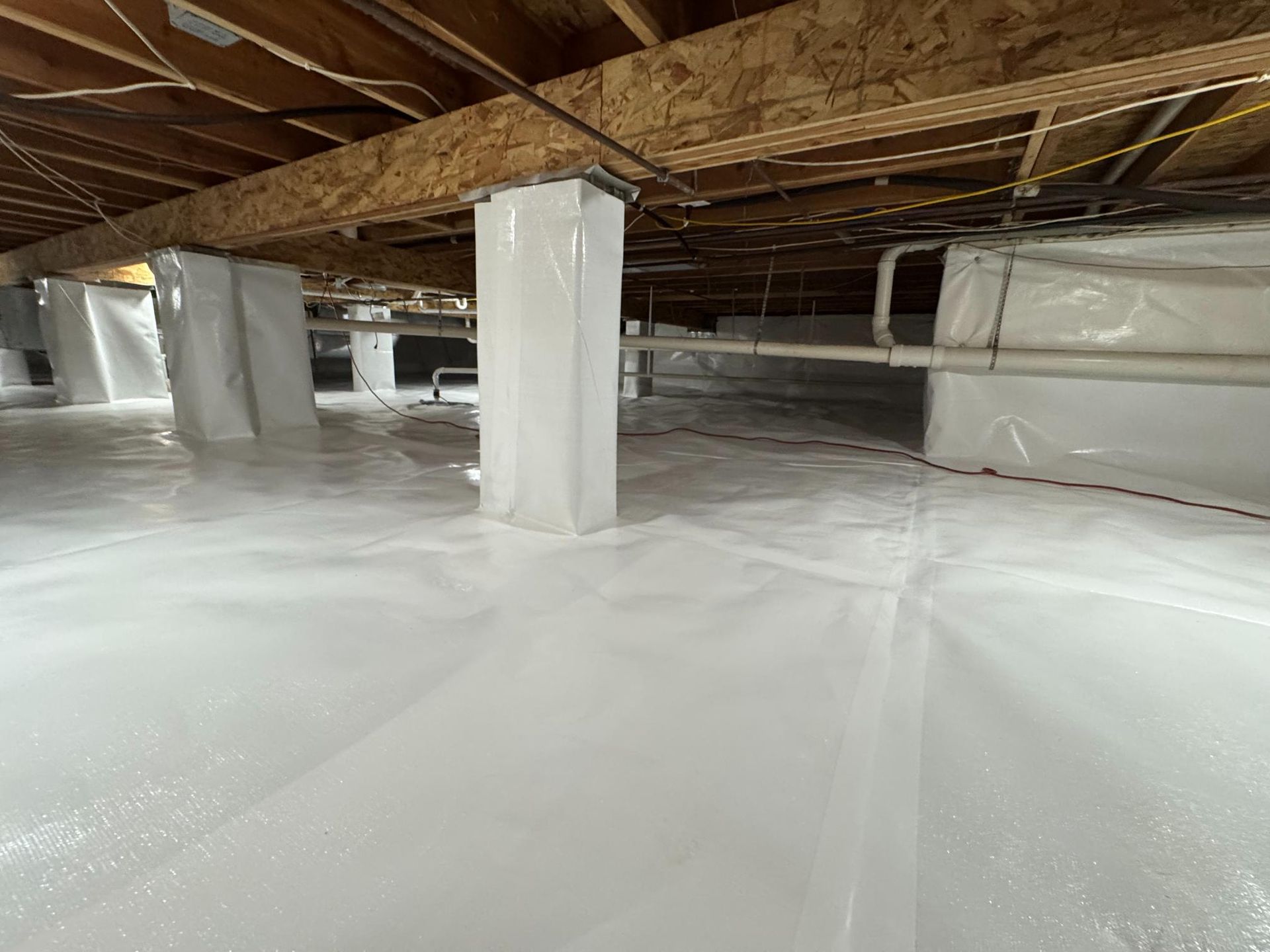
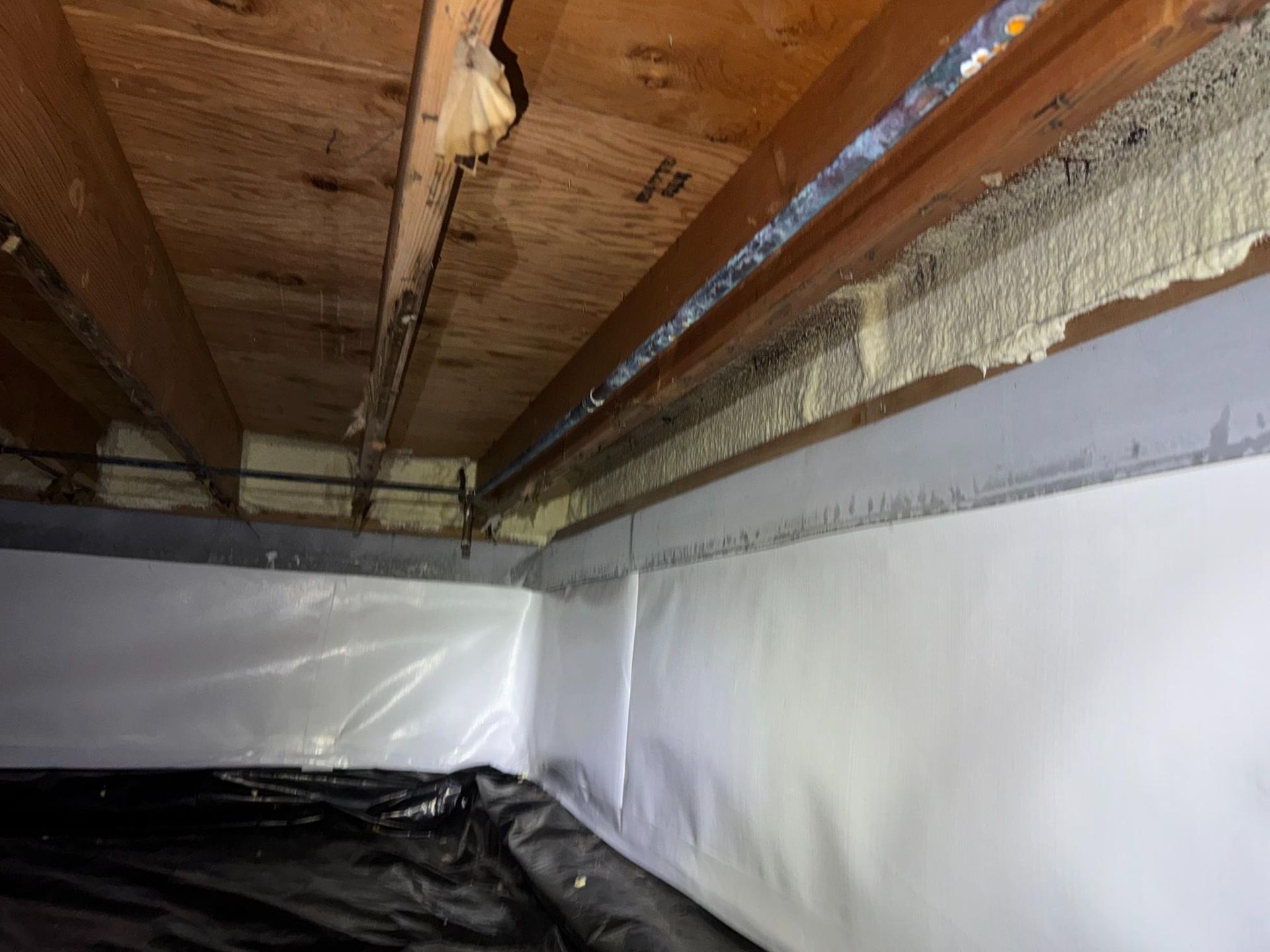
A true encapsulation closes the whole system. The liner runs up the walls, not just across the floor. It gets mechanically fastened so it actually stays in place. Seams and edges get sealed with butyl tape. Spray foam goes in to handle the gaps that tape can't reach.
When it's done right, you've created a controlled environment. The outside air, the ground moisture, the humidity — none of it gets in the way it used to. The space is sealed.
One approach covers the problem. The other one solves it.
Why This Matters More Than You Might Think
Your crawl space isn't separate from the rest of your home. The air down there moves up. Research has suggested that a significant portion of the air in your living space comes from below. That means whatever is happening in your crawl space is eventually happening in your home.
Moisture leads to mold. Mold affects air quality. Poor air quality affects the people living in the house — especially kids, elderly family members, and anyone with allergies or breathing issues.
Beyond air quality, unchecked moisture causes wood to rot. Insulation to sag and fall. Structural components to weaken over time. These aren't dramatic overnight failures. They're slow, quiet problems that get expensive.
The homeowners who feel this the most are the ones who paid for a vapor barrier, thought they were done, and then found out a few years later that nothing had really changed. The moisture was still getting in. It was just getting in through a different door.
That's the job that has to be done twice.
What the Right Job Actually Looks Like
When My Guys shows up to do an encapsulation, the crawl space we leave behind looks nothing like the one we walked into.
We're talking clean. Bright. A liner that runs wall to wall and floor to ceiling. Everything sealed. Everything fastened. A space that is genuinely different — not just covered over.
Homeowners are sometimes surprised by what it looks like when it's done. It doesn't look like a crawl space anymore. It looks like a controlled, maintained part of their home. Because that's what it is.
And that matters. Not just because it looks better. Because it means the problem is actually gone. The moisture isn't sneaking in somewhere else. The air moving up into your living space is cleaner. The wood isn't sitting in a damp environment year after year. You did it once and you did it right.
Before You Sign Anything
If you've gotten quotes and you're trying to figure out what you're actually comparing, here's the simplest thing you can do. Ask each contractor to walk you through exactly what their solution includes. Where does the liner go? How is it attached? What gets sealed and with what?
A contractor who knows what they're doing will be glad you asked. They'll walk you through it without hesitation.
If someone gets vague, or tells you the floor is all you really need, that's information too.
We're always happy to take a look and give you a straight answer about what your crawl space actually needs — no pressure, no scare tactics. Just an honest conversation.
Because you deserve to know the difference between covering the problem and actually solving it.
Book A Free Inspection Now
Your crawl space problems aren't going to fix themselves. But they are fixable. Let's get it done — the right way, permanently.
Or call us directly (217) 863-9559
Not Sure What Your Crawl Space Actually Needs?
You shouldn't have to guess whether you're paying for a temporary cover-up or a solution that actually addresses the problem.
My Guys will take a look at what's happening in your crawl space, explain what we see, and walk you through what makes sense for your home. No pressure. No scare tactics. No selling you work you don't need.
Get a straight answer about your crawl space.
Schedule your crawl space inspection today.