What Happens to Humidity When There's Nowhere for It to Go
When a homeowner finally makes the call, something shifts.
We come out and do a thorough inspection. We get under the home and look at everything — and we show you what we're seeing in real time so there are no surprises when we sit back down with you. You'll know exactly what's down there. You'll know exactly what it takes to fix it. And you'll have a clear picture of what your home looks like after the work is done.
No pressure. No scare tactics. Just an honest look at what's happening and a straightforward plan to address it.
Most homeowners tell us the same thing after that first visit.
They wish they hadn't waited as long as they did.
The Crawl Space Was Encapsulated. So Why Was There Still Mold?
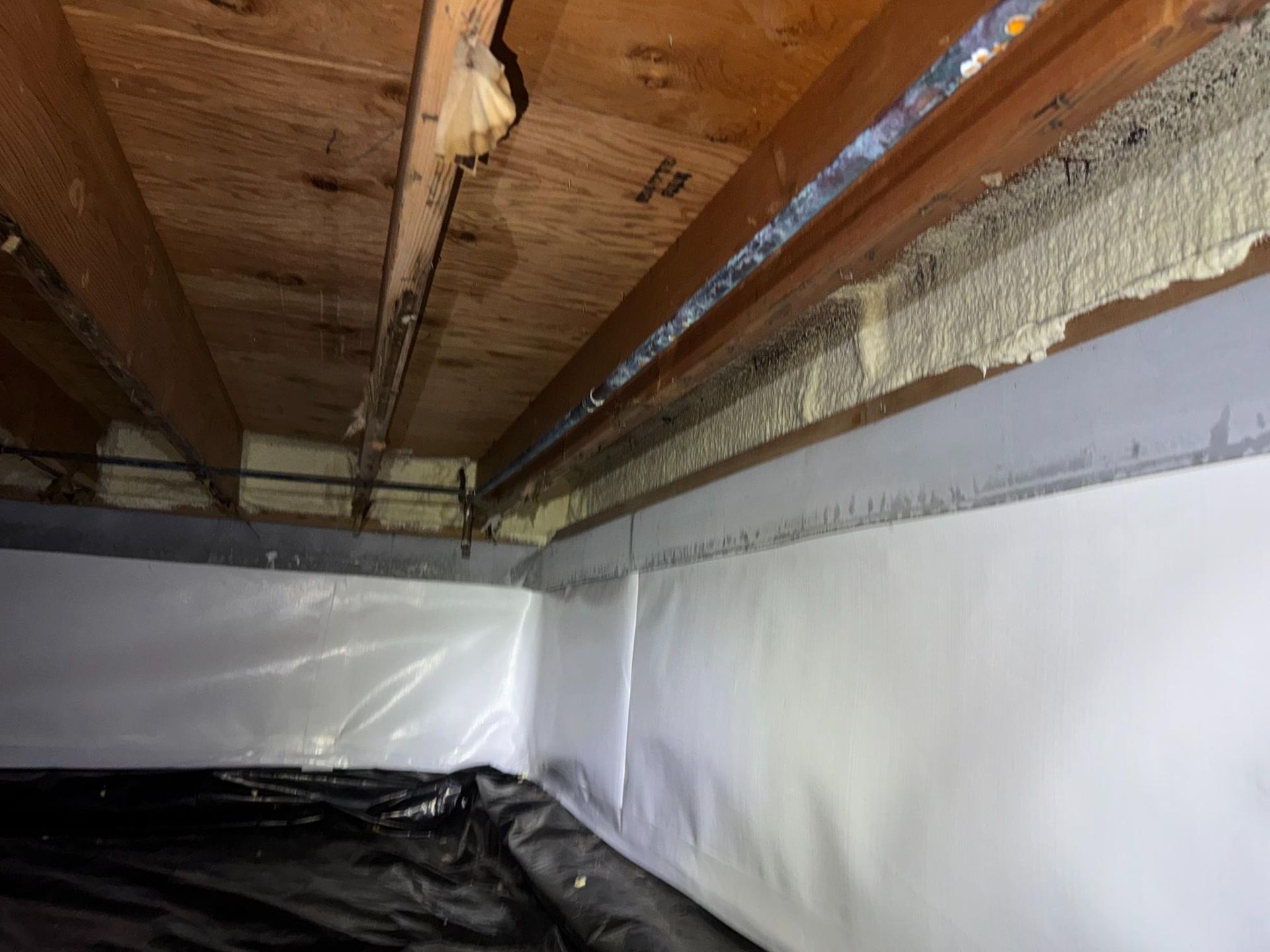
We walked into a crawlspace not long ago that had already been encapsulated.
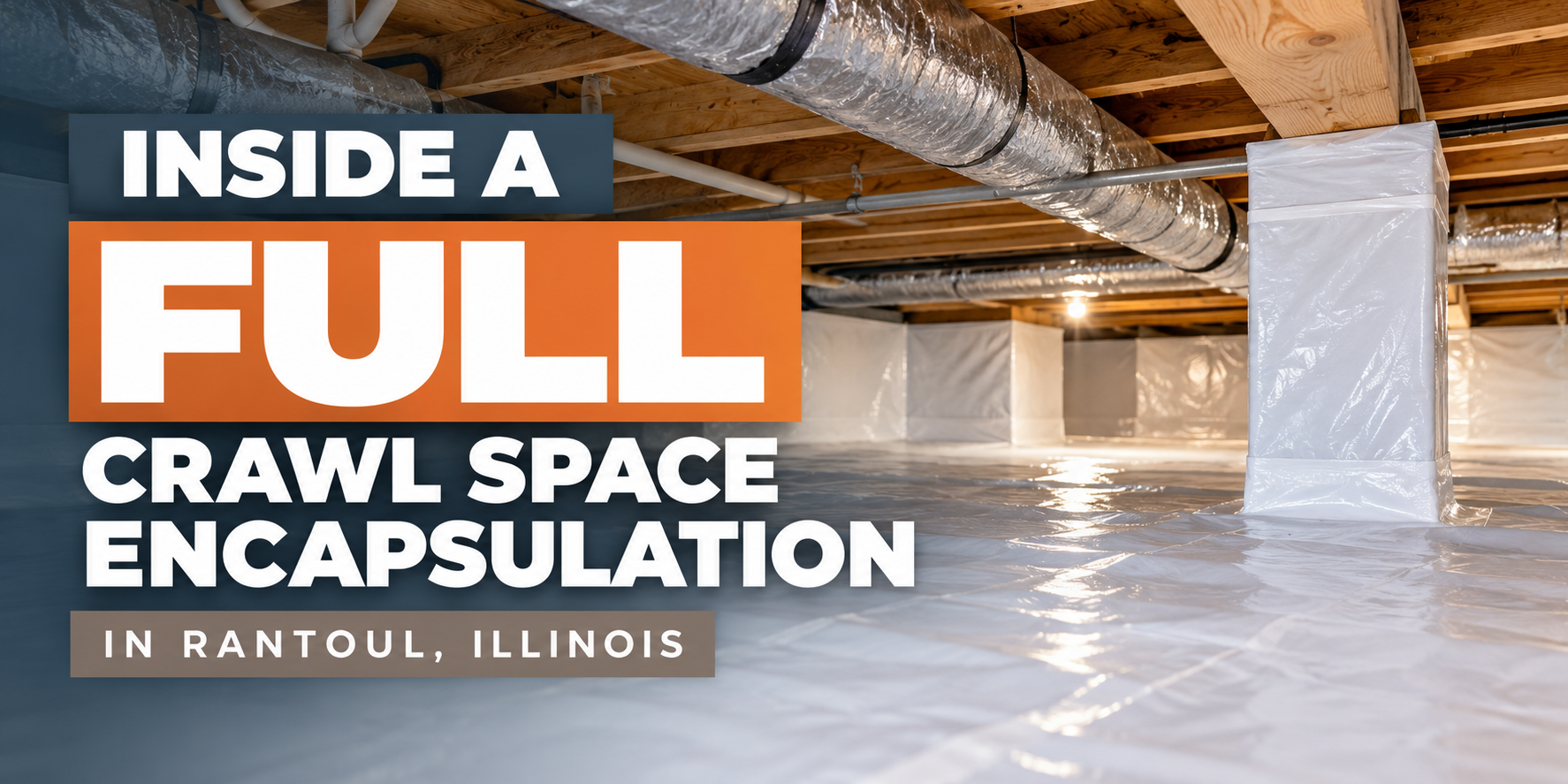
Plastic on the floor. Sealed up. Done — at least that's what the homeowner was told.
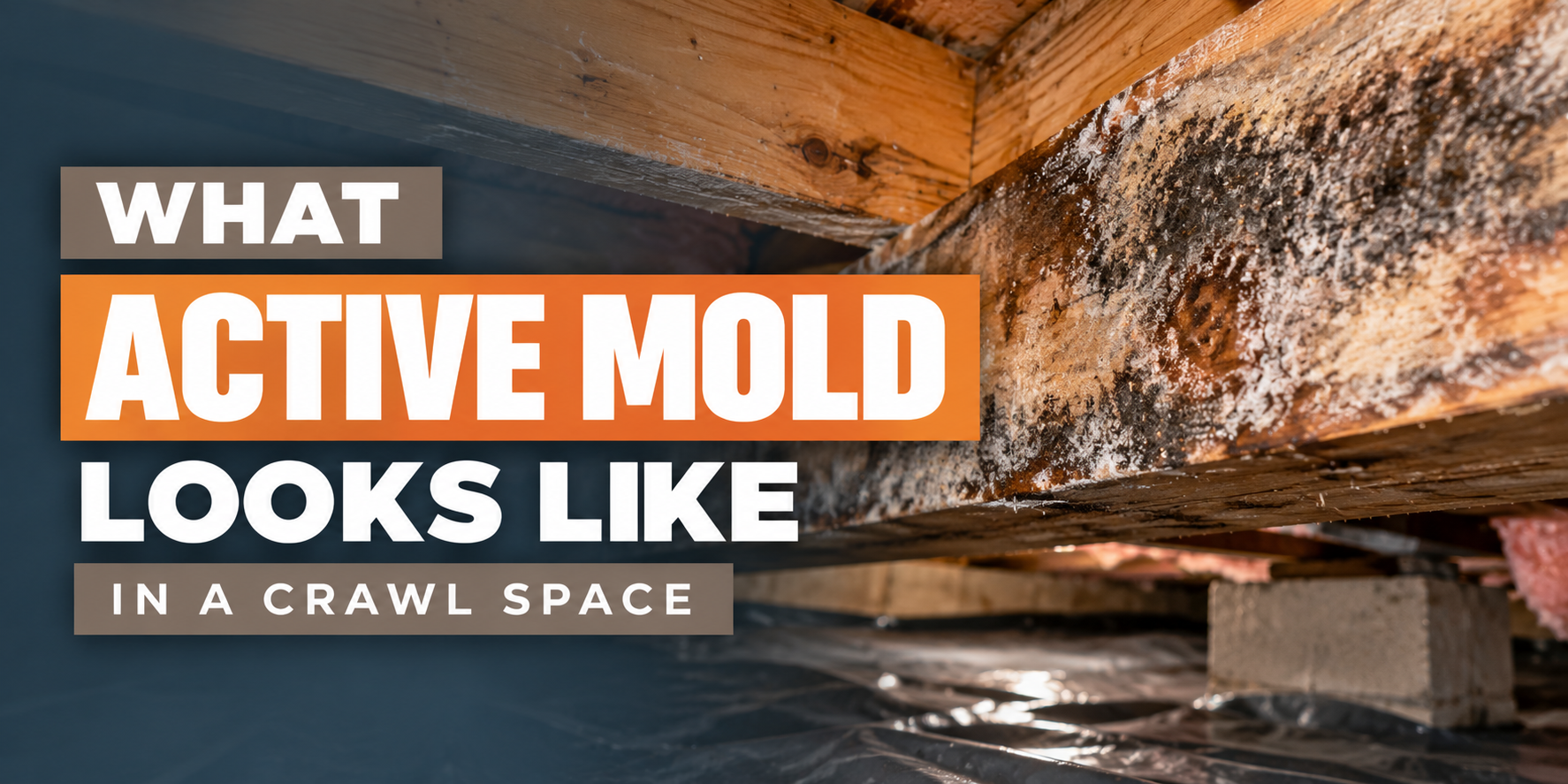
But something was wrong. You could feel it before you even looked around. The air was thick. Heavy. And when we turned on our lights and started looking at the wood above us, there it was.
Mold. On the joists. On the subfloor. On the main beam running through the center of the space.
This wasn't a crawlspace that had been ignored. Someone had already been paid to fix it. And it still ended up here.
Here's why.
Encapsulation Is One Part of the System. Not the Whole Thing.
When most people hear "crawlspace encapsulation," they picture plastic sheeting going down over the ground and up the walls. And that part is real — it matters, and it's an important piece of the puzzle.
But here's what a lot of contractors don't tell you.
Plastic on the floor stops ground moisture from rising up into your crawlspace. That's its job and it does that job well. But it does nothing about the moisture that's already in the air down there. And it does nothing about humid air that's still finding its way in through gaps, vents, or poorly sealed areas.
So what happens to that moisture?
It stays. It builds. It has nowhere to go.
And humid, stagnant air in a dark enclosed space is exactly the environment mold needs to grow.
So What's the Actual Difference?
Think about what a crawlspace is. It's a dark, enclosed space with limited airflow, sitting right on top of the ground. Even with a vapor barrier in place, humidity gets in. It comes through the air. It seeps through imperfect seals. It comes in around pipes and vents and anywhere else there's an opening.
Once it's in, it needs somewhere to go.
Without a dehumidifier actively pulling moisture out of the air, it doesn't go anywhere. The relative humidity in that space just keeps climbing. Wood is porous. It absorbs moisture. And when wood stays damp long enough, mold follows.
That's not a worst case scenario. That's just how it works.
The crawlspace we walked into had exactly this problem. High humidity, no dehumidifier, and moisture still getting in. The encapsulation made it look like the job was done. But the conditions for mold were still sitting there, building up, every single day after that crew left.
What a Complete Job Actually Looks Like
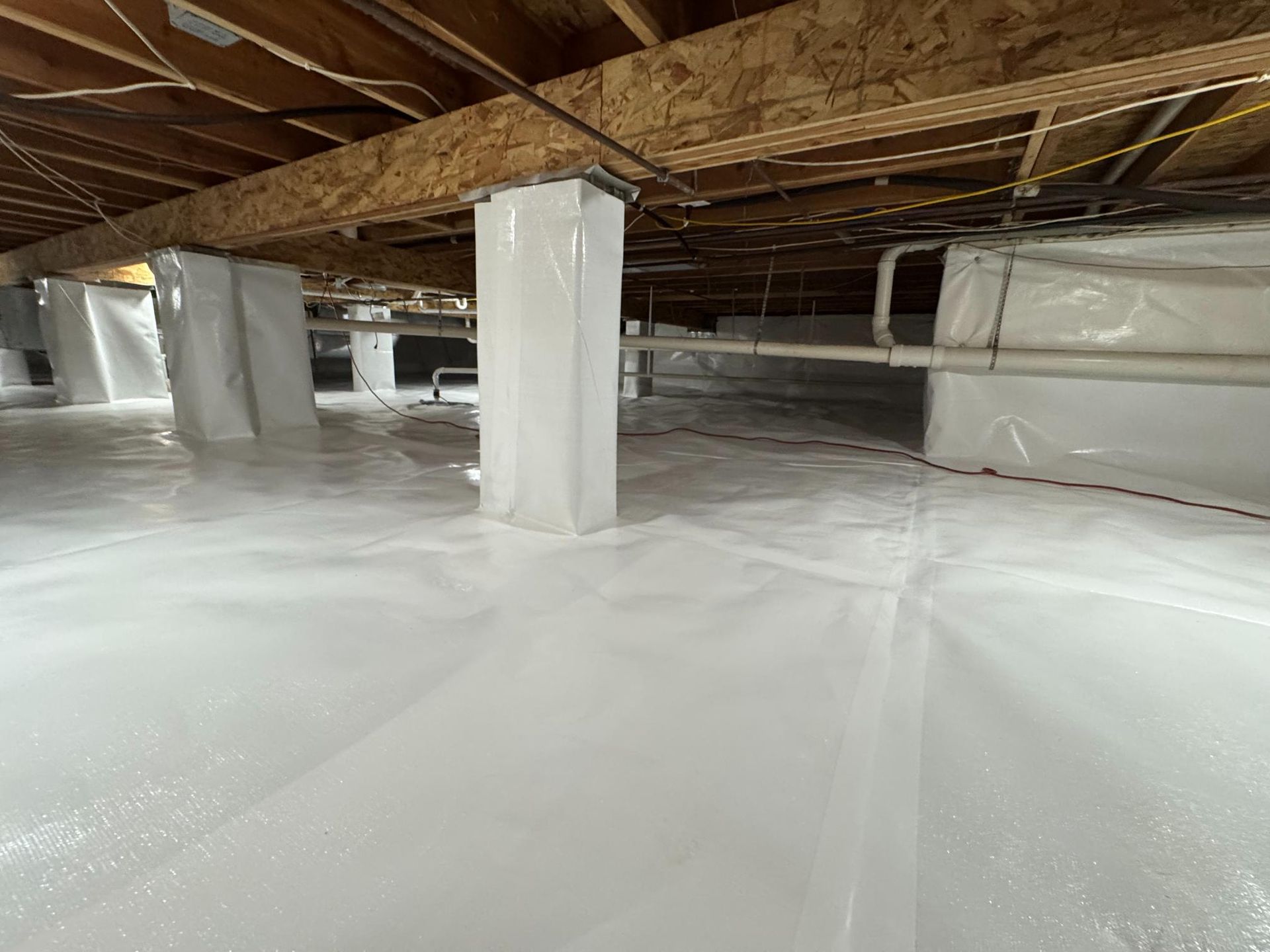
A properly done crawlspace moisture system has three things working together.
First — the vapor barrier. This is the encapsulation layer. It goes on the ground and up the walls and it stops ground moisture from rising. This part most contractors get right.
Second — sealing the entry points. Moisture gets in through vents, gaps, cracks, and poorly sealed areas. A complete job finds those spots and closes them. If you skip this step, you're managing a problem that's still being fed from the outside.
Third — active humidity control. This is the dehumidifier. It runs continuously and pulls excess moisture out of the air inside the crawlspace. This is the piece that makes the whole system work. Without it, the first two pieces are doing an incomplete job.
All three need to be present. If your crawlspace was encapsulated and you're not sure whether a dehumidifier is running down there, that's worth finding out.
The Real Cost of Getting It Wrong
Here's where this gets hard to hear.
The homeowner in that crawlspace paid once already. Now they're looking at paying again — this time to fix the mold, re-do the encapsulation correctly, and add the humidity control that should have been there from the start.
That's the real cost of an incomplete job. Not just the upfront price. The upfront price plus the redo plus whatever damage happened in between.
Mold on joists and subfloor isn't just an air quality issue — though it is that too. It's a structural concern. It's something that affects the integrity of the floor above it. And the longer it goes unaddressed, the more it spreads.
A lower quote that skips the dehumidifier isn't a deal. It's a delay on a larger bill.
What to Ask Before You Sign Anything
If you're currently getting quotes for crawlspace work, or if someone has already done work on your crawlspace and you're not sure what was included, here are a few straightforward questions worth asking.
- Does this job include a dehumidifier, and if not, why not?
- What are you doing to seal moisture entry points — not just the ground?
- How will I know the humidity is being managed after you leave?
A contractor who knows what they're doing will have clear, confident answers to all three. A contractor who gets uncomfortable with those questions is telling you something important.
Book A Free Inspection Now
Your crawl space problems aren't going to fix themselves. But they are fixable. Let's get it done — the right way, permanently.
Or call us directly (217) 863-9559
The Bottom Line
Encapsulation done right protects your home. Encapsulation done halfway creates a different kind of problem — one that hides behind plastic sheeting and builds quietly until someone goes back down there and finds what we found.
If you're not sure what's actually in your crawlspace right now, we're happy to take a look. No pressure, no scare tactics — just a straight answer about what's going on down there and what, if anything, needs to be done about it.
That's what we'd want if it were our home. So that's what we offer yours.