How Professional Crawl Space Work Actually Gets Done
The Morning of Your Crawl Space Project
Good morning from Bloomington. This is Ryan, and we're about to start a crawl space job today. Before the crew digs the first trench or rolls out any vapor barrier, we're doing a complete walkthrough of the property.
Two downspout extensions. Perimeter drain. Sump pump installation. Full encapsulation.
That might not sound exciting, but here's why I'm showing you this: most homeowners have no idea what actually happens during a crawl space project. You write a check, a crew shows up, and a few days later they say it's done. But what happened in between?
This is what professional crawl space work looks like from start to finish. Not the highlight reel—the actual process. The planning, the problem-solving, the steps that matter.
Because when you understand what you're paying for, you can tell the difference between a crew that knows what they're doing and one that's just going through the motions.
Step One: The Site Assessment
We don't just show up with materials and start working. Every job begins with a walkthrough.
Ryan's outside right now checking both downspouts. One's pretty straightforward. The other one? It's going to be a challenge—needs to route through the fence line and along a brick edge to get water far enough away from the foundation. But we've already got a plan that'll work.
Then we check the crawl space access. How easy is it to get materials in and out? Where's the sump pump going? What's the best path for the perimeter drain? Are there obstacles we need to remove first?
On this job, there's shelving that needs to come out before we can trench. Jackson, Dylan, and Dennis are already pulling that out so we can start the drain work clean.
This assessment phase isn't wasted time—it's how we avoid problems later. We're figuring out the best approach before we commit to it. We're thinking through the entire project so the homeowner doesn't pay for our mistakes or our backtracking.
Good work starts with good planning. Always.
Managing Water Outside the House
Before we do anything inside the crawl space, we handle water outside the house.
Those two downspout extensions we talked about? They're not optional. They're the first line of defense against crawl space moisture.
Right now, those downspouts are probably dumping water two or three feet from the foundation. Every time it rains, that water's soaking into the ground right next to the house. Guess where it goes? Straight under your crawl space.
So we extend them. Ten, fifteen feet away from the foundation—far enough that the water disperses before it can work its way back under the house.
The easy one routes along the yard with a clean path. The tricky one has to navigate through a fence line and along a brick edge without tearing up landscaping or creating a trip hazard. That takes some planning and the right materials, but it's worth doing right.
Here's the thing: we could skip this step. We could go straight to encapsulation, seal everything up, and be done faster. The homeowner would never know the difference—until six months later when they're still dealing with moisture issues.
Fixing the water source comes first. Always. If you're pumping water toward your foundation with your gutters, no amount of vapor barrier is going to solve that problem.
Inside the Crawl Space: Drainage System
Now we're inside the crawl space, and the crew's already trenching the perimeter drain.
This isn't a trench in one corner or just where water's pooling. It's the full perimeter—around the entire crawl space. That trench gets filled with gravel and drainage pipe that collects any groundwater trying to get under the house.
All that water flows to a sump basin we're installing in the corner. The basin collects it, the sump pump moves it out, and it gets discharged well away from the foundation—usually into the same system as those downspout extensions.
Jackson, Dylan, and Dennis have already pulled out the old shelving so they can dig without obstacles. They're making sure the trench has the right slope so water actually flows to the basin instead of just sitting in the pipe.
This is the part most homeowners never see. It's dirty, it's labor-intensive, and it doesn't look impressive when you're done because it's all underground. But it's the most important part of the job.
Without proper drainage, your crawl space will keep getting wet. Period. You can have the best vapor barrier money can buy, but if water's still coming in from the ground, you haven't solved anything.
We're not just covering up moisture. We're eliminating the source.
The Encapsulation Process
Only after the drainage is handled do we move to encapsulation.
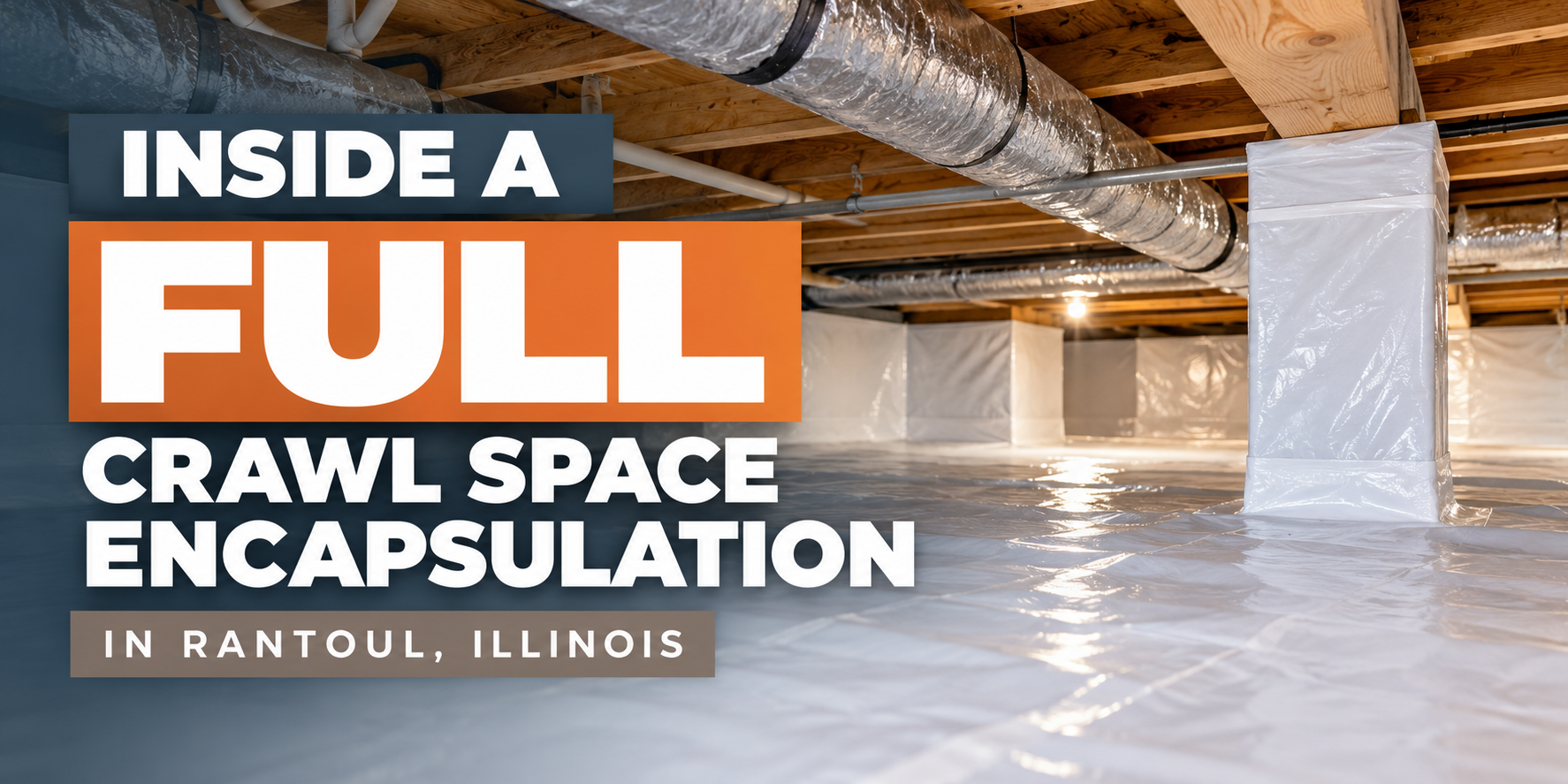
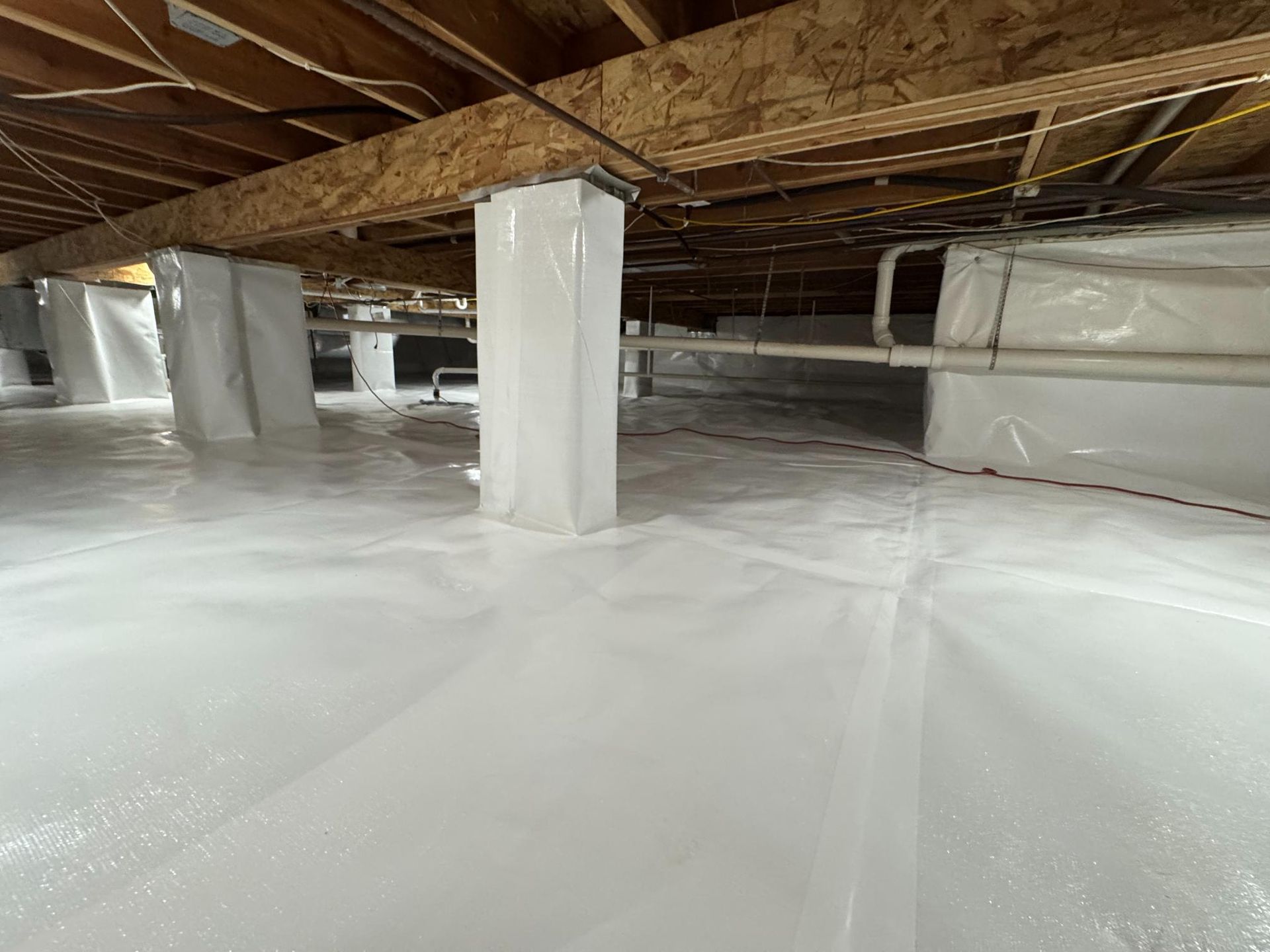
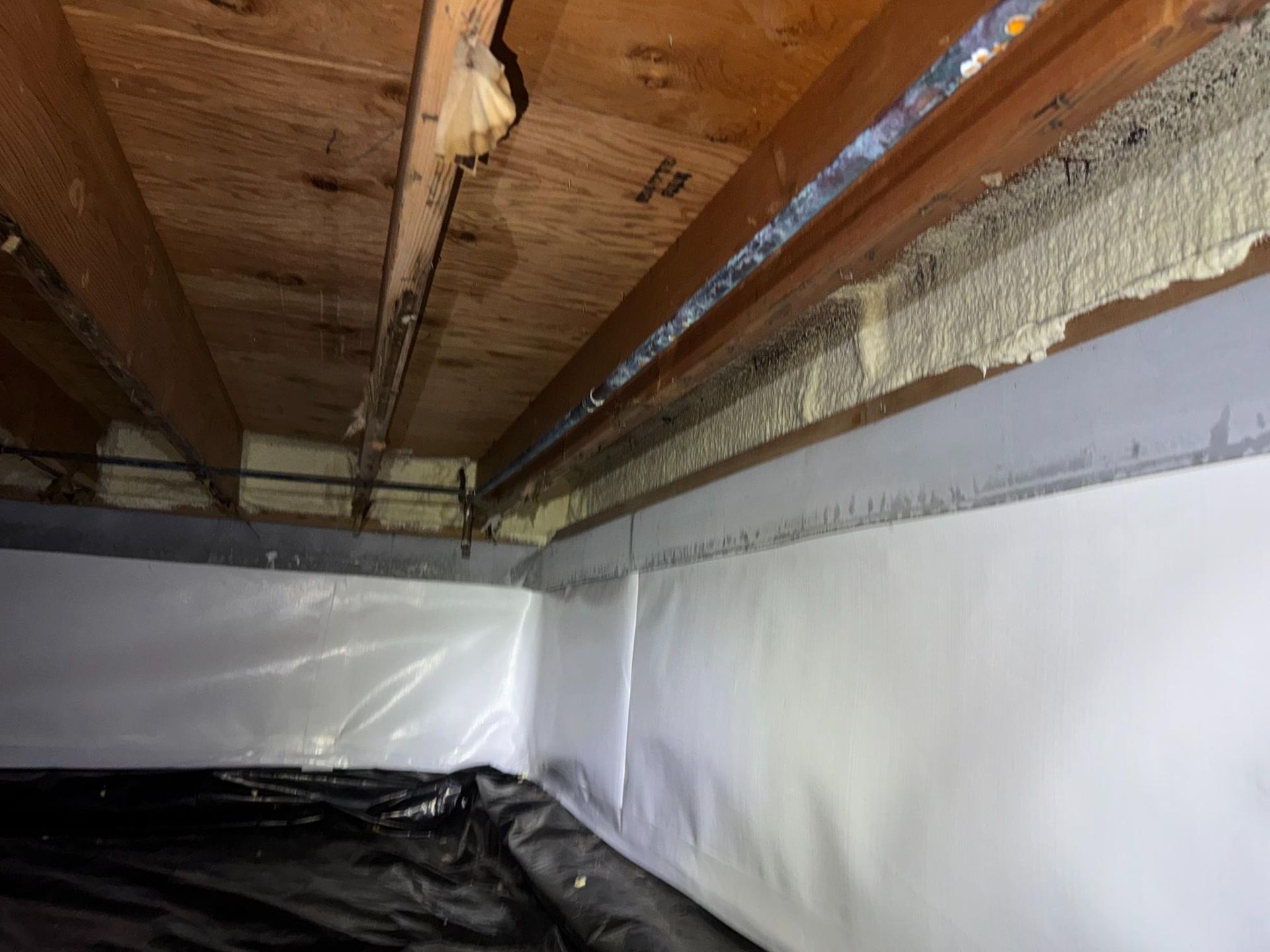
Now we're installing the vapor barrier throughout the entire crawl space. Heavy-duty material, properly sealed at the seams, run up the walls, wrapped around piers. We're sealing vents so outside air stops bringing in humidity. We're addressing any penetrations in the foundation.
And we're installing lighting throughout the space—not just one bulb by the access point, but actual visibility so future contractors can see what they're doing when they need to work down there.
This is the part that looks impressive. Clean, bright, white vapor barrier. A crawl space you could actually walk through without feeling like you're in a horror movie.
But here's what matters: this only works because we did the drainage first.
If we'd just thrown down plastic without fixing the water issues, we'd be sealing moisture into the space. The homeowner would still have problems—mold, odors, deteriorating materials—they'd just be happening under a nice-looking vapor barrier.
The order matters. Drainage first, encapsulation second. That's how you actually solve crawl space problems instead of just hiding them.
What You Should See from Your Contractor
If you're hiring someone for crawl space work, here's what professional service looks like:
They should walk the property with you before starting. Explain what they're going to do and why. Show you where the downspouts will route, where the sump pump will go, how the drainage system will work.
You should know who's on the crew. Not just "we're sending a team"—actual names, actual accountability. On this job, it's Ryan doing the walkthrough, Jackson, Dylan, and Dennis handling the install work.
Throughout the day, you should get updates. Not radio silence until they knock on your door asking for final payment.
And when they're done, they should invite you to inspect the work. Show you the finished crawl space, walk you through what they did, answer your questions.
Red flags? Crews that just show up and start digging without explanation. Contractors who won't tell you who's working on your house. Companies that rush you through the final walkthrough or discourage you from looking at the finished work.
Good contractors want you to see what you paid for. Because good work looks good.
The Central Illinois Difference
We keep our crews small and local for a reason.
Ryan, Jackson, Dylan, Dennis—these aren't random subcontractors we hired last week. They're our team. They know our standards. They know how we do things. And they know that if something's not right, we're going to hear about it.
When you're owner-operated in a small community, your reputation isn't just business. It's personal. We live here in Mahomet, work throughout Bloomington and Central Illinois. We see our customers around town.
That changes how we approach every job.
If a challenge comes up mid-project—like that tricky downspout route—we don't just pick the fastest solution. We figure out the right solution. We don't rush to the next job because we've got ten more lined up across three counties.
Big companies can send different crews, lose accountability, and move on if something goes wrong. We can't. And honestly, we don't want to.
We're building a business on quality work and word of mouth. Every crawl space we touch is either building our reputation or damaging it. So we do it right.
Book A Free Inspection Now
Your crawl space problems aren't going to fix themselves. But they are fixable. Let's get it done — the right way, permanently.
Or call us directly (217) 863-9559
Ready to See How It's Done?
If you're dealing with crawl space moisture, musty smells, or you just want to know what's actually happening under your house, give us a call.
We'll come out, do a complete inspection, and walk you through exactly what we'd recommend—and why. You'll understand the process before we start, and you'll see the quality when we're done.
No pressure, no gimmicks. Just honest answers from people who actually do the work.
Get Your Free Crawl Space Inspection