The Real Reason Your Crawl Space Has Moisture
It's Not a Leak—It's the Ground Beneath Your House
I get asked all the time: "Why does my crawl space have moisture?"
Most homeowners assume it's a leak. Or maybe the house was built wrong. Or they just got unlucky.
Here's the truth: if you live in Central Illinois, crawl space moisture isn't bad luck. It's geography.
Our water table sits high. Our soil doesn't drain well. And your crawl space is built right in the zone where groundwater naturally accumulates. That's not a defect—that's just how things work around Champaign-Urbana, Mahomet, and the surrounding areas.
Once you understand why moisture happens, the solution makes a lot more sense. And you'll stop blaming yourself for a problem that was always going to be there.
The Central Illinois Water Table Reality
Let's start with what a water table actually is: it's the level underground where the soil is completely saturated with water. Dig below that line, and you hit water.
Around here, that line sits somewhere between 2 and 10 feet below the surface, depending on exactly where you are.
Want to test it? Start digging a hole in your yard. Two feet down, you might already see water seeping in. Go deeper, and you definitely will. That's how shallow our water table is.
Compare that to other parts of the country where the water table might be 50 feet down, or even deeper. In those areas, crawl space moisture is unusual. Around here? It's physics.
And it's not just the water table. We've got clay-heavy soil that doesn't drain well. When it rains, that water doesn't soak down and disappear. It sits in the soil, right around your foundation, looking for somewhere to go.
So when someone tells me their crawl space has moisture issues, I'm not surprised. I'd be more surprised if it didn't, especially if nothing was done to manage groundwater when the house was built.
This isn't about poor construction or bad materials. It's about building a house in an area where water naturally wants to be underground.
Your Crawl Space Sits Right in the Water Zone
Now think about how deep your crawl space goes.
A typical crawl space is about 5 feet deep. The footer—the concrete base your foundation walls sit on—goes even deeper than that. Which means you're building right in that 2 to 10-foot zone where groundwater naturally accumulates.
Your house might have been bone dry when it was built. The builder dug the hole, poured the foundation, framed the house, and everything looked perfect. No water in sight.
But groundwater doesn't stop. It's always there, always moving through the soil, always putting pressure on anything below ground. Your foundation walls aren't keeping water out forever—they're just holding it back temporarily.
Over time, that constant pressure finds the tiny cracks, the seams, the spots where water can seep through. It's not dramatic. There's no flood. Just slow, steady moisture working its way into your crawl space because that's where the water table sits.
This isn't a flaw in your house. It's just reality when you build below the water table in Central Illinois.
The Five Ways Moisture Gets In (But One Matters Most)
There are actually five ways moisture can get into a crawl space:
Groundwater seepage through your foundation. Rainwater that's not properly directed away from your house. Condensation from temperature differences. Plumbing leaks. And humidity from the outside air.
But around here, groundwater seepage is the big one.
And it gets worse when your grading is off. If the soil around your foundation slopes toward your house instead of away from it, every time it rains, water runs right up against your foundation and soaks into the ground there.
Same thing with downspouts. If they're not buried and draining water at least 10 feet away from your house, all that roof runoff is dumping right next to your foundation. Soaking in. Adding to the groundwater pressure. Making the seepage worse.
So you end up with this compounding problem: high water table, clay soil that holds water, poor grading, and downspouts feeding water right where you don't want it.
Fixing just one of those things doesn't solve the problem. You can bury your downspouts, but if groundwater is still seeping through your foundation, you've still got moisture. You can seal your foundation, but if water's pooling around it because of bad grading, you're just delaying the inevitable.
It all works together. And that's why the solution has to address the whole system, not just one piece.
Why "Wait and See" Doesn't Work
Here's the thing about crawl space moisture: it's not dramatic.
You're not going to wake up to a flooded crawl space (usually). There's no burst pipe, no emergency. Just slow, steady dampness that builds up over time.
And that's exactly why waiting is a problem.
By the time you notice standing water, the moisture has been there for months. Maybe years. Your floor joists are already soft. Your insulation is sagging and useless. Mold is growing on the wood framing. The air quality in your house has already been affected.
That musty smell that comes and goes? That's not normal. That's mold spores in your air.
Those soft spots in your floor upstairs? That's moisture damage to the framing underneath.
The longer you wait, the more expensive the fix becomes. Because now you're not just solving a moisture problem—you're repairing the damage it caused.
Early intervention isn't about preventing a future problem. It's about stopping a current problem before it gets worse. The moisture is already there. The question is whether you catch it now or later.
What Actually Solves Central Illinois Crawl Space Moisture
You can't change the water table. That's geology, and it's not going anywhere.
But you can manage where water goes and what happens when it gets to your foundation.
First, proper grading and drainage. Get water away from your house. That means downspouts buried and draining at least 10 feet out. It means making sure the soil slopes away from your foundation, not toward it. Every gallon of water you keep away from your foundation is one less gallon trying to seep into your crawl space.
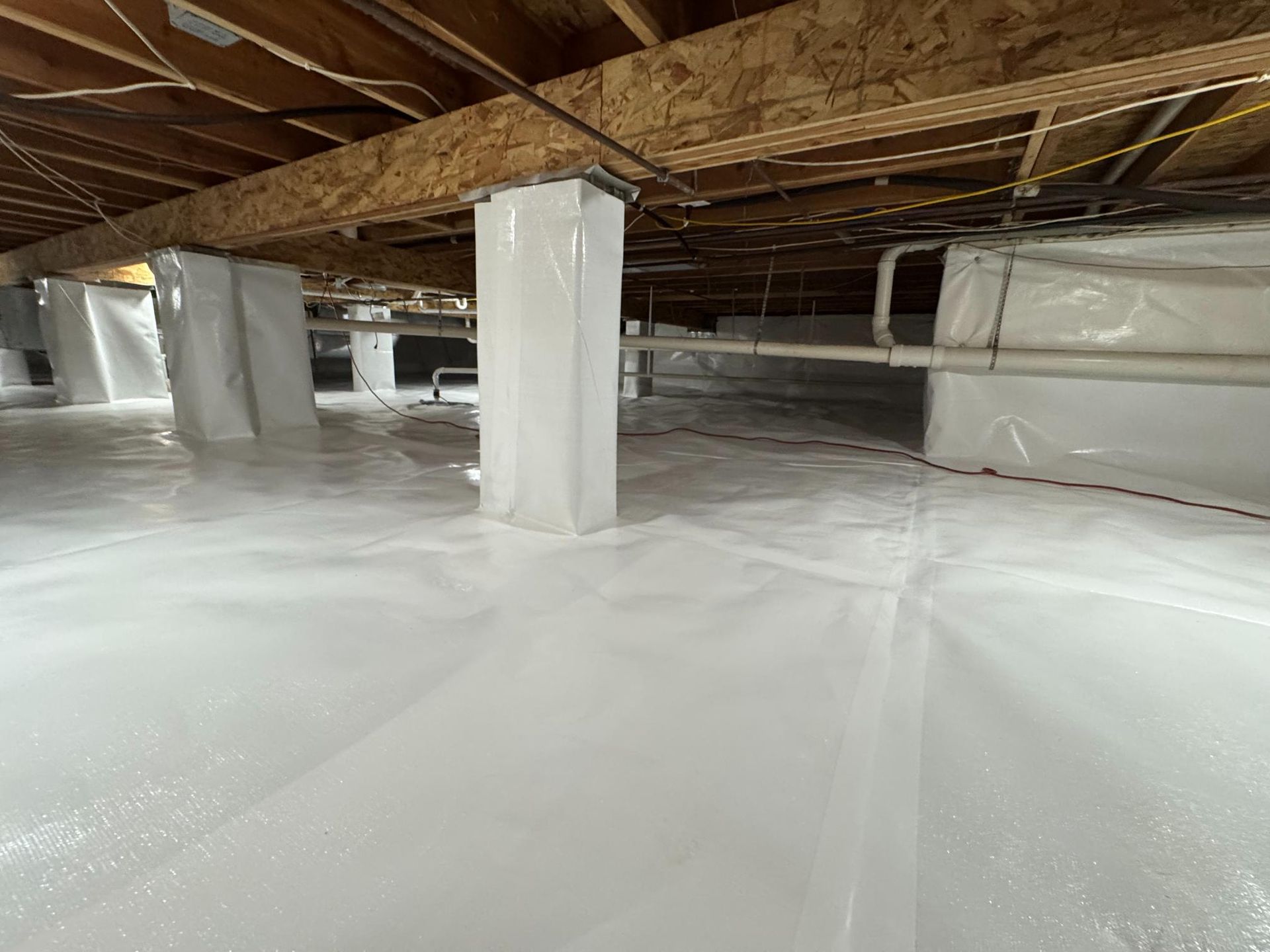
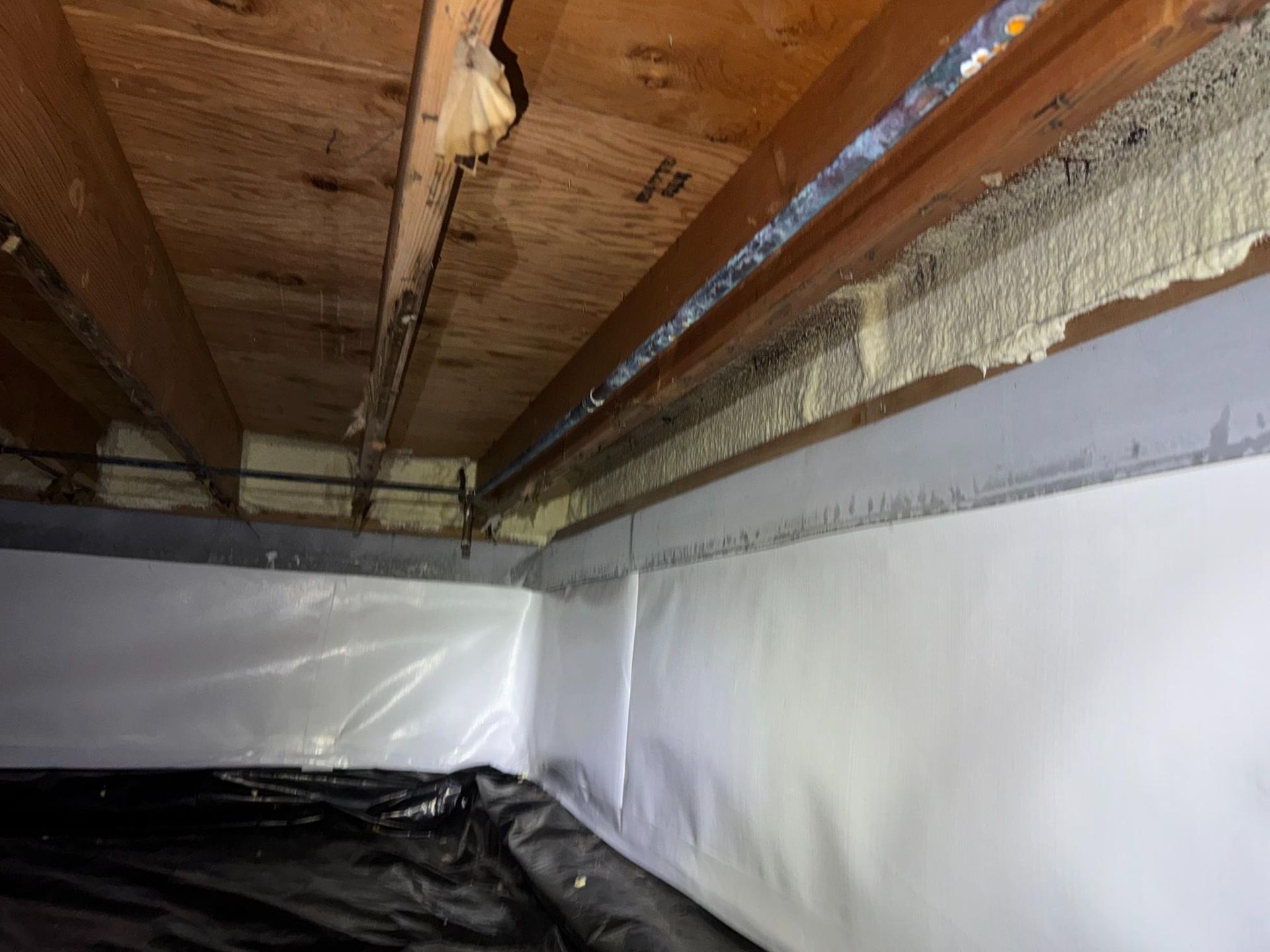
Second, crawl space encapsulation. A proper vapor barrier system that seals your crawl space from ground moisture. Not just a sheet of plastic thrown down—a complete system that's sealed at the seams, attached to the walls, and actually stops moisture from coming up through the floor.
Third, dehumidification. Even with everything else done right, you've still got humidity. A good dehumidifier keeps moisture levels low enough that mold can't grow and wood stays dry.
Here's what doesn't work: doing just one of these things and hoping for the best.
Burying your downspouts won't stop groundwater seepage. A vapor barrier alone won't handle drainage issues. A dehumidifier can't keep up if water's actively coming in.
You need a comprehensive approach that addresses the whole problem. Because around here, crawl space moisture isn't one issue—it's several issues working together.
Why Local Experience Matters
Not all crawl space problems are the same. What works in Arizona doesn't work here. What works in Georgia might not work in Central Illinois.
Our water table is different. Our soil composition is different. Our weather patterns are different. And that means the solution has to be different too.
Chris and I have lived in Mahomet our entire lives. We've been under hundreds of crawl spaces in Champaign-Urbana and the surrounding areas. We know exactly how water moves through our soil. We know where the water table sits in different parts of town. We've seen what works and what doesn't.
When a big national company sends a crew through here, they're using the same approach they use everywhere. Cookie-cutter solutions that don't account for our specific conditions.
We're not guessing about what works in Central Illinois. We know. Because we've done this work here, in this soil, with this water table, for years.
That local knowledge matters. It's the difference between a system designed for "crawl spaces in general" and one designed specifically for the ground conditions under your house.
Book A Free Inspection Now
Your crawl space problems aren't going to fix themselves. But they are fixable. Let's get it done — the right way, permanently.
Or call us directly (217) 863-9559
Understanding Your Crawl Space
If you're dealing with musty smells, visible moisture, or you just want to understand what's happening under your house, give us a call.
We'll come out and do a thorough inspection. We'll show you exactly where moisture is coming from - whether it's groundwater seepage, drainage issues, or something else. And we'll explain what we'd recommend based on your specific situation and what we know works in this area.
No pressure. No gimmicks. Just honest answers from someone who's spent years working on Central Illinois foundations and understands exactly what you're dealing with.
Because moisture problems don't fix themselves. And the sooner you understand what's happening, the easier and less expensive the solution is.