The Crawl Space Misconception Every Homeowner Believes
When Dry Weather Feels Safe (But Isn't)
It's been a beautiful stretch of dry weather here in Central Illinois. The kind where you're not thinking about crawl space problems at all.
And that's exactly the misconception I want to talk about.
Most homeowners believe that when it's dry outside, their crawl space is fine. No rain means no water getting in, right? So there's nothing to worry about until the next storm.
I've been doing this work long enough to tell you: that thinking actually sets you up for bigger problems.
Dry weather doesn't mean your crawl space is safe. In fact, what's happening to the soil around your foundation right now is creating pathways for even more moisture to get in the next time it rains. And when homeowners finally call us after that next storm, they're often shocked by how much worse it is than before.
Let me explain what's really going on.
The Misconception Most Homeowners Believe
Here's what we hear all the time: "It hasn't rained in weeks, so my crawl space should be fine."
It makes sense on the surface. No rain equals no water. No water equals no crawl space problems. So why would you even think about what's happening under your house during a dry spell?
This is when homeowners stop checking their crawl space. They stop thinking about moisture issues. They stop worrying about what might be happening down there. The problem feels solved because there's no immediate evidence of water.
But that false sense of security is exactly what gets people into trouble.
Because while you're not thinking about your crawl space, the soil around your foundation is changing. It's shrinking. It's creating gaps. It's setting up conditions for the next rainfall to bring more water into your crawl space than you've ever seen before.
And when that happens, homeowners call us saying, "I don't understand—it was fine all summer, and now suddenly it's flooded." It's not sudden. It's been building up the whole time you thought everything was okay.
What Actually Happens When Soil Dries Out
Think about a wet paper towel for a second. When it's soaked, it swells up—gets thicker, heavier, expands. Then when it dries out, it shrinks back down. Gets thinner, pulls in on itself, contracts.
Soil does the exact same thing.
When the ground around your foundation is saturated, it swells. It's pressed up against your foundation walls, dense and compact. But when we go through a dry period like we're in now, that soil starts to shrink. It pulls away from your foundation. It contracts around your footer. It creates gaps that weren't there before.
Those gaps are the problem.
Because when the next rain comes—and it will—water doesn't have to force its way through dense, saturated soil anymore. It's got easy pathways straight to your crawl space. Through those gaps along your foundation wall. Through the spaces that opened up as the soil pulled away. Through cracks that are now exposed instead of sealed by compact earth.
So instead of soil acting like a barrier that water has to work through, it becomes a highway system directing water right where you don't want it.
This is the dry-wet cycle that causes cumulative damage over time. Every dry period creates new pathways. Every wet period sends more water through those pathways. And each cycle makes the problem a little bit worse than it was before.
Why Crawl Spaces Flood Worse After Dry Spells
Here's a pattern we see over and over: a homeowner will call us after a heavy rain and say their crawl space has never flooded this bad before. When we ask about their history, they'll tell us it's been dry for months and this was the first real rain they've had.
That's not a coincidence.
The dry period set them up for the flood.
Water always takes the path of least resistance. During normal conditions, it has to work through soil, find its way around your foundation, seep through slowly. But after soil has shrunk and pulled away? Water's got a clear shot.
I've seen crawl spaces that had minor seepage for years suddenly take on several inches of standing water after a long dry spell followed by heavy rain. The homeowners are baffled because "it's never been this bad before." But what changed wasn't the amount of rain—it was the soil's ability to channel that rain directly into the crawl space.
We see this constantly in Mahomet and across Central Illinois. A dry summer followed by fall rains, and suddenly we're getting calls from homeowners dealing with flooding they've never experienced in the ten years they've lived there.
The "worse than last time" phenomenon isn't random. It's the result of soil shrinkage creating better and better pathways for water with each cycle.
Why Dry Weather Is Actually the Best Time for Inspections
Most of our emergency calls come right after heavy rains. That's when homeowners see standing water and panic. And we'll absolutely come out and help in those situations.
But here's what I always wish homeowners knew: the best time to inspect your crawl space is actually when it's dry.
Because when there's no active moisture down there, we can see everything. We're not wading through standing water or trying to navigate mud. We can move around the entire space. We can get into corners and tight spots. We can document everything properly with clear photos and video.
And here's the thing people don't realize—the evidence of moisture problems doesn't disappear just because it's currently dry.
We can see water staining on your foundation walls that shows exactly how high water has gotten in the past. We can spot efflorescence (that white, chalky stuff) that indicates where moisture is wicking through your concrete. We can identify mold growth patterns and soil erosion that tell us the whole story of what's been happening under your house.
All of that evidence is easier to see and document when conditions are dry. When there's active flooding, we're dealing with the immediate crisis. When it's dry, we can be detectives and figure out exactly where problems are coming from and where they'll come from next.
That's how we design solutions that actually work long-term instead of just bailing you out of the current emergency.
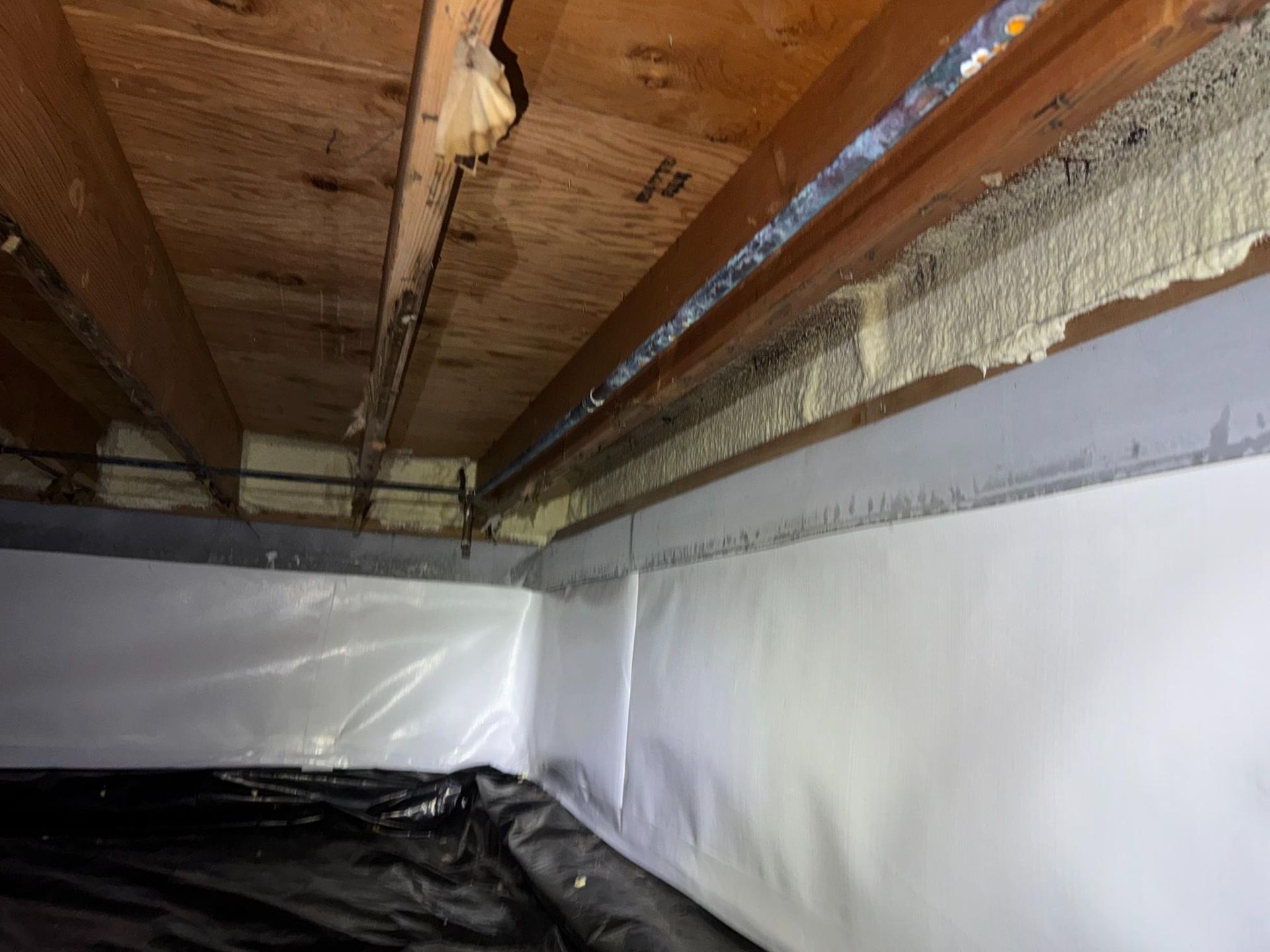
What We Look For During Dry Weather Inspections
When we do an inspection during dry conditions, we're looking for evidence that tells us the full story of what's been happening—and what's going to happen next time it rains.
Water staining on foundation walls shows us exactly how high moisture has gotten in the past. Those stains don't lie. They're a historical record of every time water made it into your crawl space.
Efflorescence—that white, chalky deposit you sometimes see on concrete—tells us where moisture is actively wicking through your foundation. It's a mineral residue left behind when water evaporates, and it's a clear sign of ongoing moisture movement.
We look at soil erosion patterns to understand how water flows around and under your foundation. Where has soil washed away? Where are the low spots? Where does water naturally want to go?
We document any previous moisture damage—wood rot, mold growth, deteriorating insulation. All of it visible and easier to photograph when it's not actively wet.
And most importantly, we identify every potential entry point. Every crack, every gap, every vulnerability where the next rainfall will try to get in.
That complete picture is what lets us design a real solution instead of just guessing.
The Difference Between Emergency Calls and Prevention
There's a big difference between calling us during a crisis and calling us during a calm period.
When you call after your crawl space floods, you need help right now. You're stressed. You're making decisions under pressure. And honestly, you're probably going to pay more because emergency work costs more. Plus, our availability is limited because everyone else just got flooded too.
When you call during dry weather, you're in control. You can schedule at your convenience. We can take our time doing a thorough inspection. You can think through your options without water actively coming in. And you get to make an informed decision instead of a panicked one.
The homeowners who never have crawl space emergencies? They're the ones who handled it during the dry months.
They saw the warning signs. They got the inspection. They installed a proper system before the next weather pattern hit. And now when it rains, they don't even think about their crawl space because they know it's handled.
That's the difference between reacting to problems and preventing them. And prevention is always cheaper, less stressful, and more effective.
Book A Free Inspection Now
Your crawl space problems aren't going to fix themselves. But they are fixable. Let's get it done — the right way, permanently.
Or call us directly (217) 863-9559
Schedule a Free Crawl Space Inspection
Right now, we're in that perfect window here in Central Illinois. Conditions are dry, crawl spaces are accessible, and we can do the kind of thorough inspection that sets you up for success.
Give us a call and we'll come do a complete assessment of your crawl space. Chris or I will personally walk through, document everything we find, and explain exactly what's going on under your house. No pressure, no gimmicks—just an honest evaluation.
We'll show you where moisture has been, where it's likely to come in next, and what a proper solution looks like for your specific situation.
Don't wait until the next heavy rain to find out your crawl space has a problem. Let's catch it now while conditions are ideal and we can actually do something about it before it becomes an emergency.