What a Storm Revealed Under This Urbana Home
When a homeowner finally makes the call, something shifts.
We come out and do a thorough inspection. We get under the home and look at everything — and we show you what we're seeing in real time so there are no surprises when we sit back down with you. You'll know exactly what's down there. You'll know exactly what it takes to fix it. And you'll have a clear picture of what your home looks like after the work is done.
No pressure. No scare tactics. Just an honest look at what's happening and a straightforward plan to address it.
Most homeowners tell us the same thing after that first visit.
They wish they hadn't waited as long as they did.
When the Storm Showed What Years of Living There Didn't
This Urbana couple had owned their home for a long time. They knew something was going on under the house. They just didn't know how bad it was.
Then a storm hit. And suddenly what had been a nagging feeling became something they couldn't ignore anymore.
Here's the thing about crawl space problems: they don't announce themselves. They hide. Water finds its way in slowly. Old pipes deteriorate quietly. Moisture builds up over months and years without a single obvious sign upstairs.
Until something forces the issue.
For this family, that something was a storm. And the timing actually couldn't have been better—because they were in the middle of passing this home down to their daughter and son-in-law. If they were going to fix it, now was the time.
The Problem With "Out of Sight, Out of Mind"
Most homeowners never go into their crawl space. Not once. And honestly, that makes sense—it's dark, it's tight, and nothing seems wrong from upstairs.
But here's what's happening while nobody's looking.
Moisture is getting in. Maybe through vents, maybe through the soil, maybe through small gaps around old pipes. It builds up slowly, raising the humidity level under your home. Over time that humidity starts affecting your floor framing. It creates the conditions mold needs to grow. It sends musty air up into your living space.
And because none of this is visible from inside the house, it just keeps going.
This couple had lived with it for years without realizing the full extent of what was happening. It wasn't neglect. It was just the reality of owning a home with a crawl space that nobody ever properly addressed.
A storm changed that. One heavy rain event showed them exactly where water was getting in and made it impossible to ignore any longer.
That's usually how it goes. Not a gradual realization—a moment that forces the conversation.
What the Inspection Actually Found
When we got under this house, the picture became a lot clearer.
Water was getting in through specific entry points that hadn't been properly addressed. Old pipes needed to be capped. The existing vapor barrier—whatever was left of it—was deteriorating and doing almost nothing at this point. Humidity levels were higher than they should be, and you could see the evidence of that in the condition of the wood.
This is what a real inspection looks like. Not a twenty minute walk-through with a headlamp and a clipboard. We document what we find, show the homeowner exactly what we're seeing, and explain why each issue matters.
For this family, it wasn't just one problem. It was several things working against each other. Water entry, failing vapor barrier, no drainage system, no way to manage humidity long term.
Each one on its own is manageable. Together they create a crawl space that's actively working against the health of the home.
The good news: every single one of those problems has a solution.
What a Complete System Actually Means
This is where a lot of contractors get it wrong.
They'll come in, throw down some vapor barrier, and call it a day. But vapor barrier alone doesn't solve a moisture problem. It's one piece of a system that only works when everything is in place.
Here's what a complete solution looks like for this Urbana home:
Drainage system. We're cutting trenches along the perimeter of the crawl space and installing a drainage channel that directs water to the sump pit instead of letting it sit on the ground.
Sump pump. That water needs somewhere to go. The sump pump collects it and moves it out of the crawl space automatically, even during heavy rain events.
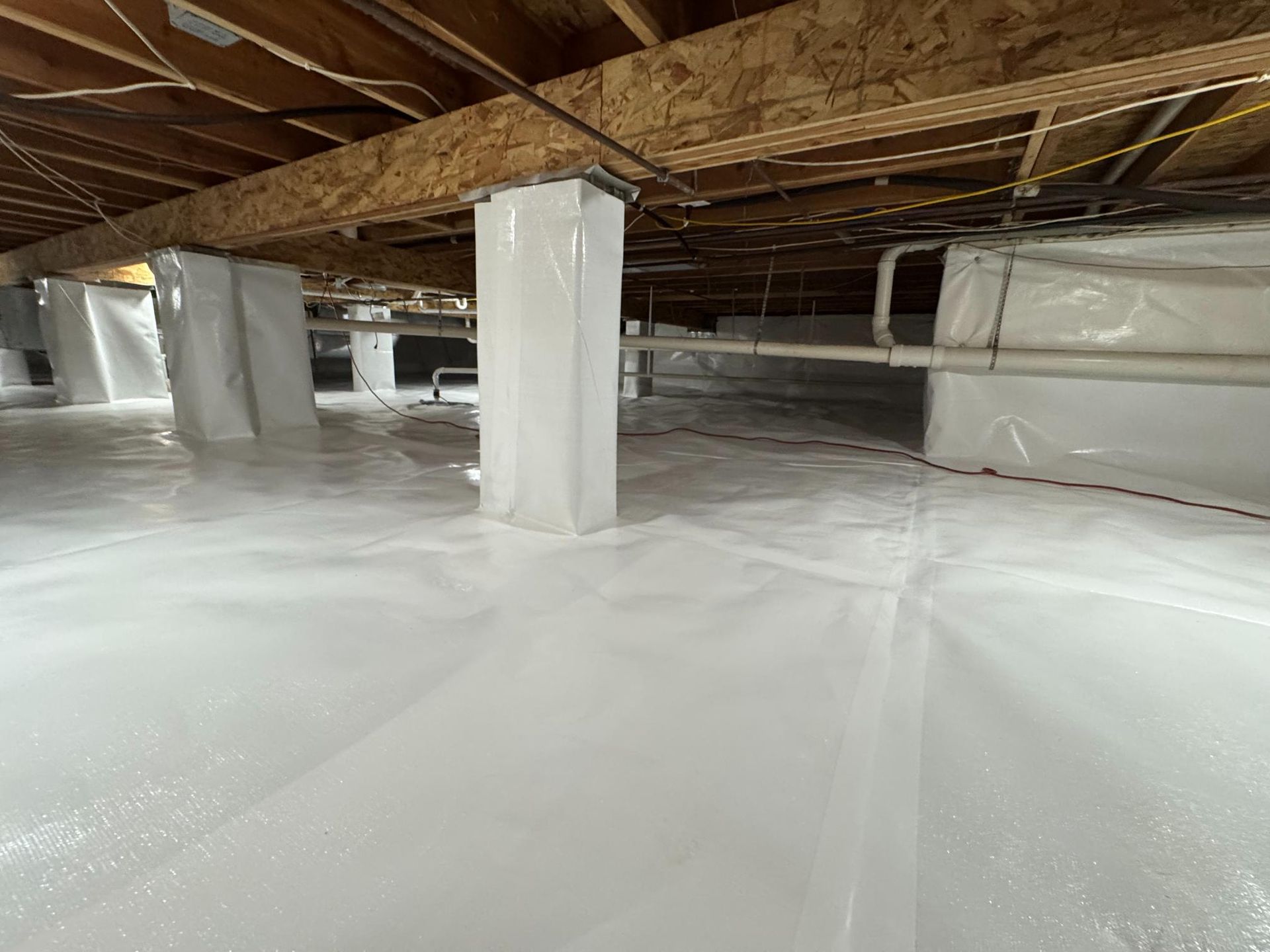
Full encapsulation. Walls, floor, and piers all get covered with heavy duty vapor barrier. This seals the crawl space from ground moisture and creates a clean, usable space.
Dehumidifier. Even with encapsulation, humidity needs to be actively managed. A properly sized dehumidifier keeps moisture levels where they need to be year round.
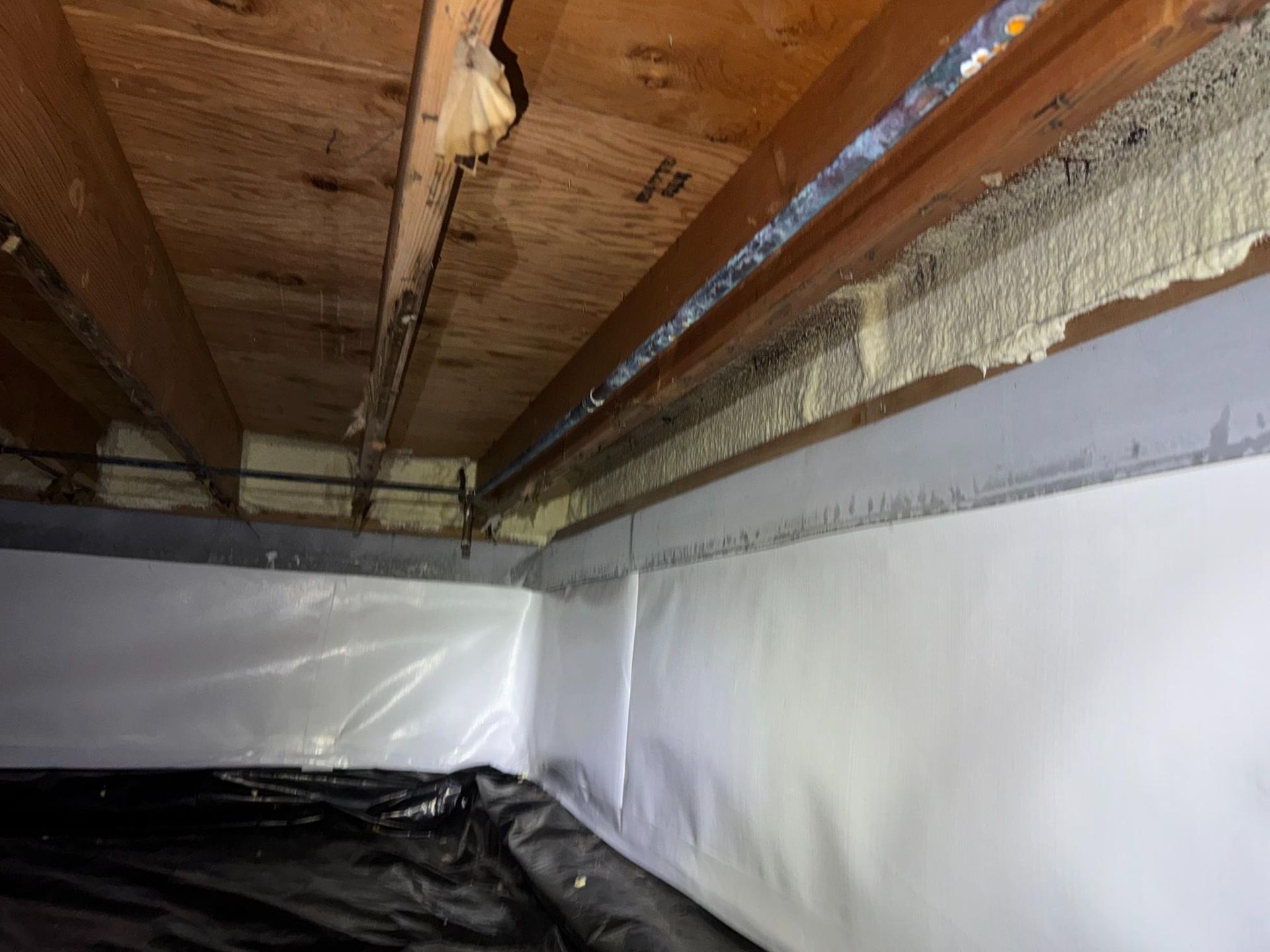
Rim joist spray foam. This is the gap between your foundation wall and your floor framing. Sealing it stops cold air and moisture from sneaking in around the edges.
Each piece works with the others. Pull one out and the system doesn't perform the way it should. That's why we don't recommend partial solutions when the problem calls for a complete one.
What Day One Actually Looks Like
Here's something most people don't expect: a crawl space job looks worse before it looks better.
Day one is mostly cleanup and setup. Old vapor barrier comes out. Debris gets bagged and hauled away. Old pipes get capped. We're not laying a single piece of new material until the space is ready for it.
One of the first things we do on every job is hang lights throughout the crawl space. It sounds simple but it changes everything. You cannot do good work in the dark. Lighting lets us see exactly what we're working with and makes sure nothing gets missed.
We do leave the old vapor barrier down while we're doing the heavy cleanup work. Not because we're cutting corners—because crawling around on bare soil and mud all day slows everything down and creates more mess than it solves. It comes out when the time is right.
By the end of day one this Urbana crawl space had lights hung, cleanup well underway, and the sump pit location marked and ready to dig.
It doesn't look like much yet. But the foundation for everything else is already in place.
Passing a Home Down the Right Way
There's something different about a job like this one.
When a couple sells their home to a stranger, the goal is usually to get it in good enough shape to close the deal. But when it's your daughter moving in? Your son-in-law? That changes things.
This couple didn't want to hand down a problem. They wanted to hand down a home. One that was going to take care of their family the same way it took care of them.
That's why they called us before closing. Not after. Not when their daughter started noticing a musty smell six months down the road. Before.
And that's exactly the right call.
Book A Free Inspection Now
Your crawl space problems aren't going to fix themselves. But they are fixable. Let's get it done — the right way, permanently.
Or call us directly (217) 863-9559
Ready to See What's Under Your Home?
If this story sounds familiar—you know something's going on but you're not sure how bad it is—we'd love to help.
Chris or I will come out personally, do a thorough inspection, and show you exactly what we find. No pressure, no big number on a little piece of paper without explanation. Just honest answers about what's happening under your home and what it would take to fix it.
Whether you're staying put or passing your home down to someone you love, we'll make sure you know exactly what you're working with.