
What Is Dimple Mat and What Does It Actually Do?

Jeff Robinson • October 8, 2026

When a homeowner finally makes the call, something shifts.


We come out and do a thorough inspection. We get under the home and look at everything — and we show you what we're seeing in real time so there are no surprises when we sit back down with you. You'll know exactly what's down there. You'll know exactly what it takes to fix it. And you'll have a clear picture of what your home looks like after the work is done.


No pressure. No scare tactics. Just an honest look at what's happening and a straightforward plan to address it.


Most homeowners tell us the same thing after that first visit.


They wish they hadn't waited as long as they did.

You're Staring at a Proposal You Don't Fully Understand

You just got a quote for crawlspace work, and it's full of line items you've never heard of. Vapor barrier. Sump pump. Dimple mat. Maybe you nod along while the salesman talks, but inside you're wondering: is this stuff actually necessary, or is some of this just padding the bill?


That's a fair question. Nobody wants to pay for something they don't understand. And in an industry where high-pressure sales and inflated prices are common, it makes sense to want proof before you hand over your money.


So let's break down one of those line items — dimple mat — and show you exactly what it does and why it's there.

What Dimple Mat Actually Is

Dimple mat is a layer that sits on the floor of your crawlspace. The name comes from exactly what it sounds like: it's covered in small dimples.


Those dimples aren't decoration. They do two things.


First, they create a small air space between the mat and the dirt floor underneath. Second, that air space gives water somewhere to go, instead of just sitting there.


Here's why that matters. Encapsulation is supposed to protect your home from moisture. But a good system doesn't just hope water never shows up — it plans for what happens if it does. Dimple mat is part of that plan.

Where the Water Actually Goes

Real encapsulation means covering the whole crawl space, not just the floor. Here's what that looks like:


  • Floor coverage. This is the part most people already know about.
  • Wall coverage. The barrier runs all the way up the walls, not just across the ground.
  • Mechanical fastening. The wall barrier gets locked in place so it stays put over time.
  • Sealed seams. Every seam gets taped tight with butyl tape, so there are no gaps for air or moisture to sneak through.
  • Spray foam insulation. This is the final layer. It locks everything in and creates a space that stays controlled, not just "covered."


Skip any one of these steps, and the space isn't fully sealed. It's just partly protected.

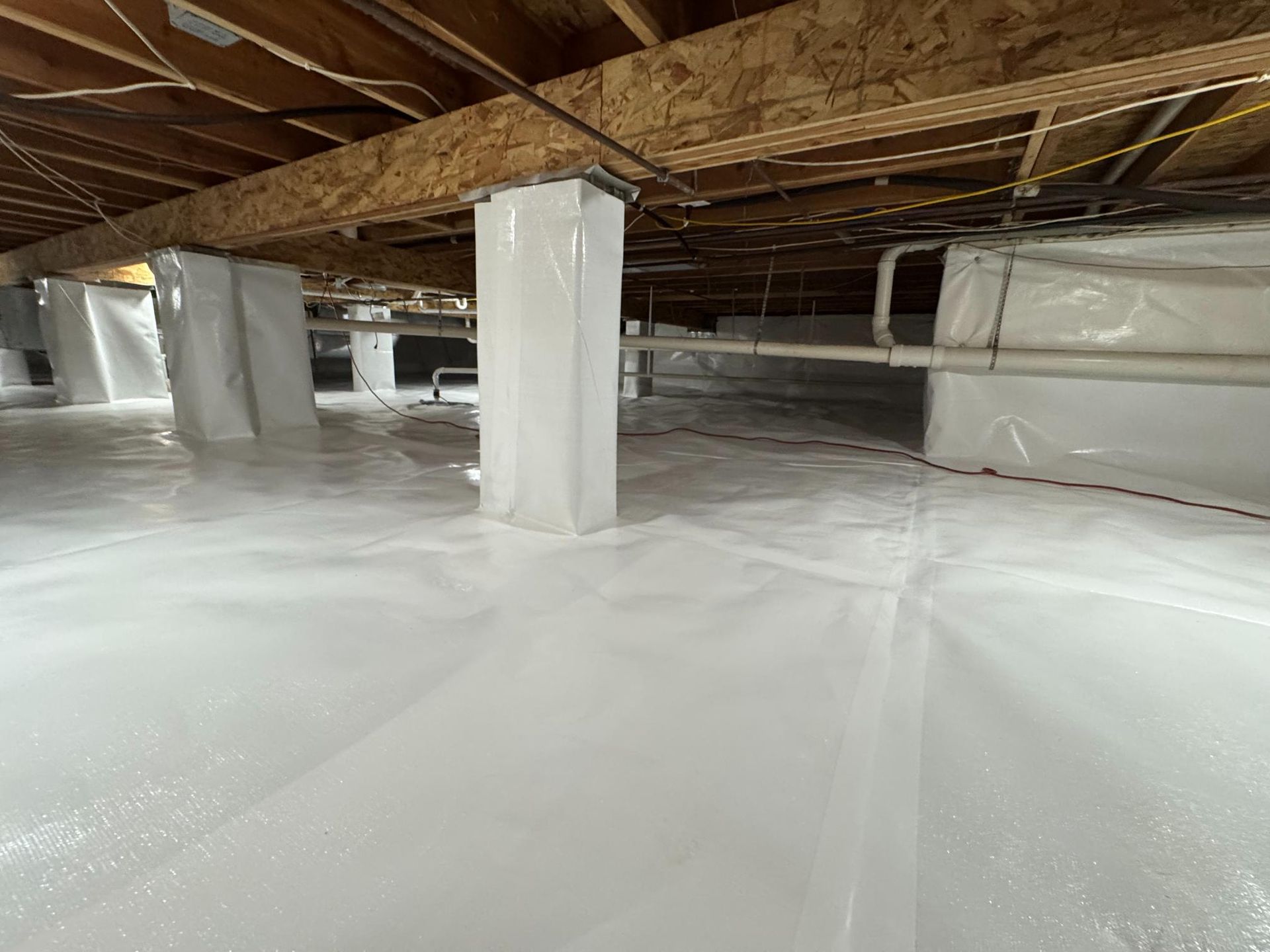
A crawl space with white plastic vapor barrier covering the ground and wrapping around the support pillars and walls.

What to Ask Before You Sign Anything

You don't have to take any contractor's word for it. Here are a few simple questions worth asking about any crawlspace proposal:


  • What is this material, and what does it actually do?
  • If water does get in somewhere, where does it go?
  • Is there anything underneath the vapor barrier, or is it just laid on the dirt?


A contractor who knows what they're doing should be able to answer these clearly, without dodging or talking over your head. If they can't explain where the water goes, that's worth asking about before you move forward.

Why This Small Detail Matters More Than It Looks

It's easy to assume a line item like "dimple mat" is just extra cost. But once you understand what it does, it stops looking like padding and starts looking like a plan — one small piece of a system built so that if water shows up, it knows exactly where to go.


That's really what separates a crawlspace job done right from one that just looks finished. The materials work together on purpose, not by accident.


Once you understand one material this well, you've got a new filter for everything else on your proposal. You're not just trusting a number on a page anymore. You know what to ask, and you know what a real answer sounds like.

Book A Free Inspection Now

Your crawl space problems aren't going to fix themselves. But they are fixable. Let's get it done — the right way, permanently.

Or call us directly (217) 863-9559

Not Sure What Your Crawl Space Really Needs?

At My Guys Crawl Space, we believe homeowners deserve to understand exactly what they're paying for. We'll walk you through your crawl space, explain our recommendations, and help you understand how each part of the system protects your home.


Serving Mahomet, Champaign-Urbana, and surrounding Central Illinois communities.

Based in

Mahomet, Illinois Serving all of Central Illinois.

Business Hours

Mon Fri - 8am to 5pm

Sat Sun - Closed

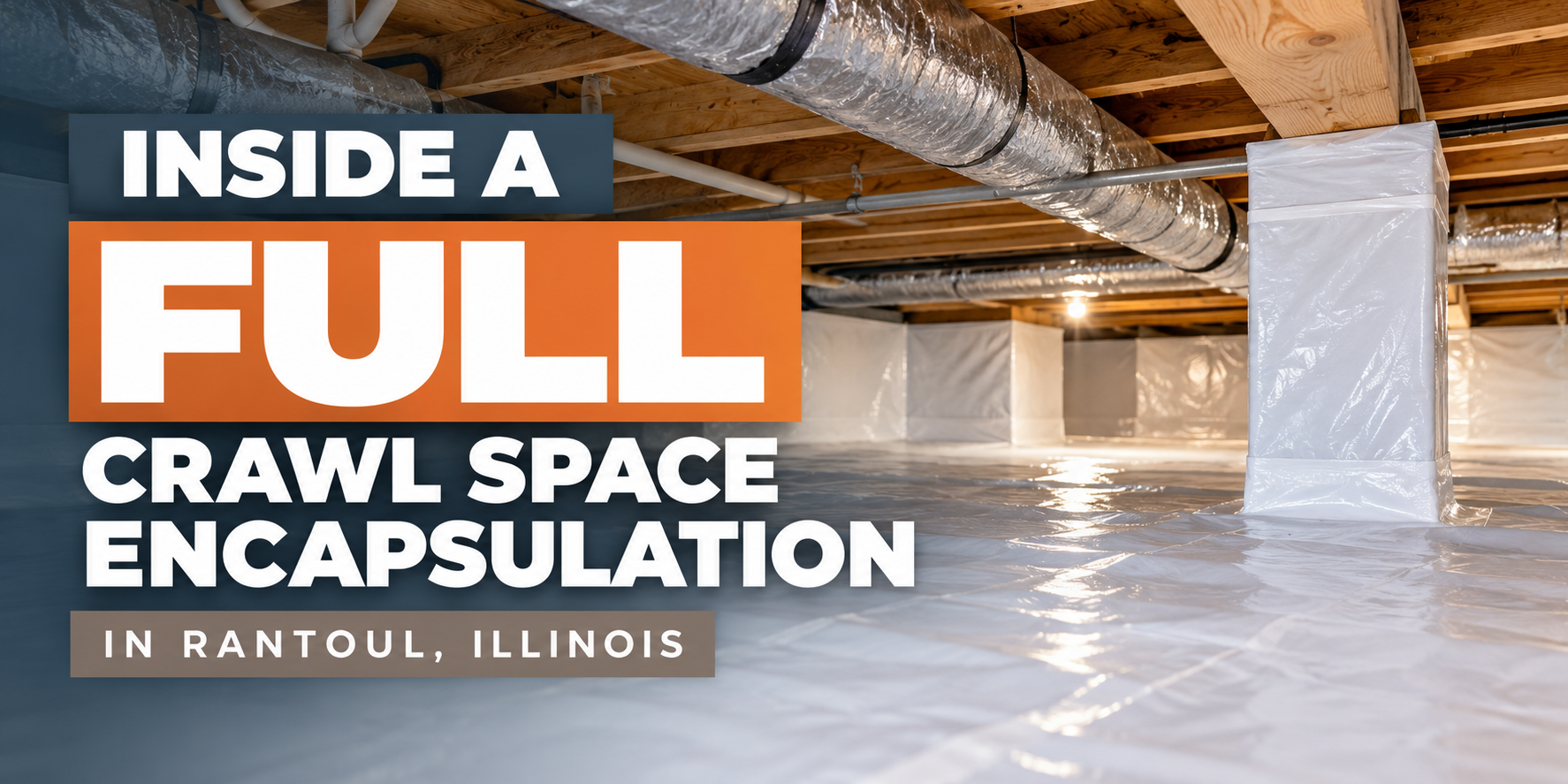
Crawl space under house covered with plastic sheeting; text reads “Inside a full crawl space encapsulation in Pantoul, Illinois”
By Jeff Robinson • October 15, 2026
Most crawl space companies show up, do the work, and leave. You never really know what happened down there. You just hope it was done right.

Clipboard with checklist on desk beside text: “What we expect from our team even when we’re not there.”
By Jeff Robinson • October 15, 2026
I'm heading up to Rantoul today to check in on a job. Full crawl space encapsulation—two-inch high-density foam on the walls, vapor barrier, a couple of floor jacks under a sagging washer/dryer and furnace area.
Promotional graphic reading “How to Never Dread a Rainy Day Again” over a rainy house exterior
By Jeff Robinson • October 14, 2026
Rain used to mean one thing for a lot of homeowners: a little knot of worry. Is everything okay down there? Is the crawl space holding up? Most people just hope for the best and move on with their day.