What We Fixed Under This Champaign Home
A Complete Crawl Space Transformation
Just finished up a job here in Champaign, and I wanted to walk you through what we did because it's a good example of how crawl space problems connect to each other.
This homeowner had sagging floors from a kitchen remodel, 80% humidity reading under the house, and a furnace condensate line draining outside where it could freeze. Three different issues, but they all needed fixing to actually protect the home.
So we installed six floor supports, encapsulated the entire space, added a dehumidifier, spray foamed all the rim joists, and moved that drainage indoors with a pump.
Now the space is bright, clean, properly supported, and humidity-controlled. This is what comprehensive crawl space work looks like—not just fixing one symptom, but addressing everything that's affecting your home's foundation and air quality.
The Problem Started Upstairs
Here's what happened: this homeowner did a kitchen remodel. They knocked out a wall to open things up, added an island, put in a refrigerator, and installed a new tub. Beautiful work upstairs—exactly what they wanted.
But all that new weight landed in one spot. Right in the middle of a floor span that wasn't designed to carry it.
When you remove a load-bearing wall, that weight has to go somewhere. When you add a heavy island with appliances, or a tub filled with water and a person, you're adding hundreds of pounds in a concentrated area. If there's no support underneath, the floor system starts to sag.
That's what was happening here. The main beam runs all the way to the outside wall, but all this new weight was sitting right in the middle with nothing supporting it from below.
Most remodeling contractors focus on what's above the floor. They're thinking about cabinets, countertops, plumbing, electrical. They're not thinking about whether the floor system can handle the new load. That's how you end up with beautiful kitchens and sagging floors.
The 80% Humidity Problem
When we first got under this house, I pulled out my hygrometer and it read 80% relative humidity. That's way too high.
For context, you want your crawl space below 55% humidity. Anything above 60% and you're creating an environment where mold can grow, wood can rot, and dust mites thrive. At 80%, you've got a serious moisture problem.
Here's what most people don't understand: that humidity doesn't stay in the crawl space. It rises. About 50% of the air you breathe upstairs actually comes from below your house. So when your crawl space is sitting at 80% humidity, that moist air is seeping up through your subfloor and affecting your indoor air quality.
It makes your air conditioner work harder because humid air is harder to cool. It can cause hardwood floors to cup or warp. It creates that musty smell some houses have. And it's putting stress on your floor framing system.
This is why we include a dehumidifier in every encapsulation we do. Sealing the crawl space with vapor barrier helps, but it's not enough. You need active moisture control to actually get that humidity down and keep it there.
The dehumidifier we installed will bring that 80% down below 55% and maintain it. It protects your floors, improves your air quality, and stops moisture-related problems before they start.
What We Actually Did
So here's what this job needed: six floor supports total.
Three went under the existing main beam to stabilize what was already there. Then we installed a new beam specifically to handle the weight from that kitchen remodel, and put three more supports under that.
Now all that weight from the island, refrigerator, and tub is properly distributed. The sagging is fixed and those floors are stable.
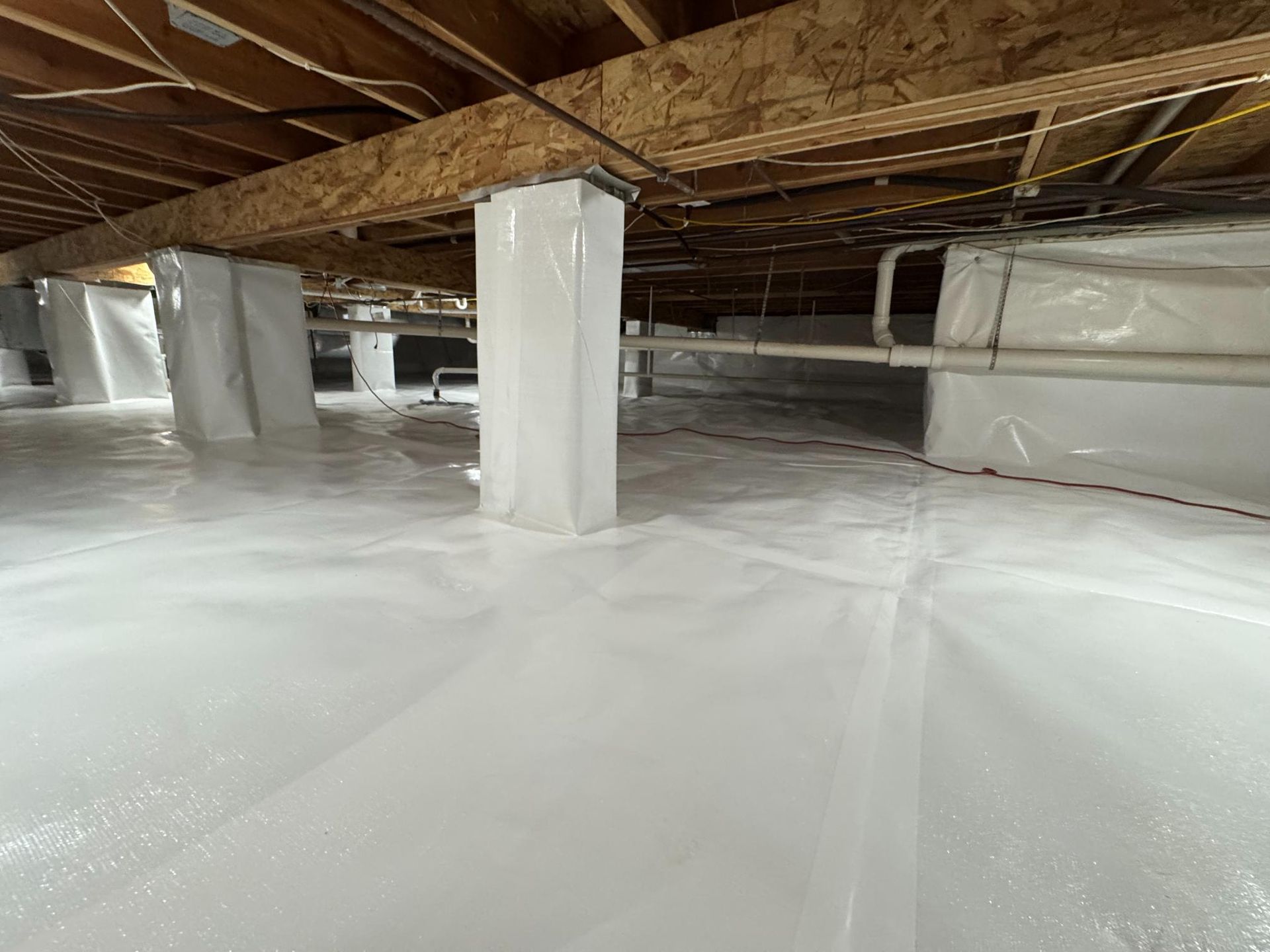
We encapsulated the entire crawl space with vapor barrier—clean, white, properly sealed to the walls and floor. This stops ground moisture from coming up into the space.
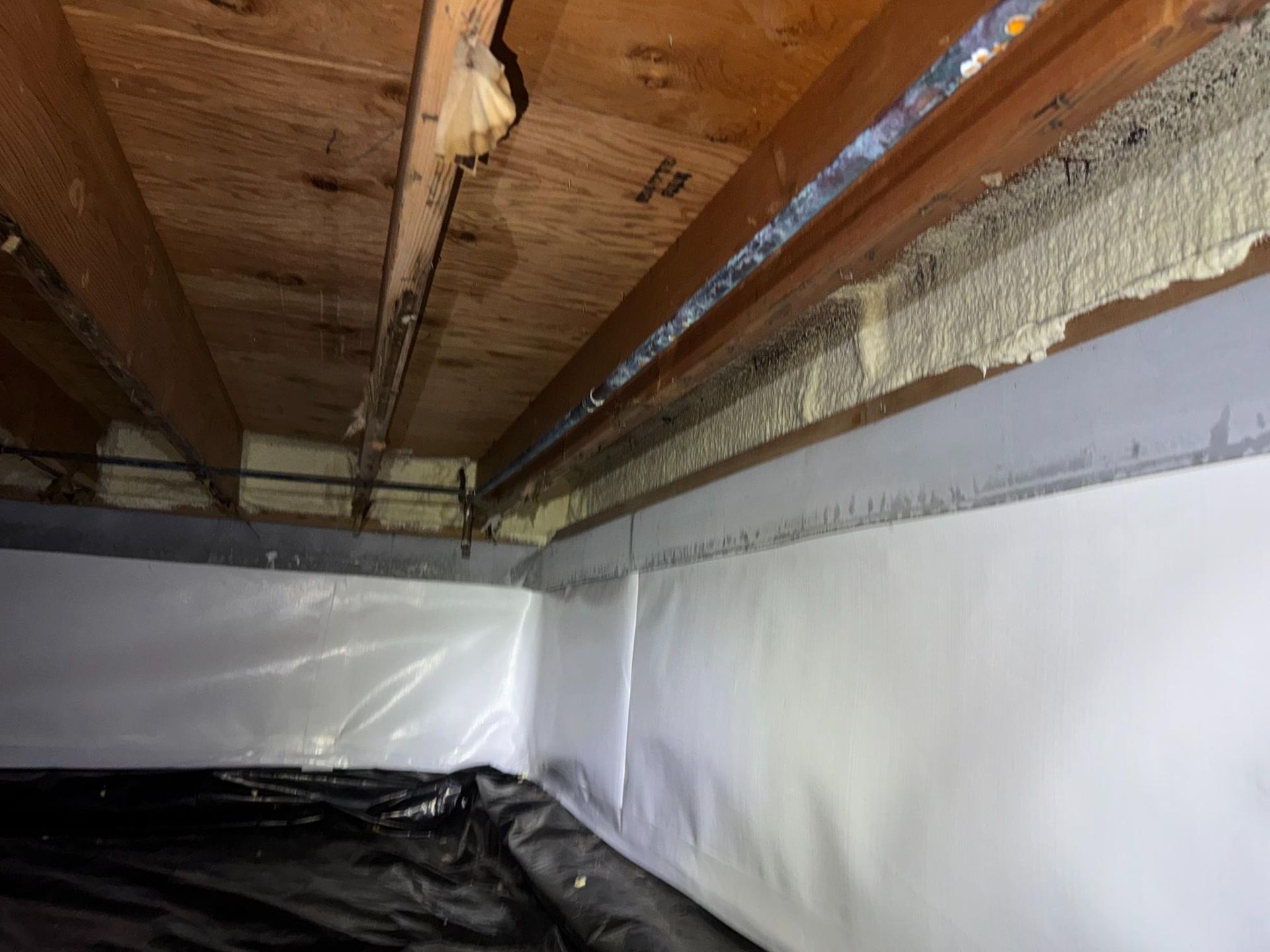
Then we spray foamed every single rim joist pocket. You can see it up along the foundation where the floor meets the walls. That spray foam stops air infiltration, keeps critters out, and insulates that transition point where a lot of energy loss happens.
Installed lighting throughout the whole space so you can actually see down here. Not just one bulb near the access—proper lighting all the way through. This matters when your HVAC tech or plumber needs to work under here in the future.
And we added a condensate pump for both the furnace and the dehumidifier. Their old setup was draining outside, which freezes in winter and creates problems. Now it pumps to the washer drain indoors. No more frozen lines, no more issues.
The Details That Make It Work
Let me show you some of the details that separate good work from just "getting it done."
That spray foam in the rim joists? It's stopping air leaks, blocking entry points for insects and mice, and insulating a spot where conditioned air typically escapes. Most crews skip this step because it takes time and adds cost. But it makes a real difference in your energy bills and keeps pests out.
Moving the condensate drainage indoors seems small, but in Illinois winters, exterior drainage lines freeze. When that happens, your furnace shuts down for safety or water backs up where it shouldn't. The pump we installed solves that completely.
The lighting matters more than you'd think. When something needs maintenance under here—and eventually something will—proper lighting means faster service calls and lower bills because the technician can actually see what they're doing.
Even with all the pipes and obstacles under this house, we kept the installation clean. The vapor barrier is smooth and properly sealed. Everything is accessible for future work. This is what it should look like when we're done.
What This Means for the Homeowner
So what did all this work actually accomplish for this Champaign homeowner?
Their floors are properly supported now. That sagging from the kitchen remodel is fixed, and the structure can handle the weight it's carrying. No more soft spots, no more bouncing when you walk across the kitchen.
The humidity is controlled. Instead of 80% moisture affecting their indoor air quality, it's staying below 55%. That means healthier air upstairs, less work for their AC, and protection for their hardwood floors and floor joists.
No more worrying about frozen condensate lines in winter. That drainage is handled indoors now with a proper pump system.
And when they need future maintenance—HVAC work, plumbing repairs, inspections—contractors can actually work down here efficiently because it's clean, lit, and accessible.
This isn't just about fixing today's problems. It's about protecting their investment long-term. Good crawl space work prevents bigger, more expensive issues down the road. That's what comprehensive solutions do.
When Remodeling, Think Below Too
Here's something most homeowners don't know: when you remodel upstairs, you should be thinking about what's underneath.
Most remodeling contractors are focused on the finished product—the cabinets, the tile, the layout. They're not structural engineers checking load-bearing capacity or crawl space conditions. That's not a criticism, it's just not their specialty.
But when you remove walls, add heavy appliances, or install fixtures like soaking tubs, you're changing how weight sits on your floor system. If nobody checks what's supporting that new load, you can end up with problems within a year or two.
Signs your remodel might need crawl space attention: floors that feel soft or bouncy, visible sagging, doors that suddenly don't close right, or cracks appearing in drywall above doorways.
It's a lot easier—and cheaper—to add proper support during or right after a remodel than to fix structural damage years later.
Book A Free Inspection Now
Your crawl space problems aren't going to fix themselves. But they are fixable. Let's get it done — the right way, permanently.
Or call us directly (217) 863-9559
Thinking About Remodeling?
If you're planning kitchen or bathroom work that involves removing walls or adding heavy fixtures, it's worth having someone check your crawl space first.
And if you've already remodeled and you're noticing floor issues, sagging, or just want to know what's happening under your house, we can help.
We'll come out, do a thorough inspection, and show you exactly what's going on down there. No pressure, just Chris or me explaining what we find and what we'd recommend.