Why Crawl Space Encapsulation Done Wrong Is Worse Than Not Doing It at All
When a homeowner finally makes the call, something shifts.
We come out and do a thorough inspection. We get under the home and look at everything — and we show you what we're seeing in real time so there are no surprises when we sit back down with you. You'll know exactly what's down there. You'll know exactly what it takes to fix it. And you'll have a clear picture of what your home looks like after the work is done.
No pressure. No scare tactics. Just an honest look at what's happening and a straightforward plan to address it.
Most homeowners tell us the same thing after that first visit.
They wish they hadn't waited as long as they did.
When "Already Fixed" Isn't Actually Fixed
This Decatur crawl space already had an encapsulation. The homeowner had already paid for it. As far as they knew, the problem was handled.
It wasn't.
When Ryan from our team got down there, it took about thirty seconds to see that something was seriously wrong. The plastic wasn't installed correctly. The walls weren't fully covered. There were gaps in the foundation. Animals had been getting in. Water had been pooling in the corners—right on top of the liner that was supposed to be keeping it out.
Here's the hard truth: a crawl space encapsulation done wrong doesn't just fail to protect your home. It gives you a false sense of security while the real damage keeps building underneath.
That's actually worse than doing nothing at all.
What We Found When We Got Down There
Ryan walked through the whole space on camera so you could see it for yourself.
The first thing you notice is the liner. It's there, but it's not doing its job. Improperly installed plastic bunched and pulled away from the walls means moisture still has a way in. The whole point of encapsulation is to create a sealed environment—this wasn't sealed.
Moving through the space, the wall coverage gets worse. In several areas the seal just stops. Pulled away, never finished, or simply skipped. In the older part of the house, it's even more apparent.
Then there's the back right corner. There's a significant gap in the foundation wall. Water has been coming in through that corner consistently enough to leave clear evidence behind. And because the liner was already in place, that water had nowhere to go—it just sat there on top of the crawl seal.
Animals had found their way in too. When the liner isn't properly sealed, it doesn't keep critters out. It just gives them a nicer floor to walk on.
This is what "done cheap" looks like up close.
Why Bad Encapsulation Is Worse Than No Encapsulation
Here's the part that really stings.
When a homeowner has crawl space work done, they stop worrying about it. That's the whole point. You paid for a solution, so you move on. You're not checking for musty smells anymore. You're not watching for soft floors or water stains. You think it's handled.
But if the work wasn't done correctly, the problems don't stop. They just become invisible.
Moisture keeps coming in through gaps in the liner. Water pools in corners where the wall seal was never finished. Animals find their way through unsealed sections. And because you're not looking for these things anymore, months go by. Sometimes years. The whole time, the damage is building quietly underneath your home.
That's the false security problem. A bad encapsulation doesn't freeze the situation—it hides it.
By the time it becomes obvious something is wrong, you're not just dealing with the original moisture issue. You're dealing with everything that continued to develop while you thought it was fixed. Damaged floor joists. Mold growth. Structural concerns. A compounding mess that's now significantly more expensive than it would have been.
And then comes the real gut punch: you have to pay to have the incorrect work removed before you can even start fixing it properly.
Twice the cost. Double the disruption. All because the first job wasn't done right.
What a Correct Crawl Space Encapsulation Actually Includes
So what should it look like when it's done correctly?
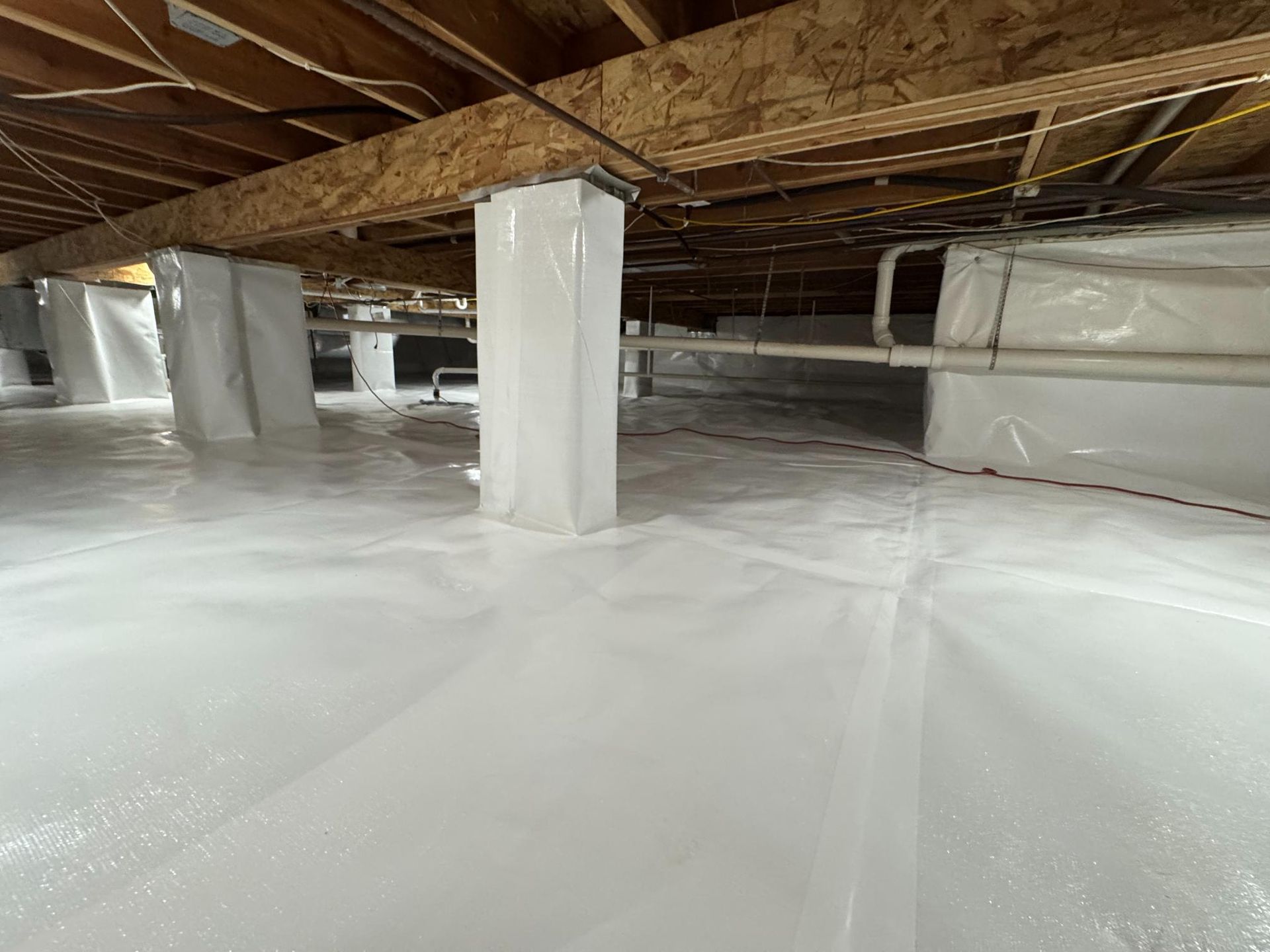
First, the liner. A quality vapor barrier needs to be properly laid across the entire floor with no gaps, no bunching, and no sections where it's just loosely placed and hoped for the best. It should be thick enough to hold up over time and sealed at all the seams.
The walls need to be covered all the way up. Not halfway. Not most of the way. All the way to the sill plate. Any gaps or cracks in the foundation need to be identified and addressed before the liner goes up—not covered over and ignored.
If there's a water intrusion issue, a proper sump pump and discharge system needs to be part of the solution. Liner alone can't handle active water. Trying to encapsulate over a drainage problem is like putting a bandage over something that needs stitches.
Floor jacks go in where the structure needs support. Lighting gets installed throughout the entire space so that anyone who needs to get back down there can actually see what they're doing.
Every piece of this works together as a system. Skip one element, or do one element incorrectly, and you compromise the whole thing.
That's not us being picky. That's just how crawl space encapsulation is supposed to work.
Questions to Ask Before You Hire a Crawl Space Contractor
Before anyone gets under your home, here are some things worth asking:
- What thickness liner do you use, and why?
- How do you handle wall coverage near the foundation?
- What happens if you find active water intrusion during the job?
- Will there be lighting installed throughout the space when you're done?
- How do you address foundation gaps or cracks?
- What does your cleanup process look like?
- Can I see photos or video of the finished space?
The answers will tell you a lot. A contractor who gets uncomfortable with these questions, rushes through them, or gives vague answers is showing you something important.
Also watch for this: if the bid comes in significantly lower than others you've received, ask why. Sometimes it's efficiency. More often it's corners being cut somewhere—thinner liner, incomplete wall coverage, skipping drainage solutions that the job actually needs.
The cheapest bid isn't always a deal. Sometimes it's just the most expensive mistake you'll make twice.
What We're Doing Differently in This Decatur Home
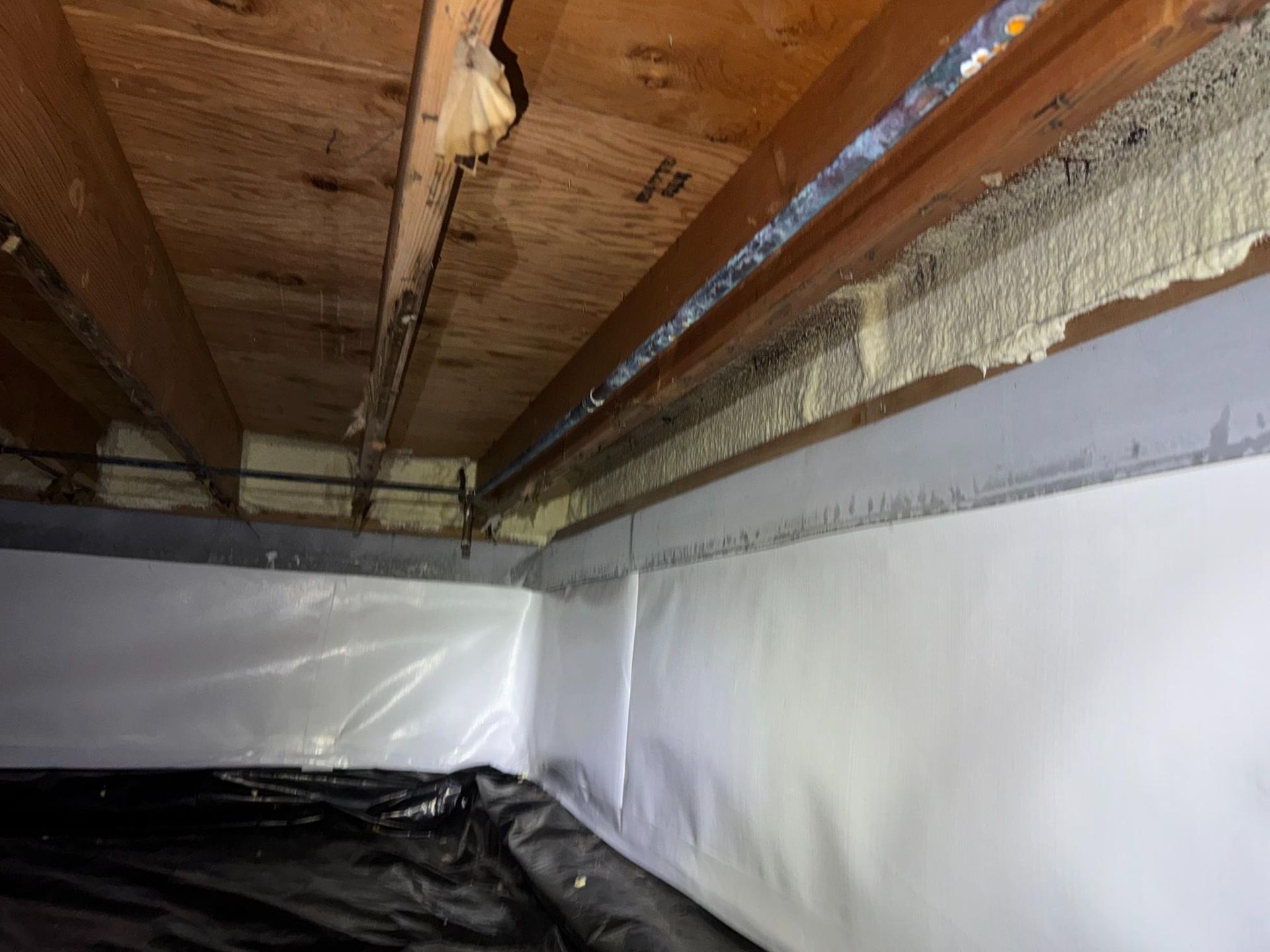
When we got into this crawl space, we didn't patch what was there. We pulled everything out and started fresh.
That means the old liner is coming out completely. Not covered over, not worked around—removed. Then we're going back in with proper installation from the ground up. Wall seal all the way to the sill plate. Foundation gap addressed before anything goes back in. New sump pump and discharge system to handle the water intrusion correctly.
Ryan, Dennis, and Dylan are working through this space systematically. Floor jacks going in where the structure needs support. Lighting installed throughout so the space is actually usable when we're done.
By the time we're finished, this crawl space will look and function completely differently than it did when we arrived. Clean, sealed, lit, and actually protected.
That's the My Guys standard. We're not here to put a fresh coat of paint over someone else's mistakes. We're here to fix the problem.
Book A Free Inspection Now
Your crawl space problems aren't going to fix themselves. But they are fixable. Let's get it done — the right way, permanently.
Or call us directly (217) 863-9559
Don't Get It Done Twice
If you're not sure whether your crawl space encapsulation was done correctly, it's worth finding out.
We offer thorough inspections with full documentation—photos and video so you can see exactly what's going on under your home. No guessing, no vague answers. Just an honest look at what's there and what, if anything, needs to be done about it.
Jeff, Chris, or Ryan will talk to you personally. We serve Decatur, Mahomet, and communities throughout Central Illinois.
If you have questions or want to schedule an inspection, reach out anytime. We're happy to take a look.